
There’s something almost unsettling about how popular dystopian fiction has become. Not because the stories are dark, though they absolutely are, but because so many of them feel less like science fiction and more like a mirror pointed directly at the evening news. The genre taps into a very specific human anxiety: the fear that things could get much, much worse, and that we might not even see it coming.
The resurgence of dystopian fiction in 2025 reflects heightened societal anxieties about political instability, environmental collapse, and technological overreach. This genre’s popularity is driven by its ability to mirror real-world concerns, offering cautionary tales that resonate with readers navigating uncertain futures. So if you’ve been eyeing that reading list and wondering where to start, we’ve done the work for you. Let’s dive in.
1. 1984 by George Orwell – The One That Started It All
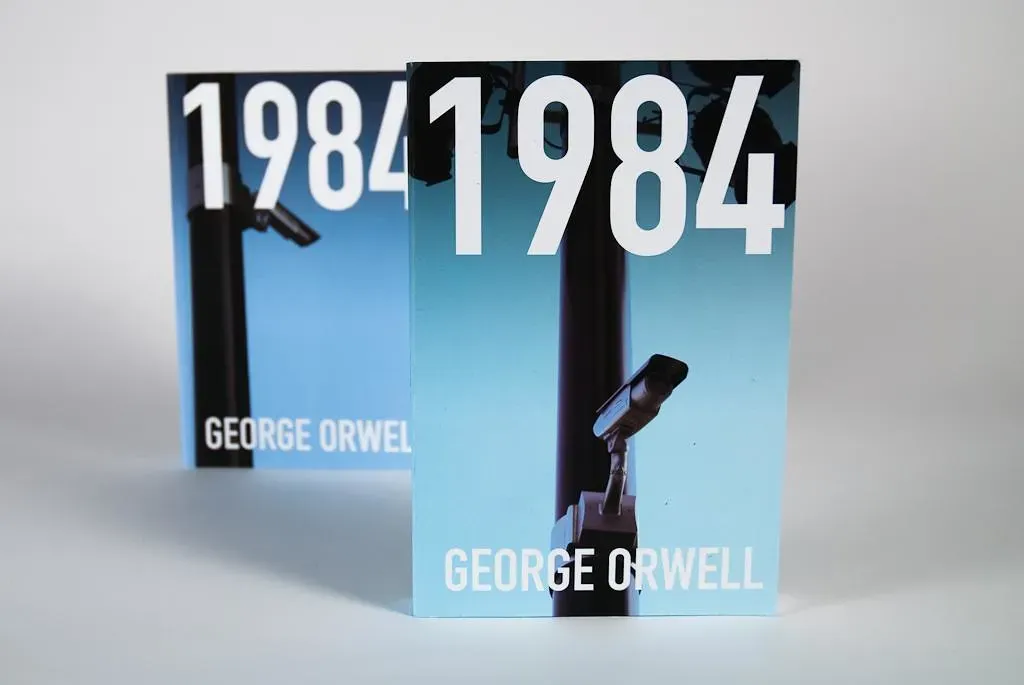
Honestly, no list of dystopian novels is complete without this one. It’s the book that gave us “Big Brother,” “doublethink,” and “Newspeak,” words that have slipped so naturally into everyday language that most people forget they came from a 1949 novel. Nineteen Eighty-Four is a dystopian speculative fiction novel by the English writer George Orwell, published on 8 June 1949. Thematically, it centres on totalitarianism, mass surveillance, and repressive regimentation of people and behaviours.
The book’s cultural staying power is remarkable and frankly a little alarming. Sales of Nineteen Eighty-Four increased by up to seven times within the first week of the 2013 mass surveillance leaks, and the book again topped the Amazon.com sales charts in 2017 after a controversy involving Kellyanne Conway using the phrase “alternative facts.” In January 2017, Penguin USA ordered 75,000 new copies of the book and said it was considering another reprint due to a roughly ninety-five-hundred percent bump in sales, according to the New York Times.
It is hard to argue against 1984 by George Orwell as the best dystopian novel ever written. This novel has become the face of the genre and rightfully so. It has the best elements of dystopian novels while also telling a great story. On 5 November 2019, the BBC named Nineteen Eighty-Four on its list of the 100 most influential novels, and in 2020, it was number three on the list of “Top Check Outs of All Time” by the New York Public Library.
2. Brave New World by Aldous Huxley – The Soft Nightmare
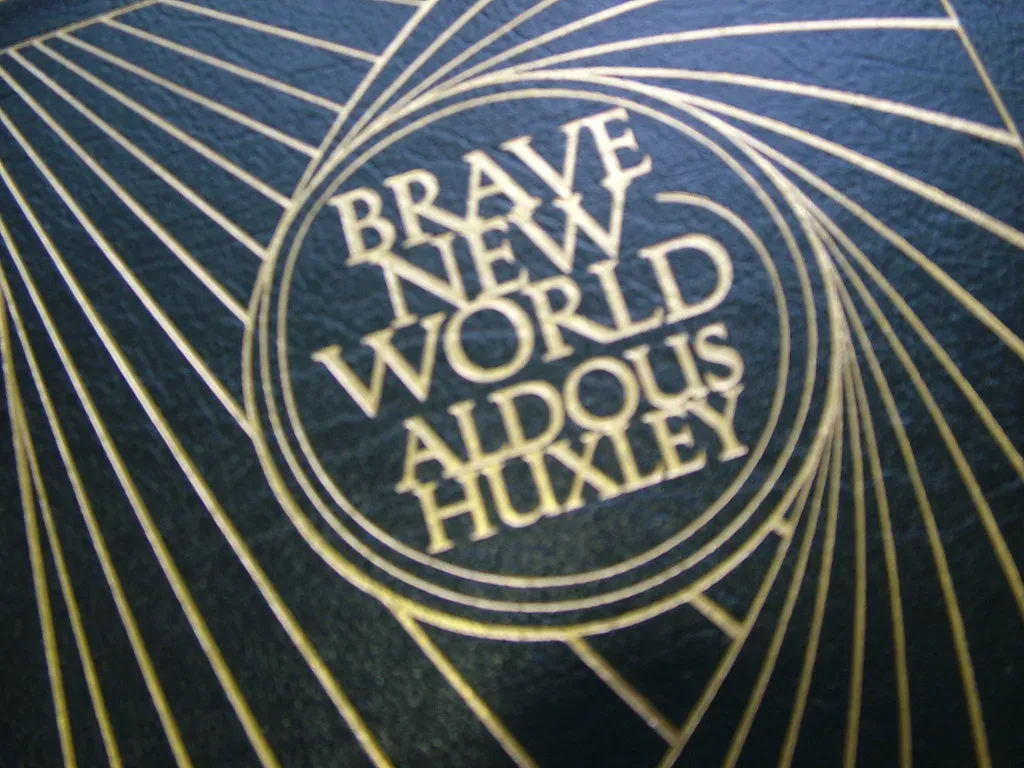
If 1984 is about control through fear, Brave New World is about control through pleasure, and somehow that’s even more disturbing. Aldous Huxley published Brave New World in 1932, and the world has never quite figured out how to argue back. The novel sold twenty-three thousand copies in Britain alone in its first year, remarkable for a debut of that kind during the Great Depression. By 1999, the Modern Library had ranked it fifth on its list of the 100 best English-language novels of the 20th century.
Huxley’s Brave New World, published during the Great Depression and amid rapid industrial advancement, warns about consumerism, technological dependence, and the loss of human connection in pursuit of comfort and stability. It’s amazing how many technologies Brave New World predicted. There’s genetic engineering where people can choose what traits their offspring are born with. There’s also the proliferation of mass media where people don’t have to be bored for a second.
It has appeared on the American Library Association’s list of the top 100 banned and challenged books in every single decade since the ALA began tracking in 1990. As recently as August 2024, a Colorado school district required parental permission for students to access it, before a federal judge intervened in March 2025, ordering all 129 restricted titles restored to shelves. I think there’s a certain irony in banning a book about information control, and Huxley would likely agree.
3. The Handmaid’s Tale by Margaret Atwood – Still Shockingly Relevant
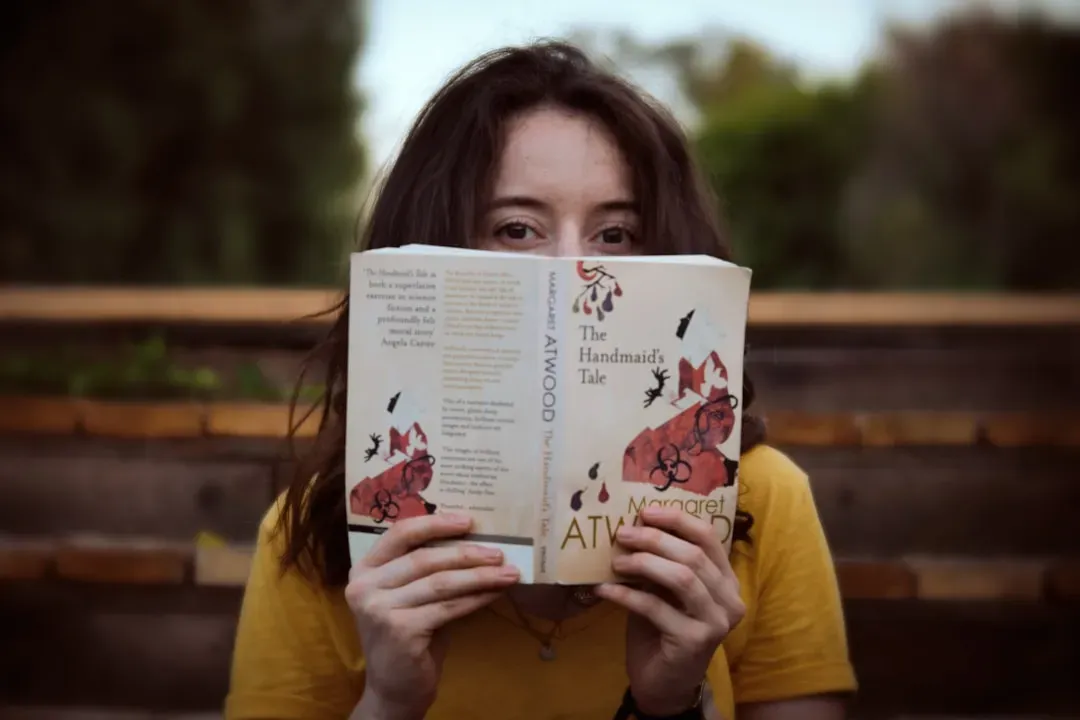
Margaret Atwood wrote this novel in 1985, and it has refused to stop being relevant ever since. Set in the near future, it describes life in what was once the United States and is now called the Republic of Gilead, a monotheocracy that has reacted to social unrest and a sharply declining birthrate by reverting to, and going beyond, the repressive intolerance of the original Puritans. The Handmaid’s Tale is a novel of such power that the reader will be unable to forget its images and its forecast.
Following the 2024 U.S. presidential election, The Handmaid’s Tale saw a nearly seven-thousand percent rise in sales based on Amazon figures. Before Election Day the book ranked at 209, but shot up to No. 3 after the election, placing 9th on Barnes and Noble’s list of bestsellers. That’s a staggering jump, not just a bump.
Margaret Atwood published The Handmaid’s Tale in 1985, and its final television season concluded in spring 2025, over eight years after the show premiered. Written in 1985, the novel presents a totalitarian society known as Gilead in which fertile women are enslaved and sexually assaulted in order to bear children for the ruling class. The book inspired Hulu’s Emmy-winning TV series adaptation starring Elisabeth Moss. The themes of the novel and series have resonated as reproductive rights like abortion and other health care concerns have been rolled back.
4. Fahrenheit 451 by Ray Bradbury – The Book About Burning Books
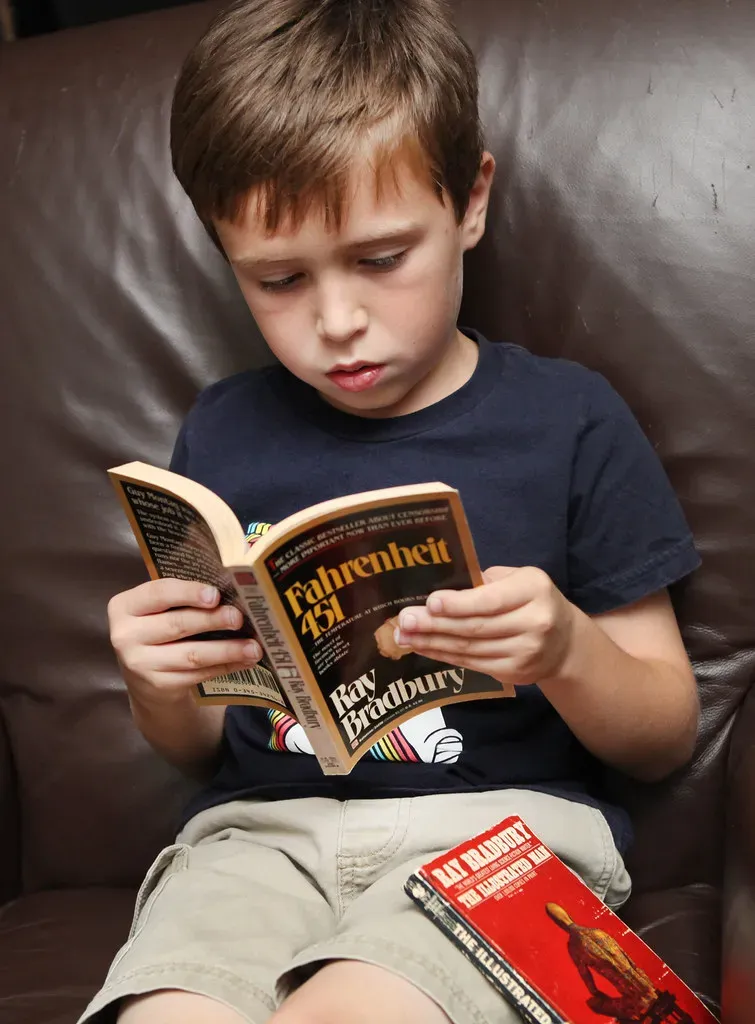
Here’s the thing about Fahrenheit 451. It gets invoked every single time a book is banned somewhere, and the irony is that this particular novel has itself been challenged and restricted in schools. Fahrenheit 451 by Ray Bradbury gets evoked any time a city or state bans books. It makes sense given the book is fundamentally about censorship, but it can be read as so much more than that. The world of Fahrenheit 451 sees firemen burn anything that could lead to independent thought, with anyone caught with a book facing severe punishment.
Bradbury’s diagnosis is closer to Huxley than to Orwell. The censorship in Fahrenheit 451 emerges from the bottom up, driven by a culture that prefers comfort to complexity. That’s what makes it so specifically American, and so durable. There’s something almost therapeutic about that thought, like the horror doesn’t come from the government alone, but from the people who gave up first.
According to Bookscan, Fahrenheit 451 ranked as the single top backlist fiction title by units sold in 2025, sitting above Animal Farm, 1984, The Handmaid’s Tale, and Brave New World. Ray Bradbury’s Fahrenheit 451 remains one of the most classic pieces of literature more than 75 years since its publication. That kind of longevity doesn’t happen by accident.
5. The Hunger Games by Suzanne Collins – The Modern Phenomenon

It would be easy to dismiss The Hunger Games as a young adult blockbuster, something flashy and fun but not quite literary. That dismissal would be a mistake. Goodreads users have chosen The Hunger Games by Suzanne Collins as the best book ever, besting Pride and Prejudice by Jane Austen and To Kill a Mockingbird by Harper Lee, rated millions of times by readers. That’s not nothing.
The Hunger Games entered the New York Times bestseller list in November 2008, remaining there for over 100 consecutive weeks. It also appeared on USA Today’s bestseller list for more than 135 weeks and has sold millions of copies worldwide. The Hunger Games has sold over 100 million copies as of October 2022, and has probably only continued to climb in sales since the prequel was released.
Another prequel novel, titled Sunrise on the Reaping, taking place before the original trilogy, follows a young Haymitch Abernathy through the 50th Hunger Games. It was published March 18, 2025, and is currently set to have a film adaptation releasing in November 2026. The Hunger Games trilogy has a particularly modern resonance with its use of themes such as class and racial friction, the use of media to manipulate viewpoints and simultaneously entertain and control the masses, and oppression of the lower socioeconomic tiers.
6. Parable of the Sower by Octavia E. Butler – The One That Set the Wrong Predictions Right
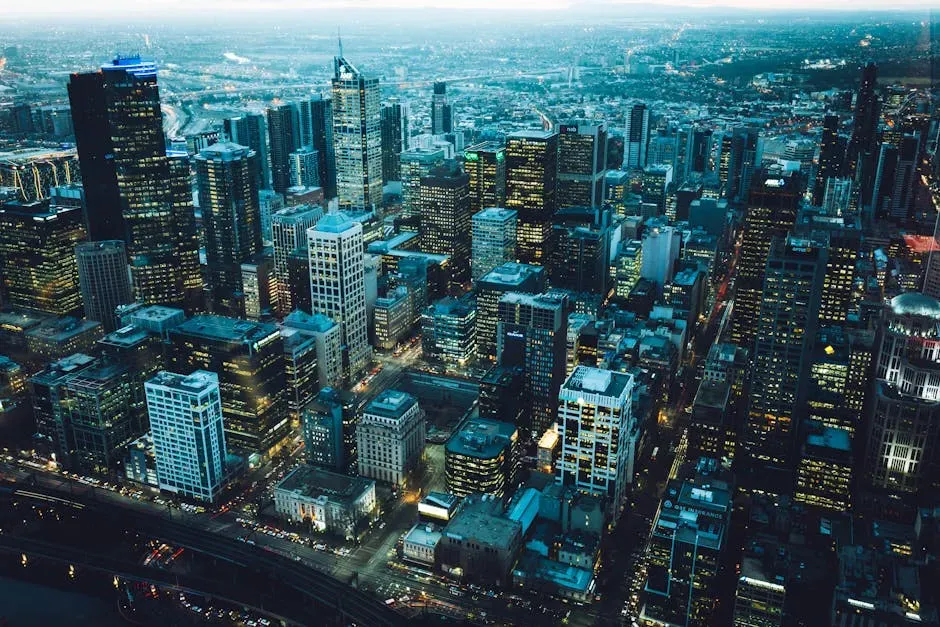
Few dystopian novels have aged as unpleasantly well as this one. I say unpleasantly because that’s the honest word for it. Octavia Butler wrote Parable of the Sower as a speculative novel about a United States ravaged by climate change, corporate dominance, and the collapse of civic institutions. Her protagonist, Lauren Olamina, is a Black teenager in a walled community in Los Angeles who develops a new philosophy called Earthseed while everything around her burns.
The novel, published in 1993, takes place in 2024 where the United States has been ravaged by climate change and corporations ruling over everything. Think about that for a moment. Butler set the book in 2024, and published it over thirty years before that date arrived. Set in 2024 and 2027, the degree of accuracy is not something anyone should be comfortable with.
Parable of the Sower by Octavia E. Butler isn’t just a great dystopian novel; it sets a template for how we can create as close to a utopian society as we can get in the real world. It belongs on this list not because it entertains, though it does, but because it demands to be read. Butler was not guessing. She was watching.
7. Never Let Me Go by Kazuo Ishiguro – The Quietest Dystopia Ever Written
Most dystopian novels announce their horror loudly. Oppressive governments, armed soldiers, fire and ash. Never Let Me Go does something far stranger and far more disturbing. It whispers. The horrific reality of Never Let Me Go is that everyone is seemingly fine raising a subjugated class for the sole purpose of killing them when some organs are needed. It’s a showcase of how easily people can accept horrors just because it’s too inconvenient to deal with the alternative. What’s perhaps most fascinating about the novel is how the characters don’t try to stage a rebellion, as is often the case in dystopian fiction. Instead, they accept what their lives are, which raises questions as to how much agency anyone has to change their fates.
Ishiguro’s novel is built on the chilling premise of human clones raised solely to donate their organs, but the real subject is compliance. The characters know their fate. They simply… adjust. It’s a deeply uncomfortable read precisely because the violence isn’t loud or dramatic. It’s bureaucratic. Normalized. That might be the most Orwellian thing about a book that has nothing to do with Orwell.
The resurgence of dystopian fiction in 2025 reflects heightened societal anxieties about political instability, environmental collapse, and technological overreach, and Ishiguro’s book slots perfectly into that anxiety. It asks the question that all great dystopian fiction eventually gets around to: at what point does complicity become consent? Never Let Me Go offers no comfortable answer, which is exactly why it belongs on this list.
Why Dystopian Fiction Matters More Than Ever in 2026
The primary purpose of dystopian fiction is to serve as a cautionary tale. These novels often highlight the potential consequences of current societal trends, encouraging readers to reflect on issues such as governance, environmental policies, and human rights. By exploring extreme scenarios, dystopian fiction urges readers to consider the importance of vigilance and advocacy in preserving a just and humane society.
Concepts like “Big Brother,” “thoughtcrime,” or “The Hunger Games” have entered our cultural lexicon, offering shorthand ways to identify and discuss real-world parallels when they emerge. That shared language between readers is itself a kind of power, a way to name what’s happening before it becomes too normalized to name at all.
Every book on this list has seen its sales spike during periods of political anxiety, not because readers want to be scared, but because they want to understand. The renewed interest in these dystopian works often occurs during periods of political upheaval or when current events draw parallels to the themes they explored, such as authoritarianism, surveillance, and the manipulation of truth. This pattern suggests these books serve as a cultural barometer, reflecting public anxiety and a desire to understand complex societal changes through a familiar literary lens. So which one are you picking up first? Tell us in the comments.