


Some books are read. Others rewrite the rules entirely. European literature has produced works so powerful, so deeply embedded in the human psyche, that they didn’t just entertain – they altered the very way we understand stories, language, society, and ourselves. We’re talking about novels that crossed borders, survived centuries, and kept showing up in conversations they were never formally invited to.
It’s hard to say exactly why certain books endure while others vanish. Honestly, it probably comes down to a combination of raw genius, historical timing, and the rare ability to hold a mirror up to humanity in a way that feels both specific and completely universal. These seven European novels managed all of that. Let’s dive in.
1. Don Quixote by Miguel de Cervantes (Spain, 1605/1615)

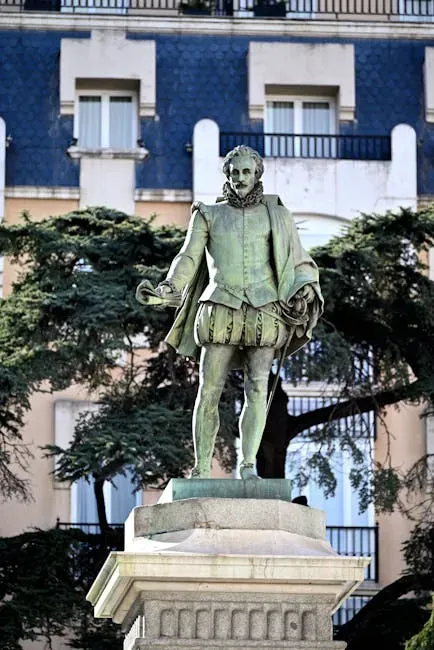
Don Quixote is a Spanish novel by Miguel de Cervantes, originally published in two parts in 1605 and 1615. It is considered a founding work of Western literature and the first modern novel. Think about that for a moment. Everything we recognize as a novel today – the complex inner life of characters, the satire of social norms, the blending of comedy and tragedy – traces back to this one book. It’s like the Big Bang of fiction.
Cervantes’ satirical observation of the human condition is often classed as Europe’s first ‘modern’ novel and has sold over 500 million copies since it was first published in the early seventeenth century. It literally created the modern Spanish language. While Cervantes was writing Don Quixote, the majority of the Iberian Peninsula spoke a dialect that was a mix of Latin, old Spanish, and a North African dialect borrowed heavily from Arabic. Cervantes wrote Don Quixote in a local Spanish dialect, and the success of the book sparked a language revolution across Spain.
In 2025, as we celebrated the 420th anniversary of the publication of the first part, the world revisited a work that never ages. Quite the opposite – Don Quixote has perhaps never been so relevant. In an era marked by fake news, fragmented realities, and crises of meaning, the fundamental question that runs through the book – What is real? – resonates with renewed force. That alone should tell you everything about how extraordinary this novel is.
Mark Twain, Fyodor Dostoyevsky, and Michel Foucault directly referred to Miguel de Cervantes’ Don Quixote in their various works. Milan Kundera’s The Art of the Novel cites Don Quixote as the first and best novel ever written, and Kundera admits all of his works are a homage to Cervantes. That’s the kind of legacy most writers can only dream of.
2. War and Peace by Leo Tolstoy (Russia, 1869)

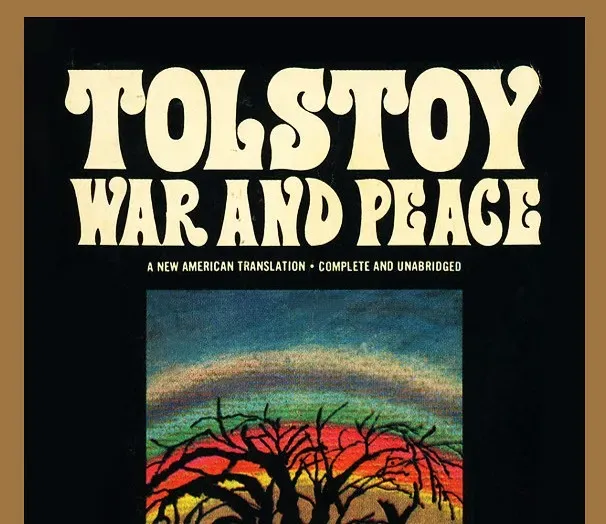
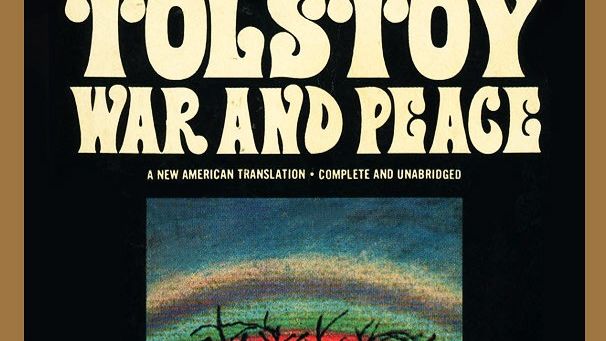
War and Peace is a historical novel by Russian author Leo Tolstoy, originally published between 1865 and 1869. This panoramic study of early 19th-century Russian society, noted for its mastery of realistic detail and variety of psychological analysis, is generally regarded as a masterwork of Russian literature and one of the world’s greatest novels. At more than one thousand pages and one million words, it is also one of the world’s longest novels.
Tolstoy was instrumental in bringing a new kind of consciousness to the novel. His narrative structure is noted not only for its god’s-eye point of view over and within events, but also in the way it swiftly and seamlessly portrayed an individual character’s viewpoint. His use of visual detail is often comparable to cinema, using literary techniques that resemble panning, wide shots, and close-ups. That’s a remarkable description for a novel written more than 150 years before the invention of the modern film camera.
Virginia Woolf called Tolstoy “the greatest of all novelists,” and Gary Saul Morson referred to War and Peace as the greatest of all novels. Tolstoy received nominations for the Nobel Prize in Literature every year from 1902 to 1906 and for the Nobel Peace Prize in 1901, 1902, and 1909. Tolstoy never being awarded a Nobel Prize remains a major Nobel Prize controversy.
The epic novel War and Peace by Tolstoy has profoundly influenced German realistic literature, yet the extent and nuances of this impact remain underexplored. Research addressing this knowledge gap by analyzing German literary works from the late 19th to early 20th centuries has focused on how Tolstoy’s philosophical and narrative techniques were adopted and adapted by German authors. Findings reveal that German writers integrated Tolstoy’s realist approaches, particularly his depiction of war and societal dynamics, into their works.
3. Les Misérables by Victor Hugo (France, 1862)

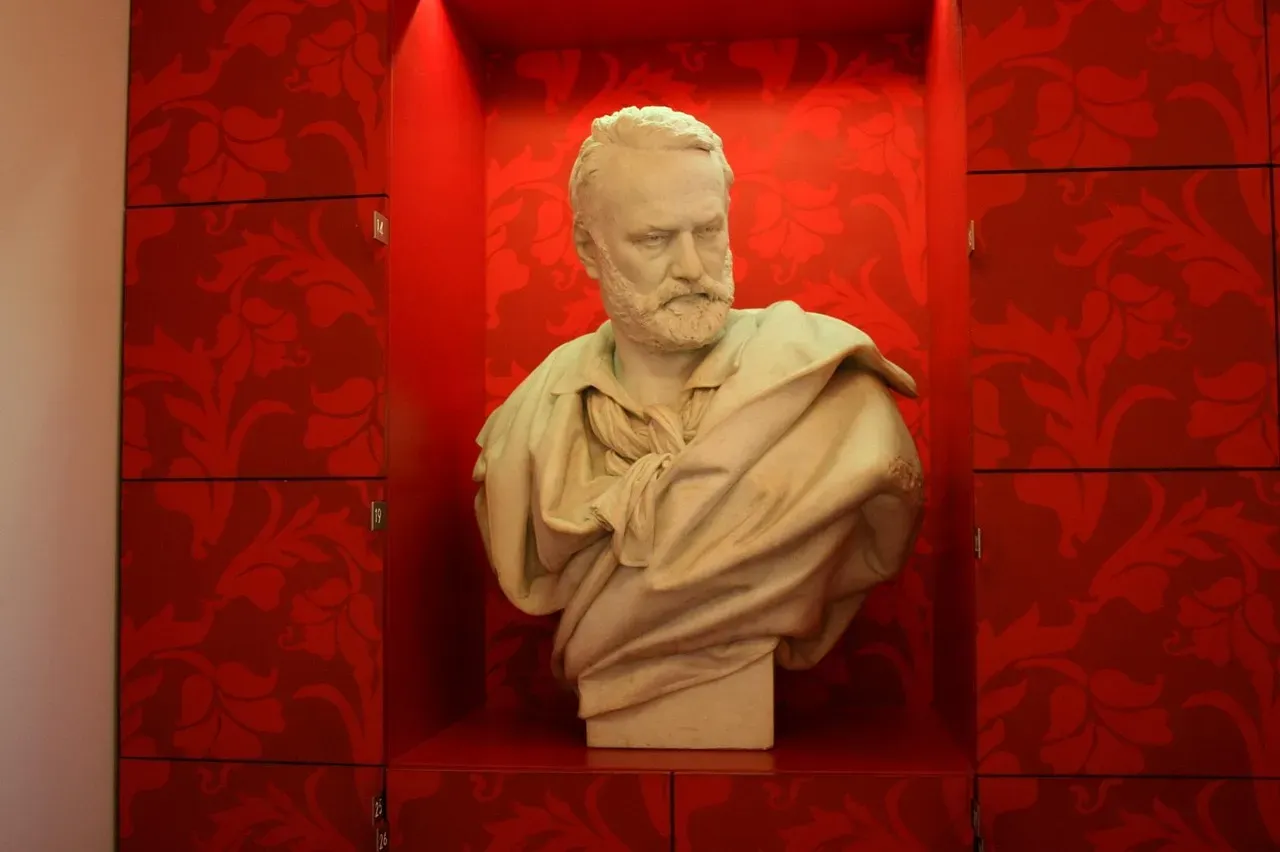
Les Misérables is a French epic historical novel by Victor Hugo, first published on 31 March 1862, and is considered one of the greatest novels of the 19th century. Hugo began planning a major novel about social misery and injustice as early as the 1830s, but a full 17 years were needed for Les Misérables to be realized and finally published in 1862. That kind of sustained dedication to a single vision is almost unheard of today.
Political concerns dominate much of Hugo’s writing, and he used his work to champion causes such as universal suffrage and free education. Hugo believed that the modern writer had a mission to defend the less fortunate members of society. The themes of Les Misérables are concerned with social issues in 19th-century urban France. The novel delivers critiques of wealth distribution, the justice system, industrialism, and republicanism.
Hugo’s significance as a writer is incontestable. As the poet and critic Mallarmé argued, Hugo “divided all French literature into two epochs – before and after Hugo.” Hugo had a lasting impact on a wide range of writers, from his French contemporaries Zola and Flaubert to Dostoevsky and Camus.
Les Misérables was adapted into a musical in 1980 by Alain Boublil and Claude-Michel Schönberg, and it won best musical at the 1987 Tony Awards. Today, the novel remains his best-known work. It is popular worldwide and has been adapted for cinema, television, and stage shows. Let’s be real – a novel that still sells out theaters more than 160 years after publication has done something profoundly right.
4. The Brothers Karamazov by Fyodor Dostoevsky (Russia, 1880)

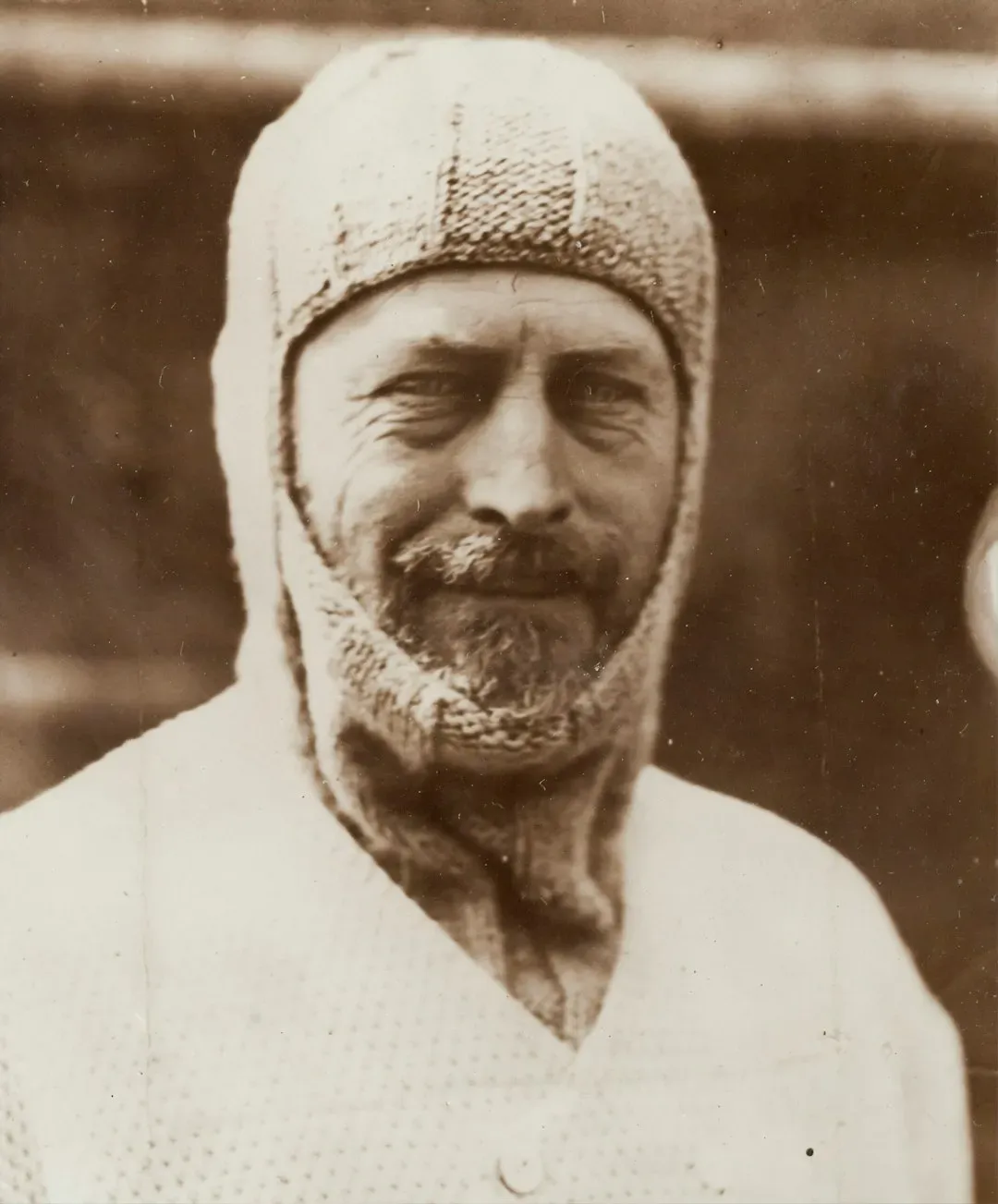
The Brothers Karamazov isn’t just a novel – it’s a philosophical earthquake. Dostoevsky’s last work unspools a complex family saga, but beneath the surface it wrestles with the meaning of faith, morality, and free will. The three Karamazov brothers each represent different aspects of the human soul: the sensualist, the rationalist, and the spiritual seeker.
The novel was published in installments in Mikhail Katkov’s literary and political journal The Russian Messenger from 1879 to 1880. In his final novel, Dostoevsky charts a path for modern society out of its ideological dead ends. It argues against what the author sees as the plagues of his century: atheism, materialism, utilitarian socialist morality, and the breakdown of the family. Those themes, it should be noted, feel even more pressing in 2026 than they did in 1880.
It has become commonplace to compare Ivan Karamazov to Goethe’s Faust and Shakespeare’s Hamlet. In this final work, Dostoevsky charts a path for modern society out of its ideological dead ends, arguing against the plagues of his century. The sheer range of intellectual ambition in this single novel is staggering. It is not a light read. It is, however, a transformative one.
The novel was originally conceived as the first part of ‘The Life of a Great Sinner,’ exploring the journey of a man who attains righteousness through temptation. That broader project was never completed because Dostoevsky died shortly after finishing the Karamazov manuscript. What he left behind, though, proved more than enough to change world literature forever.
5. In Search of Lost Time by Marcel Proust (France, 1913–1927)


Marcel Proust’s In Search of Lost Time is less a novel and more a sprawling, introspective universe. Spanning seven volumes, it’s a meditation on memory, time, and the intricacies of human consciousness. Proust’s sentences are famously long – sometimes running to pages – but every word is meticulously chosen to capture the fleeting sensations and recollections that make up a life.
Research from the Proust Society highlights that this work is regarded as one of the greatest literary achievements of the twentieth century, cited for its profound psychological insight and unmatched depth. Readers are drawn into the narrator’s world, where a taste of madeleine cake can unlock years of buried memories and emotions. The book’s influence on modern literature is vast, inspiring writers to explore inner life with new honesty and precision.
Here’s the thing about Proust – reading him is like walking very slowly through a gallery where every painting takes three hours to fully appreciate. You either fall completely in love with it, or you close the book after twenty pages. I think it’s worth the effort. Western literature, also known as European literature, is the literature written in the context of Western culture in the languages of Europe, and is shaped by the periods in which they were conceived. Proust’s work sits at the very summit of that tradition, a monument to what the interior life of a single human being can yield when examined with total devotion.
6. The Magic Mountain by Thomas Mann (Germany, 1924)


The Magic Mountain is often cited as a cornerstone of twentieth-century literature, a novel that explores time, illness, and the meaning of existence. Set in a sanatorium in the Swiss Alps before World War I, the book follows Hans Castorp as he’s drawn into philosophical debates and life’s deepest questions. Mann’s layered narrative and reflective tone turn what could be a simple story into an exploration of the spirit of an entire era.
According to literary studies from the Thomas Mann Society, the novel’s themes of intellectual and spiritual crisis have made it essential reading for understanding Europe’s turbulent twentieth-century history. Its rich symbolism and long, contemplative passages invite readers to slow down and consider their own place in the world.
Think of The Magic Mountain like a slow-cooked meal – it takes time, patience, and a certain kind of deliberate attention. Mann uses a tuberculosis sanatorium as a metaphor for a Europe on the verge of catastrophic self-destruction. The characters debate politics, philosophy, and morality in a hermetically sealed mountain world, blissfully unaware of the war about to tear everything apart. It’s eerie and beautiful at the same time. Different literary periods held great influence on the literature of Western and European countries, with movements and political changes impacting the prose and poetry of the period. Mann captured an entire civilization’s crisis in a single novel.
7. Doctor Zhivago by Boris Pasternak (Russia, 1957)

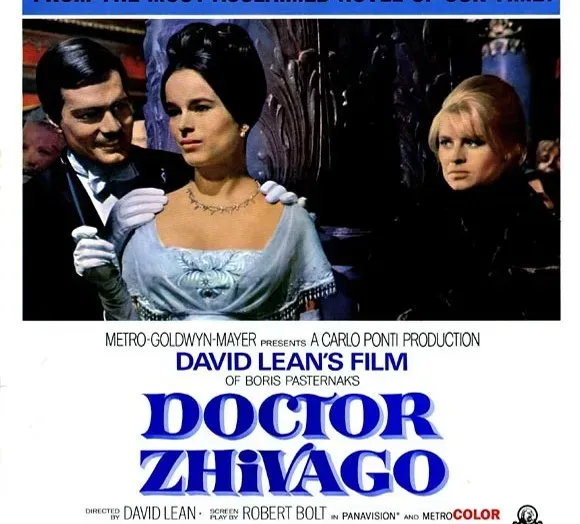
Doctor Zhivago stands as a deeply moving portrait of love and loss during times of political upheaval. Set against the Russian Revolution, Pasternak’s novel follows Yuri Zhivago as he navigates personal and historical chaos. The book’s sweeping narrative and emotional range have earned it a place among the 20th century’s most important works.
According to the Russian Academy of Sciences, Doctor Zhivago’s publication led to Pasternak winning the Nobel Prize for Literature, though he was forced to decline it under pressure from Soviet authorities. That’s one of the most dramatic backstories in literary history. A novel so powerful, so dangerously human, that an entire government apparatus tried to suppress it.
The novel’s focus on individual resilience and the interplay between fate and free will continues to resonate with readers worldwide. It was first published not in Russia but in Italy in 1957 – smuggled out of the Soviet Union by an Italian publisher. The very act of its survival is its own kind of story. Western literature is shaped by the periods in which its works were conceived, with each period containing prominent authors and defining texts. The best of Western literature is considered to be the Western canon. Doctor Zhivago belongs firmly in that canon – not only for its literary beauty, but for what its existence cost its author.
These seven novels represent something larger than any individual list. They prove that European literature, across centuries and languages, has a singular gift: the ability to ask the questions that no government, no ideology, and no amount of time can make irrelevant. What does it mean to live? To love? To fight for what’s right in a world that doesn’t always reward it? The answers, it turns out, are still being written. What would you have guessed was the most influential of them all?


