There’s something quietly remarkable about a song that refuses to belong to just one voice. Most recordings come out, get their moment, and fade. A rare few get handed down, picked up, turned inside out, and made new again by dozens, hundreds, or even tens of thousands of other artists. These are the songs that hit some unreachable nerve in the human experience, something so precise and so universal that musicians across every genre and generation feel compelled to try it for themselves.
What makes a song endlessly coverable isn’t always obvious from the original recording. Sometimes it’s a melody so clean it bends to any style. Sometimes it’s lyrics that hold an open-ended emotional charge, inviting each new singer to fill them differently. The songs below are the most covered in recorded music history, and in nearly every case, at least one cover came along that gave the original a serious run for its money.
“Yesterday” – The Beatles (1965): Covered More Than 3,000 Times

According to Guinness World Records, “Yesterday” has the most cover versions of any song ever written, with more than 1,600 recorded versions tracked at the time of that record being set. More recent counts are considerably higher. According to the Guinness Book of World Records, the song accumulated over a hundred covers in 1966 alone and over three thousand covers total.
Paul McCartney allegedly composed the entire melody in a dream one night while staying at the Wimpole Street home of his then-girlfriend Jane Asher and her family. Upon waking, he rushed to the piano to hum some early lyrics to keep the memory alive. Convinced that he must have subconsciously plagiarized someone else’s work, McCartney was hesitant to record the song. As for the cover that arguably surpasses the original, Paul McCartney himself said “I think I like Marvin’s best,” referring to Marvin Gaye’s deeply soulful rendition, which recast the song entirely around emotional texture rather than melody.
“Summertime” – George Gershwin (1935): The Undisputed Numbers Champion
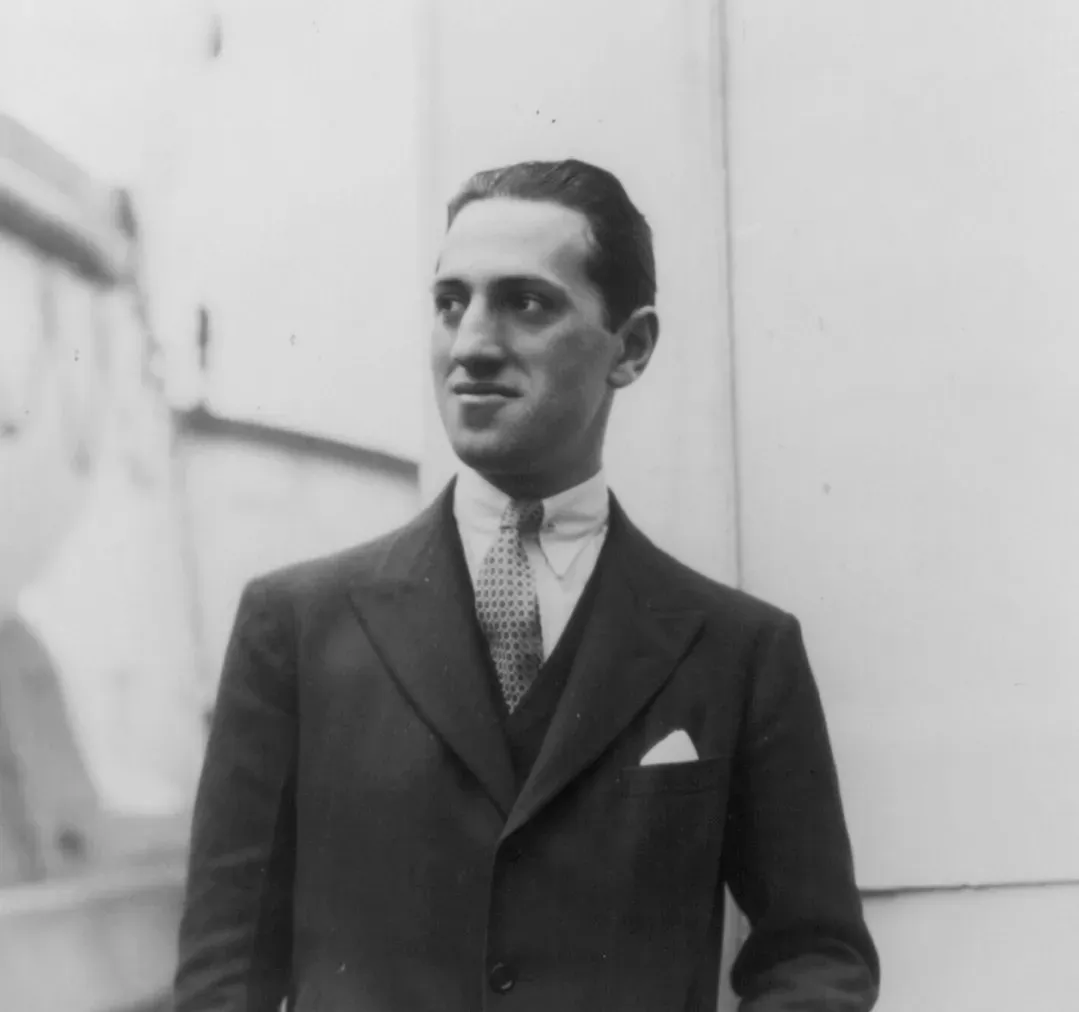
A group of fans called “The Summertime Connection” claim that “Summertime” is the most recorded song ever, with a staggering 67,591 recorded versions in existence as of June 2017. It is an aria composed in 1934 by George Gershwin for the 1935 opera Porgy and Bess, with lyrics by DuBose Heyward, the author of the novel on which the opera was based.
Thousands of artists have recorded “Summertime” over the years, including Billie Holiday, Ella Fitzgerald and Louis Armstrong, Miles Davis, Sam Cooke, Sonny and Cher, Paul McCartney, Annie Lennox, and Willie Nelson. The song weaves simple yet potent lyrics with a slow, steady harmonic progression, allowing artists to freely improvise the musical masterpiece and make it distinctly their own. Covers range from chilling and ominous to sultry and even joyous, always maintaining the song’s soulful cool. The 1957 Ella Fitzgerald and Louis Armstrong recording from their Porgy and Bess album remains the version most widely regarded as the definitive interpretation.
“Amazing Grace” – John Newton (1779): On More Than 11,000 Albums

Since its creation in 1779 in England, “Amazing Grace” has grown in popularity to become one of the best-known musical works in the world. The Library of Congress’s Chasanoff/Elozua Amazing Grace Collection alone comprises 3,049 published recordings of the hymn by different individual musicians or musical ensembles. Guinness World Records notes that “Amazing Grace” has been recorded thousands of times and has appeared on at least 11,000 albums.
Newton worked as a slave trader early in his life, yet he later became rector of a parish in Olney, England, and fought for the abolition of slavery. Although Newton first wrote the words to “Amazing Grace” in 1772, it was not until 60 years later that the text was wed to the tune to which it is sung today. Some renditions considered superior include those by the Harlem Gospel Choir, Elvis Presley, Aretha Franklin, Ray Charles, and Leann Rhimes, while less famous covers were recorded by the Dropkick Murphys, U2, and Willie Nelson. Aretha Franklin’s 1972 live gospel recording, captured on her landmark “Amazing Grace” album, is the performance most historians and critics point to as the song’s emotional peak.
Partner offer
“Hallelujah” – Leonard Cohen (1984): The Modern-Era Cover Phenomenon
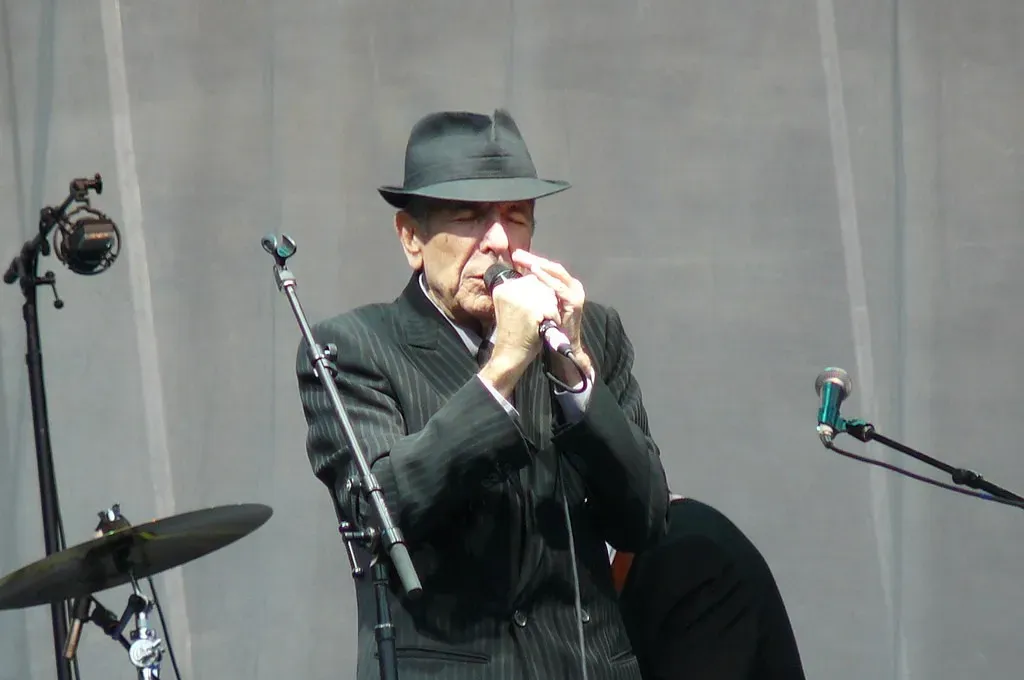
Few songs have left as deep a mark on music history as “Hallelujah,” written by Leonard Cohen in 1984 and reimagined through more than 700 covers by artists worldwide. Unlike some other songs that became anthems, “Hallelujah” initially was on an album that was rejected by Columbia Records, was largely ignored after an independent label released it, was not widely covered until John Cale’s 1991 version, and did not reach the Billboard charts until Cohen’s death in 2016.
Cohen is reputed to have written between 80 and 180 draft verses for “Hallelujah,” having many versions of the same line. He claimed 150 draft verses, substantiated by his notebooks containing many revisions and additions. Jeff Buckley, inspired by Cale’s earlier cover, recorded one of the most acclaimed versions of “Hallelujah” for his only complete album, Grace, in 1994. Buckley’s rendition of “Hallelujah” was eventually entered into the Library of Congress National Recording Registry, cementing its status as the version that redefined the song entirely.
“Hurt” – Nine Inch Nails (1994): The Cover That Became the Definitive Version

“Hurt” is a song by American industrial rock band Nine Inch Nails from its 1994 studio album The Downward Spiral, written by Trent Reznor. In 2002, American country singer Johnny Cash covered “Hurt” to commercial and critical acclaim. The related music video is considered one of the greatest of all time by publications such as NME. Reznor praised Cash’s interpretation for its “sincerity and meaning,” going so far as to say “that song isn’t mine anymore.”
Cash’s accompanying video, featuring images from his life and directed by Mark Romanek, was named the best video of the year by the Grammy Awards and CMA Awards, and the best video of all time by NME in July 2011. In a 2014 survey conducted by the BBC, the UK public voted the Johnny Cash version the second greatest cover version of any song of all time. When the video was filmed in February 2003, Cash was 71 years old and had serious health problems. His frailty is clearly evident in the video. He died seven months later. The weight of that context transformed a song about self-destruction into something closer to a final testament.
“Stand By Me” – Ben E. King (1961): A Soul Standard That Keeps Traveling

Ben E. King’s 1961 soulful classic “Stand By Me” was dedicated to the unconditional love built between the singer and his audience. Not only has the single been covered hundreds of times, but it also inspired a film, or at least its title. The 1986 cult classic “Stand By Me” was named after the song; based on the Stephen King novella “The Body,” the film was originally going to share the novella’s name until director Rob Reiner heard Kiefer Sutherland teaching River Phoenix to play the song on guitar.
While it has been covered more than 170 times officially, there are many more casual covers out there, including a 2019 version from “The Voice” coaches John Legend and Blake Shelton. The song’s simple chord progression and deep groove make it almost irresistibly easy to approach from any genre, from reggae to orchestral pop. John Lennon recorded a version in 1975 that reached the top five in both the UK and the US, bringing a fresh generation to a song that already felt timeless.
“With a Little Help From My Friends” – The Beatles (1967): Joe Cocker’s Defining Moment
Joe Cocker’s cover of “With a Little Help From My Friends” at Woodstock in 1969 sealed Cocker’s place as a musical legend. Though Cocker covered it best, the song was initially branded “Badfinger Boogie” and written solely for Ringo Starr, and it has dozens of different versions. Count Basie, The Beach Boys, Ike and Tina Turner, Toto, Peter Frampton and the Bee Gees, Cheap Trick, Santana, and Puddle of Mudd each put their touch on the tune.
Cocker’s performance at Woodstock in August 1969 is one of the most electrifying live vocal moments ever captured on film. He took a cheerful Ringo Starr vehicle and tore it apart into something raw, desperate, and gospel-drenched, ending the song in a full vocal breakdown that the audience greeted with something close to disbelief. The Beatles’ version, charming as it is, has largely become the preamble to Cocker’s. The Beatles and their members now account for a remarkable portion of the top most covered pop songs of all time, and this track is one of the clearest examples of why their catalog keeps attracting new interpreters decade after decade.
Partner offer
Planning a trip to Vegas?
Compare hotel rates and show tickets on VEGAS.com.