There’s a certain irony baked into music history. The records that end up reshaping entire genres, inspiring generations of artists, and landing on every “greatest albums ever” list are often the same ones that gathered dust in record store bins when they first appeared. Listeners at the time either didn’t know what to make of them, or simply never got the chance to find out.
Commercial failure and cultural immortality have always made for strange bedfellows in rock. The albums on this list didn’t sell. Some barely charted. A few were laughed at or ignored outright. Yet each one quietly rewired the DNA of popular music in ways that are still felt today.
The Velvet Underground & Nico (1967) – The Velvet Underground
No album fits this list more perfectly. Brian Eno stated in 1982 that while the album only sold approximately 30,000 copies in its first five years, “everyone who bought one of those 30,000 copies started a band.” The exact sales figure has been disputed over the decades, but the sentiment is accurate enough. At the time, the album barely registered: sales were poor, reviews were indifferent or hostile, and radio play was virtually non-existent.
The Velvet Underground & Nico eked into the Billboard 200 at Number 199 in May 1967, peaking at Number 195. Despite that dismal commercial performance, it has been characterized as the original art-rock record, influencing many subgenres of rock and alternative music, including punk, garage rock, krautrock, post-punk, post-rock, noise rock, shoegaze, gothic rock, art punk, and indie rock. In 2006, it was inducted into the National Recording Registry by the Library of Congress for being “culturally, historically, or aesthetically significant.”
The Stooges (1969) – The Stooges
Released on August 5, 1969, The Stooges peaked at No. 106 on the Billboard charts and initially puzzled critics, many of whom dismissed it as amateurish. The timing couldn’t have been worse for mainstream reception. The album arrived the same week as Woodstock, its brutal minimalism wildly out of sync with the peace-and-love spirit of the moment. The brutal and uncompromising sound of the band’s debut album was so out of step with prevailing styles of the era that it might have even seemed a joke to some listeners.
The Stooges’ brand of rabid proto-punk laid the foundation for countless punk rock bands over the decades. The Sex Pistols recorded the first high-profile Stooges cover, “No Fun,” in 1976. According to Dee Dee Ramone, the members of the Ramones felt alienated from their community growing up and started hanging out with each other due to a common love of Stooges, a band everyone else they knew greatly disliked. The Stooges is now regarded as a masterpiece, but it was widely ignored in 1969, selling only 32,000 copies.
#1 Record (1972) – Big Star
The title is almost painfully ironic. Many critics praised the album’s vocal harmonies and songcraft, but #1 Record suffered from poor distribution and sold fewer than 10,000 copies upon its initial release. Big Star’s debut album was met with enthusiastic reviews, but ineffective marketing by Stax Records and limited distribution stunted its commercial success. The problem was structural as much as cultural: a small Memphis label trying to push jangly pop through a soul distribution network.
#1 Record stood out from the rest of the US rock scene in its uniqueness and was probably ahead of its time with its power pop sound, a style that became more popular in the late-70s and 80s. Seemingly America in the early-70s was still hung over from flower power and just weren’t ready for this more melodic, poppy rock sound. During the group’s hiatus in the 1980s, the Big Star discography drew renewed attention when R.E.M. and the Replacements, as well as other popular bands, cited the group as an influence. It is now widely regarded as a seminal work in pop rock and power pop. In 2020 it was ranked number 474 on Rolling Stone magazine’s list of the 500 greatest albums of all time.
Pet Sounds (1966) – The Beach Boys
It seems almost impossible to believe now, but Pet Sounds was a commercial disappointment when it landed in 1966. Beach Boys fans expecting to hear more carefree celebrations of cars and girls and surfing wouldn’t have been sure what to make of the intricate, impressionistic orchestral-pop arrangements that Brian Wilson laid on them. Though the trippy “Sloop John B” and the dreamy “Wouldn’t It Be Nice” were both Top 10 hits, Pet Sounds was the group’s lowest charting LP of original material since their 1962 debut, Surfin’ Safari.
A few of the songs did well, but the album itself didn’t perform too well commercially. A lot of The Beach Boys’ original fans were confused by the album and didn’t know what to do with it, hence the poor sales. The record found its most devoted early audience not in America but in Britain, where Paul McCartney famously championed it as one of the greatest records ever made. That endorsement, and decades of hindsight, have since confirmed what Wilson heard in his head all along: it was years ahead of its time.
Forever Changes (1967) – Love

Arthur Lee and his band Love were the darlings of the Sunset Strip scene, yet the friction between its gloriously ornate textures and frontman Arthur Lee’s somewhat paranoid lyrics, inspired by the seedier side of the Summer of Love as well as internal tensions within the band, made it a tough sell, despite a few relatively positive critical notices and the band’s label, Elektra, taking out a Sunset Strip billboard. It barely registered commercially in its own time, overshadowed by the louder, more psychedelic records dominating 1967.
Later on, Forever Changes would be heralded both for its prescience and for its intricacy. It is now routinely placed among the greatest albums of the 1960s, celebrated for its string arrangements, its dark lyrical undertow, and its refusal to fit neatly into any single genre. The album’s strange, autumnal beauty reads like a premonition of the counterculture’s collapse, a quality that was hard to appreciate at the time but impossible to ignore in retrospect.
Sweetheart of the Rodeo (1968) – The Byrds
Expectations ran high for the Byrds release following the Top 10 status of The Byrds’ Greatest Hits in 1967. Yet August 1968’s ambitious Sweetheart of the Rodeo stalled at 77 on the Billboard albums chart. The band had made a hard left turn into country music at a time when rock audiences had little patience for that kind of genre pivot. Radio didn’t know where to put it, and the Byrds’ existing fanbase was baffled.
Sweetheart of the Rodeo marks the first time an established rock band played authentic country music, and subsequently became the group’s most influential release. It is widely credited with planting the seeds of country rock and Americana, directly influencing artists from Emmylou Harris to Wilco. The album essentially created an entire subgenre that would take another decade to reach mainstream audiences, which is either visionary or commercially reckless, depending on how you look at it.
Song Cycle (1968) – Van Dyke Parks
Warner Bros. signed Van Dyke Parks expecting a major record. What they got was something nobody in 1968 was prepared for. A dizzying tour through pop music’s disparate history via show tunes, bluegrass, and classical orchestration, there was nothing on “Song Cycle” that was even close to being a radio single. Thus, Warner Bros. infamously took out a full-page ad reading “How We Lost $35,509.50 on the Album of the Year (Damnit).” The label’s self-deprecating marketing campaign was clever, but it didn’t move units.
The reverse psychology didn’t move units, leaving Song Cycle to wallow in bargain bins and recoup none of its expenses. Over time, amateur pop scholars have discovered Parks’ indescribable debut all on their own, and it’s now rightly considered a misunderstood masterpiece. The album not only cost $35,000 to make, compared to the then-average cost of $10,000, but it was marred by poor sales. Today it’s studied in music schools and cited by arrangers and producers as one of the most ambitious pop records ever conceived.
Nirvana’s Bleach (1989) – Nirvana
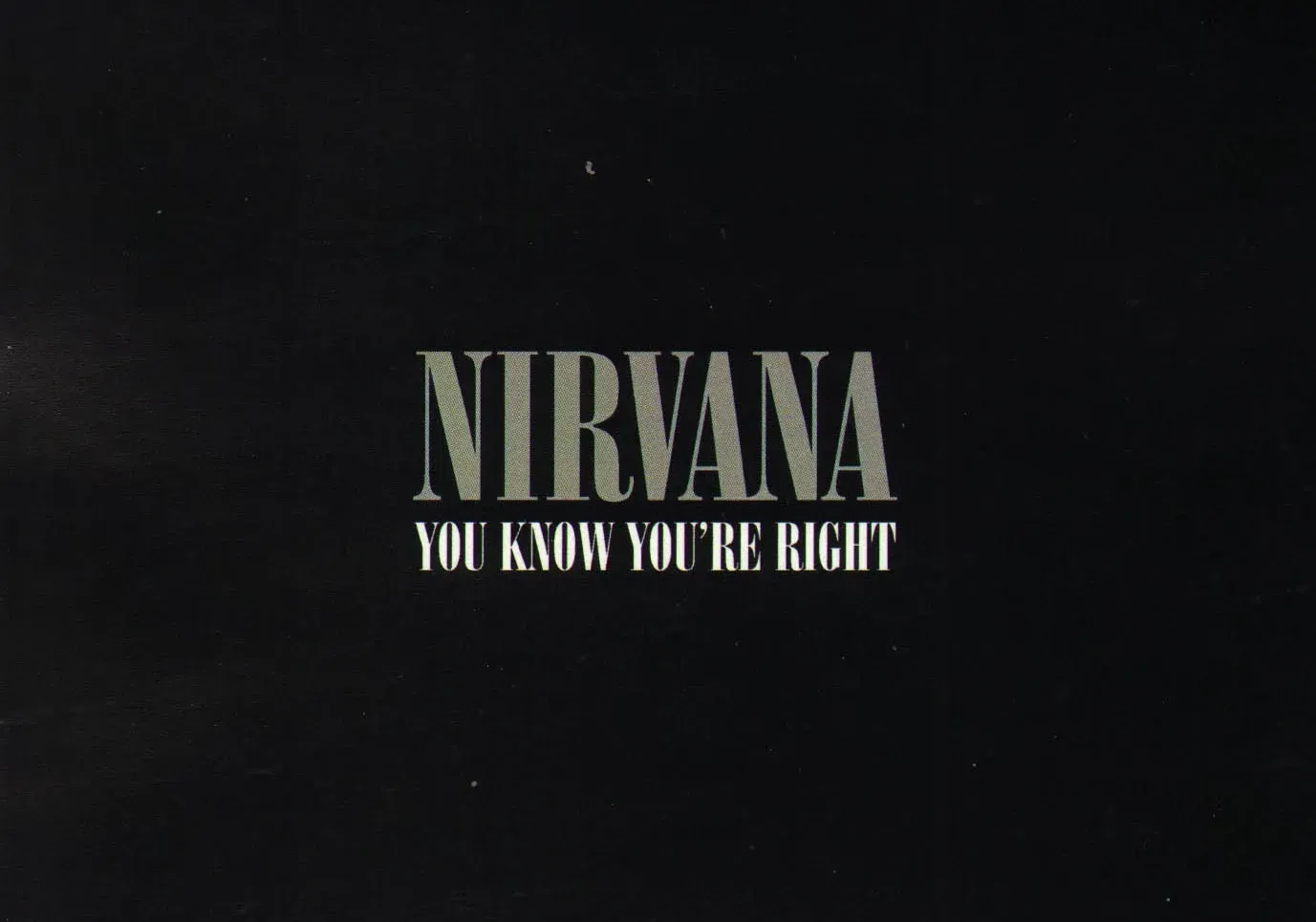
Before Nevermind turned the music world upside down, there was Bleach. At times, it’s hard to imagine that Nirvana existed before Nevermind. Their inaugural album didn’t chart during its initial release and sold only around 40,000 albums in the first two years. Recorded for roughly $600 and released on the small Seattle label Sub Pop, Bleach circulated through college radio and underground circles with essentially no mainstream traction.
The flood of eager fans that followed Nevermind pushed Bleach up to number 89, but that was as high as it ever got. Still, its raw, sludgy heaviness influenced the entire Seattle sound that followed, and many fans and critics consider it the more honest document of who Nirvana actually were before commercial pressure reshaped them. Nirvana frontman Kurt Cobain consistently listed the Stooges’ Raw Power as his favorite album of all time, and you can hear that debt clearly in Bleach’s unpolished, confrontational energy. It remains a record that sounds truer with every passing year.