Most people picture scientific discovery as a social affair: labs buzzing with researchers, peer review panels, heated conference debates. The reality is often far stranger and quieter. Some of history’s most world-altering breakthroughs emerged not from crowded institutions but from solitary minds left alone with their thoughts, cut off from the usual noise of academic life.
Isolation can strip away distraction, social pressure, and the temptation to conform. For a handful of thinkers throughout history, that enforced solitude became the precise condition their genius required. What follows is a gallery of nine discoveries that changed the course of human knowledge, each born in some form of extraordinary remove from the world.
Isaac Newton’s Annus Mirabilis: Gravity, Calculus, and Light
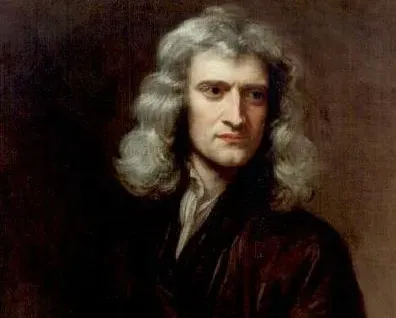
In 1665, social distancing orders emptied campuses throughout England as the bubonic plague raged, killing roughly one hundred thousand people in just eighteen months. A twenty-four-year-old student from Trinity College, Cambridge was among those forced to leave campus and return indefinitely to his childhood home. His name was Isaac Newton, and his time at home during the epidemic would be called his “year of wonders.”
At Woolsthorpe, Newton formulated three fundamental cornerstones of science and mathematics: the foundation of modern calculus, then known as his theory of fluxions; experiments with prisms and light that led to his later book Opticks; and his thoughts on gravitational attraction, which eventually produced his masterwork, the Principia Mathematica. The plague came to London, Cambridge closed, and Newton began connecting the force pulling an apple to the ground with the force keeping the moon in orbit. It would be a couple more decades until he fully fleshed out his thinking, but what resulted was a true masterpiece laying out his laws of motion and theory of gravity.
Alfred Russel Wallace and Natural Selection in the Malay Archipelago
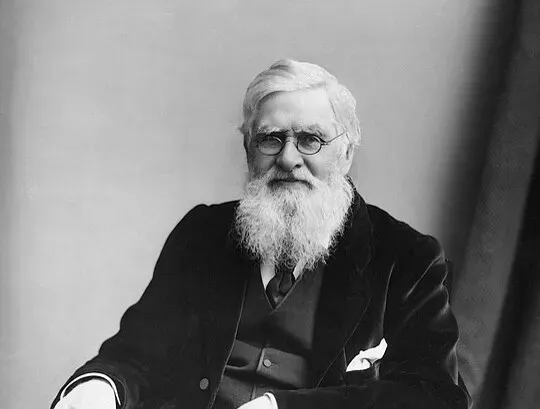
Alfred Russel Wallace was an English naturalist, explorer, geographer, and biologist who independently conceived the theory of evolution through natural selection, with his 1858 paper on the subject published that year alongside extracts from Charles Darwin’s own writings. Wallace paid special attention to isolated populations separated by geography and did most of his research on the Malay Archipelago, where, as something of an outsider observer, he had the chance to study isolated populations on islands and theorize about his conclusions.
Wallace did extensive fieldwork starting in the Amazon River basin, then moved to the Malay Archipelago, where he identified the faunal divide now termed the Wallace Line, separating the Indonesian archipelago into two distinct parts: a western portion of largely Asian fauna and an eastern portion reflecting Australasian wildlife. This work on how geography drives species divergence effectively made biogeography into a science. His theory arrived at Darwin’s door so fully formed that Darwin immediately recognized it as a near-mirror of his own unpublished manuscript.
Darwin’s Galápagos Observations and the Seeds of Evolution

Although Darwin was only in the Galápagos for five weeks in 1835, it was the wildlife he saw there that inspired him to develop his theory of evolution. In the Galápagos he found a remarkable population of plants, birds, and reptiles that had developed in isolation from the mainland, often differing on almost identical adjacent islands, whose characteristics he could only explain by a gradual transformation of the various species.
Darwin spent years amassing evidence of his findings and kept them secret from the public for more than twenty years, partly because the idea of evolution was heretical and challenged the concept of creationism. Yet without his trip to the Galápagos Islands, Darwin might never have pursued this line of questioning in the first place. In the mid-1800s, Darwin and Wallace independently conceived of a natural, even observable, way for life to change: a process Darwin called natural selection.
Einstein’s Special Relativity: The Patent Office and Pure Thought

Einstein developed the special theory of relativity in 1905 while working as a patent clerk in Switzerland. It is conceivable that his labors at the patent office had a bearing on his development of special relativity: he arrived at his revolutionary ideas about space, time, and light through thought experiments about the transmission of signals and the synchronization of clocks, matters that also figured in some of the inventions submitted to him for assessment.
In 1905, sometimes described as his own annus mirabilis or miracle year, Einstein published four groundbreaking papers. In them, he outlined a theory of the photoelectric effect, explained Brownian motion, introduced his special theory of relativity, and demonstrated that mass and energy are equivalent to each other. Einstein’s discovery of special relativity came from ten years of meditation on how to reconcile the relativity of motion with James Clerk Maxwell’s theory of electromagnetism, which describes the propagation of light. Few offices in history have been so quietly revolutionary.
Gregor Mendel’s Monastery Garden and the Laws of Heredity

Gregor Mendel was an Augustinian friar who conducted his famous pea plant experiments largely in the garden of his monastery in Brno, working in remarkable intellectual isolation from the mainstream scientific community of his day. Between 1856 and 1863, he cultivated and tested nearly thirty thousand pea plants, tracking the inheritance of seven distinct traits across multiple generations. His findings established the foundational principles of heredity that we now call Mendelian genetics.
A year after he published his work, Mendel became Abbot of his monastery and spent his remaining years managing the monastery and its monks. His landmark paper, published in 1866, went almost entirely unread for decades. It was only rediscovered around 1900, sixteen years after his death, when three different botanists working independently stumbled upon the same conclusions and then found that Mendel had already been there. The garden in Brno had contained, in its quiet rows of plants, the very architecture of biological inheritance.
Alexander Fleming’s Contaminated Petri Dish

On returning to his lab after a month-long holiday in 1928, Scottish doctor Alexander Fleming discovered that a culture of the bacteria Staphylococcus aureus, which he had been experimenting with, had been destroyed by a mold growing in his petri dishes. Fleming had discovered the first antibiotic, which he called penicillin. The drug has saved countless lives, and Alexander Fleming was awarded the Nobel Prize for medicine in 1945.
The discovery happened precisely because the lab was empty. Had Fleming been surrounded by colleagues running active experiments, the contaminated dish would likely have been cleaned and discarded before he returned. After isolating the mold and conducting some tests, Fleming realized that it inhibited bacterial growth, and by 1942 penicillin was being mass-produced as medicine. What began as a lone scientist coming back from holiday to a neglected bench became arguably the single most life-saving pharmaceutical discovery of the twentieth century.
Nikola Tesla’s Solitary Visions and the Alternating Current Motor
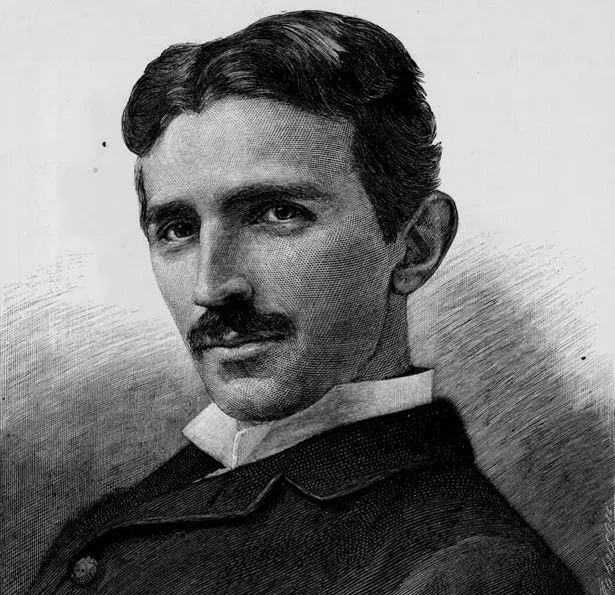
Nikola Tesla conceived his rotating magnetic field principle and the alternating current induction motor in a burst of solitary insight in 1882, reportedly while walking through a Budapest park and reciting poetry. He visualized the entire motor design in his mind before a single part was built, later claiming the concept arrived fully formed. The AC motor he developed from this vision became the foundation of the modern electrical grid that now powers virtually every building on Earth.
Tesla’s working method was notoriously solitary. He frequently conducted extended mental experiments entirely without paper or models, trusting his visual imagination over conventional drafting processes. The electric grid that supplies power to households and industries and the modern electric generators with high output voltages emerged from the kind of foundational electrical work that Tesla’s discoveries made possible. His isolation was not circumstantial like Newton’s plague quarantine; it was deeply temperamental, and it shaped every significant breakthrough he produced.
Cavendish’s Secret Laboratory and the Discovery of Hydrogen
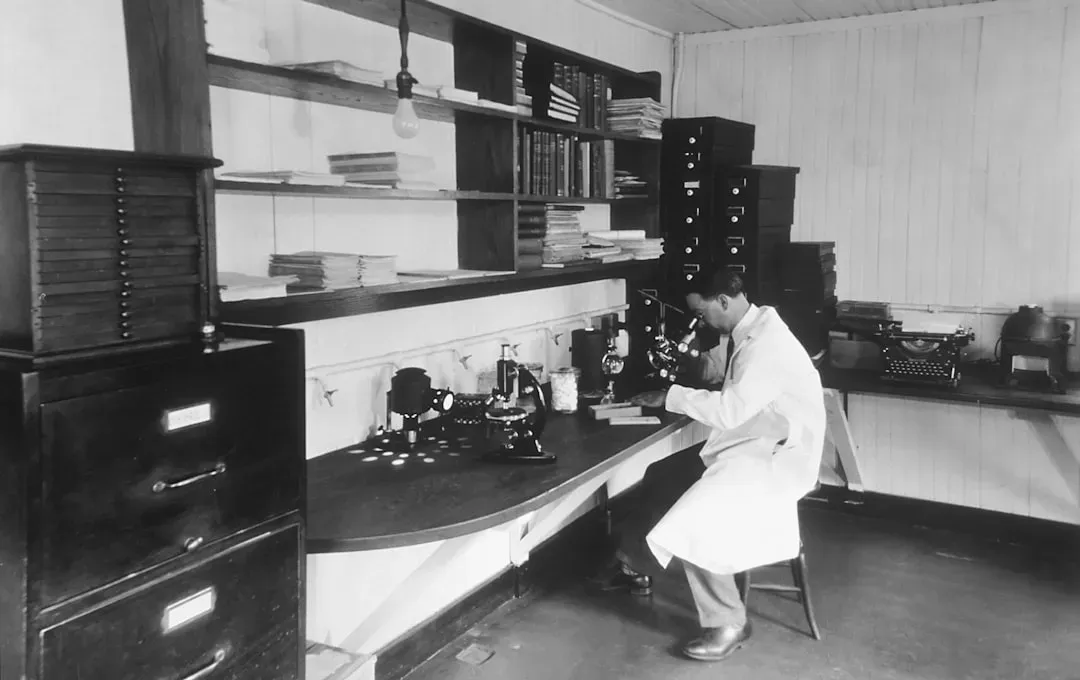
Henry Cavendish was one of the most reclusive scientists in the history of natural philosophy. He lived virtually as a hermit in eighteenth-century London, rarely speaking to anyone and communicating even with his household staff by written notes. In this state of near-total social isolation, he conducted decades of precise experiments in his private home laboratory. In 1766, he identified hydrogen as a distinct substance, which he called “inflammable air,” becoming the first person to characterize it as an element.
Cavendish also calculated the density of the Earth with extraordinary accuracy in 1798 using his famous torsion balance experiment, a result that remained the most precise measurement of its kind for over a century. His manuscripts, published only after his death, revealed that he had independently discovered Ohm’s Law, Coulomb’s Law, and other fundamental electrical principles decades before the scientists for whom those laws are named. Most of what he discovered was simply never shared. His isolation was so complete that science had to catch up to him posthumously.
Ramanujan’s Self-Taught Mathematical Universe
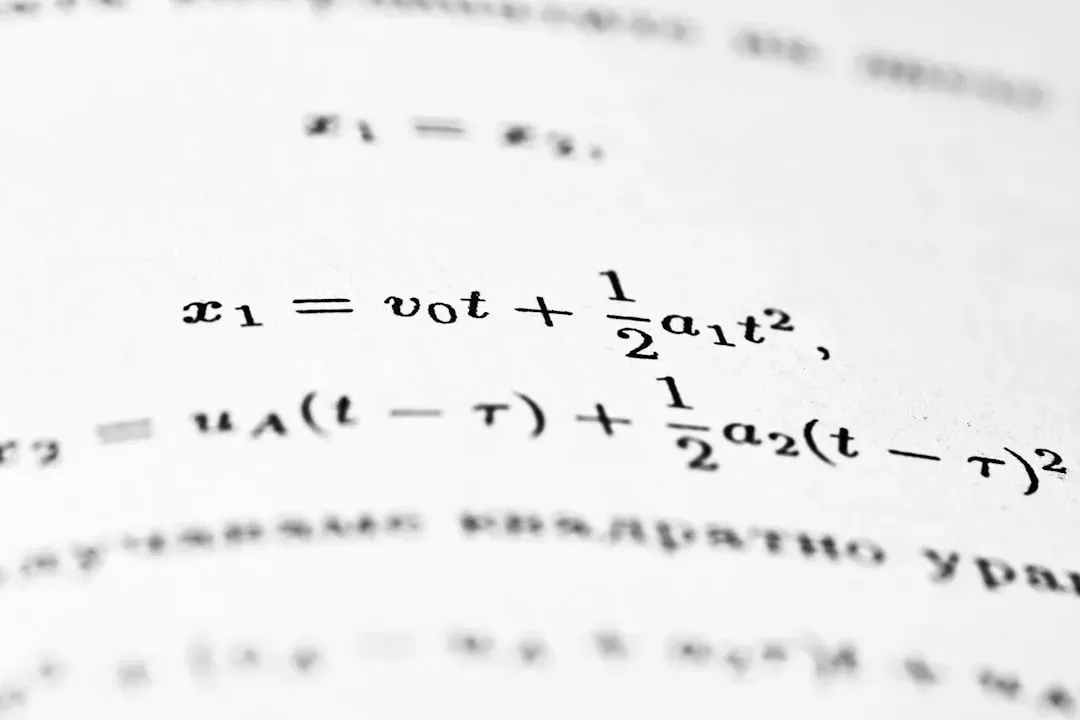
Srinivasa Ramanujan grew up in colonial India with almost no formal mathematical training beyond a borrowed textbook, yet he independently derived thousands of mathematical results that professional mathematicians in Europe had taken generations to develop. Working largely alone in Madras in the early twentieth century, he filled notebooks with formulas on number theory, infinite series, and continued fractions, many of which remain subjects of active research more than a century later.
When he finally wrote to the Cambridge mathematician G. H. Hardy in 1913, Hardy quickly recognized that the pages contained results too sophisticated to be anything but genuine, noting that some of them had defeated the greatest mathematical minds of the previous generation. Science is not merely a collection of facts but a story of human curiosity and perseverance that continues to shape civilization. Ramanujan’s story is perhaps the most extreme version of that truth: a self-isolated mind that reached the frontier of mathematics alone, armed with little more than paper and an almost supernatural intuition for the hidden structure of numbers.