
Let’s be honest. Most people who walk into a casino floor aren’t tourists on a once-a-year Vegas trip. They’re locals. Regulars. People who know which machines sit near the entrance and which ones haven’t paid out since last Tuesday. For those players, the question isn’t just “is this fun?” It’s “where does my money actually have the best chance of coming back to me?”
The answer, it turns out, is more data-driven than most people realize. Payout rates are regulated, published, and tracked. There’s real science here, not just superstition. So if you’ve ever wondered whether the slots near your house are quietly draining your wallet more than the ones across town, you’re in exactly the right place. Let’s dive in.
Understanding RTP: The Number That Actually Matters

Before any casino conversation makes sense, you need to understand Return to Player, or RTP. It’s the percentage of wagered money a slot machine pays back to players over time. Think of it like this: if a machine has a 93% RTP, it returns $93 for every $100 fed into it, on average, over millions of spins.
In regulated U.S. markets, RTP typically ranges between 85% and 98%, depending on the casino and the game design. That gap is massive in practice. It’s the difference between a machine that gently chips away at your bankroll and one that practically hands it back.
The key word is “average.” RTP plays out over a huge volume of spins, not in a single session. One player might hit a jackpot. Another leaves empty-handed. Over time, though, the math always wins. Knowing the number at least puts you in the right ballpark.
Nevada’s Slot Data: What the Numbers Officially Say

Nevada is one of the most transparent gaming markets in the world. The Nevada Gaming Control Board reported that slot machine house win percentages statewide averaged 7.2% in 2024, slightly up from 7.16% in 2023. Flip that around, and you get a player return of roughly 92.8%, which is actually pretty competitive compared to many other states.
Not all slot types perform equally. The biggest revenue generators for casinos were multidenomination machines, pulling in billions with a 6.75% win percentage. Penny slots earned more for the house, with the highest hold rate at 9.36%. Players seeking better odds found the best RTP on $5 slots, with a casino win rate of just 4.46%.
That last point is worth pausing on. Dollar and five-dollar denomination machines genuinely return more than penny slots. The data says so plainly. If you’re a local who plays regularly, denomination choice matters more than most people think.
Atlantic City: New Jersey’s Competitive Market

Atlantic City operates under tight regulatory oversight from the New Jersey Division of Gaming Enforcement, and that scrutiny shows up in the payout data. New Jersey gaming regulations require all slot machines to have a minimum theoretical payout of at least 83%. The actual averages, though, run significantly higher than that minimum.
Tropicana Casino and Resort, Caesars Atlantic City, and Bally’s Casino are among the top venues in Atlantic City for slot machine RTP, each offering an average RTP above 92%. That’s genuinely solid for a brick-and-mortar market. Choosing a slot with a $0.50 denomination size gives players the best average RTP of all games in New Jersey, at a 93.9% average, programmed more than 5% more in the player’s direction than an Atlantic City penny slot.
So if you live near AC and you play penny slots out of habit, here’s a thought: bumping up your denomination, even just to fifty cents, can statistically improve your return. Small shift, real difference.
The Las Vegas Strip vs. Local Casinos: A Surprising Divide

Here’s something that surprises a lot of people. The glamorous Las Vegas Strip does not necessarily offer the best payouts for locals. There is a consistent discrepancy between reporting areas in slot hold in Nevada: the Las Vegas Strip has a hold percentage 45% higher than the lowest reporting area, Reno. A higher hold percentage means less money returned to the player.
Looking at Nevada’s largest reporting areas, the Las Vegas Strip has a significantly higher hold than other reporting areas, followed by Downtown Las Vegas, South Shore Lake Tahoe, and Laughlin. Meanwhile, local neighborhood casinos and off-Strip properties tend to operate with tighter margins, partly because they rely on repeat business from the community.
The logic makes sense when you think about it like a corner restaurant versus a tourist trap. The tourist spot charges more because customers won’t be back. The local joint keeps prices fair because you’ll be there next week. Casino economics work the same way.
The Denomination Effect: Penny Slots Are the Quiet Drain

One of the most consistent findings across state gaming data is the denomination gap. Penny slots remain major revenue generators for casinos, earning billions with the highest hold rate of 9.36% in Nevada. Honestly, the math here is not flattering for penny slot players.
Players seeking better odds found the best RTP on $5 slots, where the casino win rate dropped to just 4.46%. That’s nearly half the house edge of penny machines. It’s hard to say for sure whether casual players fully grasp this distinction, but the data leaves little room for debate.
This doesn’t mean you should never play penny slots. Entertainment value is real. But if you’re a local trying to stretch your budget over a long session, higher denomination machines give you a structurally better deal. The house still wins, just a bit less aggressively.
The Industry’s Record Revenue: What It Means for Local Players
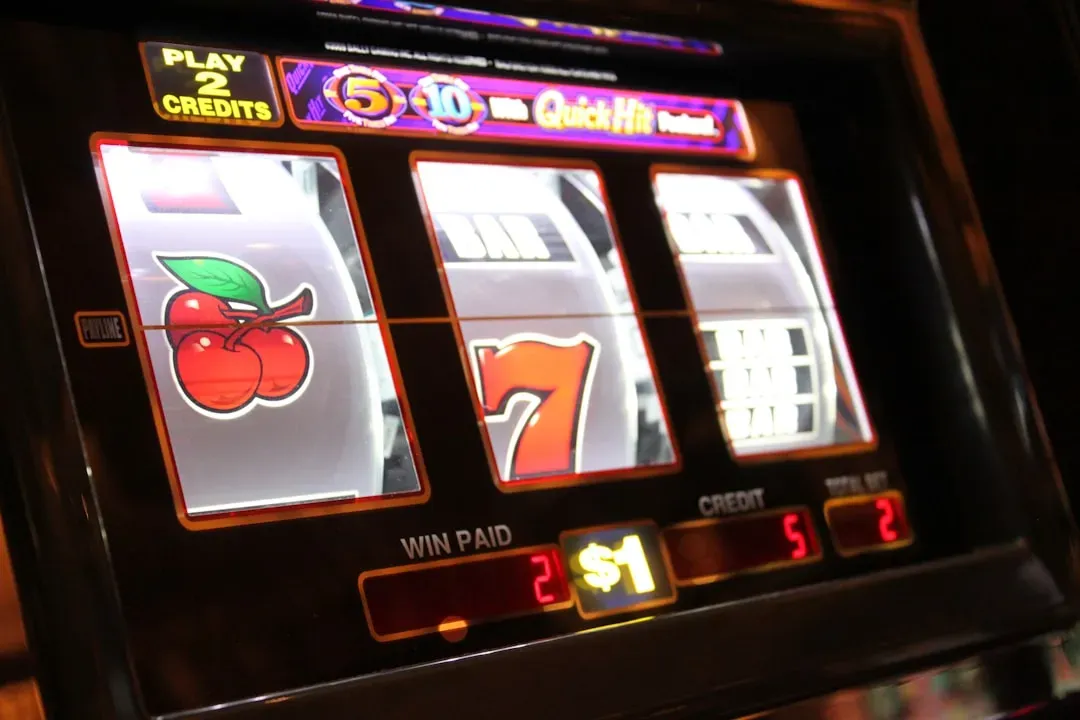
The broader context matters here. U.S. commercial gaming revenue reached an annual record of $66.5 billion in 2023, according to the American Gaming Association’s Commercial Gaming Revenue Tracker. The total surpassed 2022’s previous high of $60.5 billion by 10%, marking the industry’s third consecutive record revenue year.
Brick-and-mortar casino slots and table games alone grossed a record $49.4 billion in 2023, up 3.3% over 2022. Record revenues don’t necessarily mean worse odds for players, but they do signal massive engagement. Casinos in high-competition markets, aware that locals can easily drive to a rival property, have an incentive to keep payouts attractive.
Think of it as the streaming wars, but for gambling. When there are multiple options nearby, each casino has to offer something worth coming back for. Payout rates are one of the few concrete things that can tip the scales.
Loyalty Programs: The Unofficial RTP Booster

Player loyalty programs don’t change the mechanical RTP of a slot machine. The math inside the machine stays the same. What they do, however, is layer additional value on top of your play. Casino loyalty programs have become a cornerstone of player retention strategies, compensating players for their continued loyalty with complimentary play, dining deals, and private event access.
A 2023 study by the American Gaming Association revealed that nearly 80% of casino patrons engage in some form of loyalty initiative, emphasizing their significance in the industry. For locals who play regularly, this is where the real value accumulates. Cashback, free play credits, discounted meals and hotel stays. These perks effectively reduce your net losses over time.
Loyal players spend more, stay longer, and are more open to cross-sell opportunities. Casinos know this, which is why their loyalty programs are aggressively structured to reward frequency. For a local, that’s leverage. Use it.
How Regulation Protects What You Win

One thing locals can genuinely rely on is the regulatory backbone behind payout integrity. It’s not just an honor system. The New Jersey Division of Gaming Enforcement investigates and prosecutes all casino-related crimes and tests all casino slot machines, casino floor systems, and Internet gaming platforms prior to use.
In Nevada, the oversight is equally rigorous. Statistical reports are reviewed and initialed by management on at least a monthly basis, and large variations between theoretical hold and actual hold, by machine and by denomination, are investigated and resolved. This means the payout percentages you read about aren’t just marketing. They’re audited, tracked, and enforced.
When slot developers make their games available to a casino, they may give the operator options as to what RTP and bet sizes they prefer. While a casino can’t choose its own numbers, it can pick from options set by the developer. Regulation sets the floor. Within that, casinos choose where to land. And in competitive local markets, the pressure is almost always toward the higher end of those options.
Conclusion: Play Smarter, Not Just More Often

The data tells a genuinely useful story. Location matters. Denomination matters. Loyalty programs matter. And whether you’re in Nevada, New Jersey, or somewhere in between, the difference between a casino that’s friendly to local players and one that quietly bleeds them dry often comes down to a few clearly measurable factors.
Off-Strip and local casinos consistently show lower hold percentages. Higher denomination machines return more. Loyalty programs add measurable value over time. And regulated markets with transparent reporting give you, the player, the ability to make informed choices rather than guessing.
Locally-focused gambling is really about the long game. Not one session, but dozens of them, over months and years. Knowing where the data points is the closest thing to an edge that a slots player can actually earn. So next time you settle into your favorite seat at your neighborhood casino, you might ask yourself: do I actually know what this machine is programmed to return? The answer is out there. What will you do with it?