
Something fundamental has shifted in how crime works. It used to be place-based. A robbery happened on a specific street. A fraud scheme operated out of a particular building. Officers showed up, gathered evidence, and the geography made sense. Today, a criminal sitting in one country can simultaneously victimize thousands of people across dozens of others, without ever leaving their apartment. That is not an exaggeration. That is Tuesday.
The digital revolution has handed law enforcement both remarkable new tools and a set of problems that have no easy playbook. The scale of modern cybercrime is staggering, the legal frameworks are often outdated, and the adversaries are adaptable in ways that never stop being surprising. What follows is an honest look at the pressures reshaping policing in 2026, and why the road ahead is considerably harder than most people realize. Let’s dive in.
The Sheer Scale of the Problem Is Staggering

Global cybercrime costs are projected to reach $10.5 trillion annually by 2025, growing by roughly fifteen percent each year. That number is almost too large to process. Think of it this way: that is more than the GDP of most countries on Earth, flowing into the pockets of criminals every single year. In 2023 alone, the FBI’s Internet Crime Complaint Center received over 880,000 cybercrime complaints, representing a nearly ten percent increase from the previous year, with potential losses exceeding $12.5 billion, up about a fifth from 2022.
A single cyberattack or cyberscam can affect hundreds of victims or span across hundreds of jurisdictions at once, creating major challenges for law enforcement coordination and response. Honestly, that is the crux of the problem. Local police departments were built and funded for local crime. While the FBI plays a significant role in investigating cybercrime, most of the responsibility often falls to local law enforcement, including municipal police departments and county sheriff’s offices, which must determine jurisdiction and secure limited resources while staying on top of an ever-evolving threat landscape.
Encryption: The Double-Edged Sword Officers Cannot Ignore

Here is the thing about encryption. It protects all of us. It keeps our banking details safe and our private messages private. Yet, that same protection creates a wall that investigators simply cannot get through. As Europol has stated, privacy measures such as end-to-end encryption will stop tech companies from seeing any offending that occurs on their platforms, and it will also stop law enforcement’s ability to obtain and use evidence in investigations to prevent and prosecute serious crimes such as child sexual abuse, human trafficking, drug smuggling, homicides, and terrorism offenses.
In 2024, the FBI began working with the University of California, Berkeley, to create a lawful-access solution to the growing inability to collect evidence of crimes like terrorism and online child abuse due to improvements in data encryption. The debate around so-called backdoor access remains fierce. Balancing the needs of public safety and data privacy remains a complicated question, and many experts suggest that piecemeal answers rooted in litigation are ineffective, while debate continues between those who favor some level of government access to encrypted information and those who argue that any such access creates a slippery slope toward loss of privacy and civil rights.
AI-Powered Crime and the Deepfake Nightmare

A deepfake attack occurred every five minutes globally in 2024, while digital document forgeries jumped by nearly two and a half times year-over-year, according to the Entrust Cybersecurity Institute. Those numbers are not just alarming. They represent a fundamental challenge to the concept of digital evidence itself. The advent of artificial intelligence has intensified threats through deepfakes, which are AI-generated synthetic media in video, audio, or images used to commit fraud, extortion, and misinformation, with voice-cloning technology enabling fraudsters to impersonate a person with high accuracy.
Departments now confront a new reality where each digital file crossing a detective’s desk demands extensive verification, a process requiring specialized tools and expertise that many organizations have not budgeted for or integrated into daily operations, creating a technological and procedural gap most agencies are not positioned to bridge without significant operational changes. I think what makes this particularly unsettling is that it does not just hinder new investigations. It potentially undermines convictions built on digital evidence from years ago. The misuse of AI presents complex challenges, such as verifying the authenticity of evidence in cases where video or audio can be manipulated.
The Widening Digital Skills Gap Inside Police Agencies

As cybercriminals become more sophisticated by leveraging advanced technologies like generative AI, law enforcement agencies face an urgent need to enhance their capabilities, and investing in digital skills is vital for effective crime prevention, investigation, and prosecution. Yet the reality on the ground tells a very different story. Nowhere are the stakes higher than when it comes to upskilling the very people responsible for protecting the community and maintaining public safety, and digital skills investment in the law enforcement and national security sector globally is currently well short of where it needs to be.
Law enforcement agencies often struggle to keep pace with rapid technological advancements, and there remains a substantial gap in training and expertise within many departments, leaving them ill-equipped to respond effectively to sophisticated AI-driven crimes. Making things worse, law enforcement also has to compete for talent with the private sector, which can afford to pay higher salaries to those with cyberskills. It is a constant talent drain that does not get nearly enough attention in public policy conversations.
Cryptocurrency and the Dark Web as Criminal Infrastructure

The increasing adoption of cryptocurrencies has not only revolutionized financial transactions but has also facilitated illicit activities, making them a preferred tool for criminal organizations worldwide. According to the 2025 Crypto Crime Report by Chainalysis, 2024 saw a drop in value received by illicit cryptocurrency addresses to a total of around $40.9 billion. That is still an almost incomprehensibly large sum flowing through criminal hands via digital channels.
To avoid being tracked by law enforcement, criminals turn to more private cryptocurrencies like Monero and Zcash, which use total anonymity and untraceable transactions, making them ideal for dark web activity. Due to a lack of technical knowledge and resources, it is challenging for law enforcement to find, arrest, and effectively prosecute a dark web market vendor who trades from the other side of the world by anonymizing hops in multiple jurisdictions. The gap between what criminals can do technically and what investigators can match in real time remains wide, though it is slowly narrowing.
The Jurisdiction Problem: No Country Owns the Internet

Because cybercriminals do not need to be anywhere near the scene of the crime, they can deliberately choose to operate from the city, state, or country where they believe they are least likely to get caught by law enforcement. This is sometimes called “jurisdiction shopping,” and it is remarkably effective. The lack of harmonization in cyber laws hampers the ability of law enforcement to pursue cybercriminals across borders, creating safe havens for illicit activities.
The collection, sharing, and ability to use electronic evidence across borders poses a major obstacle to prosecuting cybercrime, and with no consistent international rules, evidence admissible in one country’s court system may be rejected in another. This is maddening in practice. An officer builds a case, gathers digital evidence meticulously, and then watches it fall apart because a different legal system treats that data differently. The United Nations Convention against Cybercrime opened for signature on October 25, 2025, and currently has 74 signatories, representing a significant push toward the kind of harmonized legal approach that investigators have long needed.
Ransomware: Criminal Enterprises Targeting Critical Infrastructure
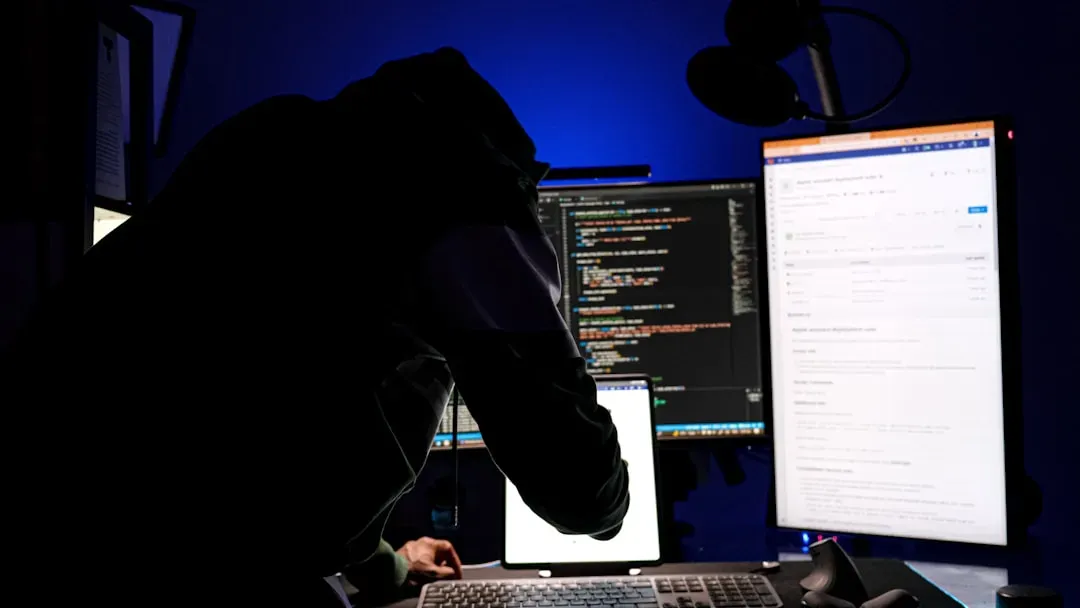
The U.S. Justice Department has announced significant disruption campaigns against ransomware groups like Blackcat, also known as ALPHV, which targeted over 1,000 victims worldwide, including critical U.S. infrastructure. Ransomware has evolved from a nuisance into a genuine national security threat. While ransomware attacks on government organizations dropped by roughly half in 2024, the average cost of recovery more than doubled to $2.83 million, up from $1.21 million in 2023.
Following law enforcement takedowns of major gangs like LockBit and AlphV/BlackCat in 2024, extortion payments dropped thirty-five percent compared to 2023, falling from $1.25 billion to $812.55 million. That is actually encouraging news, showing that sustained pressure works. The FBI’s Internet Crime Complaint Center continues to identify law enforcement agencies as critical infrastructure, with attacks becoming increasingly sophisticated, and recent examples include a November 2024 ransomware attack on Hoboken, New Jersey that forced City Hall closure and suspended online services.
Digital Evidence: Collection, Preservation, and Courtroom Admissibility

A major challenge in cybercrime investigations is the loss of crucial digital evidence, as service providers often delete records after a short period due to privacy concerns or legal restrictions, and law enforcement agencies frequently encounter barriers when attempting to retrieve historical data essential for identifying cybercriminals. Think about how a traditional crime scene works. Evidence stays where it is until police arrive. Digital evidence, by contrast, can vanish within days or weeks, by design.
Metadata from photos can reveal the time and location of an event, while public posts can provide insights into a suspect’s motives and connections, and the importance of digital evidence cannot be overstated as it often serves as a critical piece of the puzzle in criminal investigations. Yet there are no federal laws that specifically govern law enforcement agencies’ use of information obtained from social media sites, and their ability to obtain or use certain information may be influenced by social media companies’ policies as well as the rules of criminal procedure. That regulatory vacuum creates inconsistency and uncertainty at exactly the moment clarity is most needed.
International Cooperation: Progress Made, But Gaps Remain

A notable trend throughout 2024 and 2025 has been the increasing effectiveness of international cooperation among law enforcement agencies, with major operations involving unprecedented levels of coordination across borders and agencies from dozens of countries working together under organizations like INTERPOL, Europol, and the FBI, which has been essential in combating cybercriminals who use technological means to obscure their locations and identities. The results have been real and measurable. A recent joint effort by INTERPOL and AFRIPOL across 18 countries saw 1,200 arrests and $97 million recovered.
Several emerging trends point to the future direction of cybercrime, including decentralization, where criminal networks following major takedowns are increasingly adopting decentralized structures that lack clear leadership hierarchies, making them more resilient to law enforcement actions. Honestly, it is a cat-and-mouse game that shows no sign of ending. As the U.S. Government Accountability Office noted in a recent report, differences in how various agencies define and track cybercrime can hinder comprehensive understanding of the threat landscape, and efforts are underway to develop standardized categories of cybercrime to improve data collection and analysis. That work matters enormously, even if it rarely makes headlines.
The Civil Liberties Tightrope: Surveillance, Bias, and Public Trust
On the front lines of this effort, ethical dilemmas add new hurdles to progress when AI-powered surveillance tools escalate privacy concerns, and researchers have pointed out that the misuse of AI technologies can infringe upon privacy and perpetuate bias, bringing challenges such as algorithmic discrimination and mismanagement of personal data. This tension is real and it matters. Law enforcement needs powerful tools. The public needs to trust that those tools will not be turned against them unfairly.
Data used for predictive policing may have significant gaps and errors and may reflect human biases, and the use of models based on that data may entrench existing disparities, resulting in unintended consequences and unjust outcomes such as over-policing of certain individuals and communities. Critically, police and others in positions of authority may be more apt to perceive a social media post as dangerous based on the speaker or their viewpoint, a documented pattern that raises serious questions about the accountability structures around these technologies. Getting this balance right is not optional. It is essential to maintaining the public legitimacy that policing depends on.
Conclusion: A Race That Cannot Be Lost

Law enforcement today faces a genuinely daunting set of challenges. The technology that empowers investigators also empowers criminals. The same platforms that help detectives gather evidence help predators find victims. The same encryption that protects ordinary citizens can shield the worst offenders from accountability. There is no simple resolution to these tensions, only the hard work of navigating them carefully.
What is clear is that standing still is not an option. Police training, laws, and cross-border tools are not keeping up with AI-supercharged crime, and off-the-shelf AI lowers the skill level and cost of carrying out attacks, enabling small crews to execute schemes that previously required nation-state resources. More investment in digital training, more honest international cooperation, smarter legal frameworks, and a genuine commitment to ethical oversight are not idealistic goals. They are operational necessities. The question is not whether law enforcement can meet this challenge. It is whether the political will to fund and support that effort will arrive quickly enough.
What do you think? Are we investing enough in preparing the people who protect us for the digital world they actually operate in? Share your thoughts in the comments.