There is a vehicle near you right now that does not legally exist. Its plate is fake, altered, or simply belongs to another car entirely. To a traffic camera, to a toll reader, to a police officer scanning plates at 60 miles per hour, that vehicle is invisible. A ghost.
For years, the problem of ghost plates and fraudulent tags has been treated like a nuisance, something law enforcement dealt with occasionally but never aggressively. That is no longer the case. From New York to Texas to Illinois, states are now launching the most coordinated, technology-driven crackdowns on unregistered and untraceable vehicles the country has ever seen. The numbers are staggering, the crimes linked to these vehicles are serious, and the policy changes are finally matching the scale of the problem. Let’s dive in.
What Exactly Is a Ghost Plate – and Why Does It Matter?

Here’s the thing most people don’t realize: a ghost plate isn’t always a crudely handwritten tag slapped on a windshield. It can be a real plate, just one stolen from another vehicle, or one purchased through an underground black market of fraudulent dealer-issued tags. Ghost cars are vehicles that are virtually untraceable by traffic cameras and toll readers because of their forged or altered license plates. That invisibility is the whole point.
Drivers use ghost plates for various reasons, including to avoid getting traffic tickets, paying tolls, being held accountable for crimes, or simply evading enforcement systems altogether. Think of it like wearing a disguise that works on every camera in the city. It is not hard to see why criminals love them.
Some of the modified license plates belong to stolen or uninsured cars, while others are altered to prevent cameras from capturing an accurate photo at tolls. Some drivers use license plate flippers, which are devices that flip up to cover the plate as the car reaches a toll. These devices, originally marketed for auto shows, have found a very different audience.
New York City: Ground Zero for the Ghost Car Epidemic

New York City Mayor Eric Adams and New York Governor Kathy Hochul announced that the NYPD and New York City Department of Sanitation have removed more than 73,000 illegal ghost cars and illegal and unregistered motorized scooters, bikes, and all-terrain vehicles from New York City streets since the start of the Adams administration. That number should stop anyone in their tracks. Seventy-three thousand.
Ghost cars and other illegal vehicles pose significant public safety risks and are increasingly being used in violent crimes, including shootings and robberies, as well as in traffic offenses like hit-and-runs. Ghost cars also deprive law-abiding taxpayers of millions of dollars in unpaid tolls and fees that could otherwise be invested in critical government services.
The MTA reported losing more than $21 million to toll evasion from ghost plates in 2023, a 140% increase from 2020, with projections of nearly $19 million in losses for 2024, though enforcement efforts have begun to curb the trend. That kind of revenue loss doesn’t just affect toll roads. It hits the infrastructure that millions of residents depend on every single day.
The Multi-Agency Task Force That Changed Everything


A multi-agency city and state-led task force was dedicated to removing ghost cars from New York roadways. The 100 joint enforcement operations, which began on March 11, 2024, have resulted in 5,343 vehicles towed for suspended registrations and fraudulent, obstructed, or altered license plates. That is an extraordinary result in just over a year of coordinated action.
Mayor Adams, Governor Hochul, and MTA Chair and CEO Lieber launched a multi-agency, city-state ghost car task force that included the NYPD, the New York City Sheriff’s Office, MTA Bridge and Tunnel officers, the New York State Police, the New York State Department of Motor Vehicles, and the Port Authority of New York and New Jersey Police Department. That level of interagency cooperation is genuinely rare, and honestly, it’s exactly what this problem required.
Unbillable tolls from ghost plates have dropped 20%. So far in 2025, there have been 38 enforcement operations, which resulted in 1,893 towed vehicles with approximately $11.5 million in unpaid tolls and fees, judgments and debts owed to all task force partners. The numbers are moving in the right direction. That 20% drop in unbillable tolls is the kind of measurable proof that sustained enforcement actually works.
Texas: How a $200 Million Black Market Triggered a Landmark Law

The use of fraudulent paper license plates had resulted in the death of law enforcement, enabled drug cartels and human smugglers to avoid law enforcement, and created a more than $200 million black market industry in Texas. A two-hundred-million-dollar black market. For fake paper tags. I know it sounds crazy, but that was the documented reality.
The Texas Legislature enacted House Bill 718 during the 88th Legislative Session in 2023 to address concerns related to the fraudulent use of paper license tags. The new law and associated administrative rules mandate significant operational changes for the Texas motor vehicle industry and became effective July 1, 2025. The fix took two years to implement because the scale of the overhaul was that large.
Starting July 1, Texas eliminated all dealer-issued temporary paper license plates in favor of permanent metal plates at the point of sale. The change is mandated by House Bill 718, passed by the Texas Legislature in 2023, and aims to stop widespread fraud, toll evasion, and criminal misuse of untraceable paper tags. Under the new system, every plate will be linked to a name and address, which transforms a piece of paper into a real, accountable record. That is the difference between a system that criminals can exploit and one that actually works.
The Ghost Tag Black Market: It Was Never Just a Local Problem
Used car dealers exploited loose state regulations to fraudulently issue temporary license plates, which flow through a thriving black market to drivers who use them to skirt accountability on the road. Vast numbers of temporary license plates trace back to a network of warehouses and office buildings across Georgia and New Jersey that each serve as the business address of dozens or even hundreds of enigmatic used car dealers. This was an organized, interstate supply chain, not a few bad apples.
Motorists in New York City and across the country have turned to fraudulent temporary license plates to drive without car insurance or valid licenses, to skirt tolls, taxes and fees, or to commit more serious crimes on the road with their identities concealed. The demand was enormous because the supply was easy and the risk was low. That equation is now changing.
Criminals obtained car dealer licenses so they could access the Texas DMV’s online system and then print and sell fraudulent paper tags. The sheer audacity of that scheme is almost impressive. Getting licensed as a dealer specifically to access the state’s own system and print counterfeit tags. Over the last year, the Texas DMV implemented new security measures and suspended dozens of licensed car dealers suspected of using the state’s own system to sell fraudulent tags on the black market.
Other States Join the Fight: Pennsylvania, Tennessee, and Illinois

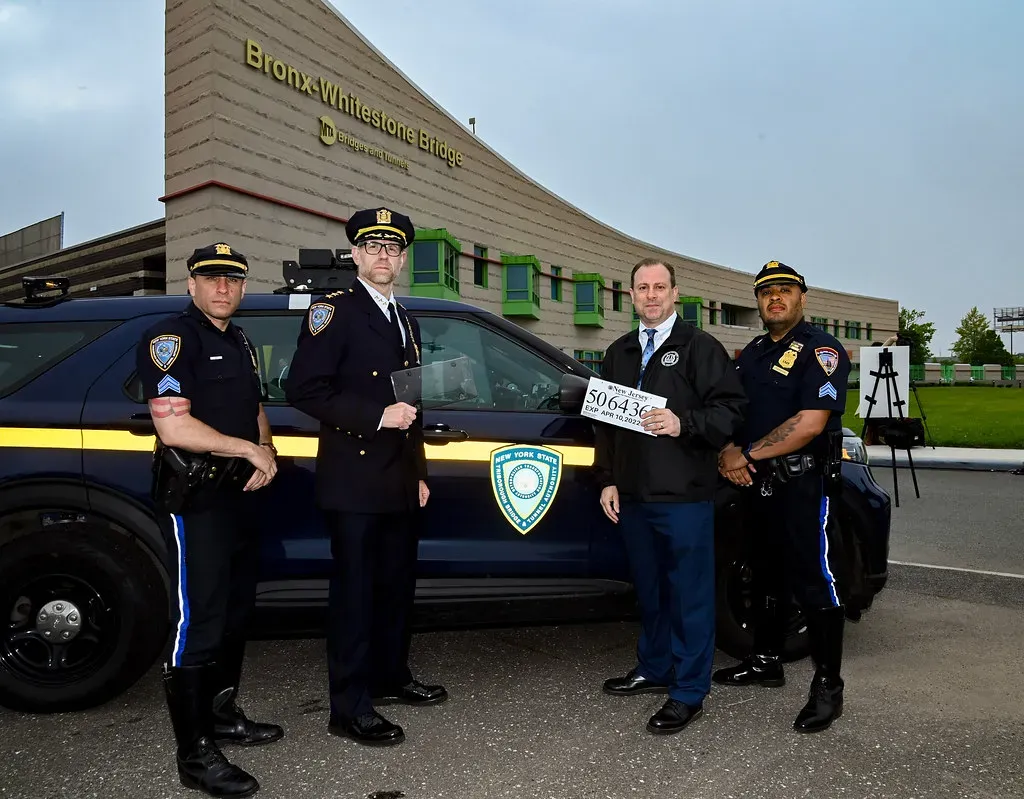
New York is part of a growing number of states implementing bans and enhanced enforcement against ghost plates. Similar crackdowns are underway in Pennsylvania, Tennessee, Illinois, Texas, and Washington as authorities work to remove untraceable ghost cars from roadways. This is no longer a regional issue being handled by one ambitious task force. It is a national movement.
Philadelphia enacted some of the strictest penalties in April 2024, imposing fines up to $2,000 for anyone who purchases, installs, possesses, or sells license plate flippers. Two thousand dollars for simply owning one of those devices. That is the kind of deterrent that actually makes people think twice before ordering one online for $50.
Illinois has been a frontrunner in monitoring temporary license plates for validity. Illinois was the first state in the nation to put temporary plates directly into the law enforcement agency data system (LEADS) so officers could quickly identify the vehicle’s owner from a scan. Illinois Democrats introduced similar legislation targeting plate-flipping devices in March 2025, building on a foundation of enforcement that the state has been constructing for years.
Drones, Cameras, and AI: The Tech Turning the Tide


In 2024, MTA Bridges and Tunnels deployed drones to assist in revenue recovery. Essentially an aerial license plate reader, drones feed video into the License Plate Reader (LPR) system to search for a potential persistent toll violator match. Drones hunting ghost cars over New York bridges. That is where enforcement technology is right now in 2026, and it’s remarkably effective.
The use of Automated License Plate Reader (ALPR) systems is becoming increasingly common in cities across the United States. ALPR systems are computer-controlled cameras sold to law enforcement agencies, which deploy ALPRs at both fixed strategic points and in mobile formats. Think of them as a silent, tireless officer reading every plate that passes, day and night, without missing one.
Advances in machine learning, computer vision, and artificial intelligence have made ALPR systems more affordable and more effective. According to the Department of Homeland Security, ALPR systems can now read much more than license plates. ALPR software can detect dents on cars, search for specific bumper stickers, process specialty tags, and recognize rideshare logos. That is a level of detail that makes hiding a ghost plate significantly harder than it used to be.
Ghost Plates Hurt Innocent People Too

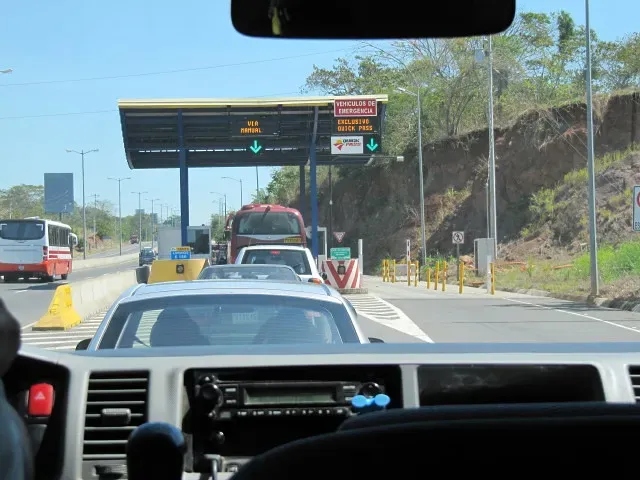
It’s easy to frame ghost plates as a purely criminal problem. However, the damage runs deeper than toll revenue and crime statistics. Calvin Lawrence, a retired veteran on disability, lives more than 750 miles away in Charleston, South Carolina, with his wife and two children. He hadn’t even visited New York City in years. Yet in May 2024, a notice from New York transit authorities arrived in his mail: a toll bill for $22.38. Someone in New York was driving with his old plate number.
The entities that send those bills have said ghost plates result in tens or even hundreds of millions in lost revenue, money that would normally help fund infrastructure costs. That money isn’t abstract. It is road repairs, bridge maintenance, and public transit funding that vanishes when someone drives an untraceable vehicle through a toll plaza.
Vehicles with ghost plates are most prevalent in the Bronx and accrue more fines and serious traffic violations than other cars, according to an NYC Council investigation. The effect on communities where ghost plates are concentrated is real. More reckless driving, less accountability, and residents left to absorb the consequences.
What Comes Next: A Nationwide Reckoning

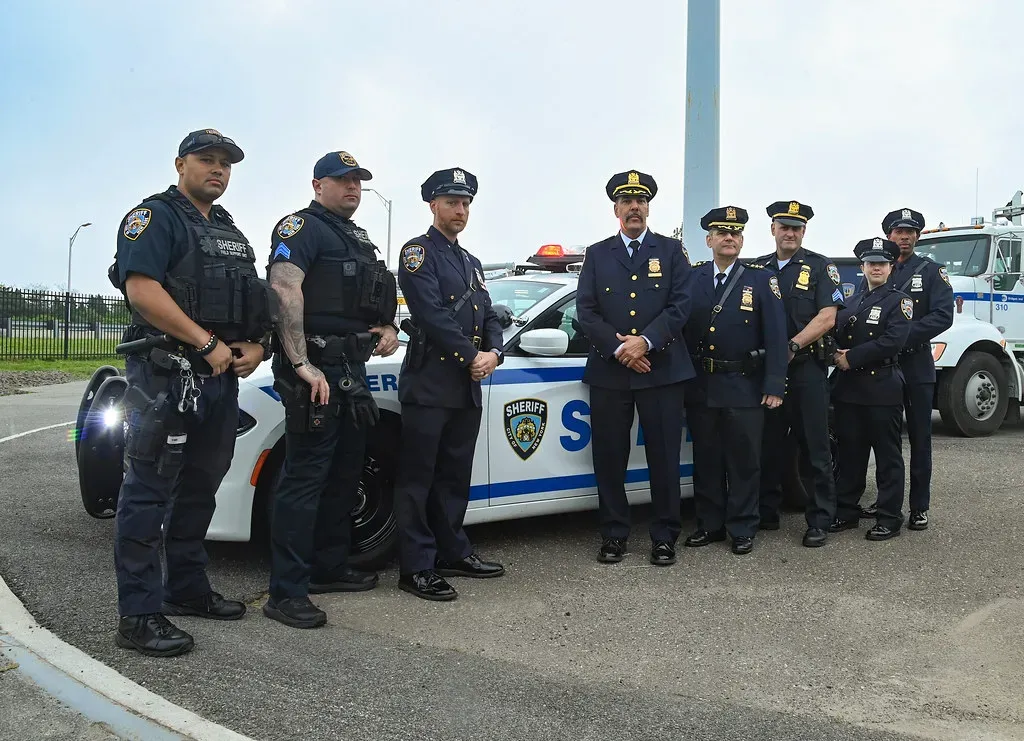
The task force marked its 100th joint operation in August, resulting in over 5,300 vehicles towed for suspended registrations or altered plates, along with 1,300 arrests and 16,000 summonses issued by MTA and Triborough Bridge and Tunnel Authority officers in 2025 alone. Those are remarkable numbers for a problem that just a few years ago seemed almost impossible to contain.
States like California and Illinois have also enacted laws to combat plate-altering devices, responding to similar challenges posed by automated toll systems and red-light cameras. The legislative momentum is building. States are watching each other’s progress and borrowing what works. That kind of interstate learning is exactly how systemic change happens.
Honestly, the ghost tag problem was tolerated for far too long. The combination of better technology, tougher laws, interagency cooperation, and genuine political will is finally producing results that matter. This overhaul is intended to eliminate fraudulent tags that have been linked to toll violations, vehicle theft, and even violent crimes. Permanent metal plates will provide law enforcement with traceable, tamper-resistant identification and give buyers registered vehicles on day one. That is what accountability on the road actually looks like.
What do you think – was it surprising that it took this long for states to get serious about ghost plates? Share your thoughts in the comments.