Every school day in Las Vegas, thousands of middle schoolers walk through the doors of Clark County School District campuses carrying smartphones that connect them to a world their teachers and parents can barely keep up with. On those phones, viral trends are born and shared in seconds. Some are harmless. Others are genuinely deadly.
Social media challenges have quietly become one of the most alarming youth safety issues in American schools, and Las Vegas is no exception. From physical dares to coordinated school threats, the risks run deeper than most parents realize. What’s really happening inside those hallways, and how bad has it actually gotten? Let’s dive in.
1. The Scale of the Problem: Teens Are More “Plugged In” Than Ever

According to Pew Research Center’s late 2024 survey, roughly half of U.S. teens say they are online “almost constantly,” with roughly six in ten saying they visit TikTok daily. That’s not just a statistic. That’s the reality of every middle schooler walking into a Las Vegas classroom.
Approximately three in four U.S. high school students reported frequently using social media, with more than four in ten saying they use it at least several times a day, and nearly three in ten saying they use social media more than once an hour. For 11, 12, and 13-year-olds, those numbers are just as sobering.
A 2023 Pew Research Center survey reveals that a majority of U.S. youth aged 13 to 17 visit YouTube, TikTok, and Snapchat at least “about once a day.” Las Vegas middle schoolers are among those numbers. The digital flood isn’t slowing down anytime soon.
2. What Are “Social Media Challenges”? More Than Just Dances

Social media challenges are activities individuals perform as content for social media, sometimes being “challenged” by others to join. Some of these challenges can cause injuries and even death. That’s the hard truth most people don’t want to face when they picture a teen goofing around on TikTok.
The most frequently referenced risky social media challenges documented in peer-reviewed research are the Cinnamon Challenge, the Fire Challenge, the Blackout or Choking or Strangulation Challenge, and the Salt and Ice Challenge. These aren’t fringe internet oddities anymore. They circulate through middle school friend groups like wildfire.
Other risky challenges are related to dangerous ingestions and include the Tide Pod Challenge and the Benadryl Challenge. Think about that for a moment. Children are being dared to eat laundry detergent pods and overdose on allergy medication, just to get views.
3. The Injuries Are Real, and They Are Severe
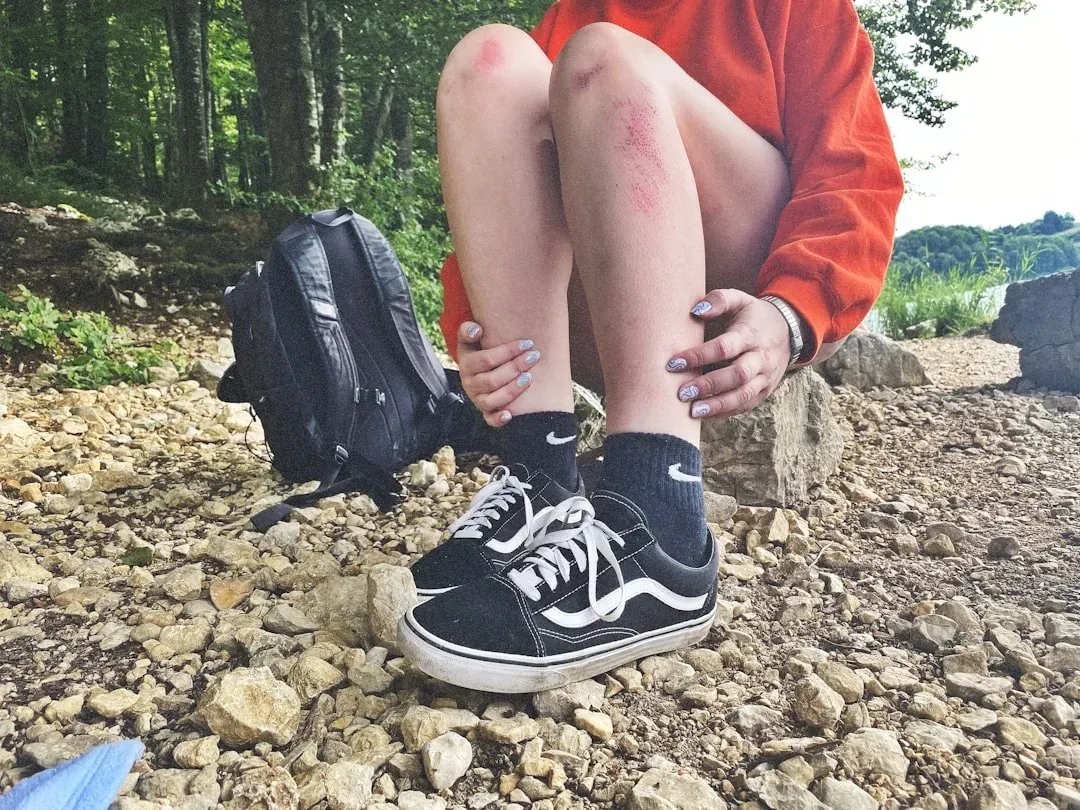
Of documented patient cases from risky social media challenges, the most common injuries were burns and poisoning or overdose. The vast majority of those cases resulted in the need for medical care, including roughly two-thirds that required emergent medical evaluation, nearly three in ten that suffered permanent morbidity such as permanent scarring or anoxic brain injury, and a third that died. This is not a joke. These are real children with real families.
The challenges most associated with death were the Blackout and Choking and Strangulation challenges, the Benadryl challenge, and the Fire challenge. Honestly, it’s shocking that these challenges don’t receive the same public health attention as drunk driving or childhood obesity.
Both documented cases in the pediatric literature underscore that life-threatening complications can arise in healthy adolescents due to risk-laden behaviors influenced by social media. These are healthy kids who had no pre-existing conditions. One bad dare changed everything.
4. Who Is Most at Risk? Middle Schoolers Are Prime Targets

The most frequent age group discussed in risky social media challenge research was adolescents between the ages of 12 to 18 years, followed by children aged under 12 years. Las Vegas middle schoolers fall right in that sweet spot of vulnerability.
When teens constantly see friends engaging in activities they weren’t part of, it triggers feelings of exclusion and inadequacy. This hits especially hard during middle school years when social belonging feels like everything. That pressure to belong is exactly what makes challenges so seductive to a 12-year-old who just wants to fit in.
Many young children aged 8 to 12 years are heavy users of social media such as Snapchat and Instagram even though most platforms stipulate that users need to be 13 years and older. The age gate is essentially an illusion. Kids know it, and frankly, the platforms know it too.
5. School Threats Go Viral: Las Vegas Classrooms on Lockdown

Here’s where things get especially alarming for Las Vegas families specifically. Metro police detained one person after Roy Martin Middle School’s principal said the school received a threat on social media in September 2025, triggering a full campus lockdown that shook parents and students across the city.
Once the lockdown was lifted, students were released for the day through a delayed, staggered release. Imagine being a sixth grader and having your school locked down because of something someone posted online. The trauma of that experience doesn’t just disappear at the final bell.
Clark County School District officials confirmed that school districts across the country are witnessing a rise in social media trends and rumors of threats to campuses, and these threats are investigated by CCSD Police Officers. It’s become routine. That says everything.
6. Mental Health Consequences: The Invisible Wound
A new analysis from the Centers for Disease Control and Prevention found that frequent use of social media platforms is associated with a higher prevalence of students reporting being bullied, feeling sad and depressed, and having thoughts of suicide. The connection between screen time and suffering is no longer a theory. It’s documented by the nation’s top health agency.
A meta-analysis that examined 45 studies covering over 150,000 adolescents found small but significant relationships between increased social media use and symptoms of depression, anxiety, and loneliness. Across the board, the pattern holds. More scrolling, more suffering.
A 2024 study in JAMA Pediatrics found that teens who reduced their social media use to 30 minutes daily showed significant decreases in depression and loneliness after just three weeks. The control group, who continued normal usage patterns, showed no improvement. Three weeks. That’s all it took to see a measurable difference. Think about what that means for Las Vegas kids spending hours a day online.
7. Cyberbullying and the Challenge Connection
Nearly half of teens report experiencing some form of cyberbullying. Let that sink in. Walk into any Las Vegas middle school cafeteria and statistically, roughly half the kids at those tables have been targeted online.
Cyberbullying includes offensive name-calling, spreading false rumors, receiving explicit images, physical threats, and having embarrassing photos shared without permission. Unlike traditional bullying that might end when school lets out, cyberbullying follows teens home. There is no safe room. No place to escape. The harassment lives on their phone, on their pillow at night.
Research shows cyberbullying victims experience higher rates of depression, anxiety, and suicidal thoughts compared to teens who haven’t been cyberbullied. Social media challenges often weaponize this dynamic. Kids are dared, filmed, mocked, and the footage gets shared. It’s bullying with a viral engine attached.
8. Nevada Takes Action: The CCSD Phone Policy and State Law
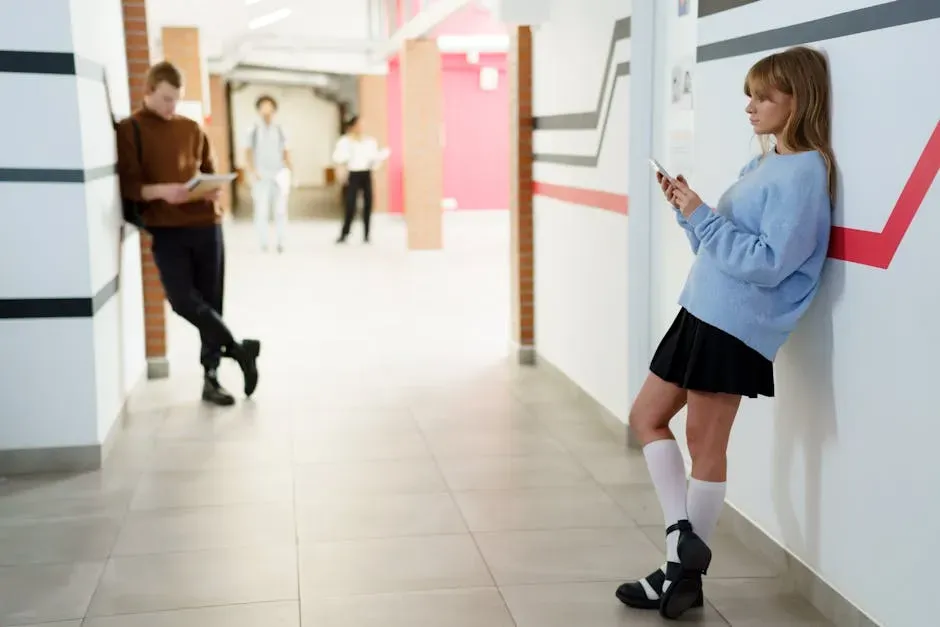
Las Vegas schools didn’t just sit on their hands. The Clark County School District required students in middle and high school to place their cellphones in non-locking, signal-blocking pouches starting in the 2024-2025 school year. It was a bold move, and honestly, a necessary one.
Several large school districts including Clark, Washoe, and Nye already had policies in place prior to a new state bill, but Nevada’s SB444 helped standardize and require the policy statewide. Nevada is now one of 35 states with laws or rules limiting phones and other electronic devices in school. The momentum is real.
Nevada Attorney General Aaron Ford sued social media companies Meta, Snapchat, and TikTok in early 2024 over the impact their algorithms were having on youth. The state is fighting back on multiple fronts, and it’s about time. Though whether legal action will actually protect kids inside those school halls remains an open question.
9. The Algorithm Problem: Why Challenges Spread So Fast

Research published in Injury Epidemiology in 2025 showed that academic articles about risky social media challenges increased from just one in 2010 to twelve in 2024, with the most common platforms discussed being YouTube and TikTok, both video-based platforms. Video spreads fast. It’s designed to.
Hundreds of school districts have sued the major social media companies including ByteDance, Google, Meta, and Snap, claiming that their products are eroding students’ mental health and forcing schools to devote significant resources to managing the behavioral and academic fallout. These algorithms aren’t neutral. They’re built to maximize engagement, and for middle schoolers, dangerous content is incredibly engaging.
Researchers from the University of Chicago discovered that almost six in ten health videos posted by nonmedical influencers included misinformation. When a teenager watches a “challenge” video, they’re often watching someone with zero expertise tell them it’s safe or funny to try. The algorithm makes sure that video reaches the next viewer immediately.
10. What Parents, Schools, and Nevada Leaders Must Do Now

The majority of peer-reviewed articles on risky social media challenges argued for prevention, most commonly through education, calling for parents and school officials to be aware of new challenges and counseling adolescents against their danger, and for medical providers to be mindful of trends on social media. Education is consistently the top answer from researchers. It beats bans, and it beats lawsuits.
According to a February 2025 study from the National Center for Education Statistics, more than half of school leaders believe that cell phones negatively impact students’ academic performance, with nearly three-quarters mentioning the negative impacts on students’ mental health and attention spans. Las Vegas school leaders already know this. The data confirms what teachers have seen in front of them every single day.
Nevada Attorney General Aaron Ford filed the Nevada Youth Online Safety Act, which if passed, would require social media platforms to establish an age verification system, obtain parental consent before minors can create an account, and limit certain features like notifications during hours typically reserved for sleep or school. It’s a promising step. The question is whether the political will exists to push it all the way through, and whether it will be enough.
Conclusion: The Danger Is Real, and Las Vegas Kids Are in the Middle of It
Let’s be real. Social media challenges are not a niche internet problem. They’re happening in every grade level, in every neighborhood across Las Vegas, right now. Children are daring each other to choke themselves, swallow dangerous substances, and make school threats, all for the dopamine rush of views and likes.
The good news is that Las Vegas and Nevada are not ignoring the issue. From signal-blocking pouches in Clark County classrooms to state-level lawsuits against social media giants, the response is building. It’s hard to say for sure whether it will be fast enough to protect the next generation of students who grow up entirely online.
Parents, educators, and policymakers all have a role to play here. The research is clear. The dangers are documented. The kids are watching. The real question is whether the adults in the room will act before the next viral challenge claims another life. What would you do differently if it were your child? Tell us in the comments.