
When a big gaming studio shuts down a team of hundreds, the news cycle picks up the story for a day, maybe two. The headlines focus on the studio name, the games that get canceled, the executives who offer their vague, sympathetic statements. Then it all fades. What doesn’t fade, though, is what happens in the neighborhoods surrounding those shuttered studios. The coffee shops. The lunch spots. The apartment buildings and local gyms. The ripple moves outward, quietly, and it hits small businesses in ways that rarely make the front page.
Gaming’s recent era of mass layoffs has been genuinely staggering in scale. What started as a wave became a tide. The question worth asking now is not just what happened inside those studios, but what happened just outside them. Let’s dive in.
A Wave That Just Kept Growing

Here’s the thing – nobody expected 2024 to be worse than 2023. But it was. The video game industry experienced mass layoffs in a wave which began in 2022, peaked in January 2024 and began to ease off in 2025. By the time the dust settled on that peak, the numbers were genuinely shocking. The video game industry has faced an unprecedented wave of layoffs over the past several years, culminating in the most severe job cuts in 2023 and 2024, with over 25,000 gaming jobs lost across these two years, affecting major publishers, independent studios, and industry veterans alike.
Zoom out even further and the picture gets darker still. An estimated 45,000 jobs were lost from 2022 to July 2025. That is not a market correction. That is a fundamental restructuring of an industry – and a profound blow to the workers and communities that depended on it. The layoffs peaked in early 2024, with 8,619 jobs lost in the first quarter alone, marking the highest quarterly number in gaming history.
The Biggest Names, the Biggest Cuts

The headlines were dominated by corporate giants who slashed headcounts with startling speed. On January 25, 2024, Microsoft Gaming underwent significant restructuring, leading to 1,900 staff being laid off. That was just the beginning for Microsoft. On May 7, 2024, Microsoft Gaming closed three studios: Tango Gameworks, Arkane Austin, and Alpha Dog Games, and announced the merger of Roundhouse Studios into ZeniMax Online Studios.
Sony was not far behind. On February 27, 2024, Sony Interactive Entertainment announced the layoff of 900 employees across various studios, citing the need to restructure operations in response to the evolving economic landscape and changes in product development, distribution, and launch strategies. Meanwhile, Embracer Group’s collapse was a story all its own. The company reportedly reduced its headcount from 15,701 to 7,873 – a reduction of approximately 8,000 workers or over half of their 2024 total.
Not Just the Big Players – Indie Studios Got Hit Too
Let’s be real: the conversation about gaming layoffs often defaults to Microsoft, Sony, EA. The giants. But the smaller studios? They were suffering just as badly, often with far less attention and far fewer resources to help laid-off workers land on their feet. The layoffs were not confined to specific types of studios or geographic locations – they spanned across various sectors within the gaming industry, impacting both small indie developers and large AAA studios.
Even indie studios and mobile-first outfits were not spared, with dozens of small teams laying off 10, 20, or 30 employees – numbers that might seem small on paper, but can mean the collapse of an entire dev team. Think about that for a second. A team of 25 people is somebody’s entire creative world. When that closes, it is not just jobs lost – it is projects, identities, and communities that disappear overnight. When asked what reason developers were given for layoffs, 22% were told it was due to restructuring, 18% cited declining revenues, and 15% were due to market or industry shifts.
Why Did This Happen? The Real Reasons Behind the Cuts

Honestly, the causes are more complicated than most corporate statements suggest. There was no single reason for the layoffs – multiple economic and industry-wide factors converged to create a difficult environment for game developers, as the gaming industry saw explosive growth during the COVID-19 pandemic, prompting companies to aggressively expand, but as global economies stabilized and people returned to pre-pandemic habits, game spending declined, forcing companies to downsize.
Inflation and decreased discretionary spending throughout 2023 to 2024 pressured household budgets, reducing discretionary spending on entertainment including gaming, as consumers facing higher costs for essentials like food, housing, and energy found spending on games and subscription services increasingly optional. There is also a cost explosion on the development side that many people overlook. According to a report cited by the Competition and Markets Authority, development budgets for AAA video games have surged in recent years – while AAA releases previously had budgets ranging from $50 to $150 million, games set for release in 2024 or 2025 are now seeing budgets of $200 million and higher. That kind of cost inflation makes risk-taking almost impossible for publishers.
How Laid-Off Workers Reshape Local Economies
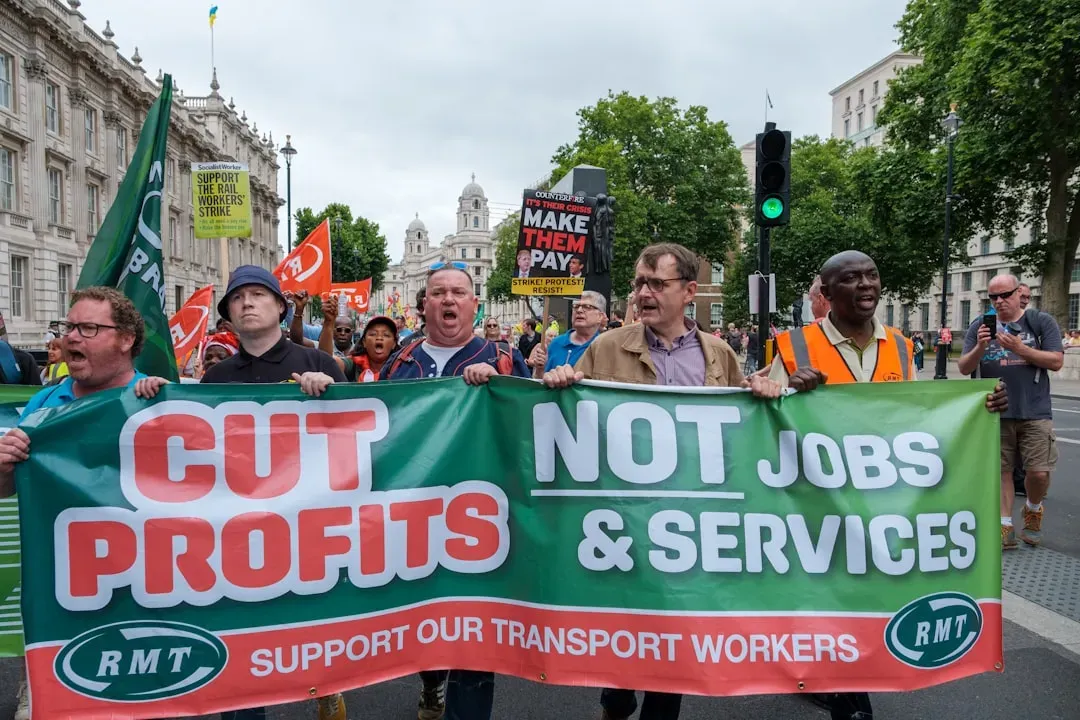
Here is where the story gets personal, and frankly, underreported. A game developer earning a solid tech-sector salary is not just an employee – they are a consumer, a neighbor, a regular at the local restaurant down the street. When that income disappears, spending patterns change fast. The large-scale layoffs could significantly dampen economic growth, potentially affecting everything from consumer spending to innovation rates.
While there may not be a complete drop-off in consumer spending, a gradual decline in discretionary spending is expected as people become increasingly cautious. Think of it like a stone dropped in a still pond. The stone is the layoff. The rings rippling outward are the lunch spots that see fewer orders, the gyms that lose members, the bookstores that notice the slowdown. There was broad concern about the impact of gaming and tech layoffs not only on the technology sector but also on Seattle’s economy as a whole, especially as the city largely depends on tech-driven growth.
Gaming Hub Cities Feel It Most

Cities like Seattle, Austin, and Montreal are not just home to gaming studios – they are, in many ways, built around them. The coffee shops near a major studio are there because of foot traffic from employees. The housing market nearby reflects those high salaries. When the studios contract, the whole neighborhood feels it. The layoffs pose a challenge for the commercial real estate sector, especially in tech hubs like San Francisco, Austin, and New York City.
In Seattle, the numbers tell a stark story. Tech layoffs in Seattle during 2024, though significant, were considerably lower than those seen in 2023, with 151,484 employees affected compared to 264,220 in the previous year. Still, the scale of disruption was enormous. While larger enterprises struggled to maintain workforce levels due to macroeconomic constraints and strategic shifts, it had a cascading impact on smaller tech firms, many of which relied heavily on the wider network of the regional tech ecosystem – companies like First Mode, which faced intense financial scrutiny, eventually filed for bankruptcy, showing the extent to which smaller entities bore the brunt of the economic headwinds. Montreal’s gaming scene, home to studios like Behaviour Interactive and Eidos, was also not spared. Behaviour had a round of layoffs mostly at their Montreal studio in June 2024, with around 95 people losing their jobs, including 70 from their Montreal studio.
The Mental and Institutional Cost Nobody Talks About

Numbers can only tell you so much. Behind every statistic is a person whose daily routine changed entirely overnight. The ripple effects of these layoffs are profound – there is a massive loss of institutional knowledge as experienced workers are let go, and this brain drain can severely impact the quality and innovation of future games. Developers who dedicated a decade to a franchise, who built relationships with colleagues, who made their corner of the city their home – many of them are now reconsidering whether gaming is a viable career path at all.
Following 2024’s massive wave of layoffs across the video game industry, one in ten developers say they were among those cut from AAA studios and indie outlets alike, according to the Game Developers Conference’s “2025 State of the Game Industry” report, based on a survey of 3,000 developers. The psychological toll on those who kept their jobs is also real. Overall, roughly two in five game developers were impacted by layoffs, either by being laid off themselves or having cuts affect their teams – and more than half of respondents expressed some level of concern that more reductions were still to come. Survivor guilt is real in workplaces. It kills productivity, creativity, and morale.
A Paradox: The Industry Is Not Dying, Just Reshaping
Here is the part that many people find genuinely baffling. All of this carnage is happening inside an industry that is still generating enormous revenue. Data from Newzoo shows that global gaming revenue in 2023 reached $184 billion, an increase of just 0.6% from 2022, reflecting a broader slowdown in growth across the sector. The revenue is there. The players are there. It is not a dying industry – it is a restructuring one, and that distinction matters enormously.
I think this is the most important thing to understand about the layoff era. These are not companies on the brink. All of the major tech companies conducting another wave of layoffs were sitting atop mountains of cash and were wildly profitable, so the job-shedding was far from a matter of necessity or survival. The cuts were largely about shareholder optics and cost optimization – not survival. Game jobs champion Amir Satvat estimated that game industry layoffs dropped from 15,631 in 2024 to 9,053 in 2025, which is a small improvement, but thousands of workers are still being shown the door in a profitable, thriving industry. That is a hard thing for local small businesses near these studios to absorb – especially when there is no recovery plan aimed at them.