


Some creative endeavors don’t just span years or decades. They stretch across centuries, outliving their original creators and becoming something far greater than anyone first imagined. These projects challenge everything we think we know about commitment, vision, and human ambition. They’re testaments to patience in a world that increasingly values speed over substance.
What drives people to dedicate their lives to something they’ll never see completed? These aren’t just buildings or artworks. They’re almost living things, breathing through generations of craftspeople, architects, and dreamers. Let’s explore the most astonishing long-term creative projects humanity has ever undertaken.
The Sagrada Família: Barcelona’s Eternal Cathedral

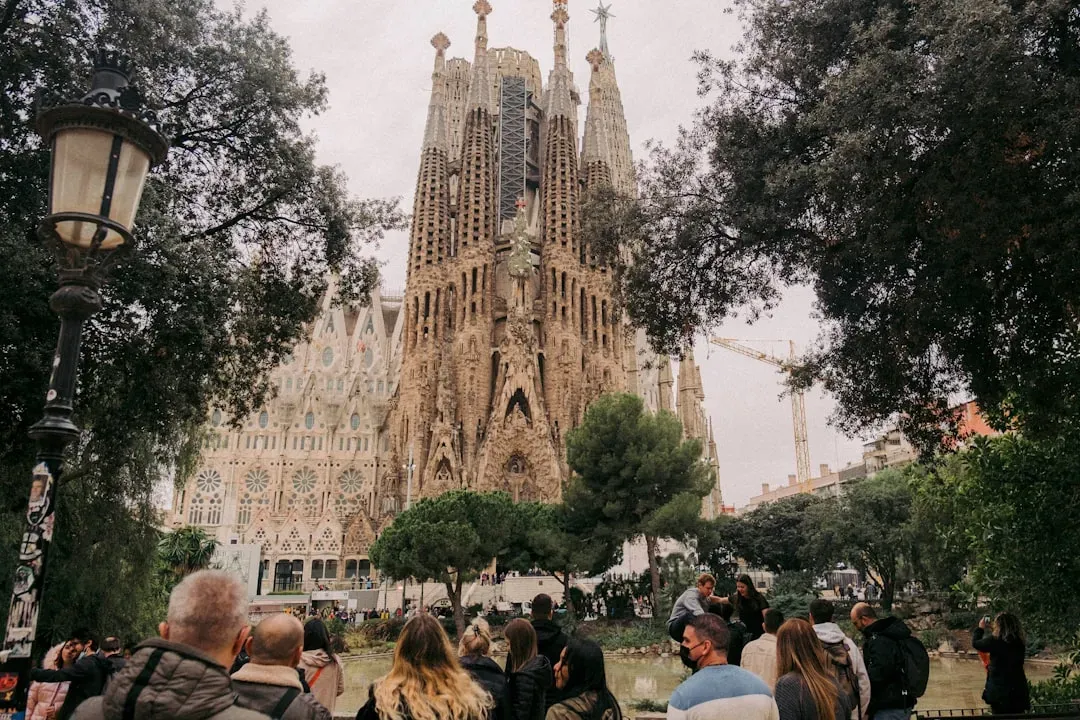
Construction on Antoni Gaudí’s masterpiece began in 1882, and it’s still not finished. The architect himself knew he wouldn’t live to see its completion, famously saying his client wasn’t in a hurry. Gaudí died in 1926, having devoted over forty years to the project, yet only a fraction was complete.
Today, the basilica stands as a bizarre fusion of Gothic revival and surreal modernism, with towers that look like they’ve melted under the Spanish sun. Roughly about one third of the building uses modern techniques and materials, creating an interesting tension between old and new. The current completion date is projected for 2026, marking 144 years since the first stone was laid.
What’s fascinating is how each generation of builders interprets Gaudí’s vision differently. Some of his original models were destroyed during the Spanish Civil War, so architects have had to rely on fragments, drawings, and educated guesses. It’s both a faithful recreation and a completely new creation.
The Oxford English Dictionary: Cataloging Every Word


The first attempt to document every word in the English language started in 1857. Scholars thought it might take ten years. They were spectacularly wrong. The first complete edition wasn’t published until 1928, seventy-one years later, filling ten volumes and containing over 400,000 words.
Here’s the thing though – it was outdated the moment it was printed. Language doesn’t stand still, especially English, which absorbs new words like a sponge. The dictionary now exists in a state of perpetual revision, with teams of lexicographers constantly adding, updating, and refining entries.
One volunteer, Dr. William Chester Minor, contributed over 10,000 definitions while confined to an asylum for the criminally insane. His story alone shows the obsessive dedication this project demanded. The OED isn’t just a reference book, it’s a living monument to human communication that will genuinely never be finished.
The Crazy Horse Memorial: Carving a Mountain

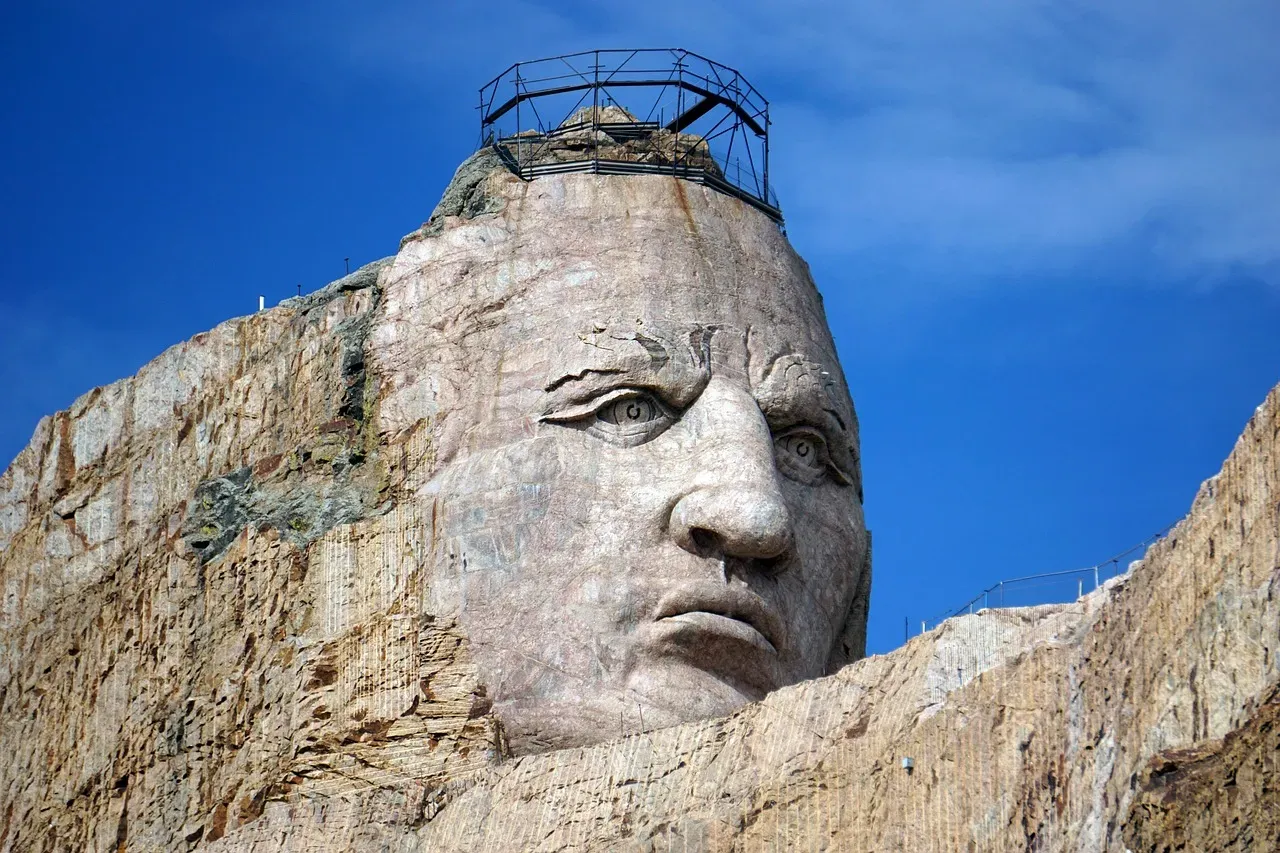
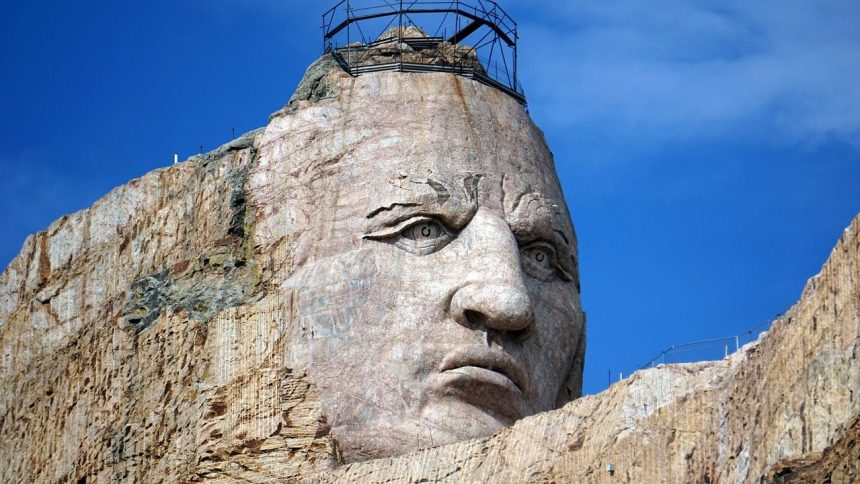
When completed, this South Dakota mountain carving will dwarf Mount Rushmore. Sculptor Korczak Ziolkowski started blasting away at Thunderhead Mountain in 1948, and work continues today under his family’s direction. The finished monument will show Lakota warrior Crazy Horse astride his horse, pointing into the distance.
Only the warrior’s face has been completed so far, and it took nearly fifty years just for that. The entire sculpture, if finished, will be 641 feet long and 563 feet high. For comparison, the heads at Mount Rushmore are roughly sixty feet tall.
Ziolkowski refused federal funding, wanting the memorial to remain independent and under Native American control. This decision has slowed progress considerably, but it’s kept the project’s integrity intact. Some Native American activists have criticized it, questioning whether Crazy Horse would have wanted such a monument. It’s a complex legacy, still being carved one blast at a time.
Cologne Cathedral: Six Centuries of Construction

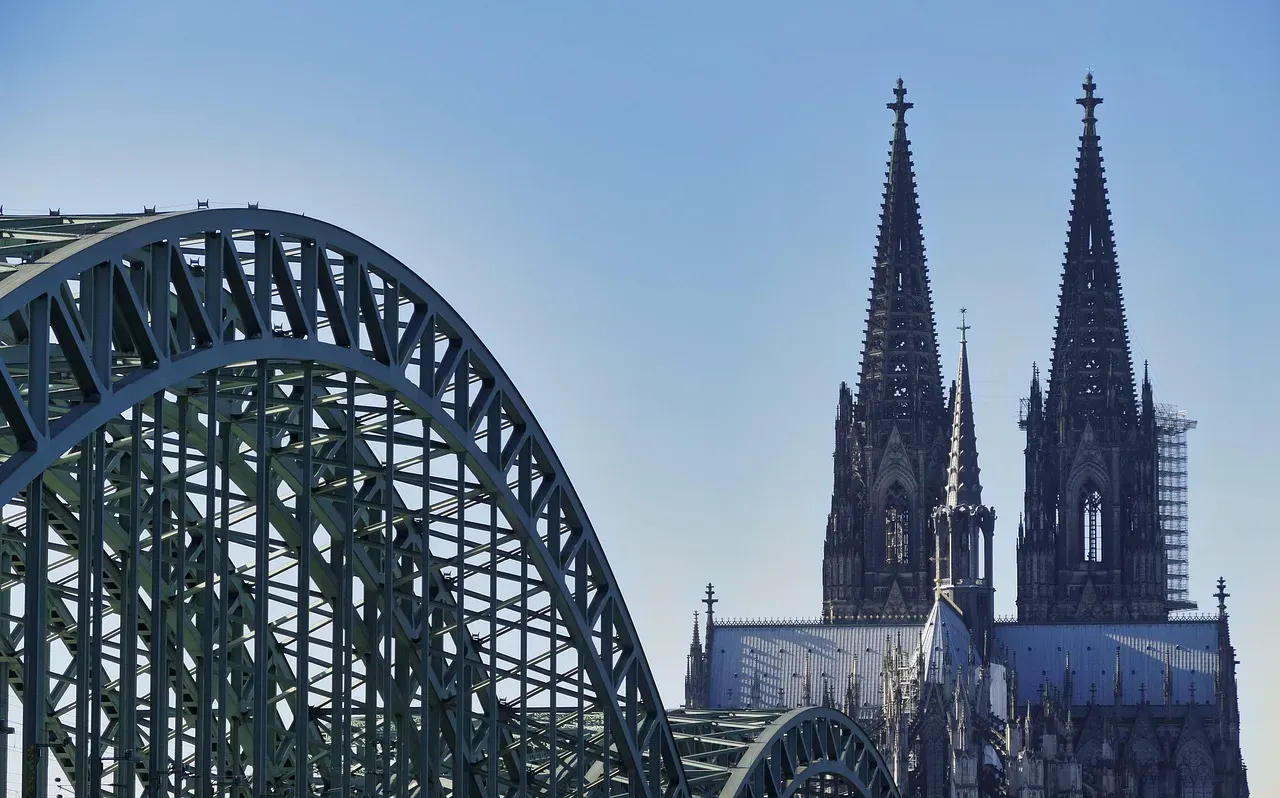
Construction began in 1248, and the cathedral wasn’t officially completed until 1880. That’s 632 years from groundbreaking to final stone, making it one of the longest construction projects in Gothic architecture. Work actually stopped completely for nearly 300 years, from the 1500s to the 1800s, leaving a massive crane sitting atop the unfinished tower.
The medieval builders used techniques that were already ancient by their standards, creating soaring vaults and impossibly delicate stonework. When construction resumed in the 19th century, workers had to reverse-engineer medieval methods because the knowledge had been lost.
Today, the cathedral requires constant maintenance and restoration. There’s a permanent team of stonemasons who work year-round replacing weathered stones. In a way, construction will never truly end – the building is slowly being rebuilt stone by stone as old pieces erode and crack.
The Great Wall of China: Millennia of Building
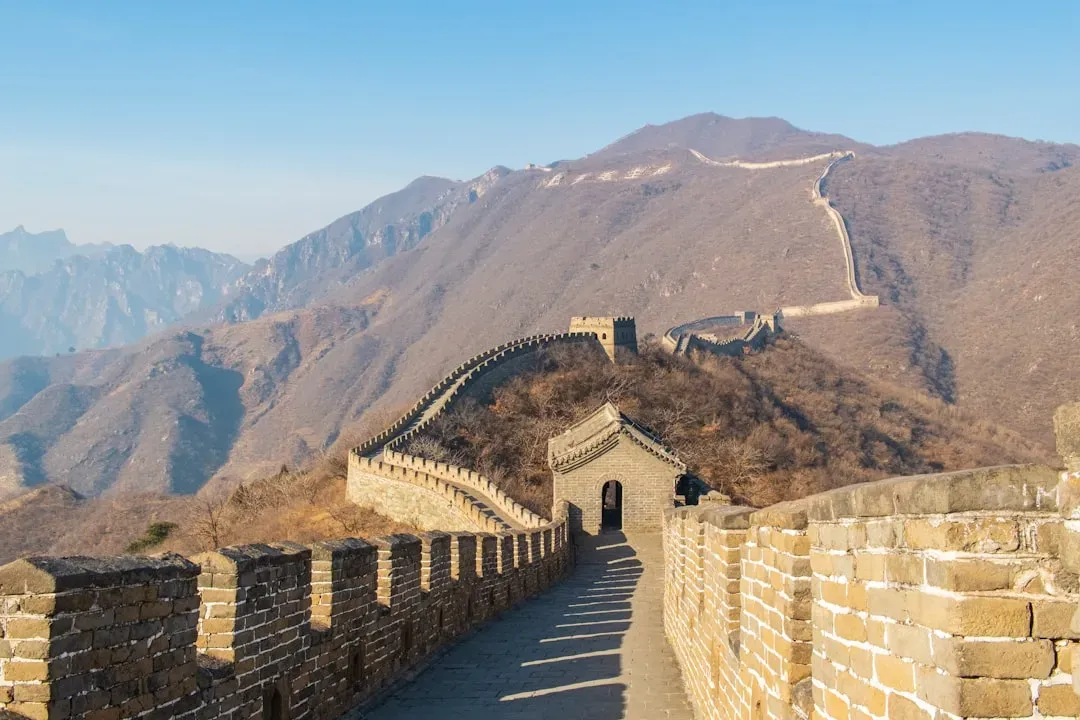
Calling it “a project” is almost misleading because the Great Wall was built, demolished, rebuilt, and extended by different dynasties over roughly two millennia. The earliest walls date back to the 7th century BC, while the most famous sections were built during the Ming Dynasty, which ended in 1644.
Different sections were built with completely different materials and techniques. Some parts are rammed earth, others brick, still others cut stone. The vast majority of what tourists visit today dates from the Ming period, but older segments exist in various states of decay throughout northern China.
The total length, including all branches and historical sections, stretches over 13,000 miles. Many sections have crumbled away entirely, leaving only traces in the landscape. Recent preservation efforts mean construction work, in the form of restoration, continues today. No single emperor or government can claim credit for the Wall. It’s truly the work of countless generations.
The Watts Towers: One Man’s 33-Year Obsession

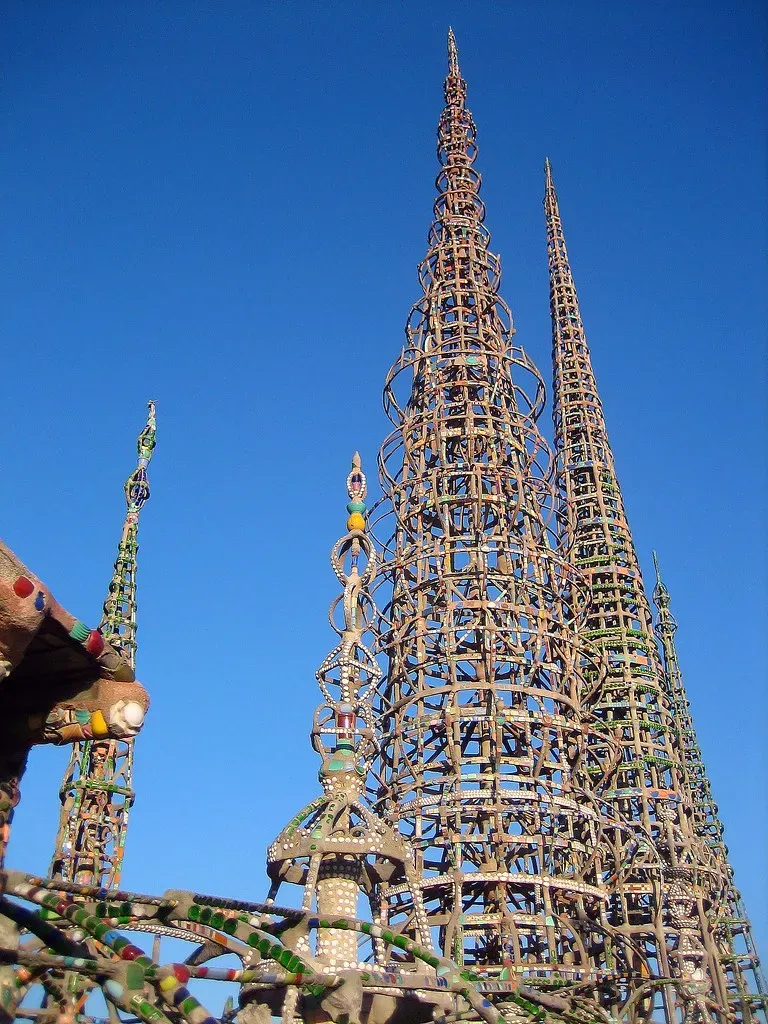
Italian immigrant Simon Rodia spent 33 years building an elaborate complex of towers, structures, and sculptures in his Los Angeles backyard, working alone without scaffolding or machinery. He started in 1921 and finished in 1954, then walked away and never returned, leaving no explanation for his creation.
The tallest tower reaches nearly 100 feet, constructed from steel pipes wrapped in wire mesh and covered with mortar embedded with found objects. Broken glass, seashells, pottery, and tiles cover every surface, creating a glittering mosaic that catches the California sun.
What’s truly remarkable is that Rodia had no formal training in engineering or architecture. He worked construction jobs by day and built his towers by night and on weekends. The structures have survived earthquakes that damaged conventional buildings nearby. Rodia himself said he wanted to do something big, and he did.
Parc Güell: Gaudí’s Unfinished Dream
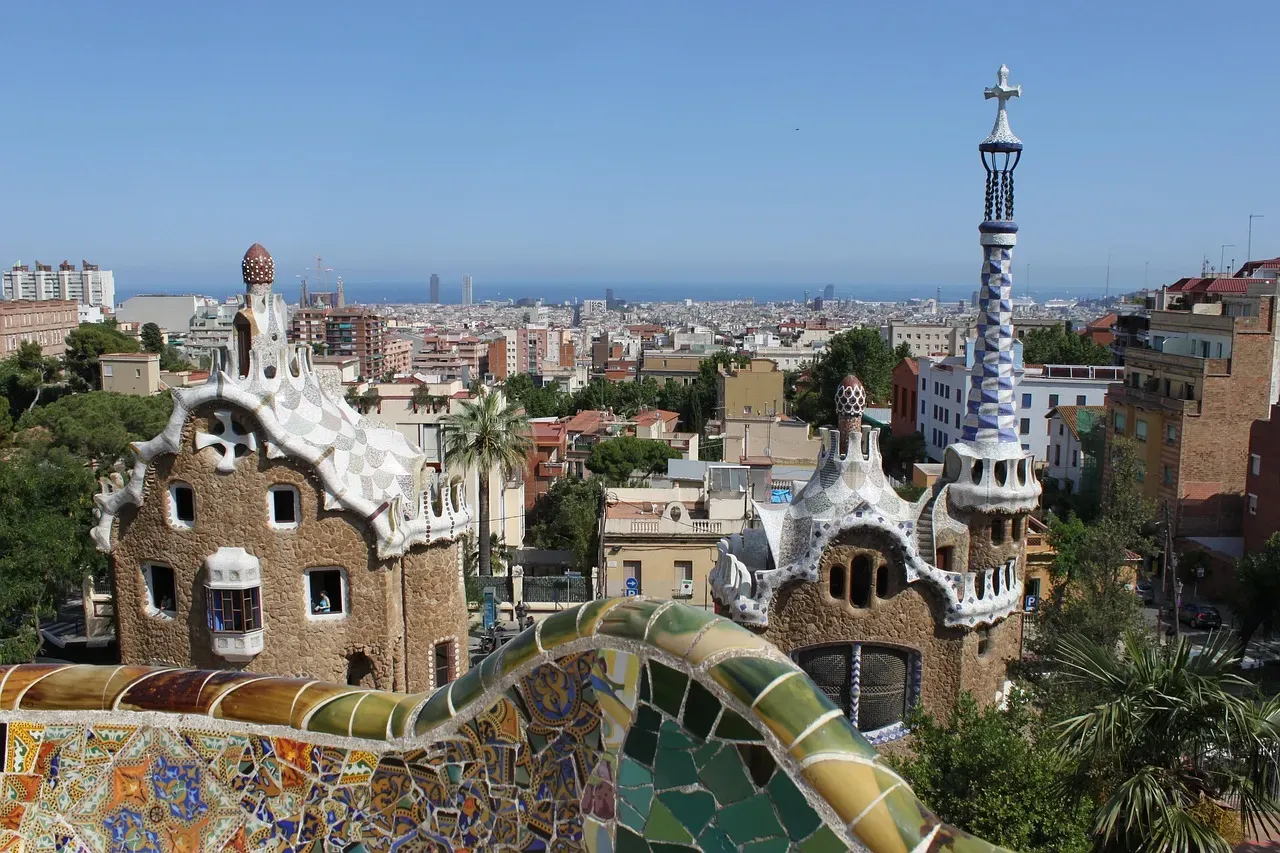
Another Gaudí project, this one commissioned by Eusebi Güell as a housing development in Barcelona. Work began in 1900 and officially stopped in 1914, though it was never truly completed according to the original vision. The plan called for sixty houses, but only two were ever built.
What remains is something far stranger and more wonderful than a housing development. The park features mosaic-covered structures, undulating benches, and buildings that seem to grow organically from the landscape. Gaudí’s trademark broken tile technique, called trencadís, covers surfaces in swirling patterns of color.
The project failed commercially but succeeded artistically in ways no one predicted. It’s now one of Barcelona’s most visited attractions. Sometimes the most interesting creative projects are the ones that fail to meet their original goals but succeed on completely different terms.
Conclusion: Time as Material

These projects challenge our modern obsession with efficiency and quick results. They use time itself as a building material, letting centuries accumulate like layers of paint or stone. Some were carefully planned across generations, others grew organically, almost accidentally achieving their monumental scale.
What they share is a quality that’s increasingly rare: patience. Not just patience from individuals but from entire cultures willing to invest in something they’ll never fully experience. These aren’t just buildings or books or artworks. They’re conversations between generations, each adding their voice to something larger than any single lifetime.
What do you think drives people to commit their entire lives to something they’ll never see completed? Share your thoughts in the comments.


