There is a graveyard in Hollywood that nobody talks about. It has no headstones, no flowers, and no visiting hours. It exists only in filing cabinets, hard drives, and the memories of directors who still wake up at night thinking about the films they never got to make. These are the lost scripts, the unmade movies, the greatest cinematic experiences that never happened.
Some of these projects represent decades of obsessive work. Others were killed overnight by a studio executive who simply said no. For every screenplay that becomes a feature film, there are far more that are never produced. Many scripts, even those that have sold for a lot of money and had A-list talent attached, find themselves in “development hell” or “turnaround,” where the studio that bought the script decides not to produce it.
The stories behind these lost pages are sometimes more fascinating than the movies themselves. So let’s dive in.
Stanley Kubrick’s Napoleon: The Greatest Film Never Made

If there is one title that film scholars reach for when discussing unmade masterpieces, it is this one. Often cited by film scholars as “the greatest film never made,” Stanley Kubrick’s ambitious Napoleon biopic has indeed garnered a legendary and mythic status. Honestly, that description barely does it justice.
Possibly the most notorious unmade film of all time, Stanley Kubrick’s Napoleon script is a thing of legend. Written after the success of 2001: A Space Odyssey, Kubrick centered his gaze on creating a biographical epic about the French commander Napoleon Bonaparte, with Jack Nicholson attached to star. The casting alone sends chills down your spine.
Stanley Kubrick’s legendary script for Napoleon is a thing of myth. He spent years developing the story. He literally knew what Napoleon did every day of his life and had it cataloged. Ultimately, major studios balked at the projected costs, especially after the commercial failure of Sergei Bondarchuk’s “Waterloo” in 1970. The loss of financial backing killed the project, leaving a gaping hole in film history.
Kubrick’s notes and research were later passed to Steven Spielberg, who has been developing a miniseries based on the unused material, keeping the legend alive for a new generation. It is bittersweet, really. A visionary’s life work living on as someone else’s TV project.
Jodorowsky’s Dune: The Unmade Film That Changed Cinema Anyway
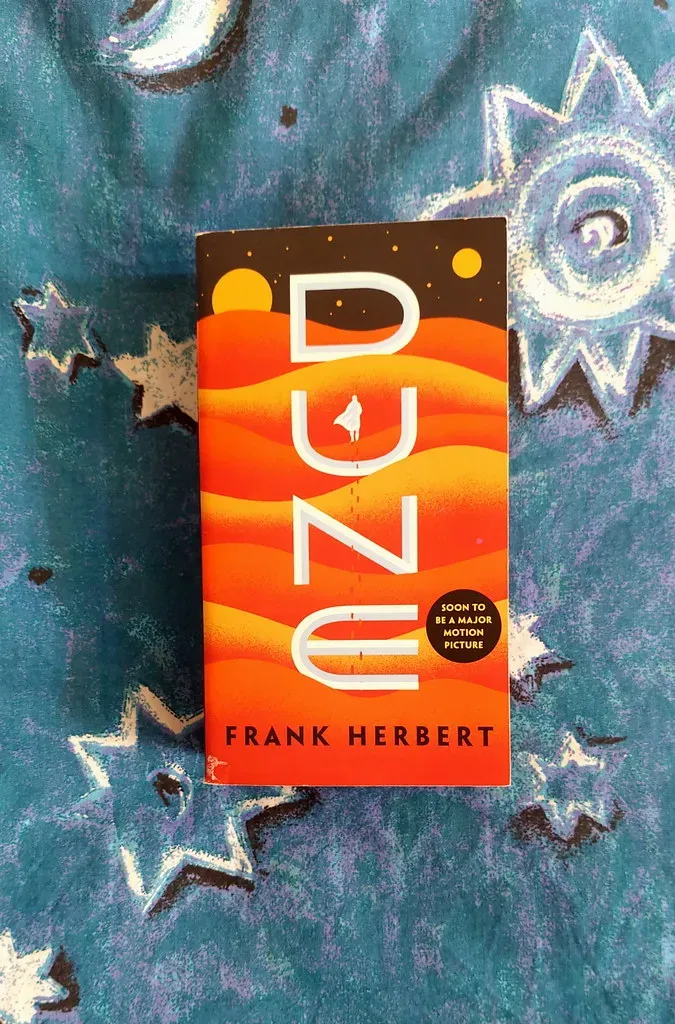
Here is the thing about Alejandro Jodorowsky’s version of Dune: it never got made, yet it may have influenced more blockbusters than almost any film that actually did get produced. Jodorowsky’s Dune is the subject of a 2013 American-French documentary film directed by Frank Pavich, which explores cult film director Alejandro Jodorowsky’s unsuccessful attempt to adapt and film Frank Herbert’s 1965 science fiction novel Dune in the mid-1970s.
Herbert traveled to Europe in 1976 to find that $2 million of the $9.5 million budget had already been spent just on pre-production expenses and that Jodorowsky’s script would result in a 14-hour film. Salvador Dali was cast as the Emperor and claimed he wanted to be the highest-paid actor in Hollywood history, asking for $100,000 per hour to act in the movie. Jodorowsky accepted, but then reduced the Emperor’s scenes so that Dalí would be needed for no more than one hour.
The film notes that Jodorowsky’s script, extensive storyboards, and concept art were sent to all major film studios, and argues that these influenced and inspired later film productions, including Star Wars, the Alien series, Flash Gordon, the Terminator series, and The Fifth Element. That is an extraordinary legacy for something that never even went into production.
Dan O’Bannon, who was in charge of special effects for Jodorowsky’s Dune, would be instrumental in getting H.R. Giger to design the original Alien (1979). At an auction in 2021 at Christie’s in Paris, one of the film-books sold for a world-record price for a storyboard of 2,660,000 euros. An unmade movie, fetching millions at auction. You really could not make this up.
The Cursed Script of Atuk: Four Men Who Read It and Died
I know it sounds crazy, but this one is genuinely unsettling. Atuk is considered a “cursed script” in Hollywood because four actors attached to play the title character died after accepting or expressing interest in the role: John Belushi, Sam Kinison, John Candy, and Chris Farley. Four comedic legends. One script. All gone.
Based on The Incomparable Atuk by Canadian author Mordecai Richler, the project began development in 1971 when director Norman Jewison acquired the rights to the novel and enlisted National Lampoon writer Tod Carrol to write the satirical “fish out of water” script. Atuk tells the story of a Canadian Inuit poet who relocates to Toronto and becomes corrupted by militaristic urban culture.
John Belushi was the first actor attached to the script and was set to play Atuk when months later, he died of a drug overdose at the Chateau Marmont. A couple years later, Sam Kinison signed on for the part and even went as far as to rewrite the script. The pattern continued after him with Candy and then Farley.
Whether you believe in curses or not, the sheer statistical improbability of four attached leads all dying before production began makes Atuk one of the most chilling footnotes in Hollywood history. The script still exists. No one has dared touch it since.
The Beatles in Middle-Earth: Tolkien’s Veto That Saved Cinema
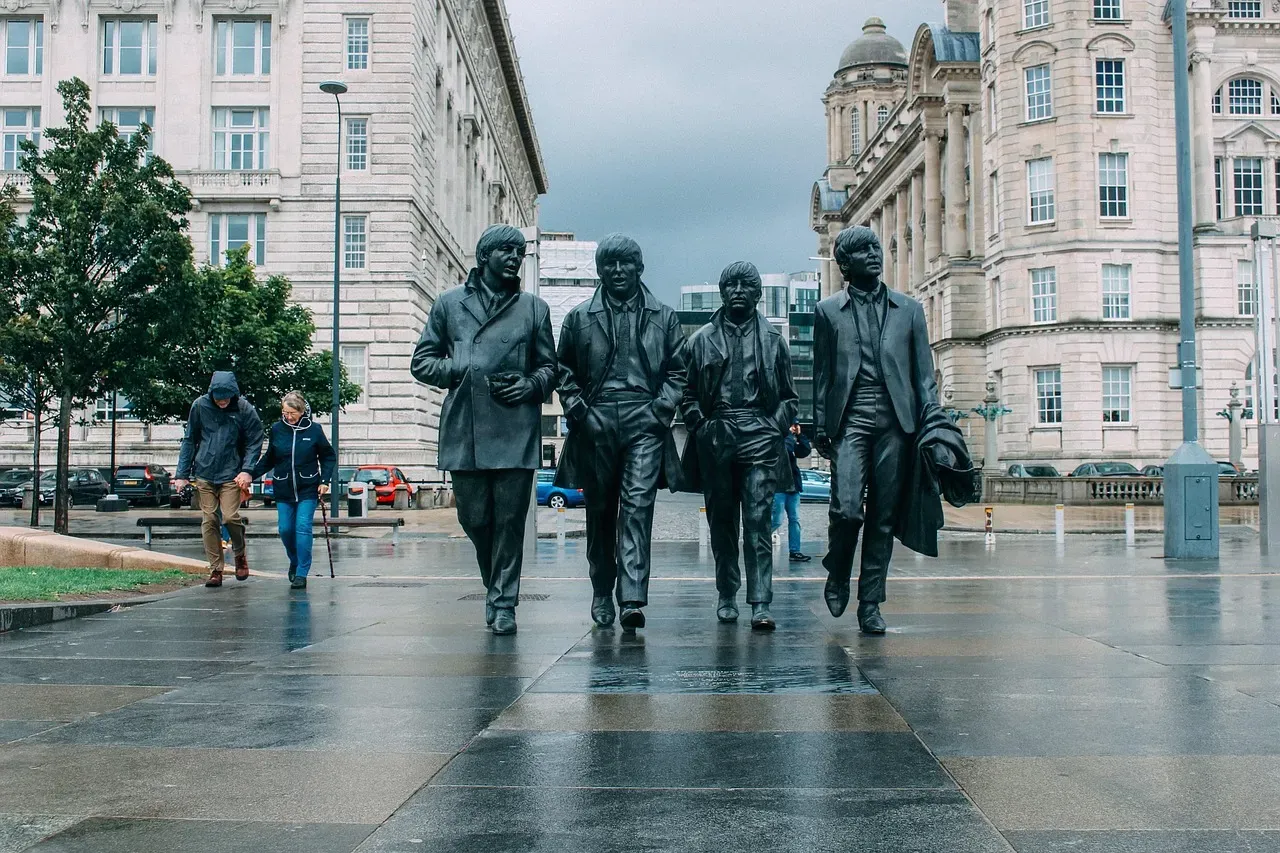
This one sounds like a fever dream someone had in 1967, but it actually happened. In one of the strangest intersections of music and film, The Beatles once tried to make a movie version of “The Hobbit,” with Stanley Kubrick as their top choice to direct. John Lennon was eager to play Gollum, Paul McCartney fancied himself as Frodo, and the whole band wanted to bring Tolkien’s world to life with their own unique style.
However, J.R.R. Tolkien himself was unimpressed by the idea, refusing to grant the film rights. The project never moved forward, but the thought of The Beatles in Middle-earth continues to capture the imagination of fans and pop culture historians alike.
Think about what this means for a moment. Had Tolkien said yes, Peter Jackson’s beloved trilogy probably never happens. The entire modern fantasy film genre might look completely different. One man’s refusal reshaped cinematic history in ways we still cannot fully measure.
Colin Trevorrow’s Star Wars: Duel of the Fates

Few unmade scripts in recent memory have generated as much passionate debate as this one. Star Wars: Duel of the Fates is a 2016 screenplay written by Colin Trevorrow and Derek Connolly. It was intended as the third entry of the Star Wars sequel trilogy and the sequel to Star Wars: The Last Jedi.
Trevorrow was announced as the director of Episode IX in 2015. After producing several drafts of a screenplay, Trevorrow was removed from the project, with Lucasfilm citing the reason as “creative differences.” The third in the trilogy was released in December 2019 as Star Wars: The Rise of Skywalker. While Trevorrow retained a story credit on the final release, it was directed by J.J. Abrams and co-written by Abrams with Chris Terrio.
In January 2020, Trevorrow’s script was posted to social media, with some critics describing the work as too professional to be fan fiction. The Duel of the Fates script depicted Finn and Rose leading a stormtrooper rebellion; John Boyega described the concept art as “dope” and expressed interest in a television series depicting it, but would not read the final script because he’d “be heartbroken.”
Abrams’ conclusion to the Skywalker Saga drew some of the harshest reviews in Star Wars history. Perhaps it is the mixed result of Rise of Skywalker that makes Trevorrow’s draft most fascinating, as this provides a glimpse at an alternate reality in which a very different version of Star Wars 9 got made.
Clair Noto’s “The Tourist”: The Alien Script That Inspired Men in Black
Not every lost script belongs to a famous director. Sometimes the most tragic losses in Hollywood belong to writers you have never heard of. Clair Noto’s “The Tourist” is a legendary unproduced sci-fi script from the 1980s, telling the story of alien refugees hidden among humans in New York. The script’s adult themes and complex world-building scared off studios, but insiders repeatedly praised its originality and ambition.
Elements of “The Tourist” later influenced films like “Men in Black” and “Under the Skin,” underlining its lasting legacy despite never being filmed. That is the cruel irony that follows so many lost scripts. The ideas survive. The original creator just does not get the credit, or the paycheck.
Let’s be real: this particular story says something uncomfortable about how Hollywood treats women writers, especially those working in genre fiction. Noto’s script was decades ahead of its time. The industry simply was not ready to take that kind of risk on a female voice telling a difficult story.
Guillermo del Toro’s At the Mountains of Madness

There is a version of this film that exists in your imagination, and it is extraordinary. Guillermo del Toro penned a script adaptation with Matthew Robbins for At the Mountains of Madness in 2006. Based on H.P. Lovecraft’s masterwork, this project became one of the most heartbreaking cases of development hell in modern Hollywood.
At one time, the project had a $150 million budget, Tom Cruise attached to star, and James Cameron on board as a producer. That lineup reads like a guarantee of cinematic greatness. A visionary horror director, a global superstar, and the most commercially successful filmmaker of all time. How could it possibly fail to get made?
Guillermo del Toro has been trying to get this script produced for years. He’s been close a bunch of times but no bites yet. The frustrating truth is that the Lovecraftian horror genre del Toro wanted to explore still has not found a comfortable home in mainstream Hollywood. It is too dark, too strange, too demanding of its audience.
The Black List and Development Hell: How Many Great Scripts Never Get Made

The phenomenon of the lost script is so widespread in Hollywood that an entire annual institution now exists to document it. The Black List is an annual survey of the “most-liked” motion picture screenplays not yet produced. It has been published every year since 2005 on the second Friday of December by Franklin Leonard, a development executive who subsequently worked at Universal Pictures and Will Smith’s Overbrook Entertainment.
The Black List unveiled its annual list of top unproduced screenplays in Hollywood, just in time for its 20th anniversary. The yearly compilation of the “most liked” unproduced screenplays included 83 scripts by 91 writers. The list was selected by more than 500 film executives, a record number of voters ever for a Black List survey.
Of the more than 1,000 screenplays The Black List has included since 2005, at least 450 have been produced as theatrical films. The produced films have together grossed over $30 billion, and been nominated for 241 Academy Awards and 205 Golden Globe Awards, winning 50 and 40 respectively. Remarkable numbers, yet they also reveal something sobering.
A 2019 Harvard Business School study found that The Black List scripts were “twice as likely to be made into films, with 30 percent of them produced, compared to 15 percent of non-listed scripts.” Additionally, The Black List screenplays “did better at theaters with movies of the same budget generating 90 percent more revenue at the box office.” Even with that enormous advantage, the vast majority of acclaimed, celebrated scripts still never reach the screen.
That means for every Spotlight, every Argo, every Promising Young Woman that emerged from these celebrated lists, there are hundreds of brilliant scripts quietly gathering dust. A screenplay, whether well-received by executives or noted for an appealing high-concept hook, being picked up by a prominent producer or major studio only for it to never get developed into a feature is a Hollywood tale as old as time. It is a story so commonplace in the motion picture industry that there even exists a yearly survey of the most-liked scripts floating around town that have yet to be made into a film.
The lost scripts of Hollywood are not just curiosities for film buffs. They are a record of the roads not taken, the stories untold, and the creative visions sacrificed at the altar of commercial caution. Every single one of them represents a filmmaker who poured something real into those pages and then watched the world walk past. What would cinema look like today if even a handful of them had been made? What do you think – which lost script deserves to finally see the screen?