


There is something deeply human about the idea of buried gold. It taps into a part of our brain that no amount of rational thinking can fully quiet. The mere possibility that a fortune sits somewhere in the earth, beneath the ocean floor, or locked inside a cipher no one has cracked yet, keeps people up at night, rearranging their lives, sometimes even risking everything.
History is full of genuine mysteries, and not all of them belong to folklore. Some are supported by historical records, archival accounts, and modern research. The following ten stories are as real as treasure gets – and not one of them has an ending yet. Let’s dive in.
The Beale Ciphers: A Code That Has Stumped America for Two Centuries

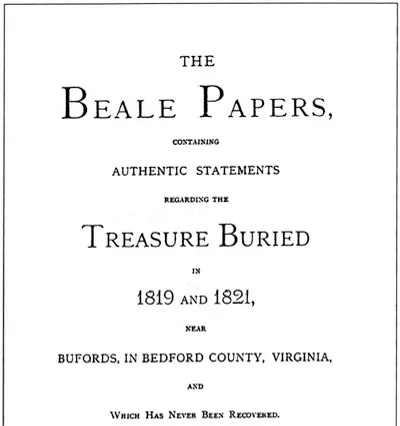
Imagine being handed a puzzle that could be worth tens of millions of dollars – but the key to solving it has been missing for nearly 200 years. That is the reality of the Beale Ciphers. The Beale ciphers are a set of three ciphertexts, one of which allegedly states the location of a buried treasure of gold, silver, and jewels estimated to be worth over $60 million as of January 2025. The story begins in the early 1800s, when a man named Thomas J. Beale supposedly buried a massive fortune in Bedford County, Virginia.
Comprising three ciphertexts, the first unsolved text describes the location, the second solved ciphertext accounts for the content of the treasure, and the third unsolved text lists the names of the treasure’s owners and their next of kin. Here’s the thing – only one of those three ciphers has ever been cracked, using the Declaration of Independence as the key. The ciphers were eventually published in 1885, but only one has been cracked: the second cipher, detailing the fabulous contents of the hidden treasures. Its cipher key? The Declaration of Independence. So far, investigators have been unable to crack either of the other two and find the treasure.
The treasure’s total weight is about three tons, as described in the inventory of the second cryptogram. This includes approximately 35,052 troy ounces of gold, 61,200 troy ounces of silver (worth about $96.3 million and $1.8 million respectively in October 2024) and jewels worth around $220,000 in 2017. Researchers are still at work trying to break the remaining ciphers, with a Popular Mechanics feature in 2024 dedicating fresh attention to the puzzle. Whether the treasure is real or an elaborate hoax remains, honestly, one of the greatest open questions in American history.
The Flor de la Mar: A $2.6 Billion Ship the Ocean Refuses to Give Back


More than 500 years after it vanished beneath the sea, the Flor de la Mar remains one of history’s most valuable and mysterious shipwrecks. The 16th-century Portuguese vessel believed to be carrying a treasure worth $2.6 billion in today’s value sank in 1511 off the coast of Sumatra during a storm. Neither the ship nor its cargo has been recovered to this day. Think of it as a locked vault the size of a ship, somewhere in the murky waters off Indonesia.
Among the items claimed to have been aboard were 80 tons of gold, 200 chests filled to the brim with diamonds, rubies, emeralds, coins and jewels, four full-sized sitting lions made of solid gold and filled with the finest perfumes and a jewel-encrusted table from which the Queen of Malacca took her meals. The cargo was intended as a personal gift for King Manuel I of Portugal. It never arrived.
International disputes further complicate efforts to locate the Flor de la Mar. Portugal, Malaysia, and Indonesia have each claimed the ship’s contents, arguing for historical and territorial rights. More than five centuries later, the Flor de la Mar mystery continues to fuel stories of sunken fortunes, lost empires, and the enduring hope of discovery. Even if someone found the wreck tomorrow, the legal battle over who owns it would likely be just as dramatic as the discovery itself.
The Lost Inca Gold of Atahualpa: A Ransom That Was Hidden in the Mountains

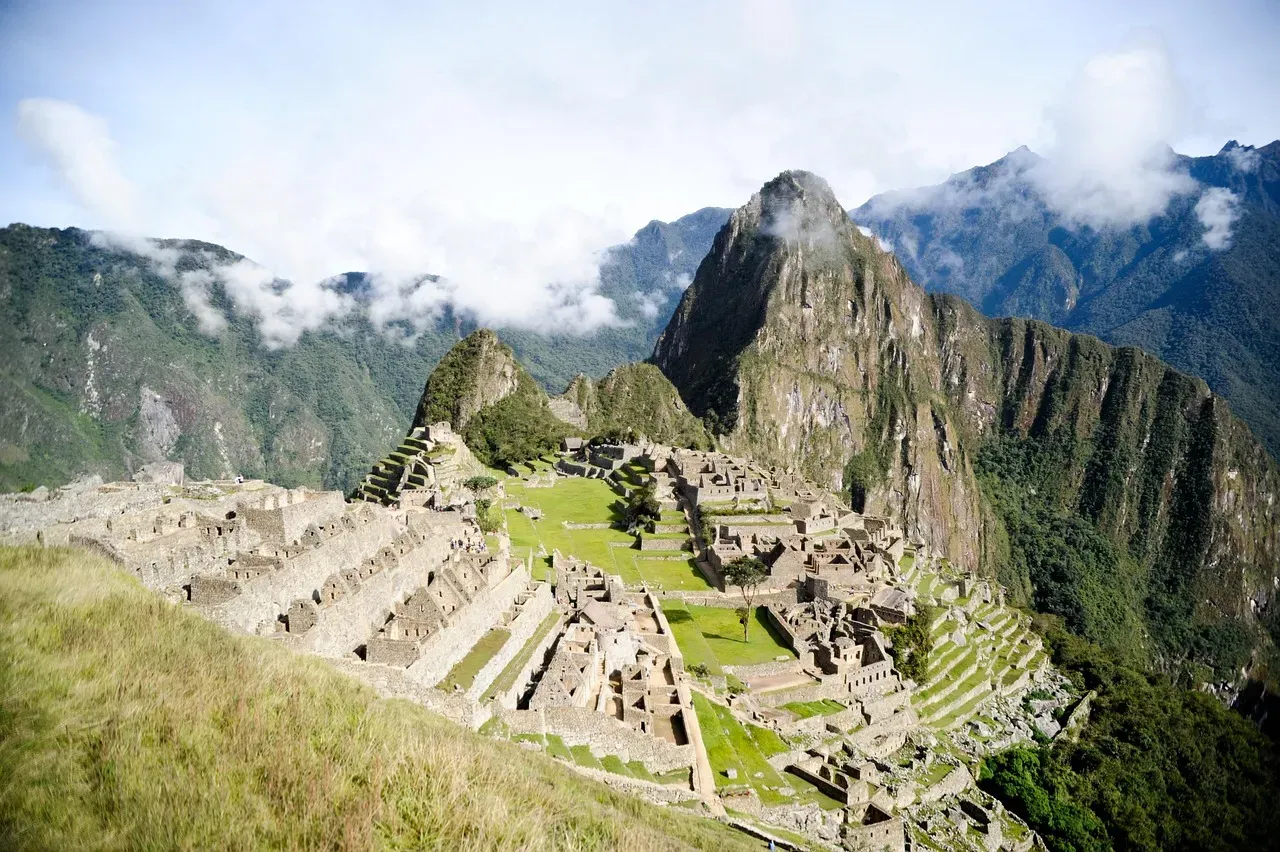
In 1532, Spanish conquistador Francisco Pizarro captured Inca Emperor Atahualpa at Cajamarca in modern-day Peru. The emperor promised to fill an entire room with gold and another with silver to secure his release, but before the precious metals could be delivered, the Spanish murdered their captive. According to legend, Inca general Rumiñahu, who was transporting the gold and silver, buried the stash in a cave or dumped it in a lake in Ecuador’s Llanganates Mountains.
Steeped in death, conquest, desire, and mystery, the legend of the lost Inca gold is guarded by remote, mist-veiled mountains in central Ecuador. Somewhere deep inside the unforgiving Llanganates mountain range between the Andes and the Amazon is said to exist a fabulous Inca hoard hidden from Spanish conquistadors. The terrain itself has repelled adventurers for centuries. Dense rainforest, constant seismic activity, and almost no infrastructure make even reaching the suspected location a genuine undertaking.
Archaeologists are divided as to whether the hoard is still out there, but that hasn’t stopped adventurer after adventurer trying their luck. The gold, if real, could be worth tens of billions of dollars. While some researchers don’t believe Atahualpa’s gold will ever be found, they say there’s still a good chance of discovering Inca sites referred to in the historical records. The mountains, it seems, are not yet done keeping their secret.
The Amber Room: The World’s Most Wanted Art Treasure


If you have never heard of the Amber Room, picture this: an entire chamber lined floor to ceiling with intricately carved amber panels, gold leaf, and precious stones, assembled over decades in 18th-century Prussia. It was considered the “Eighth Wonder of the World” by those who saw it. The Amber Room, built in Prussia in 1701, was a dazzling chamber of amber panels and gold. It vanished during World War II, believed to have been stolen by the Nazis. Some believe it was destroyed in bombings, while others think it’s hidden in bunkers. Treasure hunters have spent decades searching for this legendary lost treasure. Its estimated value is $500 million.
The Amber Room is often cited as one of the greatest art losses of World War II, but lesser-known evidence suggests that spare panels and secondary sections were stored separately from the main chamber. These components may have been transported independently during the war, increasing their chances of survival. Some historians believe the fragments were hidden in abandoned mines, sealed bunkers, or underground transport tunnels as German forces retreated.
While the original room may have been destroyed, these forgotten sections could still exist, offering a partial recovery of a cultural masterpiece thought to be lost forever. The hunt continues in Europe, quietly but persistently. Every few years, a new lead surfaces, a new tunnel is found, and for a brief moment the world holds its breath.
The Forrest Fenn Treasure: When Modern America Caught Treasure Fever
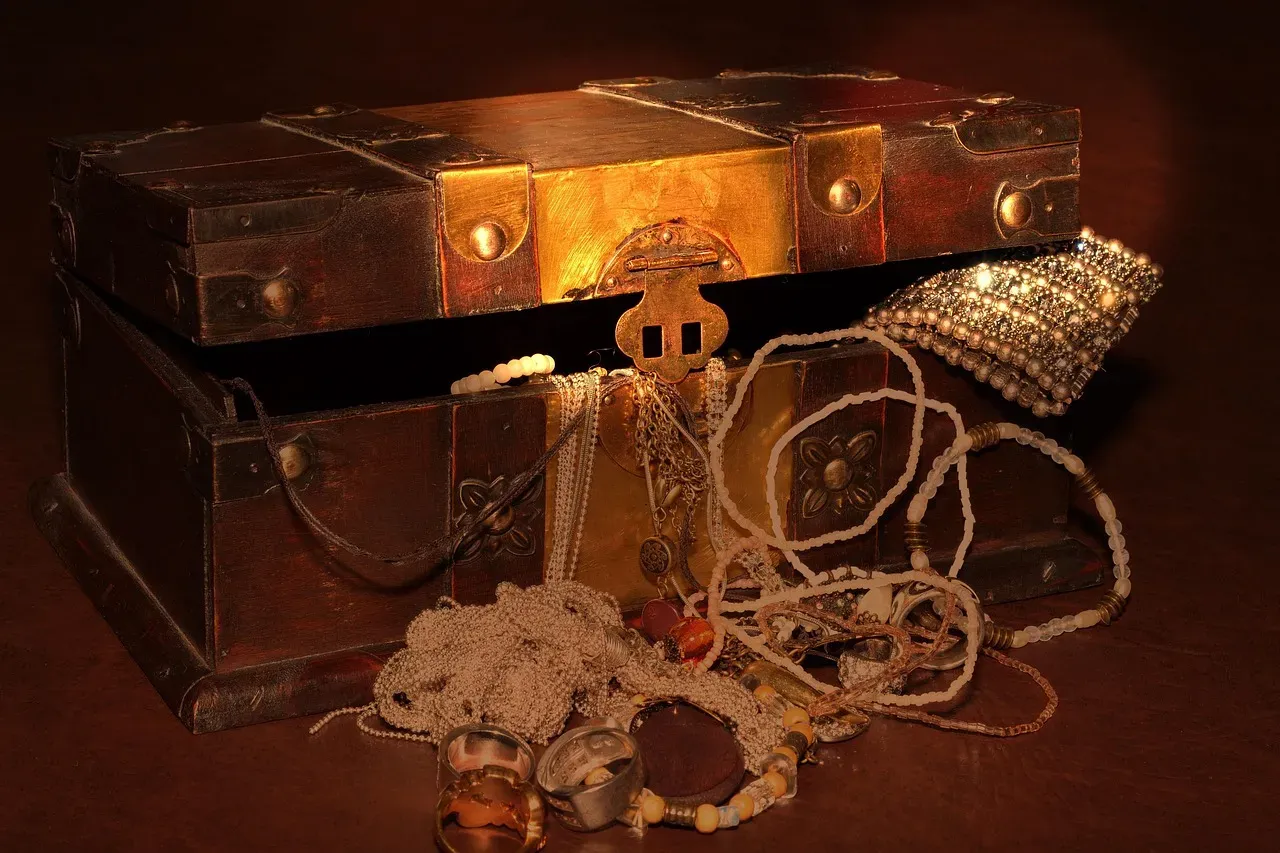
You might think large-scale treasure hunts belong to centuries past. Forrest Fenn proved otherwise. In 2010, enigmatic art dealer and author Forrest Fenn orchestrated a treasure hunt for the 21st century. At 80 years old, Fenn hid a chest filled with gold and jewels in the mountains north of Santa Fe, leaving only a cryptic 24-line poem for fortune seekers to divine its location. The audacious act ignited a decade-long quest for which a ragtag band of adventurers abandoned their jobs, families, and in some cases even their lives in pursuit of Fenn’s hidden fortune.
Sadly, five men are confirmed to have died during their hunts by falling, drowning, or hypothermia. The story is honestly as much about obsession as it is about treasure. The 42-pound treasure chest and its contents were finally unearthed by Jack Stuef in 2020. The then-medical student had initially fought to remain anonymous – for fear he would be harassed by fellow treasure hunters and Fenn fans, some of whom viewed his find as suspicious.
The Fenn saga did not end there, though. In 2025, Netflix released a three-part docuseries called “Gold and Greed: The Hunt for Fenn’s Treasure.” It features the treasure hunt, the lives that were lost, and the aftermath following the treasure being found. Meanwhile, the software engineer and amateur treasure hunter Justin Posey has kickstarted a new hunt inspired by Forrest Fenn’s original. The spirit of the chase, it turns out, is impossible to bury.
The Lost Dutchman’s Gold Mine: Arizona’s Deadliest Mystery


The Superstition Mountains east of Phoenix, Arizona, look like they were designed by someone who wanted to hide a secret. Jagged ridgelines, searing heat, no water. The tale of the Lost Dutchman’s Mine haunts Arizona’s rugged Superstition Mountains. For generations, fortune seekers have scoured the region, drawn by stories of an incredibly rich gold vein hidden somewhere in the wild terrain.
Partner offer

Jacob Waltz, the “Dutchman,” claimed he discovered the mine and left vague clues before his death. Its exact location remains one of the desert’s mysteries. The mine’s gold is estimated to be worth $200 million. Some have called it the most famous lost mine in North American history. What is remarkable, and disturbing, is the body count it has accumulated over the years.
An estimated 500 adventurers have died looking for the mythical treasure, making the search for the Lost Dutchman’s Gold Mine one of the most dangerous treasure hunts in the world. Let’s be real – that number is staggering. Yet every season, new hikers head into those mountains. The lure of $200 million in gold, it seems, is a persuasive argument even against common sense.
The Irish Crown Jewels: Stolen in Plain Sight, Never Found

Immediate source: The journal.ie, Public domain)
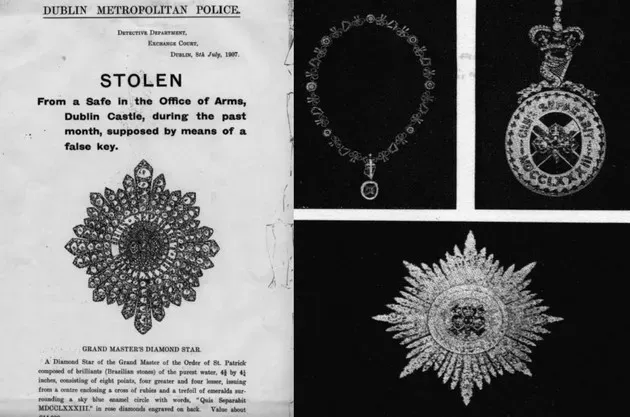
This is one of the most audacious thefts in royal history. The Irish Crown Jewels were stolen in 1907 from a safe in Dublin Castle. What makes it so strange, even over a century later, is how cleanly and completely they vanished. No solid lead. No confirmed recovery. No definitive suspect ever tried and convicted.
In 1907, the Irish Crown Jewels were stolen from Dublin Castle. The diamonds, rubies, and ceremonial badges vanished without a trace, baffling investigators. The theft was executed flawlessly, leading some to suspect an inside job. Despite extensive investigations, the jewels have never been recovered. Valued at $20 million, their rediscovery would be a monumental event for Ireland, solving a mystery that has lasted over a century.
Think about it like this: an inside job at a royal castle, no conviction, no recovery, and over 118 years of silence. The Irish Crown Jewels remain one of Europe’s most baffling cold cases. Somewhere, someone may well be wearing a ruby that once belonged to Irish royalty, completely unaware of what they have.
The Treasure of Lima: Buried on a Remote Island No One Can Crack

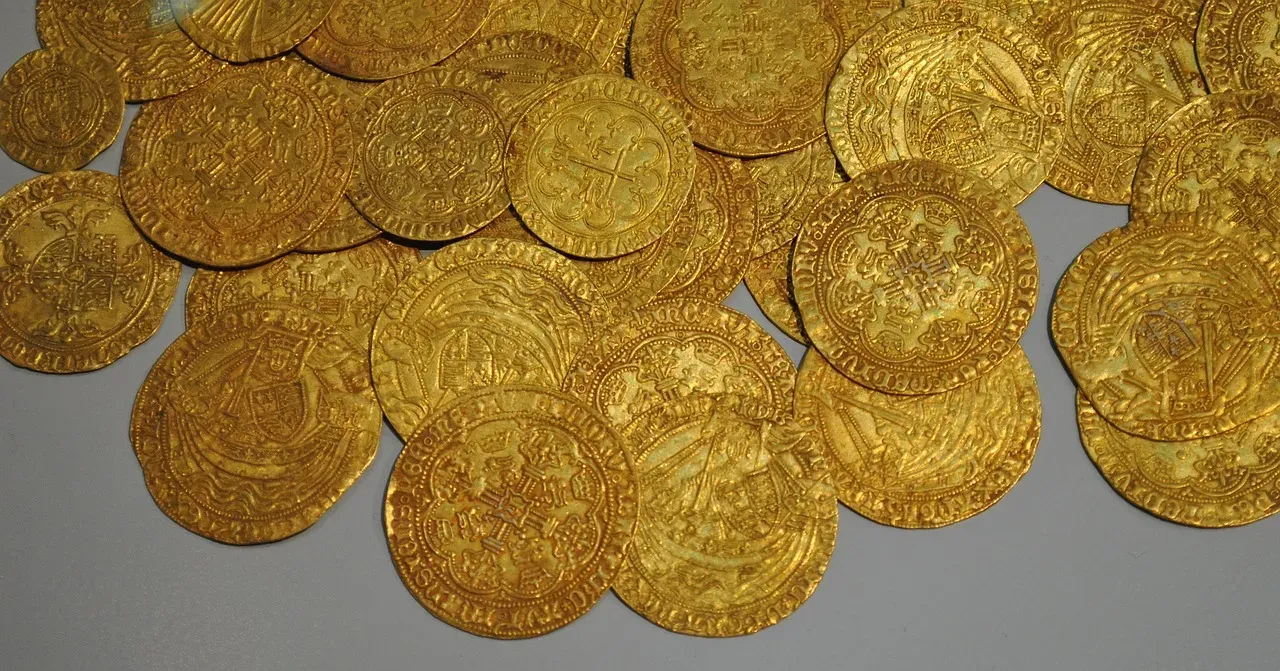
Cocos Island’s legendary lost treasure continues to lure adventurers with promises of untold riches. In 1820, as unrest swept Lima, a vast collection of gold, jewels, and sacred artifacts was spirited away for safekeeping. Instead, the treasures were stolen by a trusted sea captain and are said to have been buried on remote Cocos Island. Despite countless expeditions and wild tales of discovery, the legendary hoard remains hidden. Its elusive nature has turned Cocos Island into a magnet for treasure hunters and dreamers alike.
Despite over 300 expeditions, no one has recovered the treasure, which includes priceless religious artifacts and millions in gold coins. Three hundred expeditions. That is not a myth people gave up on quickly. The island, located off the coast of Costa Rica, is a UNESCO World Heritage Site, which today officially restricts excavation activities. The treasure is protected, in a strange irony, by the very laws meant to preserve nature.
The hoard’s value is estimated at $200 million. Its discovery would make headlines and reward the brave adventurer willing to take on this treasure hunt. Cocos Island today is one of the most biodiverse marine reserves on the planet, which means any serious excavation would face enormous legal and environmental obstacles. The island guards its secret well.
The Missing Imperial Fabergé Eggs: History’s Most Glamorous Cold Case

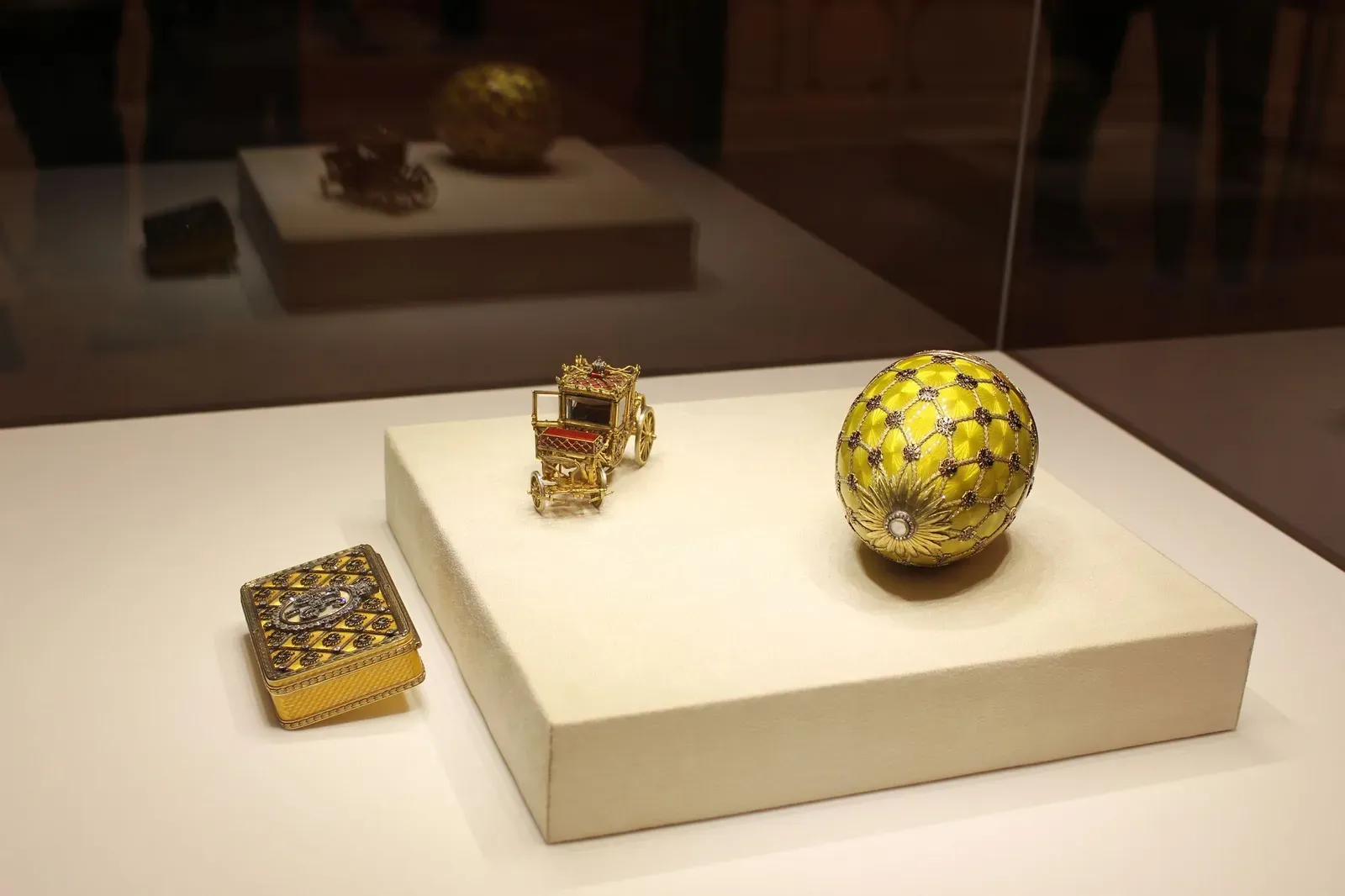
Most people know what a Fabergé egg looks like: impossibly ornate, jewel-encrusted, a symbol of Romanov excess. What most people do not know is that several of them are simply… gone. Seven of the 50 Fabergé eggs crafted for the Russian Imperial family during the late 19th and early 20th centuries are lost and out there waiting to be discovered, assuming they haven’t been broken up or melted down. The lost eggs include the 1888 Cherub with Chariot, the Nécessaire from 1889, and the 1903 Royal Danish, each of which are worth around $30 million.
Starting in 1885, the Tsars of Russia gifted the ladies in their life with eggs made of precious stones and metal by the jeweler Fabergé. Each was a treasure, and the eggs contained smaller treasures within – such as a golden crown inside a golden hen inside a golden yolk. A total of 50 were made, all of which were confiscated by the new Russian government during the Russian Revolution of 1917.
Here is the part that makes this story genuinely exciting. The Third Imperial Egg turned up in 2012 at a jumble sale in the American Midwest, so there’s every chance more could be found. A jumble sale. One of the rarest objects in the world, sitting on a table at what amounts to a garage sale. If that does not make you want to check your grandmother’s attic, I honestly don’t know what will.
The Florentine Diamond: A Gemstone That May Be Hiding in Plain Sight


The Florentine Diamond was a legendary pale-yellow gemstone weighing more than 130 carats, once owned by the Medici family before becoming part of the Habsburg crown jewels. Its disappearance occurred during the collapse of the Austro-Hungarian Empire after World War I, a period marked by chaos, exile, and secretive asset movements. The diamond vanished while being transported during the royal family’s flight from Austria.
What sets this mystery apart from most treasure hunts is the chilling possibility of where it might be now. Many experts believe it was deliberately recut to disguise its identity, meaning it could still exist today within a private collection, unrecognized as one of history’s most valuable missing gems. It could be sitting in a display case somewhere in Europe, wearing a different shape and a different name. Nobody would know.
A 130-carat diamond, once belonging to the Medici family, potentially recut and quietly passed through private hands for over a century. It is the kind of story that makes you realize how porous the borders between “lost” and “hidden” really are. While imaginations soar at the thought of lost treasures, history is full of many other, less publicized treasures that have disappeared without a trace, leaving behind only fragments of their existence, unconfirmed eyewitness accounts, and numerous unresolved theories.
The World Is Still Full of Unsolved Fortunes

What all of these stories share is not just gold or diamonds or encrypted letters. It is the stubborn refusal of history to close its accounts neatly. While some buried treasures have been found, there’s still plenty out there just waiting to be discovered by metal detector, shovel, or puzzle-solving mind. From the ocean floor off Sumatra to the mountains of Ecuador, from Vienna to Virginia, real fortunes remain genuinely unaccounted for.
These treasures are more than just gold and jewels – they represent unsolved puzzles and forgotten chapters of human history. The hope that these priceless relics might still be waiting to be discovered continues to inspire explorers, archaeologists, and dreamers worldwide. We live in 2026, with satellite imaging and deep-sea robots, and still the earth keeps its secrets.
The most remarkable thing may be this: the next discovery could come not from a funded expedition or a research institute, but from a curious person in the right place at the right time. The Third Imperial Fabergé Egg was found at a jumble sale, after all. So the real question is – what would you do if you stumbled across one of these treasures? Would you even recognize it?
Partner offer
Planning a trip to Vegas?
Compare hotel rates and show tickets on VEGAS.com.


