Reality is stranger than you think. Seriously. While we go about our daily lives, convinced we understand the basics of existence, scientists are uncovering possibilities that sound more like science fiction than fact. I’m talking about the kind of ideas that make you pause mid-coffee and wonder if everything you thought you knew is wrong.
We’re living through a golden age of cosmology and physics. From invisible matter holding galaxies together to the possibility that we’re all holograms projected from a distant surface, these aren’t just wild guesses. They’re backed by math, observations, and serious research from institutions like NASA, CERN, and leading universities worldwide. So let’s dive in.
We Might Be Living in One of Countless Universes


The multiverse concept arises from cosmic inflation theory, where causally disconnected bubble universes form a vast multiverse where physics can vary between different bubbles. Think about that for a second. Stanford physicist Andrei Linde notes that in most models of inflation, the multiverse naturally emerges, and every experiment supporting inflation brings us closer to taking the multiverse seriously. This process continues indefinitely, with inflating universes producing even more inflating universes, creating eternal inflation.
Researchers are even trying to detect evidence of this wild idea. Various teams are developing new ways to infer exactly how the multiverse bubbles and what happens when those bubble universes collide. It’s hard to believe we’re even able to discuss testing such a concept.
Our Reality Could Be a Computer Simulation


The simulation hypothesis remains scientifically discussable thanks to advances in computing and AI, with technologies making the hypothesis more plausible and prompting reflection on humanity’s technological trajectory. Philosopher David Chalmers published work in 2024 examining this idea seriously. Recent research from UBC Okanagan mathematically demonstrates that reality requires non-algorithmic understanding, something no computation can replicate. This discovery challenges the simulation hypothesis and reveals the universe’s foundations exist beyond any algorithmic system.
Yet the debate continues. Some physicists argue we can’t rule it out entirely, while others have used mathematical theorems to show fundamental barriers to simulating consciousness itself.
Most of the Universe is Invisible Dark Matter

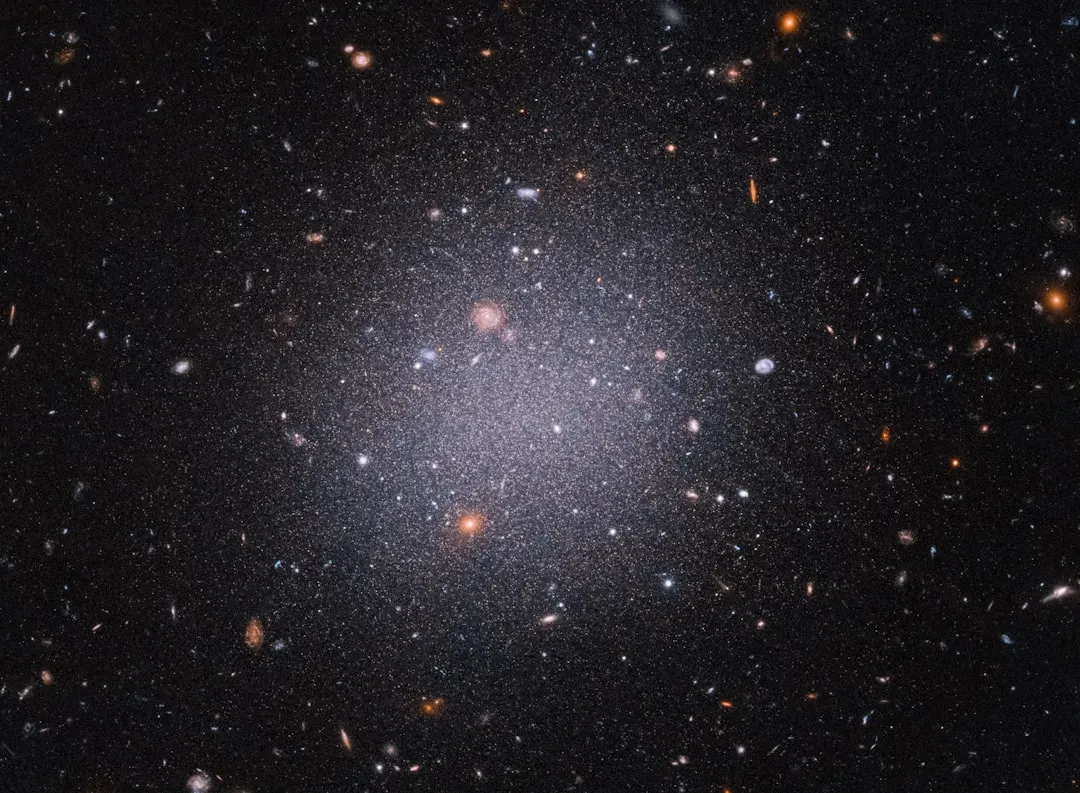
Scientists estimate that ordinary matter makes up only about 5% of the universe, while dark matter makes up about 27%. Let’s be real, that’s mind bending. By measuring the distortion of galaxies through gravitational lensing, astronomers can map the distribution of mass within clusters, illuminating the underlying cloud of dark matter. NASA’s James Webb Space Telescope and Chandra X-ray Observatory combine data to visualize dark matter, with researchers carefully measuring galaxy cluster masses and collective light from unbound stars.
Professor Tomonori Totani of the University of Tokyo believes he has identified gamma rays with 20 gigaelectronvolts of energy extending in a halo structure toward the Milky Way’s center, closely matching the shape expected from the dark matter halo. If confirmed, we’d have the first direct observation of this mysterious substance.
A Mysterious Force is Ripping the Universe Apart

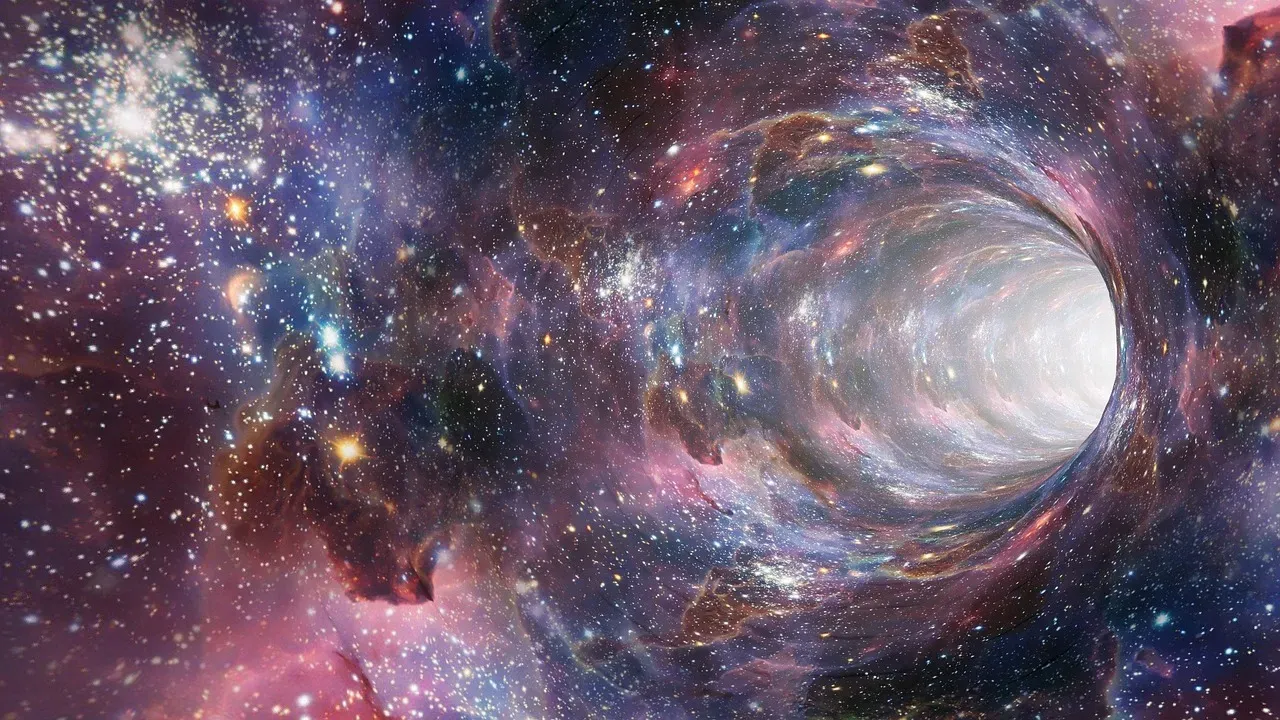
Nine billion years after the universe began, its expansion started to speed up, driven by an unknown force scientists named dark energy, which makes up approximately 68% to 70% of the universe. The Dark Energy Spectroscopic Instrument data dropped in April 2024, suggesting dark energy appears to be weakening and becoming less pushy over time. Former DESI team member Luz Ángela García Peñaloza told Space.com that the discovery of evolving dark energy would be as revolutionary as the discovery of the accelerated expansion itself.
Here’s the thing though. Combined analysis indicates the universe is not accelerating today as previously thought but has already transitioned into a state of decelerated expansion. That could completely change how the universe ends.
The Universe Might Be a Giant Hologram

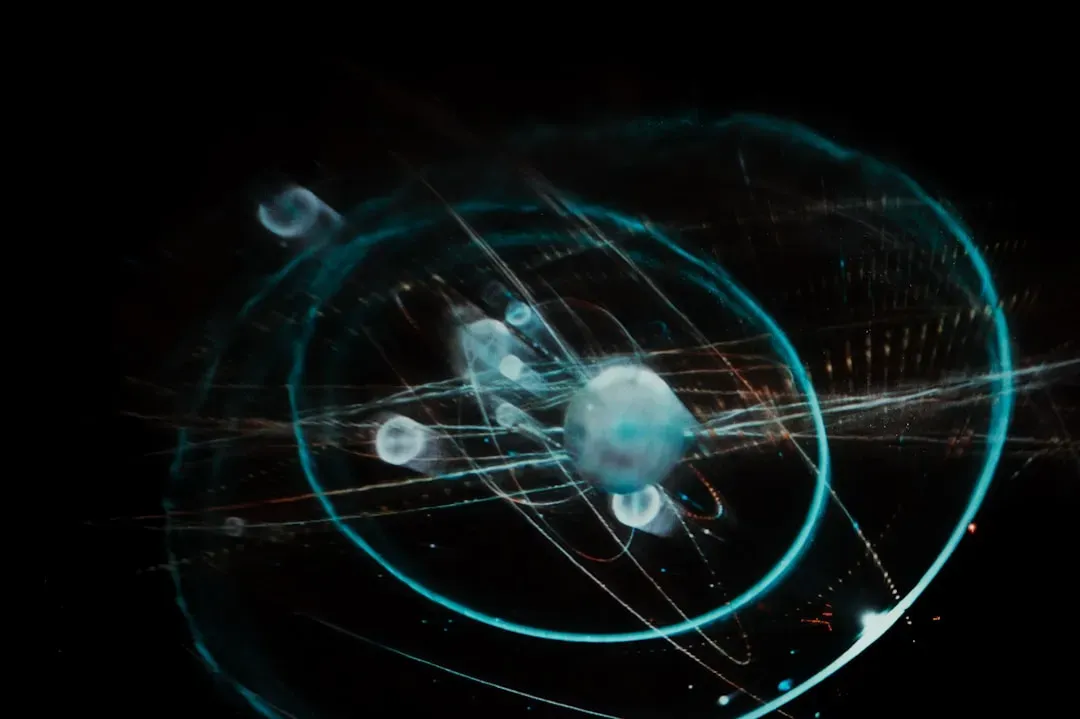
The holographic principle states that the description of a volume of space can be encoded on a lower-dimensional boundary, first proposed by Gerard ‘t Hooft in 1993 and given precise string theoretic interpretation by Leonard Susskind. The holographic principle holds that the universe and everything in it is a three-dimensional projection from a two-dimensional plane, encoded with information that gives rise to the universe in its three-dimensional form. Honestly, wrapping your head around this feels impossible.
Any theory of quantum gravity will most likely be holographic, having a dual description in the form of a theory with one fewer dimension, without gravity. Researchers continue exploring whether this applies to our actual universe, not just theoretical models.
Partner offer

Time Might Not Be What We Think It Is

Some physicists argue time may not be fundamental but instead emerges from quantum entanglement processes, according to Nature Physics research from 2023. This turns everything we assume about time on its head. If time isn’t a basic building block of reality but something that emerges from deeper processes, what does that mean for cause and effect?
The implications are staggering. Our entire experience of past, present, and future could be an illusion created by the way quantum particles interact. I know it sounds crazy, but theoretical models are taking this seriously.
String Theory Could Explain Everything

String theory remains a leading candidate for unifying gravity and quantum mechanics, though experimental verification is still lacking, according to CERN theoretical research updates. The basic idea is that fundamental particles aren’t point-like objects but tiny vibrating strings. Different vibration patterns create different particles.
The challenge? String theory requires extra spatial dimensions we can’t detect. It predicts phenomena we haven’t observed. Yet it’s mathematically beautiful and could potentially explain all forces and particles in one framework. Scientists continue working on it because the potential payoff is enormous.
Consciousness Might Have Physical Properties

Neuroscience and physics research increasingly examine whether consciousness has measurable physical properties, according to Frontiers in Psychology and Nature Reviews Neuroscience. Studies of xenon isotopes with different quantum spin values have demonstrated differential anesthetic effects, suggesting quantum properties directly influence consciousness.
Research on quantum coherence in biological systems shows quantum effects can persist at biological scales and temperatures. This contradicts earlier assumptions about quantum processes in warm, wet environments like our brains. If consciousness involves quantum mechanics, simulating it becomes exponentially harder, possibly impossible.
Traversable Wormholes Could Theoretically Exist
NASA-funded theoretical studies suggest traversable wormholes may be mathematically possible under specific conditions, though no physical examples exist, according to Classical and Quantum Gravity journal. These aren’t the Hollywood version where you just step through a portal. The conditions required are extreme and may be physically impossible to create.
Still, the math works out. Under very specific circumstances involving exotic matter with negative energy density, spacetime could be warped to connect distant points. Whether nature actually allows this remains an open question. The universe has surprised us before.
What This All Means for Reality

These theories challenge everything we thought we knew. From multiple universes to holographic projections, from invisible matter to mysterious energy, science keeps revealing a cosmos far stranger than our intuitions suggest. The craziest part? All these ideas come from serious research at major institutions, not fringe speculation.
Whether we’re living in a simulation, a hologram, or one bubble in an infinite multiverse, these possibilities emerged from physicists trying to solve real problems. They followed the math and observations wherever they led, even when the destination seemed absurd. That’s what makes them genuinely mind-blowing yet potentially true.
What do you think about these wild possibilities? Does it change how you see reality? Let us know in the comments.
Partner offer
Planning a trip to Vegas?
Compare hotel rates and show tickets on VEGAS.com.