
Every semester, millions of college students find themselves sitting in classrooms, staring at syllabi, and quietly wondering the same thing: why am I here? Not in any existential sense, but in the very literal sense of whether the course in front of them has any real connection to the career they’re paying tens of thousands of dollars to pursue. That tension between broad education and focused preparation has never felt more charged than it does today.
Fewer than half of Americans now believe colleges are headed in the right direction, and stories of unemployed graduates saddled with crushing debt continue to fuel skepticism about whether certain courses are worth the investment. Some of the loudest complaints aren’t about college itself – they’re about specific courses that students feel they were forced to take without gaining anything useful in return. Here are twenty of them.
1. Introductory Physical Education (Activity Courses)


Science has repeatedly shown that regular exercise is important – but the question students keep raising is why they need a college course in which they play sports and games they can just as easily play on their own. Health education is a different matter and arguably useful, but paying tuition to play badminton? Students widely say it’s not worth their time.
PE activity courses have survived as requirements at many universities largely out of institutional habit rather than genuine pedagogical purpose. For a student already managing a full course load and paying per credit hour, these courses often feel like an expensive errand with no academic payoff.
2. Remedial College Algebra


For students enrolled in humanities, social work, education, or the arts, being required to complete a remedial algebra course – material they covered in high school – can feel like a time warp rather than an education. Studies have shown that making advanced math a mandatory requirement can actually cause students to drop out, which raises real questions about who these requirements are designed to serve.
For many students, it feels like a waste of time and money to redo what they already covered in their four years of high school, compressed into a single college semester – and at an institution charging steep tuition, that repetition is especially hard to justify.
3. Introduction to Microsoft Office / Basic Computer Literacy


One of the clearest examples of a course students consider useless is a very basic computer literacy course – think “Intro to MS Office” – for a student pursuing a degree in Computer Science or any tech-adjacent field. That individual likely already has a strong understanding of the subject matter and simply won’t gain anything from such a course.
The problem extends beyond STEM majors. In 2026, virtually every incoming college student has grown up navigating digital tools from childhood. A course teaching students how to format a document or create a basic spreadsheet strikes most of them as condescending, outdated, and a poor use of a credit slot.
4. Survey of World Civilizations (Mega-Lecture Version)


Many colleges herd hundreds of students into these required survey courses, which are famous for either putting students to sleep or infuriating them. Many students report that these courses are only bearable if there’s an exceptional lecturer or engaged teaching assistant running the smaller sections – and when those aren’t available, the experience is largely a slog.
The sheer scope of a world civilizations survey – covering thousands of years across dozens of cultures in a single semester – means the material is spread dangerously thin. Students often leave with a collection of disconnected facts rather than any deep understanding, and the course rarely connects to their major in any meaningful way.
5. Introduction to Philosophy (As a Mandatory Gen Ed)


Philosophy is arguably the cornerstone of civilization, and a course in it can help develop thinking skills. The honest question students keep raising, though, is when they last saw a call for a robust philosophy background on a job application. Since critical thinking is developed across many classes, spending tuition money on existentialism as a required course is something many students feel they could save for elsewhere.
This isn’t an argument against philosophy as a discipline – philosophy majors often develop some of the sharpest analytical minds around. The complaint is specifically about compulsory intro-level philosophy courses that are assigned to students across every major, often with no follow-through and no connection to their field of study.
6. Speech Communication 101

Public speaking is a genuinely valuable skill, and no one seriously disputes that. The grievance students have is with intro-level speech courses that are locked behind outdated formats – timed presentations on topics the student has no interest in, graded on mechanical criteria that have little resemblance to how real communication actually works.
Many students find that so-called “filler” classes lack real depth, bear no meaningful connection to their major or career path, and exist primarily to satisfy credit requirements. Speech 101 frequently lands in this category, particularly for students in communication-heavy programs who feel the course tells them nothing they don’t already know or practice constantly in their degree work.
7. Theater Appreciation

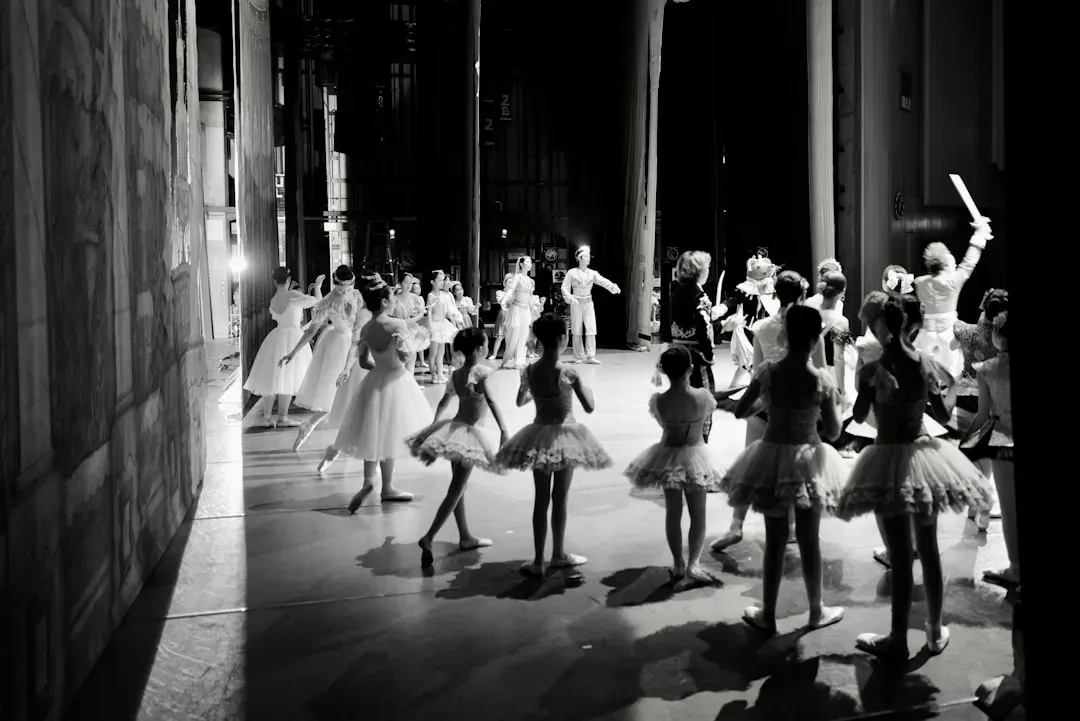
Taking a theater class – even if you genuinely love acting – is likely useless in career terms. Plenty of working actors and performers never took a formal theater class in college, which makes the case that this course is unlikely to meaningfully advance your goals.
Theater appreciation as a gen-ed requirement sits in a strange middle ground: too surface-level for anyone passionate about theater, and too disconnected from professional goals for everyone else. Students sitting through a semester of play analysis while studying nursing or accounting tend to experience it as exactly the kind of box-ticking that gives gen-ed requirements a bad name.
8. Archaeology 101


Plenty of students spend their childhoods fascinated by ancient civilizations and dream of becoming the archaeologist who unearths treasures of the past. The reality of taking archaeology as a required elective, though, is often far less romantic. The course skims the surface of a complex discipline without offering the hands-on fieldwork that gives the subject its real appeal.
Beyond the content, the career ceiling is a serious concern. The employment market for archaeology graduates is extremely narrow, and completing an intro course offers no practical credential or skill transfer. Students who took it to fulfill a requirement often describe it as interesting enough but ultimately one of the easier slots they could have filled with something more relevant.
9. History of Mathematics

History of Mathematics courses are widely dismissed by students as boring and practically useless – the premise being that instead of actually learning to apply mathematical principles, students learn when the people who discovered them were born and died. For most degree programs, that tradeoff makes little sense.
There is a version of this course that could be intellectually rewarding for someone genuinely interested in the philosophy of science or mathematical theory. As a required course for students pursuing anything from marketing to social work, however, it consistently lands on the “why did I have to take this” list when graduates look back on their transcripts.
10. General Studies / Interdisciplinary Elective Clusters


A general studies course structure has no area of focus, which means it doesn’t specifically qualify a student for any particular career field – making them more of a “jack of all trades, master of none.” While general studies can teach interpersonal skills, critical thinking, writing, and communication, the same could arguably be said for almost any college major.
General education requirements represent roughly a third of the total credits required for a bachelor’s degree. For students who view college as a career investment, those courses represent a calculable cost with an uncertain return. When a handful of loosely defined elective requirements eat up a full semester’s worth of credit hours, many students reasonably question the logic.
11. Introduction to Religion (As a Compulsory Requirement)

Taking a religion course just because you’re religious or because it’s required doesn’t necessarily make it useful – and for students who can’t approach the material objectively, it can actually become a hindrance. Like archaeology, it’s difficult to land a solid job in this field after graduation, and most students can realistically skip this course without losing anything professionally relevant.
That said, religious studies done well can offer meaningful insight into history, culture, and human behavior. The frustration students feel is with surface-level survey courses that cover a dozen world religions in a single semester, leaving everyone with a shallow impression of something that actually deserves much more care and context.
12. Basic Acting / Drama for Non-Majors

Many budding actors take formal drama courses hoping to gain an edge, but the key ingredient to success in the industry – natural talent and a thick skin – isn’t something any curriculum can teach. Many working actors never took formal acting classes in college, and the best way to break into a notoriously competitive industry is through constant auditions and hands-on experience on film and theater sets.
For non-majors required to take a drama course as part of a performing arts distribution requirement, the experience often feels performative in the wrong sense. Students who have no interest in acting and no intention of pursuing it find themselves performing monologues for a grade, largely wondering how this connects to anything they came to college to do.
13. Music Appreciation (Survey Format)


Classical musicians and serious students of music genuinely require theory-heavy instruction and guided practice. But unless a student has been accepted to one of the world’s most prestigious performance programs, formal music education is more likely to lead to teaching the subject than performing it professionally.
Music appreciation survey courses – designed to give non-majors a broad introduction to musical history and theory – tend to satisfy nobody entirely. They’re too shallow for students who already love music, and too far removed from the interests of students who are there purely to satisfy a requirement. The course often produces a semester of passive listening rather than genuine musical literacy.
14. Culinary Arts / Food Science as a Degree-Level Course


Statistics suggest that culinary college may not deliver the returns students expect. With tuition costs rising faster than wages, the financial payoff simply isn’t there – graduate chefs earn only marginally more than those who learned their craft without a degree. Most industry professionals believe raw talent and kitchen experience outweigh academic credentials, suggesting that time in a kitchen may be worth more than time in a classroom.
Students who enroll in culinary courses expecting industry-ready training often find the curriculum heavy on theory and light on the fast-paced, practical immersion that real kitchen work demands. The cost-to-benefit ratio is difficult to defend when equivalent skills can be built through apprenticeships, mentorships, and direct kitchen experience at a fraction of the price.
15. Fashion Design as a Four-Year Degree Program

Fashion design has grown more competitive than ever, with social media and reality competition shows continuously flooding the market with new talent. The result is an oversaturated field where standing out is increasingly difficult – and students interested in the industry may find better traction by pursuing specific roles in fashion writing, styling, or buying, which often come with stronger financial prospects.
Many students who commit to a full four-year fashion design program find themselves, on graduation, competing against self-taught designers with stronger social media followings and more accessible portfolios. The degree rarely functions as a distinguishing credential in a field that rewards visibility and taste over formal academic training.
16. Basic Photography as a Degree Track

Photography ranks among the degree programs where students are often better served by a focused certificate program, a dedicated photography school, or targeted online courses. This approach saves time, money, and energy while allowing students to develop exactly the skills needed to start working, without the overhead of non-essential general coursework.
The explosion of accessible, high-quality online learning platforms means aspiring photographers can build a professional portfolio and technical skill set in a fraction of the time and cost of a traditional degree. For a discipline as portfolio-driven as photography, hiring decisions are almost entirely based on the quality of your work, not the name of your degree-granting institution.
17. Standalone Communications Degree Courses (Broad, Unfocused)

One significant issue with a generic communications degree is that it can be too broad depending on the program and its course requirements. Students tend to be better served by focusing on a specific area within communication – journalism, marketing, or public relations – rather than spending credits on wide-ranging survey courses that prepare them for nothing in particular.
Intro-level communications courses that survey media theory, organizational communication, and interpersonal dynamics in a single semester often produce students who understand a little bit about everything and a lot about nothing. Employers in communications-adjacent fields consistently report looking for demonstrable, specialized skills – something a broad survey course is structurally unable to provide.
18. Intro to Sociology (When Treated as a Filler Course)


Sociology, at its best, offers genuinely important frameworks for understanding inequality, social behavior, and institutional power. The problem students identify isn’t with the discipline itself – it’s with the way introductory sociology courses are often deployed as low-effort gen-ed fillers, taught in massive lecture halls with minimal engagement and graded almost entirely on memorization.
Introductory courses like these tend not to engage students because only minimal effort is required to pass them. Upper-level versions, meanwhile, are typically designed for students majoring in that discipline – making them overwhelming for students fulfilling a requirement with no background in the field. It’s a structural mismatch that benefits nobody.
19. Astronomy / Earth Science for Non-Science Majors (Surface-Level Science Requirements)

Many of these science distribution courses teach students something about physics, botany, or biology – but not enough of any of it to actually be applied to anything. The honest question is whether a theater major needs to understand the life cycle of ferns, or whether an accounting major needs to study velocity and acceleration to succeed in their chosen field.
These courses exist primarily to satisfy science distribution requirements and are often nicknamed “rocks for jocks” or “stars for stars” – nicknames that tell you something about the academic seriousness with which they’re typically approached. Students spend a semester picking up terminology they’ll never use, for a grade that still affects their GPA, in a subject they’ll never revisit.
20. Standalone Diversity and Identity Survey Courses (Poorly Designed Versions)

The issue here isn’t with the subject matter – understanding social dynamics, structural inequality, and identity is genuinely valuable in almost any career. The problem students consistently raise is with poorly designed survey courses that treat complex, multi-decade academic debates as a checklist of terms to memorize for a midterm, reducing serious inquiry to surface-level exposure.
Many college programs offer courses without any real connection to the job market or their students’ actual career paths – and when nearly a third of mid-level credentials have no clear employment match in the marketplace, the question of course design and relevance becomes urgent. A diversity course that generates genuine critical thinking earns its place on any transcript. One that generates only a passing grade does not.
The broader frustration running through all twenty of these courses is less about content and more about context. A course that enriches a philosophy major may genuinely burden an engineering student trying to complete a demanding program. The most “useless” course is rarely a specific course in isolation – it’s a course that adds no real value to the particular path a student is on. That distinction matters, because it shifts the conversation from dismissing entire disciplines to asking harder questions about how requirements are designed, who they serve, and what students are actually getting for their money.