


When most people think of pirates, they picture Jack Sparrow sailing the turquoise waters of the Caribbean. Hollywood has spent decades reinforcing this narrow view. Yet the reality of piracy spans thousands of years and stretches across every major sea and ocean. From ancient Mediterranean raiders to organized corsair states in North Africa, pirates operated on a truly global scale that would make Caribbean buccaneers look like small-time operators.
The story of piracy is far older, more complex, and more geographically diverse than popular culture suggests. Real historical pirates established kingdoms in Madagascar, raided coastal villages in Iceland, controlled Mediterranean trade routes for centuries, and challenged the most powerful navies of their time. Their legacy shaped international law, sparked wars, and influenced the course of global trade in ways that still matter today.
Sea Peoples: The Ancient Mediterranean Raiders

The Sea Peoples invaded eastern Anatolia, Syria, Palestine, Cyprus, and Egypt toward the end of the Bronze Age, especially in the thirteenth century BCE. This confederation of tribes rampaged across the eastern Mediterranean in the thirteenth and twelfth centuries BC, making them among the earliest documented pirates in recorded history. During the reign of Ramesses II in the first half of the thirteenth century BC, an attack of the Sherden on the Nile Delta was repulsed and defeated by the pharaoh, who captured some of the pirates.
Vivid accounts of Egypt’s battles against the Sea Peoples are found in the mortuary temple of Ramses III at Medinet Habu. These maritime raiders didn’t just attack ships; they targeted coastal cities and disrupted entire civilizations. The Amarna letters from around 1350 BCE tell of sea raiders beginning not just to plunder ships but also to capture Babylonian towns, revealing how piracy could affect both commerce and diplomatic relations between kingdoms. The Sea Peoples represented organized naval warfare long before the Caribbean’s Golden Age.
Ancient Greece and Rome: When Piracy Was Honorable

Piracy held a surprisingly different status in ancient Greek society. In ancient Greece, piracy was “widespread and widely regarded as an entirely honourable way of making a living.” Already in the works of Homer, both The Illiad and The Odyssey not only condone, but praise the lifestyle and actions of sea-marauders. This wasn’t lawlessness in the modern sense but rather an accepted form of warfare and economic activity among competing city-states.
Rome supported Demetrius of Pharos as king of Illyria around 222-214 BCE, but as soon as the Romans were distracted, Demetrius rebuilt the Illyrian fleet and returned his people to piracy, starting the Second Illyrian War. During the fourth and third centuries BC, Etruscan pirates posed a major threat to Greek merchants, presenting a particular menace to the island of Rhodes whose thriving economy was heavily dependent on Adriatic shipping routes. Piracy wasn’t just a Caribbean phenomenon; it shaped the ancient Mediterranean world for centuries.
Barbary Corsairs: Terror of the Mediterranean

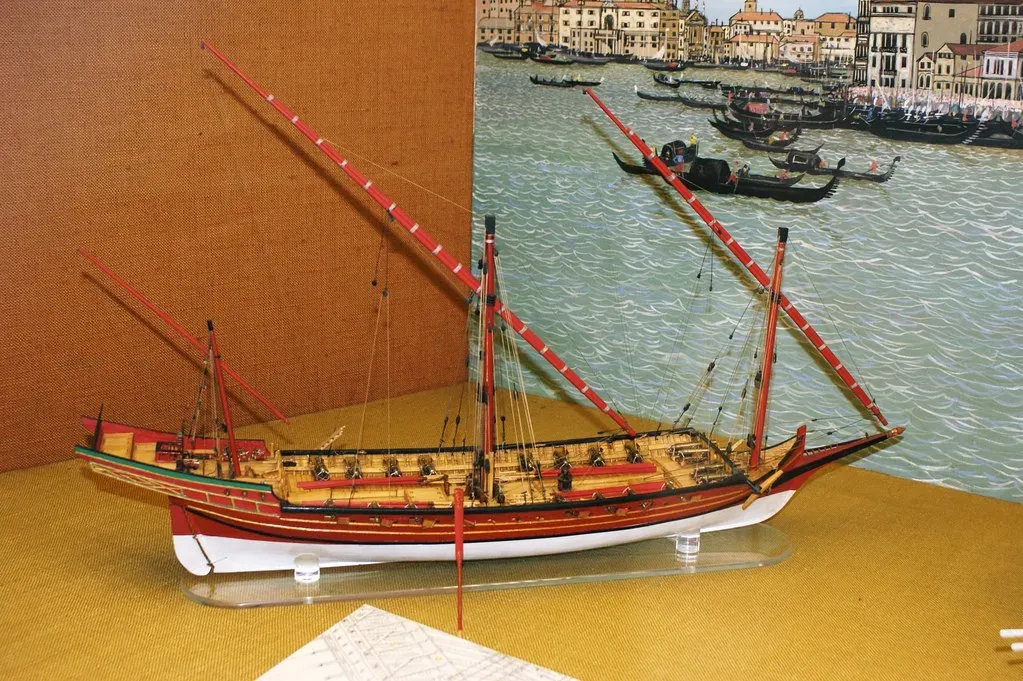
The most famous of the corsairs in North Africa were the Barbarossa brothers, Aruj and Khayr al-Din. The Barbarossa brothers rose in prominence among North African communities and preyed on Spanish and Portuguese shipping as independent corsairs during the fifteenth and sixteenth centuries. After capturing crucial coastal areas, Hayreddin was appointed admiral-in-chief of the Ottoman sultan’s fleet, and under his command the Ottoman Empire was able to gain and keep control of the Mediterranean for over thirty years.
Between 1580 and 1680, corsairs were said to have captured about 850,000 people as slaves, though these figures remain debated among historians. Barbary corsair predation extended throughout the Mediterranean, south along West Africa’s Atlantic seaboard and into the North Atlantic as far north as Iceland, engaging in raids on European coastal towns and villages in Italy, France, Spain, Portugal, Britain, Ireland, and Iceland. The Barbary corsairs represented state-sponsored piracy that lasted for centuries and challenged European naval powers repeatedly.
Salé Rovers: Morocco’s Atlantic Pirates

The Salé Rovers were a group of Barbary pirates active during the seventeenth and eighteenth centuries in the Mediterranean Sea and Atlantic Ocean, attacking Christian merchant shipping and operating out of the Republic of Salé, which existed from 1627 to 1668. The activities of the Sallee pirates extended into the English Channel and the Atlantic, and even as far as Newfoundland. This wasn’t just Mediterranean raiding; these North African pirates operated on a truly global scale.
In 1625 the Salé Rovers carried off captives from Plymouth in England; in 1626 five ships were seized off the coast of Wales; in 1627 they reached Iceland and sacked the city of Reykjavik and raided the fishing village of Grindavík. One such corsair was the Dutchman Jan Janszoon, who underwent conversion to Islam after being captured by Barbary pirates in 1618 and was renamed Murat Reis. The Salé Rovers demonstrated how pirate operations could span from North Africa to the Arctic Circle.
Madagascar: The Indian Ocean Pirate Kingdom

James Plaintain was a pirate active in the Indian Ocean, best known for using his pirate wealth to found a short-lived kingdom in Madagascar. He moved to Ranter Bay, spending his plunder and befriending the Malagasy natives to build a settlement, styling himself “King of Ranter Bay,” and organizing the locals to make war against their neighbors using firearms. This wasn’t just a temporary pirate base but an actual attempt at establishing political authority.
Having made too many enemies on Madagascar, Plaintain took his favored wife and moved to India in 1728, serving in the Maratha Navy under Admiral Kanhoji Angre, where he died some time prior to April 1737. Abraham Samuel at Port Dauphin, Adam Baldridge at Ile Sainte-Marie, and James Plaintain at Ranter Bay were all ex-pirates who founded trading posts and towns, appearing frequently in official accounts and letters from the period. These pirate settlements represented genuine attempts to create independent societies outside European control.
The Pirate Round: Global Trade Route Raiding

The Pirate Round was a sailing route followed by mainly English pirates during the late seventeenth century and early eighteenth century, leading from the western Atlantic around the southern tip of Africa, stopping at Madagascar, then on to targets such as the coast of Yemen and India, and was briefly used again during the early 1720s. This represented organized, long-distance piracy targeting the richest trade routes in the world.
The Pirate Round passed around the Cape of Good Hope and stopped in Northern Madagascar, where crews would refuel before heading towards targets in the Indian Ocean, often East India Company ships departing from Yemen and India, first attempted by Thomas Tew in 1693. Pirates positioned themselves at Perim or Mocha at the mouth of the Red Sea, the ideal position for intercepting Mughal shipping, especially the lucrative traffic between Surat and Mecca carrying Muslim voyagers on the Hajj pilgrimage. The Pirate Round demonstrated how Caribbean-based pirates expanded their operations globally.
Privateers Turned Pirates: Government-Sanctioned Raiders
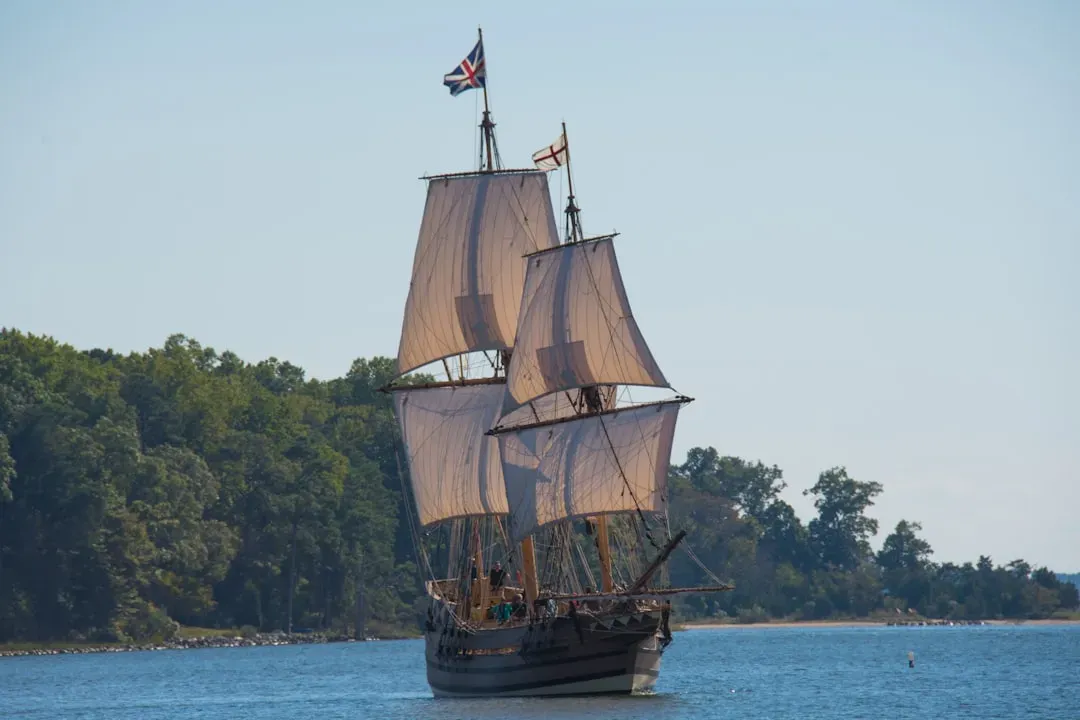
Privateers were private individuals equipped with legal authorization from their government to attack enemy shipping in time of war, with costs born entirely by private backers but profits split between the backers and the government. When wars ended, many privateers simply continued their activities without government sanction. English privateers hunted successfully throughout an enormous area, ranging from the English Channel down along the Atlantic coasts to Morocco and West Africa, across to South America and the Caribbean, up to the Grand Banks of Newfoundland.
According to historian Adrian Tinniswood, the most notorious corsairs were European renegades who had learned their trade as privateers and moved to the Barbary Coast during peacetime, and these outcasts who had converted to Islam brought up-to-date naval expertise to the piracy business, enabling corsairs to make long-distance slave-catching raids as far away as Iceland and Newfoundland. The line between legal privateer and illegal pirate often depended entirely on whether a war was currently underway.
Bartholomew Roberts: King of the West African Coast


Bartholomew Roberts was a pirate captain who burned and plundered ships from the coasts of West Africa to the coasts of Brazil and the Caribbean and as far north as Newfoundland, with his conquests said to have included more than 400 vessels. In early June 1719, Roberts was second mate on the slave ship Princess when she was anchored at Anomabu along the Gold Coast of West Africa when she was captured by pirates led by captain Howell Davis.
Roberts often captured entire fleets such as the 11 vessels he took off the West African coast in January 1722, asking the captains of these slave ships for a quantity of gold to get their ships back, and when one captain refused, Roberts covered his ship in tar and burnt it into a wreck. Following their capture, Roberts’s remaining crew was taken to Cape Coast Castle in modern-day Ghana, where 52 were hanged and 20 had their sentences commuted to seven years of indentured labour in West African mines. Roberts proved that West African waters were just as dangerous as Caribbean seas during the Golden Age of Piracy.
Archaeological Evidence from the Indian Ocean


Recent archaeological discoveries have confirmed what historical documents suggested about global pirate activity. Wreck sites off Madagascar and in Indian Ocean waters have yielded evidence of pirate attacks on major trading vessels. These finds include artifacts from ships carrying Asian silks, African gold, and Indian spices, demonstrating that pirates targeted the most valuable cargo routes connecting Europe with Asia.
The physical evidence from shipwrecks and recovered cargo illustrates that piracy was a truly international enterprise. Coins, weapons, and ship fittings recovered from these sites show pirates operated sophisticated networks spanning multiple continents. These archaeological finds provide tangible proof that piracy extended far beyond the well-documented Caribbean operations, affecting global commerce in ways that shaped economic history.
The Global Impact of Non-Caribbean Piracy

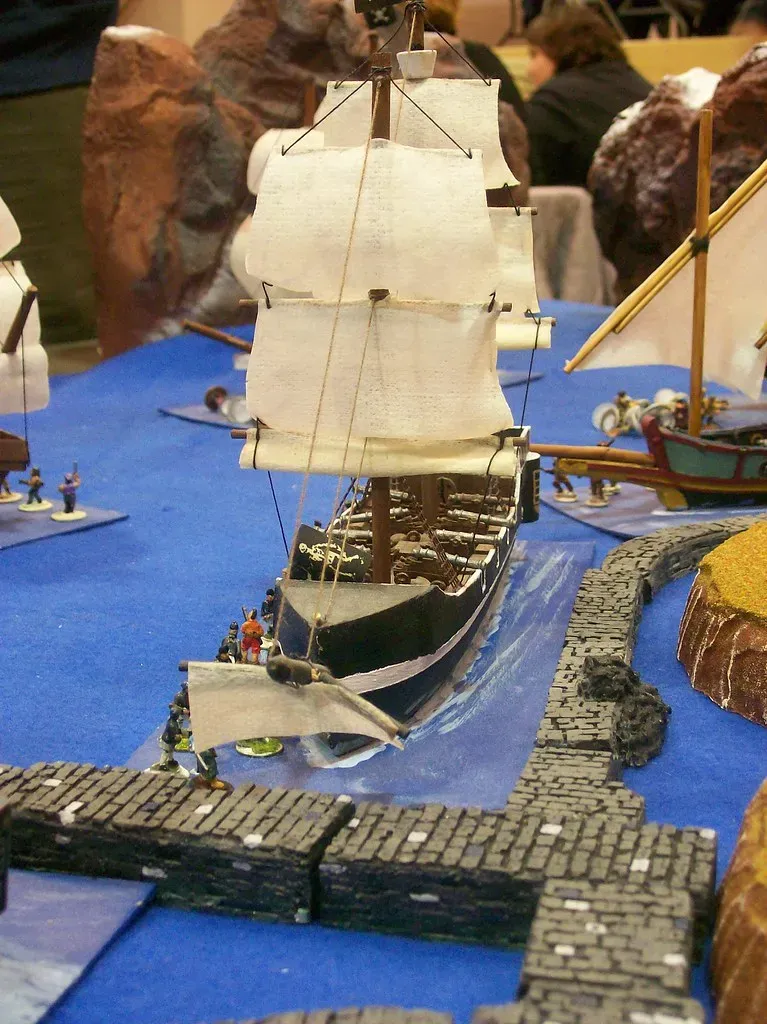
For European powers, the threat posed by Barbary corsairs forced significant changes in naval strategy and foreign policy, leading to the development of more sophisticated naval technologies and tactics, with many European states resorting to diplomacy and tribute payments, which while burdensome were often seen as a necessary cost of doing business in the Mediterranean. Piracy wasn’t just about stolen treasure; it fundamentally shaped how nations built their navies and conducted international relations.
The United States waged two Barbary Wars from 1801 to 1815, and after the Napoleonic Wars, major European powers sent fleets to force the Barbary states into permanent peace, culminating in 1830 when French armies marched into Algiers in the French conquest of Algeria, obliterating the last pirate ports and ending the age of the Barbary corsairs. The fight against piracy helped shape modern concepts of international law, freedom of navigation, and naval power projection that remain relevant today. Pirates from the Mediterranean, Indian Ocean, and Atlantic coast of Africa left a legacy that extended far beyond the romanticized image of Caribbean buccaneers.


