


Throughout history, humanity has faced moments when the course of civilization balanced on a razor’s edge. Sometimes a single decision, a stroke of luck, or an unexpected twist prevented events from spiraling into catastrophe. These near-misses shaped the world we live in today, though they often remain overshadowed by the events that actually unfolded. From assassination attempts that nearly succeeded to diplomatic crises resolved at the last second, these turning points remind us how fragile historical outcomes can be.
The Cuban Missile Crisis Brought the World to the Nuclear Brink

The Cuban Missile Crisis of October 1962 stands as the closest the Cold War came to escalating into full-scale nuclear war. For thirteen days, from October 16 to 28, the United States and Soviet Union faced off over Soviet nuclear missiles deployed in Cuba. U.S. intelligence discovered sites for medium-range and intermediate-range ballistic nuclear missiles under construction in Cuba after a U-2 aircraft photographed them on October 14. President Kennedy and his advisors weighed options ranging from diplomacy to full military invasion.
Actions by lower-ranking individuals nearly triggered nuclear Armageddon more than once, including when a Soviet air defense commander independently ordered the shoot-down of an American U-2 on October 27, and when an American submarine captain prepared to launch a nuclear torpedo at U.S. vessels. As tensions peaked, messages were exchanged between Kennedy and Khrushchev, and on October 28 Khrushchev capitulated, informing Kennedy that work on the missile sites would be halted and missiles would be returned to the Soviet Union, while Kennedy committed the United States to never invading Cuba. The secret agreement also included American removal of missiles from Turkey, defusing what could have been a global nuclear catastrophe.
Franz Ferdinand’s Assassination Nearly Prevented World War I

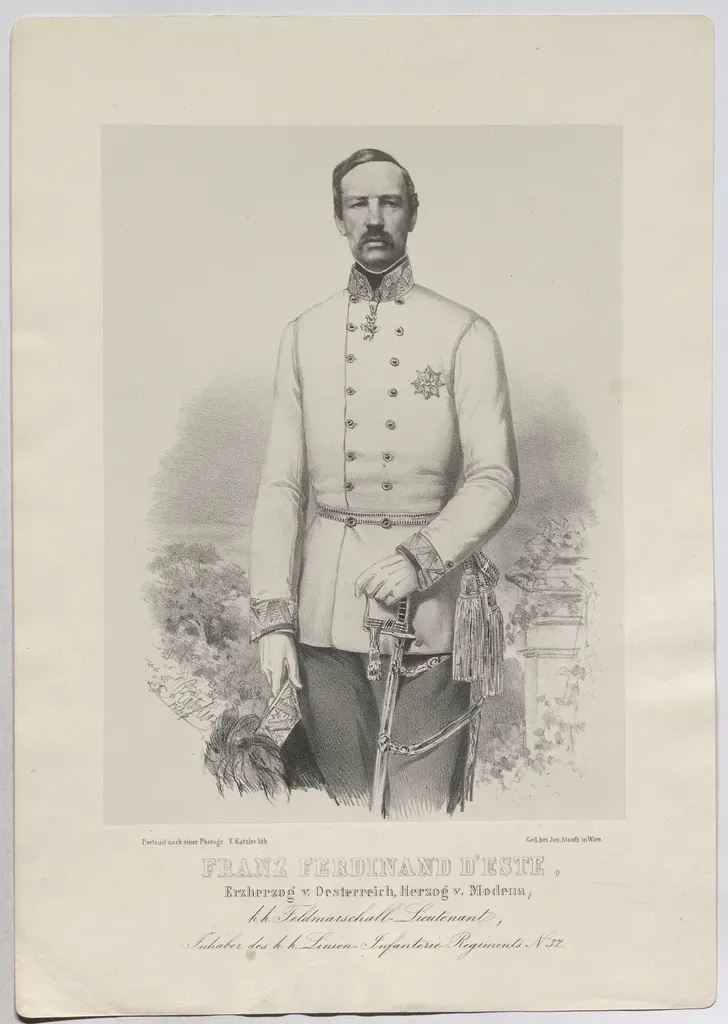
The assassination of Archduke Franz Ferdinand of Austria, heir to the Austro-Hungarian throne, and his wife Sophie on June 28, 1914, by Bosnian Serb student Gavrilo Princip became one of the key events that led to World War I. After a reception lunch at the town hall, the archduke unwisely decided to ride through Sarajevo streets again in his open-top car, but the driver had not been told of the new route and was obliged to make a U-turn after taking the wrong road, and as the car slowed to make the turn, Gavrilo Princip stepped out of the crowd. The timing was almost impossibly fortuitous for the assassins.
According to a 2021 study, Franz Ferdinand’s absence was key to the breakdown of diplomacy and escalation into war, as Ferdinand had been the most powerful and effective proponent for peace in Vienna. Had Austria-Hungary chosen diplomacy over ultimatums following the assassination, historians argue a global war might have been avoided. Emperor Franz Joseph was egged on by his chief of general staff, General Franz Conrad von Hötzendork, who had been calling for war against Serbia for years, and the kaiser gave his support on July 6 in what has been described as a blank check freedom of action notice, despite the obvious threat that Russia would intervene. The decisions made in those crucial weeks turned a regional crisis into a worldwide conflict.
Operation Valkyrie’s Failed Bomb Nearly Killed Hitler

The leader of the conspiracy, Claus von Stauffenberg, tried to kill Hitler on July 20, 1944, by detonating an explosive hidden in a briefcase, but due to the location of the bomb at the time of detonation, the blast only dealt Hitler minor injuries. The conspirators had counted on the meeting taking place in a concrete, windowless underground bunker sealed by a heavy steel door, but because July 20 was unbearably hot, the meeting planners decided to move it to a wooden bunker above ground which had greater air circulation. This last-minute change dramatically reduced the bomb’s effectiveness.
The explosives were armed and placed next to Hitler, but they were moved unwittingly at the last moment behind a table leg by Heinz Brandt, inadvertently saving Hitler’s life, and when the bomb detonated it killed Brandt and two others while Hitler’s trousers were singed and he suffered a perforated eardrum and conjunctivitis but was otherwise unharmed. The failure led to the arrest of approximately 7,000 co-conspirators and the execution of 4,980. Had the bomb succeeded, World War II in Europe might have ended months earlier, potentially saving countless lives and altering postwar boundaries.
Stanislav Petrov Prevented Nuclear War in 1983

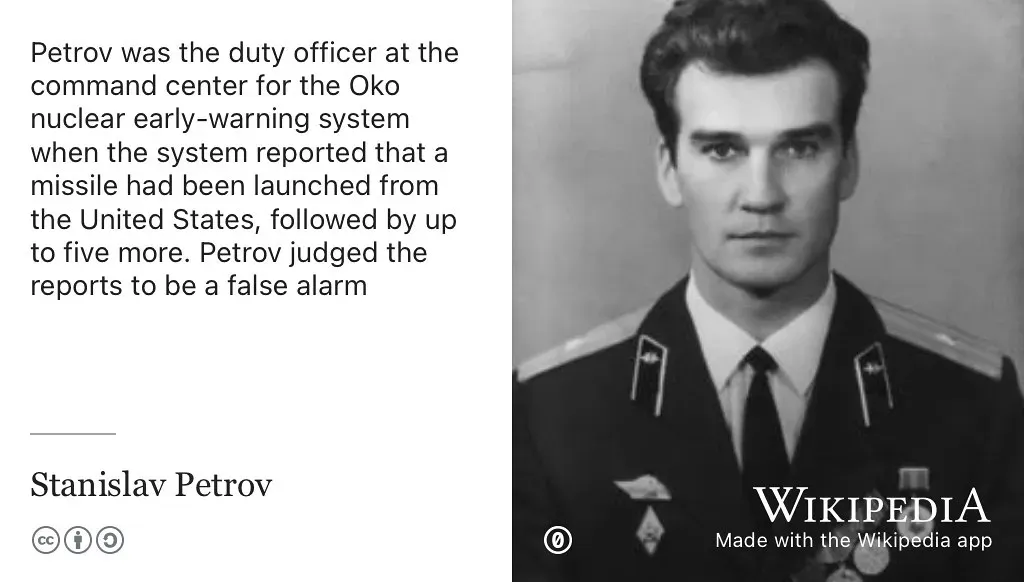
On September 26, 1983, during the Cold War, the Soviet nuclear early warning system Oko reported the launch of one intercontinental ballistic missile with four more missiles behind it from the United States, and these missile attack warnings were suspected to be false alarms by Stanislav Petrov, an engineer of the Soviet Air Defence Forces on duty at the command center. He decided to wait for corroborating evidence, of which none arrived, rather than immediately relaying the warning up the chain of command, and this decision is seen as having prevented a retaliatory nuclear strike against the United States and its NATO allies which would likely have resulted in a full-scale nuclear war.
The incident occurred at a time of severely strained relations between the United States and the Soviet Union, when the Soviet Union as a system was geared to expect an attack and to retaliate very quickly, was on hair-trigger alert, and was very nervous and prone to mistakes and accidents, making the false alarm one that could not have come at a more dangerous, intense phase in U.S.-Soviet relations. It was subsequently determined that the false alarms were caused by a rare alignment of sunlight on high-altitude clouds and the satellites’ orbits, and Petrov cited his belief and training that any U.S. first strike would be massive, so five missiles seemed an illogical start. His calm judgment under extraordinary pressure likely saved millions of lives.
The Battle of Marathon Preserved Western Civilization

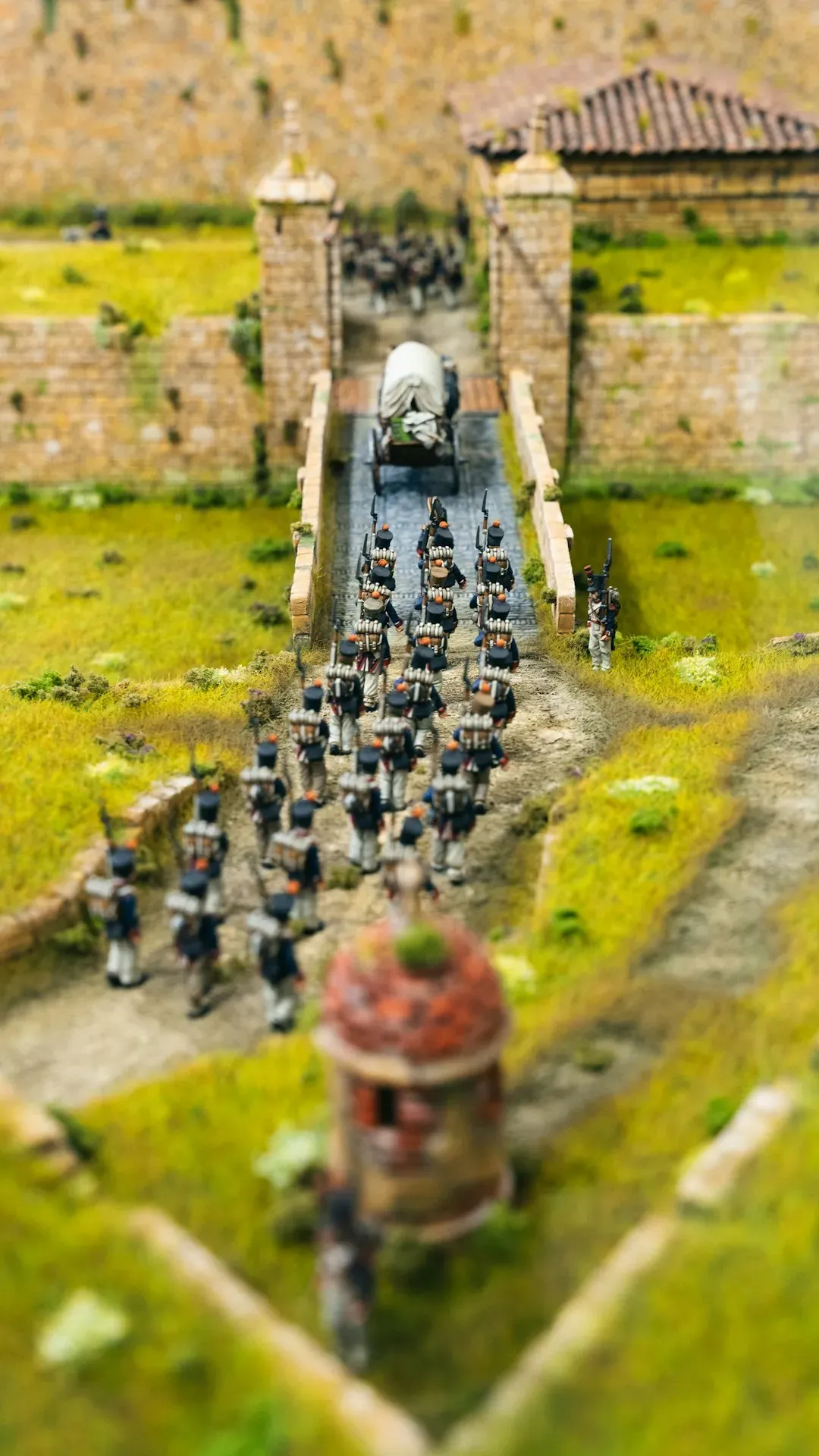
The Battle of Marathon in 490 BCE was the culmination of the first attempt by Persia under King Darius I to subjugate Greece, and the Greek army inflicted a crushing defeat on the more numerous Persians, marking a turning point in the Greco-Persian Wars. The Athenians, in a single afternoon, repulsed the first Persian invasion of Greece, with Miltiades leading his contingent of 10,000 Athenians and 1,000 Plataeans to victory over the Persian force of 15,000 by reinforcing his battle line’s flanks and thus decoying the Persians’ best troops into pushing back his centre where they were surrounded.
By the time the routed Persians reached their ships, they had lost 6,400 men while the Greeks lost 192 men, including Callimachus. The victory went down in folklore as the moment Greek city-states showed the world their courage and excellence and won their liberty, and although the battle only delayed the Persians in their imperialistic ambitions, Marathon was the first time the mighty Persian Achaemenid Empire had been shown beatable. Had Athens fallen, the democratic principles and cultural achievements that shaped Western civilization might never have flourished, fundamentally altering the trajectory of human history.
A Miscalculated Turn Nearly Prevented the American Revolution

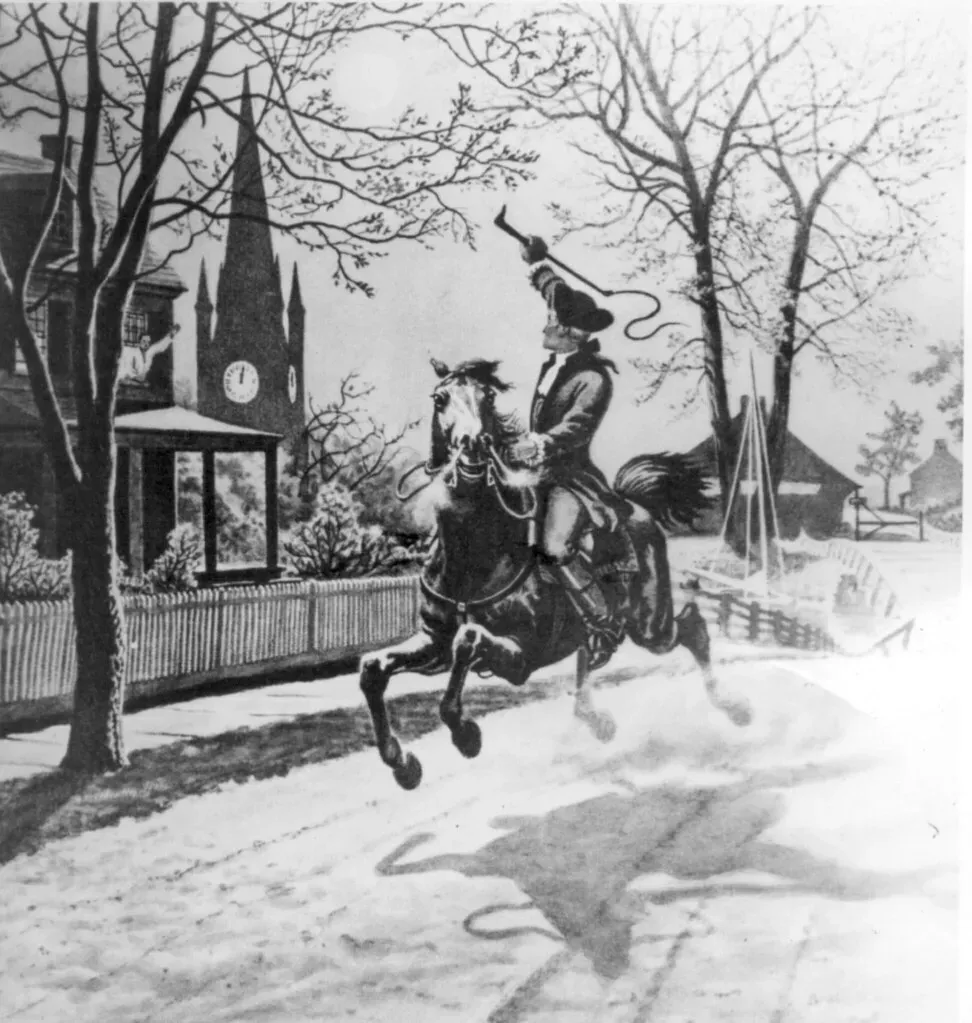
The spark that ignited the American Revolution came dangerously close to never happening. In April 1775, British General Thomas Gage dispatched troops to seize colonial military supplies stored in Concord, Massachusetts. The mission was intended to be swift and quiet, but colonial intelligence networks detected the movement. Paul Revere and William Dawes rode through the night to warn the countryside, but their success was far from guaranteed. Had the British moved just hours earlier or taken a different route, they might have seized the weapons cache without resistance.
The confrontation at Lexington Green on April 19 began with tensions so high that a single shot, whose origin remains disputed, triggered a firefight that left eight colonists dead. Historians debate whether colonial leaders initially sought independence or reconciliation. Had cooler heads prevailed that morning, or if British forces had successfully seized the supplies without bloodshed, the momentum toward revolution might have dissipated, leaving America under British rule for decades longer and reshaping the entire political landscape of the modern world.
The Spanish Armada’s Near Victory Changed Naval Warfare

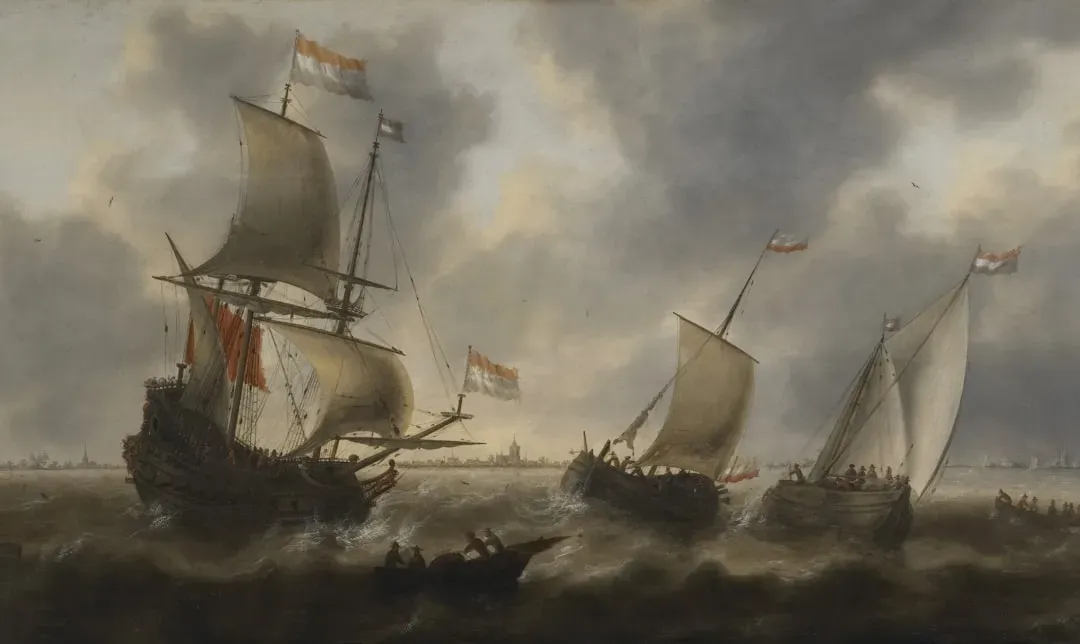
In 1588, King Philip II of Spain assembled the largest naval fleet the world had ever seen to invade England and restore Catholic rule. The Spanish Armada consisted of roughly 130 ships carrying around 30,000 men. Weather conditions and tactical decisions created multiple moments when the invasion nearly succeeded. English naval forces, though smaller and less heavily armed, relied on superior maneuverability and longer-range cannons. The fleet faced each other in the English Channel, where a series of skirmishes tested both sides.
The turning point came when English forces deployed fireships, unmanned vessels set ablaze and sent into the anchored Spanish fleet at Calais. The tactic forced Spanish ships to cut their anchors and scatter, breaking their defensive formation. Fierce storms in the North Sea then battered the retreating Armada, sinking dozens of ships and drowning thousands. Fewer than half the Spanish vessels returned home. Had weather conditions been calmer or the fireships less effective, England might have fallen to Spanish control, preventing its later rise as a global maritime power and altering the balance of European influence for centuries.
The D-Day Invasion Nearly Failed Due to Weather


The Allied invasion of Normandy on June 6, 1944, depended on precise coordination of weather, tides, and moonlight. General Dwight Eisenhower initially scheduled the assault for June 5, but a severe storm in the English Channel forced a postponement. Meteorologists predicted a brief break in the weather on June 6, giving Eisenhower a narrow window. The decision to proceed was agonizing. Delaying further would mean waiting weeks for the next favorable tide and moon combination, risking discovery of the invasion plans.
The weather on D-Day remained marginal, with rough seas causing many landing craft to capsize and seasickness to incapacitate troops before they even reached shore. German commanders, believing the weather too poor for an invasion, relaxed their vigilance. Field Marshal Erwin Rommel even traveled to Germany for his wife’s birthday. Had the storm continued just one more day, or had German intelligence been more alert, the invasion might have been repelled. The failure of D-Day would have prolonged the war in Europe, potentially allowing Nazi Germany to develop more advanced weapons and fundamentally changing the outcome of World War II.
The Printing Press Nearly Remained Obscure

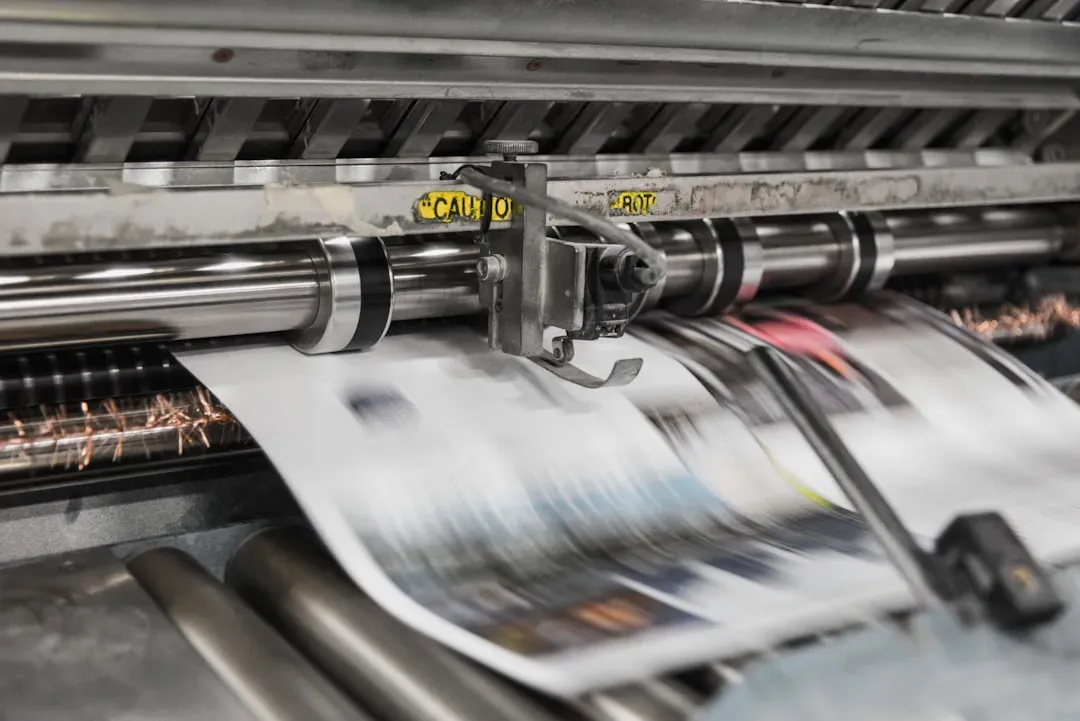
Johannes Gutenberg’s development of movable type printing around 1440 in Mainz, Germany, almost ended in financial ruin before it could transform human knowledge. Gutenberg borrowed heavily from investor Johann Fust to develop his press and produce his famous Bible. The project took years longer than expected and costs spiraled out of control. In 1455, just as the first printed Bibles were being completed, Fust sued Gutenberg for repayment of the loans. The court ruled against Gutenberg, forcing him to surrender his press and equipment.
Had Fust simply scrapped the operation rather than continuing production, the printing revolution might have been delayed by decades. The technology could have remained a local curiosity rather than spreading rapidly across Europe. Instead, Fust and his son-in-law Peter Schöffer continued printing operations, and the innovation spread to other craftsmen. Within fifty years, printing presses operated in hundreds of European cities, producing millions of books. This explosion of accessible written material fueled the Renaissance, the Reformation, and the Scientific Revolution. Without Fust’s decision to continue the business, the democratization of knowledge that shaped the modern world might have taken a drastically different path.
The Assassination of Abraham Lincoln Almost Failed

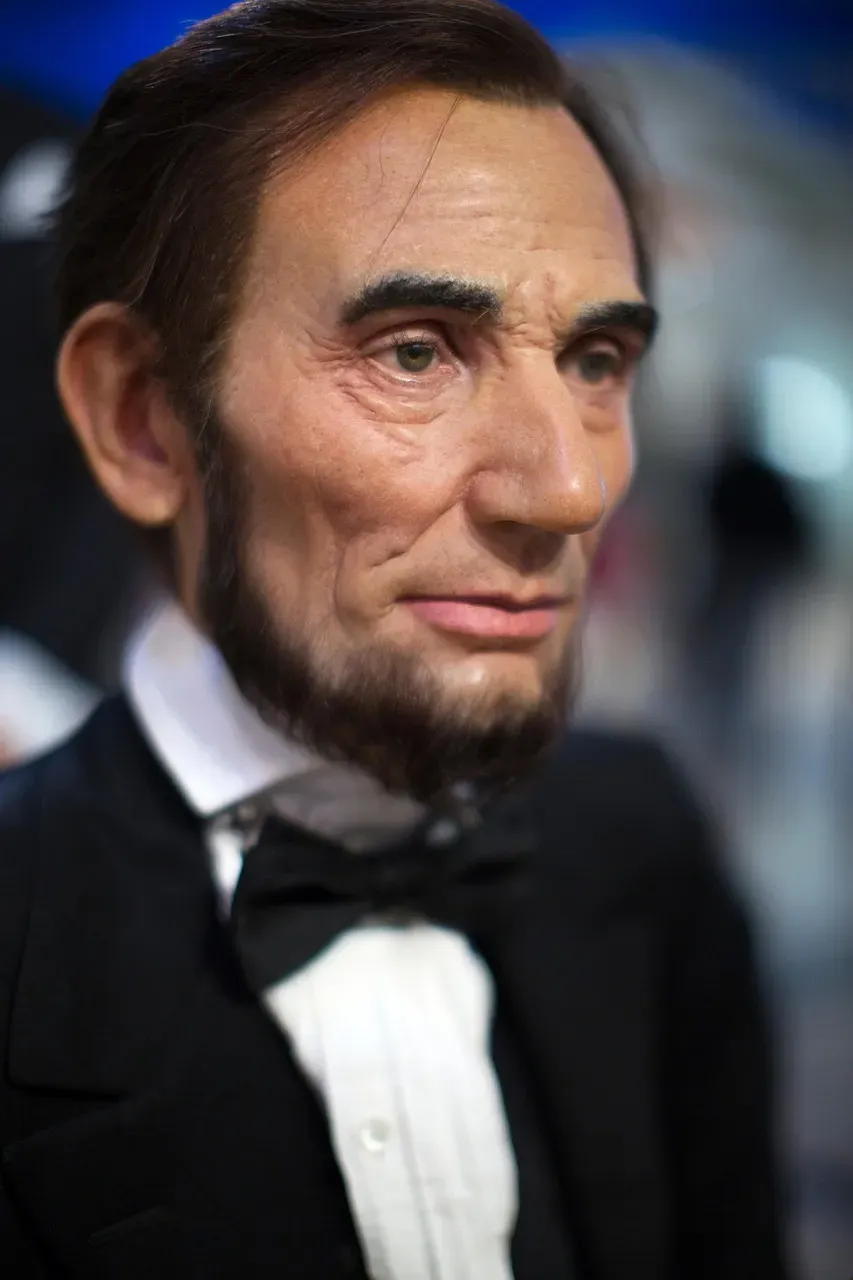
John Wilkes Booth’s conspiracy to assassinate President Abraham Lincoln on April 14, 1865, nearly collapsed multiple times before succeeding. Booth had originally planned to kidnap Lincoln months earlier but abandoned the scheme when his co-conspirators lost their nerve. On the night of the assassination, Booth learned that Lincoln would attend Ford’s Theatre with minimal security. Even then, fortune favored the assassin. The guard assigned to protect the president’s box left his post during the performance, giving Booth unimpeded access.
Booth entered the presidential box during the third act of the play, shot Lincoln in the back of the head, and leaped to the stage shouting political slogans before escaping. Had the guard remained at his post, or had Lincoln chosen a different evening’s entertainment, the president might have survived to oversee Reconstruction personally. Lincoln’s policies toward the defeated South emphasized reconciliation and swift reintegration. His successor, Andrew Johnson, proved far less capable, and Reconstruction descended into corruption and violence. A surviving Lincoln might have steered the nation toward a more just and stable postwar settlement, fundamentally altering race relations and Southern politics for generations.


