Every music fan has hit that moment of confusion: a song that was there yesterday is simply gone today. No explanation, no warning, just a blank space where a favorite track used to sit. Behind most of these disappearances is a tangled mix of legal disputes, personal protest, and the messy business side of the music industry that rarely makes headlines until something actually vanishes.
1. Prince’s catalog pull from major streaming services


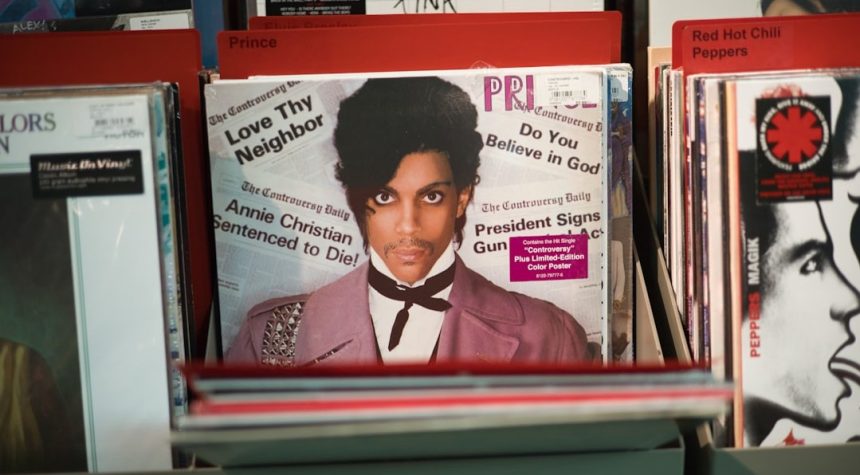
Prince’s 2015 decision to strip his back catalog from nearly every subscription streaming service remains one of the most cited examples of an artist exercising direct control over distribution. His music remaining available in limited venues such as Tidal at the time showed just how selective an artist could be about where fans could actually hear his work.
The move was rooted in long standing frustration over compensation and creative control, not a legal takedown or a licensing failure. It set a precedent that later artists would point back to whenever they debated whether streaming platforms actually served musicians fairly.
2. Young Widows and the Helsing investment protest

In 2025, the band Young Widows pulled their music from Spotify after learning about CEO Daniel Ek’s financial ties to a defense technology company. “To think our fans’ money is being used to invest in future machines to kill the innocent is beyond inhumane,” Young Widows said in a statement shared to Instagram.
The band didn’t stop at commentary. They went on to say that all music streaming platforms have their negatives, and implored fans, if they truly value an artist, to buy their records, go to their shows, and support them directly. It was a political stand dressed up as a business decision, and it resonated with a wider wave of similar exits that year.
3. Xiu Xiu’s departure from a platform they called out by name


Experimental band Xiu Xiu didn’t mince words when they announced their exit from Spotify in the summer of 2025. They wrote in a statement in July: “We are currently working to take all of our music off of garbage hole violent armageddon portal Spotify.”
The process wasn’t instant, either. It was taking longer than they had hoped due to procedural complications but would be completed soon, and they thanked fans for the support and patience. Their case is a reminder that pulling a catalog from a major platform is often a slow administrative process, not a single click of a button.
4. The Mynabirds and a stand against defense investment

Laura Burhenn’s project the Mynabirds joined the same wave of artists distancing themselves from Spotify over its leadership’s financial connections. “I will not allow my songs to be turned into bombs,” Laura Burhenn wrote on Instagram in July.
Unlike some peers, the Mynabirds didn’t leave every platform. While her project the Mynabirds is no longer available on Spotify, listeners can still stream their music on the other major streaming platforms, though Burhenn strongly suggests supporting artists via Bandcamp. The partial withdrawal shows how these protests can be targeted rather than sweeping, aimed at one company’s leadership rather than the streaming model as a whole.
5. The 1975’s “Human Too” and a matter of artistic taste

Not every removal is about money or politics. Matty Healy pulled a track from The 1975’s catalog for reasons that were purely creative. Matty Healy, lead singer of The 1975, recently confirmed on Reddit that the song “Human Too” from their latest album Being Funny in a Foreign Language was taken off streaming platforms simply because he felt the album stood stronger without it.
There was no lawsuit, no licensing dispute, and no public statement beyond a casual online comment. It was simply an artist reconsidering his own work after release, something that happens more often in the streaming era than most listeners realize since edits and removals are now technically possible after the fact.
Partner offer

6. Playboi Carti’s leaked track and an uncleared anime sample


Some songs never had a clean path to streaming in the first place. A track originally produced for a Pi’erre Bourne mixtape ran into trouble almost immediately. The song originally entitled “Pissy Pamper” was a Pi’erre Bourne produced track originally meant for Sli’merre, his collaborative mixtape with Young Nudy, and with its prominent use of a loop from “Tasogare” by Japanese singer Mai Yamane, the track regretfully never made the record due to sample clearance issues.
Despite that, the song still found its way online. But somehow, a leaked file made its way onto Spotify, where its killer component included an evocative “baby voice” verse from Playboi Carti at the peak of pre Whole Lotta Red hysteria. Once rights holders noticed, the track’s presence on official platforms became untenable and it was removed, a fate that regularly awaits leaked material tied to unlicensed samples.
7. Nicki Minaj’s “Sorry” and the Tracy Chapman sample dispute


Few sample disputes have played out as publicly as the one between Nicki Minaj and Tracy Chapman over the track “Sorry.” The legal fight centered on whether Minaj had done enough to secure permission before the song leaked. A District Court judge made a ruling in favor of Minaj that she was at least within her rights to have created the “Sorry” track in the studio with Nas before receiving clearance from Chapman.
Even with that partial legal win, the underlying issue remained unresolved for years. The ruling had little bearing on an ultimate decision over whether Minaj was liable for the track going public after her team repeatedly tried and failed to receive clearance from Chapman. The case became a textbook example of how a song can exist, leak, and still never receive an official release because of one songwriter’s refusal to grant permission.
8. Bluewater Music’s licensing lawsuit against Spotify
Sometimes it isn’t the artist pulling a song at all, it’s a publisher taking legal action because the platform never had the right to stream it. In 2017, two Nashville based publishers filed separate suits against Spotify over exactly this problem. Spotify was sued by two Nashville based music publishers, Rob Gaudino and Bluewater Music, both alleging in separate lawsuits that the music streaming service failed to obtain the proper licenses to stream thousands of songs from both publishers’ catalogs.
The scale of the claims was substantial. Some of the compositions at the center of the dispute included “Bye, Bye Baby,” “Can’t Take My Eyes Off You” and “Rag Doll,” and altogether Gaudino’s suit listed a total of 106 compositions, whereas Bluewater Music’s lawsuit claimed that Spotify infringed by streaming 2,399 songs. Cases like this explain why entire catalogs sometimes vanish overnight while licensing disputes get sorted out behind closed doors.
9. K pop tracks caught in Spotify’s artificial streaming purge

Not every removal targets the song itself, sometimes it’s the stream count that gets wiped, effectively erasing a track’s visibility and chart standing. Spotify’s fraud detection sweeps in 2025 hit several high profile K pop releases particularly hard. Industry sources, data trackers, and artists themselves confirm that the scale is massive in 2025, with K pop stars such as BTS’s Jimin reportedly losing up to 200 million streams on a single song within a few months.
Jimin wasn’t alone in feeling the impact. BLACKPINK’s Rosé and Jennie each saw between 2 and 15 million streams per track removed. These weren’t takedowns in the traditional sense, the songs stayed live, but their performance metrics were scrubbed after being flagged as artificially inflated, a distinct but increasingly common form of removal in the streaming economy.
10. The AI generated track purge across major platforms
The newest wave of removals has little to do with human artists at all. Streaming services have started aggressively clearing out music that was never meant to be heard by a real audience in the first place. Last year, Spotify removed over 75 million spammy tracks from its platform, while rival Deezer reported receiving 50,000 fully AI generated tracks per day by November, accounting for over a third of all daily uploads.
The purge hasn’t slowed the underlying problem, though. Despite this aggressive purging of content, the total amount of music in the global audio streaming ecosystem continued to soar in 2025. It’s a sign that platforms are now fighting a numbers game against automated content nearly as much as they are managing licensing disputes or artist protests.
These ten cases show that a missing song rarely means the same thing twice. One track disappears because a songwriter never signed off on a sample, another because an artist has grown uneasy with where streaming profits actually end up. Some removals are quiet business decisions buried in licensing paperwork, while others are loud, public statements meant to be noticed. What connects them all is a simple truth about modern music: once a song is uploaded, its survival on any platform depends on a web of legal, financial, and personal decisions that listeners almost never get to see.Partner offer
Planning a trip to Vegas?
Compare hotel rates and show tickets on VEGAS.com.