There is something deeply human about a story that refuses to die. Urban legends are not just campfire nonsense. They latch onto our fears, our social anxieties, and our desperate need to make sense of a chaotic world. Some of them have been circulating for generations, shape-shifting with each retelling until the original kernel of truth is almost unrecognizable.
Urban legends are a genre of folklore concerning stories about an unusual, often scary or humorous event that many people believe to be true but largely are not. These legends can be entertaining but often concern mysterious and troubling events, such as disappearances and strange objects or entities. Honestly, I think what keeps them alive is not gullibility. It is the fact that the world is genuinely strange, and sometimes truth really is stranger than fiction. Let’s dive in.
Alligators in the New York City Sewers

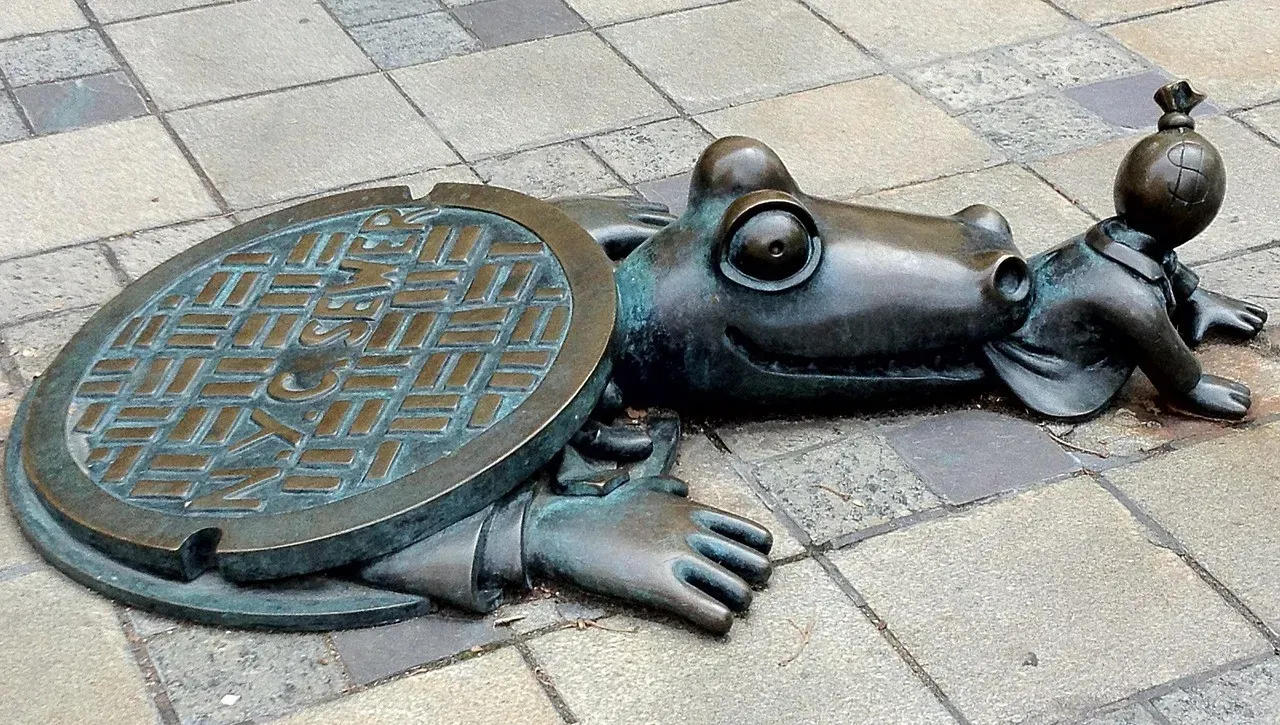
Few urban legends feel quite as New York as this one. The image of massive reptiles lurking beneath Manhattan’s streets has been told and retold for nearly a century. Following reports of sewer alligators in the 1930s, the story built up over the decades and became more of a contemporary legend. It is questionable how accurate the original stories are, and some have even suggested they are fictions created by Teddy May, who was the Commissioner of Sewers at the time.
On February 9th 1935, New York City’s greatest urban legend was born. “Alligator Found in Uptown Sewer,” read the headline. The piece recounted how some East Harlem teens were shoveling snow down a storm sewer when one of them noticed movement below. That one incident set off decades of speculation.
Families did bring back alligators as pets, and you could even order them in the mail. In the 1930s, advertisements in popular magazines sold baby alligators for as little as $1.50. The story is half real. Escaped or abandoned alligators may survive for a short time in New York’s sewers. However, they cannot live there long-term because the sewers are too cold and contain harmful bacteria from human waste. So: no thriving colonies, but not entirely fiction either.
The Bermuda Triangle


The Bermuda Triangle is probably the most famous geographical mystery that turned out to be no mystery at all. The patch of sea between Florida, Puerto Rico and Bermuda gained legendary status in the mid-20th century when articles linked it to mysterious disappearances of boats and aircraft. One of the most famous incidents occurred in 1945 when Flight 19, a group of five US Navy bombers on a training mission, vanished in the area. Over the decades that followed, shipwrecks and crashed planes were frequently attributed to the Triangle’s destructive forces.
Larry Kusche, author of The Bermuda Triangle Mystery: Solved (1975), argued that many claims of Gaddis and subsequent writers were exaggerated, dubious or unverifiable. Kusche’s research revealed a number of inaccuracies and inconsistencies between Berlitz’s accounts and statements from eyewitnesses, participants, and others involved in the initial incidents. His conclusion was blunt and definitive.
In recent years, scientists and researchers have reiterated that the Bermuda Triangle does not exhibit higher rates of disappearances than other heavily traveled ocean regions. Australian scientist Karl Kruszelnicki told The Independent in 2017 that the so-called “mystery” can be explained by human error, unpredictable weather, and the sheer volume of traffic passing through the area. In 2013 the World Wildlife Fund (WWF) conducted an exhaustive study of maritime shipping lanes and determined that the Bermuda Triangle is not one of the world’s 10 most dangerous bodies of water for shipping. The legend, it turns out, was manufactured by sloppy journalism and sensational books.
The Hookman: A Legend Born from Real Murders


Every teenager who has ever been to summer camp has heard a version of this one. A young couple parked on a lonely road. A killer with a hook for a hand. A bloody hook found hanging from the car door handle in the morning. The origins of the Hook legend are not entirely known, though according to folklorist and historian Jan Harold Brunvand, the story began to circulate some time in the 1950s in the United States. According to Brunvand in The Vanishing Hitchhiker: American Urban Legends and Their Meanings, the story had become widespread amongst American teenagers by 1959, and continued to expand into the 1960s.
Many scholars have come to believe the legend of the hook hand killer is loosely based on a string of infamous murder cases that took place in Texarkana in 1946. Often referred to as the Moonlight Murders, it was a spree of four unsolved murders taking place in the late winter and spring. A serial killer known as the Phantom of Texarkana attacked eight people over a period of ten weeks.
That year, a masked murderer killed five people and seriously injured three others in a series of attacks that shook the town to its core. The presence of a serial killer so spooked Texarkanans that they stocked up on guns and guard dogs, booby-trapped their homes, and even slept in hotels for safety. The slayings, known as the Texarkana Moonlight Murders, remain unsolved. The killer was never caught. That unresolved terror is exactly the kind of vacuum that legends fill.
The 27 Club: Curse or Coincidence?

Let’s be real: when you hear that Jimi Hendrix, Janis Joplin, Jim Morrison, and Brian Jones all died at age 27, it feels like more than coincidence. Brian Jones, Jimi Hendrix, Janis Joplin, and Jim Morrison all died at the age of 27 between 1969 and 1971. That cluster of losses within such a short window genuinely stunned the music world. Only after the death of Kurt Cobain in 1994 was the notion of a “club” established, and the death of Amy Winehouse in 2011 enhanced its prominence.
Despite the cultural significance given to musician and celebrity deaths at age 27, the common claim that they are statistically more common at this age is an urban myth, refuted by scientific research. A study by university academics published in the British Medical Journal in December 2011 concluded that there was no increase in the risk of death for musicians at the age of 27.
While the legend states that famous persons are more likely to die at 27, in actuality dying at 27 makes a person more famous than they would have been otherwise. The increased attention that members of the 27 Club receive posthumously inflates our perception of the number of deaths at 27, at least among the uppermost echelons of notable persons. Research published in the Proceedings of the National Academy of Sciences confirmed this feedback loop. The study noted a generally higher risk of mortality throughout musicians’ 20s and 30s, challenging the validity of the 27 Club narrative. There is no credible evidence or plausible medical mechanism supporting an increased likelihood of death at age 27.
Walt Disney’s Frozen Body


Walt Disney dying in 1966 left an enormous void in American popular culture. Into that void crept one of the strangest celebrity legends ever told: that his body was secretly cryogenically frozen and stored under Disneyland, waiting to be revived in the future. It is a story that sounds almost plausible, given Disney’s reputation for visionary thinking.
When Disney died in 1966, the world was already intrigued by the emerging science of cryonics, the idea of preserving bodies at subzero temperatures in hopes of future revival. However, official documents and statements from Disney’s family confirm he was cremated just days after his death, and his ashes interred at Forest Lawn Memorial Park in Glendale, California.
The legend appears to have been fueled by media mistrust and sensational reporting during the late 1960s, when the public was hungry for secrets about celebrities. Despite the lack of any credible evidence, the myth persists, perhaps because people want to believe in the magical return of visionary figures. Cultural fascination with immortality and technological miracles keeps this story alive in books, movies, and internet forums. It is, I think, less about Disney himself and more about our collective refusal to let greatness simply end.
Paul McCartney Is Dead


In 1969, a rumor swept college campuses across America: Paul McCartney had secretly died in 1966 and been replaced by a look-alike. The “Paul Is Dead” conspiracy theory burst into public consciousness in 1969, claiming that Paul McCartney had died in a car crash and been secretly replaced by a look-alike. Fans obsessed over cryptic Beatles lyrics, album art, and supposed “clues” like Paul’s barefoot walk across Abbey Road or backward messages in songs. The theory was fueled by the intense media coverage of The Beatles and the emerging culture of celebrity scrutiny.
Here’s the thing: the “clues” people found were so convincing because humans are incredibly good at finding patterns where none exist. While the band and McCartney himself have repeatedly debunked the myth, its persistence highlights the lengths people will go to find meaning in art and celebrity life. Psychologists suggest that such conspiracy theories provide fans with a sense of control and excitement, making them reluctant to let the myth die.
The “Paul Is Dead” hoax is a masterclass in how a community constructs meaning collectively, weaving significance from ambiguity. McCartney has lived to be in his eighties, recording music and touring into his seventies. Yet even today the conspiracy forums never fully sleep. The legend suggests that Paul McCartney of The Beatles died in 1966 and was secretly replaced by a body double. No verified evidence of any such event has ever surfaced.
The Vanishing Hitchhiker


Across the world, in different countries and different eras, people tell the same story. A driver picks up a hitchhiker on a lonely road. Somewhere along the journey, the passenger simply vanishes. The vanishing hitchhiker is an urban legend in which people traveling by vehicle meet with, or are accompanied by, a hitchhiker who subsequently vanishes without explanation, often from a moving vehicle. Vanishing hitchhikers have been reported for centuries and the story is found across the world with many variants.
Across the world, drivers have reported picking up a silent, sometimes distressed passenger who vanishes without a trace before their destination is reached. In many cases, these stories mirror real-life accidents or unresolved disappearances in the region, fueling speculation and local fear. The legend often takes on a supernatural twist, with some believing the hitchhiker is the ghost of a fatal crash victim seeking closure.
Psychologists suggest that these tales play into our underlying anxieties about strangers and road safety. The persistence of this legend demonstrates how powerful storytelling can be in shaping community fears and warnings. One commonality that all urban legends share is the claim that the story always happened to someone else, most often “a friend of a friend.” That FOAF structure, as folklorists call it, is the vanishing hitchhiker’s oldest trick.
The Giant Squid: From Monster Myth to Scientific Fact

Not every urban legend stays a legend. Sometimes, the world turns out to be genuinely as strange as the stories suggest. For centuries, sailors returned from sea with tales of a monstrous tentacled beast capable of dragging ships beneath the waves. The Kraken, they called it. In 1857, Danish zoologist Japetus Steenstrup identified remains that were thought to belong to a species of giant squid. As technology improved, more direct encounters followed. The turning point came in 1870, when a number of intact dead squid washed ashore in Newfoundland, offering concrete proof of their existence to science.
Then, in 2004, Japanese researchers captured the first images of a live giant squid in its natural habitat, around 900 meters below the ocean’s surface. This confirmed that the elusive creature, capable of reaching lengths of up to 40 feet, was certainly not just a legend.
Think about that for a moment. A creature the size of a school bus, hunting in the dark deep ocean, was dismissed for centuries as sailor mythology. Today, scientists continue to study giant squid, learning more about their biology and behavior. What once seemed like maritime folklore has been redefined by science, reminding people that even the most unbelievable stories can have a basis in reality. This one is a reminder to never entirely dismiss even the wildest tales.
How the Digital Age Turbocharges Urban Legends


Urban legends used to spread slowly, carried by word of mouth around kitchen tables and campfires. Today, they can encircle the globe in hours. Research discussed how digital platforms could radically alter cultural narratives, with tales spreading at an unprecedented rate due to the media. As stories go from word-of-mouth to the internet, audiences may participate in collaborative storytelling by adding their twists and turns to existing tales, shaping the development of urban legends as they happen.
Research found that digital platforms have a major impact on creating, disseminating, and editing urban myths. While digital platforms promoted shared narratives and cross-cultural understanding, they also spread incorrect information, undermined critical judgment, and amplified harmful prejudices.
A striking modern example is the 2024 Springfield pet-eating hoax. The hoax surfaced in September 2024 when a Facebook post reported that Haitian immigrants in Springfield, Ohio were eating neighbors’ pets. The baseless charge went viral and was taken up by right-wing groups and repeated by presidential candidate Donald Trump. An urban legend born and weaponized within days. Speed and reach are now the most dangerous ingredients in the legend-making recipe.
Why We Need Urban Legends to Be True


Urban legends may confirm moral standards, reflect prejudices, or be a way to make sense of societal anxieties. That is the real function of these stories. They are not just entertainment. They are emotional processing tools, dressing up our deepest fears in narrative costume so we can examine them from a safe distance.
Psychologists believe we respond to these tales because we have a morbid fascination with the disgusting. We also cannot help but enjoy gossip. Put those two things together and it makes for an irresistible mix. The persistence of a legend like the Bermuda Triangle or the 27 Club tells us more about human psychology than about geography or rock music statistics.
Many urban legends are recycled stories and continually updated. A story that was in wide circulation in the 1950s will achieve a new birth in the twenty-first century and fool people all over again. The mechanism is almost biological. Legends adapt to survive, shedding details that no longer fit the cultural moment and absorbing new ones that resonate. They are, in a sense, living things. At their core, myths are not about factual accuracy but about narratives that resonate with people. They thrive on mystery, tragedy, and the human penchant for finding patterns even in randomness.
Urban legends will keep evolving as long as humans feel fear, curiosity, and the need to belong to a shared story. So next time you hear something that sounds almost too strange to be true, ask yourself: what is this story really about? What fear is it carrying in disguise?