
It did not begin with a shadowy kingpin lighting a cigar in a back room. It began with hunger. With poverty. With entire communities pushed to the margins of society and left with few choices that led anywhere but down. Organized crime, in its earliest forms, was less an empire and more a survival strategy – raw, desperate, and remarkably effective at filling the gaps that governments and economies refused to address.
What makes the story of organized crime so enduringly captivating is how it mirrors legitimate society almost perfectly. There are hierarchies, budgets, alliances, mergers, and hostile takeovers. Honestly, if you swapped the product for something legal, some of these criminal organizations would be Fortune 500 companies. So how did it all begin, and where does it stand today? Let’s dive in.
Where It All Began – The Ancient Roots of Criminal Organization


The word “thug” dates back to early 13th-century India, when gangs of criminals roamed from town to town, looting and pillaging. That alone tells you something important: organized crime is not a modern invention. According to criminologist Paul Lunde, “Piracy and banditry were to the pre-industrial world what organized crime is to modern society.” Think about that for a moment. The terror that road bandits brought to ancient trade routes is structurally not all that different from what ransomware gangs bring to global corporations today.
Smuggling and drug-trafficking rings are as old as the hills in Asia and Africa, and extant criminal organizations in Italy and Japan trace their histories back several centuries. In Ancient Rome, there was an infamous outlaw called Bulla Felix who organized and led a gang of up to six hundred bandits. The structure was already there. The scale would come later. The pirates who plundered and looted merchant vessels in the seventeenth century, undertaking large-scale trade in stolen goods, may be considered among the earliest organized crime groups to make their appearance in the Western world.
The Street Gangs of the 1800s – Crime Finds Its Urban Playground


Organized crime as we recognize it today can be traced back to the street gangs of the 1800s. Notorious groups such as the Forty Thieves in New York formed as hundreds of immigrants came together for their own protection and financial gain. These people felt they could only rely on each other and saw organized crime as a means to improve their lives and find protection from other gangs and corrupt police officers. It sounds almost sympathetic when you lay it out like that.
The Forty Thieves were made up of Irish-Americans who lived in slums and worked for low wages – if they could find work at all. Members were given criminal assignments and often received quotas for the number of illegal activities they were expected to commit. This gang became very successful and got involved in a wide array of activities, including politics. The link between organized crime and political corruption was already being forged before the Civil War even ended. Urban conditions provided the kind of environment in which organized crime could flourish – the large population sizes provided a critical mass of offenders, customers, and victims, facilitating the development of profitable markets in illicit goods and services.
Prohibition – The Rocket Fuel That Built Modern Crime Syndicates

American organized crime in the 1920s emerged as a significant social and criminal phenomenon largely due to the implementation of Prohibition following the Eighteenth Amendment in 1919. This period marked a transformation from fragmented gangs engaged primarily in gambling and theft to highly structured criminal enterprises focused on supplying illegal alcohol. Here’s the thing about banning a product that nearly everyone wants – you don’t eliminate the market. You just hand it to criminals.
It can be argued that national prohibition facilitated the consolidation of the power of criminal organizations. Although pre-Prohibition criminal enterprises had often been profitable, the revenue potential of Prohibition was unprecedented. While precise estimates of the amount of money that flowed through organized crime groups are difficult to make, it is clear that the manufacture and sale of illegal alcohol had become a major industry. In 1927, for instance, the U.S. Attorney’s Office estimated that Al Capone’s criminal organization had an annual income of $105 million. That figure, adjusted for today’s economy, would be staggering. This era led to infamous incidents such as the St. Valentine’s Day Massacre, in which several members of Al Capone’s family pretended to be police officers and gunned down seven rivals from the Moran crime family.
The Mafia Era – Hierarchy, Loyalty, and the Code of Silence

The usual setup was a hierarchical one, with different “families,” or syndicates, in charge of operations in many of the major cities. At the head of each family was a boss who had the power of life and death over its members. It operated like a shadow government, and in many ways, it was exactly that. Wherever organized crime existed, it sought protection from interference by the police and the courts. Accordingly, large sums of money were expended by syndicate bosses in an attempt to gain political influence on both local and national levels of government.
One key factor was the threats, intimidation, and bodily violence – including murder – that a syndicate brings to bear to prevent victims or witnesses from informing on or testifying against its activities. Jury tampering and the bribing of judges were other tactics used to prevent successful government prosecutions. Bribery and payoffs, sometimes on a systematic and far-reaching scale, were useful tools for ensuring that municipal police forces tolerated organized crime’s activities. I think what shocks most people, when they look at this honestly, is how institutional and embedded it all became – not some rogue element, but an almost parallel system of governance.
The Soviet Collapse – A New Criminal Power Is Born


After the Soviet Union’s dissolution in 1991, organized-crime rings flourished in Russia, with over 5,000 groups involved in money laundering, tax evasion, and murders. The chaos of a collapsing empire was the perfect breeding ground. The Russian mafia saw an opportunity in the confusion that followed the dissolution of the Soviet state and the sudden opening of its economy. Their Soviet-era criminal networks intact, the Russian mafia soon found itself a transnational organization with operations extending into the 15 former Soviet republics and the countries of the Eastern bloc.
Taking advantage of open borders and the increasing globalization of markets, they extended their operations beyond the former Soviet republics, establishing strongholds in Western European countries such as the United Kingdom, Spain, Italy, Germany, and France. Their presence abroad was often facilitated by connections with local political and economic elites, the use of front companies, and infiltration into legitimate markets, making their operations particularly difficult to detect and dismantle. Taking advantage of the endemic economic insecurity of the early 1990s, the mafia were able to bolster their ranks by hiring muscle – former KGB agents, special forces soldiers back from the failed war in Afghanistan, and Soviet-era athletes who had lost their state sponsors.
The Era of Global Cartels – When Crime Went Truly International
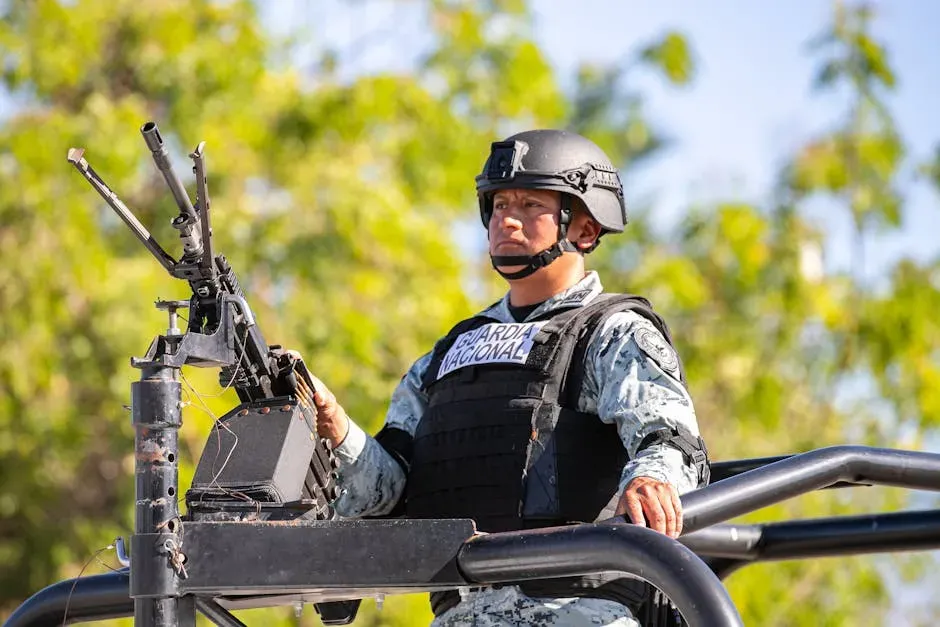
Organized crime was primarily a domestic concern, comprised of groups that rarely looked beyond their own city for profits and power. Starting in the 1970s, but accelerating in the early 1990s, a new form of organized crime took hold. The combination of a new geopolitical climate, a globalized world economy with resulting softer borders, and a revolution in information technology available to crime groups hastened a shift. Globalization, it turns out, was just as good for criminals as it was for corporations.
The ‘Ndrangheta is an excellent example of this evolution. The original ‘Ndrangheta clans arose in Calabria in the late 1800s, and until the 1970s, rarely operated outside the region. Yet by the 1990s, the ‘Ndrangheta was looking to global criminal markets for new opportunities, entering into contracts with Colombian drug trafficking organizations and importing cocaine for a growing European market. Currently, the ‘Ndrangheta has a significant presence in more than a dozen countries, ranging as far as Australia and Canada. Mexico’s cartels followed a similar trajectory. Analysts estimate wholesale earnings from illicit drug sales range from $13.6 to $49.4 billion annually, and although Mexican drug trafficking organizations existed for decades, their power increased dramatically after the demise of the Colombian Cali and Medellín cartels in the 1990s.
Crime Goes Digital – The Dark Web and the New Underground Economy

If you thought crime syndicates needed warehouses and port access to operate, the internet had other ideas. Nearly three fifths of the dark web is illegal, with content related to violence, extremist platforms, illegal marketplaces, drugs, and cybercrime forums. Global cybercrime costs are projected to reach $10.5 trillion annually in 2025 – up from $3 trillion in 2015. That kind of growth, in any industry, would be considered a miracle. In this context, it’s a catastrophe.
Ransomware attacks rose by almost a quarter in 2024, and the number of ransomware group leak sites rose by more than half. Data breaches posted on underground forums increased by nearly half, with US organizations making up roughly a fifth of total breaches. The two most significant dark web law enforcement actions in 2024 were Operation Cronos in February, which dismantled the LockBit ransomware infrastructure and led to arrests across multiple countries, and the continued fallout from the FBI seizure of ALPHV/BlackCat. These takedowns temporarily disrupted the ransomware ecosystem but also accelerated the rise of successor groups like RansomHub and Akira. Every time law enforcement shuts one operation down, another one evolves in its place. It is, honestly, like a criminal version of natural selection.
Organized Crime Today – Scale, Diversity, and Terrifying Reach

Transnational organized crime takes in between roughly three to seven percent of world GDP annually, based on 2024 estimates of global output; taking five percent as an average, that would be approximately $5.8 trillion per year – more than twice all the world’s annual military budgets. Let that sink in. Europol’s SOCTA 2024 estimates there are 3,600 active organized crime groups in the EU alone, with roughly seven in ten composed of multiple nationalities, and the main illicit markets in the EU generating around 110 billion euros each year.
Illicit economies reflect broader socio-economic, political, and geopolitical processes, because criminals are often the ones who adapt first and take advantage of disruptions such as geopolitical competition, rapid technological innovation, violent conflicts, trade wars, and the erosion of democracy. Among the findings of the 2025 Global Organized Crime Index is that there have been several shifts in the global criminal economy – for example, synthetic drugs and cocaine are rapidly dominating world drug markets. Central and South America have the highest concentration of organized crime globally, with the most widespread criminal activity in Venezuela and Colombia.
The AI Frontier – What Comes Next for Organized Crime


Here is where things get genuinely unsettling. Researchers have identified the emergence of uncensored darknet AI assistants, enabling threat actors to leverage advanced data processing capabilities for malicious purposes. One of these, known as DIG AI, was identified in late 2025 and has already gained popularity among cybercriminal and organized crime circles, with a notable increase in use observed in the final quarter of 2025. Think of it as a consultant that charges no fee and has no ethical code.
There has been a significant increase of more than double in mentions and use of malicious AI tools on cybercriminal forums in 2024 to 2025, indicating rapid adoption. FraudGPT and WormGPT are the most well-known AI tools specifically marketed to cybercriminals, but the landscape is rapidly evolving with new jailbroken and customized models appearing regularly. These tools lower the barrier for cybercrime by automating and enhancing malicious activities. Financial and cyber-dependent crimes involve intangible commodities such as data, digital platforms, or financial systems, and generally do not rely on physical violence. As a result, they are relatively easy to perpetrate yet very difficult to detect, investigate, and police. Current responses remain inadequate and insufficiently effective in addressing fast-growing forms of organized cybercrime such as online fraud and cyber-attacks.
The Fight Back – Law Enforcement’s Evolving Response
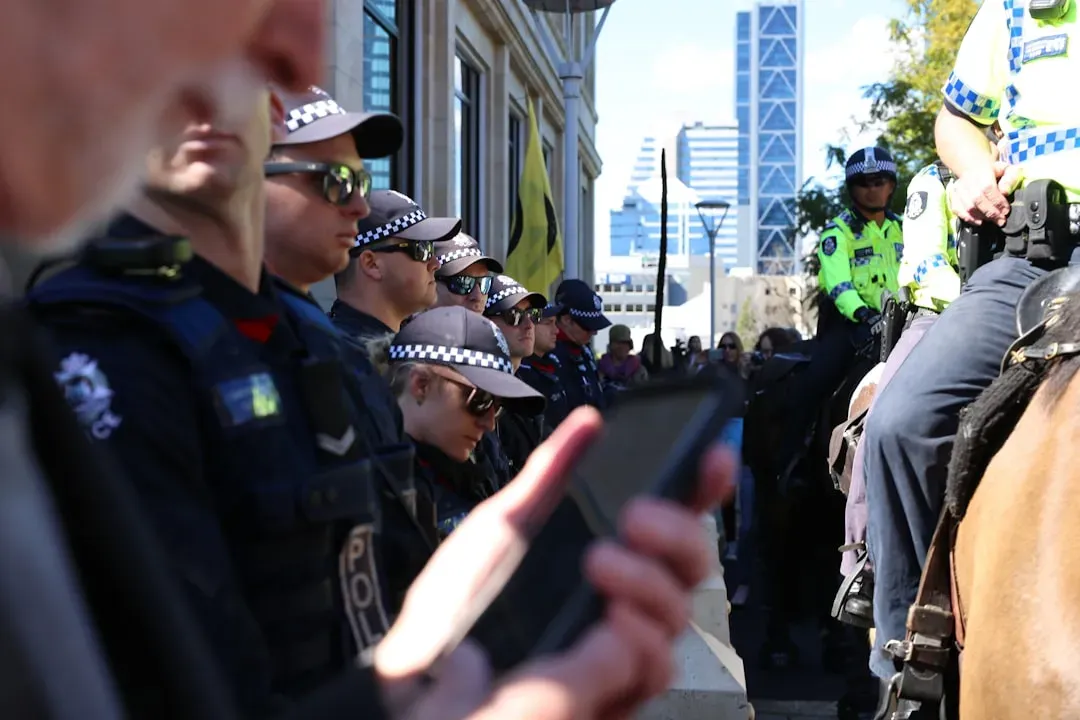
It would be wrong to paint this as a one-sided story. Law enforcement has evolved dramatically too. Operation RapTor dismantled drug, weapons, and counterfeit networks across ten countries, seizing millions in cash and cryptocurrencies. A major international crackdown netted 270 suspects of dark web crimes, seizing more than two tonnes of drugs and over 180 firearms. Known as Operation RapTor, the coordinated effort targeted networks trafficking in drugs, weapons, and counterfeit goods hidden behind layers of encryption and cryptocurrency, with suspects identified through intelligence gathered from the takedowns of four major dark web marketplaces.
While many criminal markets are witnessing growth, resilience scores appear to have plateaued. International cooperation, while it usually outperforms other resilience indicators, is being undermined by an increasingly fractured international system and a retreat from multilateralism – meaning states are becoming less willing to cooperate to fight crime. That last point may be the most sobering finding of all. While more people today live in countries characterized as having high resilience, when comparing global resilience to the rise in the pervasiveness of criminality, the data shows that response frameworks have failed to meet the organized crime threat, highlighting the urgent need for informed, practical strategies to combat organized crime globally.
From the desperate street gangs of 19th-century New York to AI-powered darknet operators in 2025, organized crime has proven itself to be one of the most adaptable forces in human history. It bends to fit every era, every technology, every weakness in society. The question worth sitting with is not how we got here – that much is clear. The real question is whether governments, working together, can finally outpace a threat that has always been one step ahead. What do you think – and has any of this surprised you? Share your thoughts in the comments below.