There’s a version of cinema history where some of the most memorable moments never happened. No shower in the Bates Motel. No boy holding a boombox in the rain. No Barbie sitting quietly on a bench, looking into the eyes of an elderly woman and seeing something true. These are scenes that studios, producers, or nervous executives tried to remove – and that directors refused to surrender. The gap between a great film and a merely competent one is often measured in exactly these moments.
The tension between creative vision and commercial caution has shaped cinema for as long as there have been studios with money on the line. Directors must contend with a variety of factors that could lead to a scene being cut: a limited budget, concerns about the run time or rating, or producers not seeing the point of certain scenes. What follows are eight of the most instructive examples of what happens when a director holds the line.
The Shower Scene in Psycho: Hitchcock’s Self-Funded Stand

The shower scene in Psycho is today considered an iconic cinematic moment, but during production, its violence and nudity deeply unsettled producers from a censorship and commercial standpoint. They also hated the idea of their protagonist, Marion Crane, played by Janet Leigh, being killed off so early in the film. For most directors, that kind of institutional resistance would have forced a compromise. Hitchcock had anticipated the problem.
Their protest couldn’t come to loggerheads because Hitchcock had funded most of the film himself, exactly for situations like this. He used fast-cutting and screeching violins to barely bypass the censors. A visionary like him had clearly anticipated that subverting expectations would permanently change how audiences experienced horror movies. The scene redefined the genre’s possibilities in ways that are still felt today.
Over the Rainbow in The Wizard of Oz: A Song MGM Thought Was Slow

It is hard to imagine cinema without its most famous song, but MGM executives originally wanted to cut “Over the Rainbow” from the film entirely. They felt that the opening sequence in Kansas was taking too long and that a girl singing in a barnyard wasn’t “sophisticated” enough for a major fantasy production. The studio’s logic was market-driven and not entirely irrational by the standards of the time. What they missed was the emotional architecture the song provided.
Director Victor Fleming knew the song was of utmost importance to mirror Dorothy’s longing for home. Surprisingly, he wasn’t the only one fighting for it – he was joined by two unlikely comrades, producer Mervyn LeRoy and associate producer Arthur Freed. Together, they fought the studio and won, keeping the film’s emotional engine intact. The song went on to win the Academy Award for Best Original Song and remains one of the most recognizable pieces of music in film history.
The Baptism Scene in The Godfather: Coppola vs. Paramount

The legendary intercutting of Michael Corleone at the baptism while his enemies are being executed was a massive editing risk that Paramount executives hated. They found the parallel storytelling confusing and wanted the scenes to play out chronologically to keep the plot simple. Director Francis Ford Coppola and editor Peter Zinner refused to budge, believing the juxtaposition was the only way to show Michael’s soul truly being lost. The studio had wanted something safer and more conventional.
The scene showed Michael becoming the godfather in real time, but what the studio saw was violence that was unusually graphic for a mainstream film, and crosscut editing they found confusing. The executives at Paramount didn’t want nuance; they wanted a linear climax that any ordinary moviegoer would understand and like. Coppola vehemently defended his vision. The sequence is now studied in film schools around the world as a masterclass in parallel editing.
Roy Batty’s Final Monologue in Blade Runner: Ridley Scott’s Philosophical Line
The studio wanted a sci-fi action movie that would give good market returns, which called for a high-octane climax full of action and drama. What Ridley Scott gave them was the anti-villain, Roy Batty, letting out what they called “philosophical ramblings” in the rain as he died. The studio’s preference was understandable from a marketing standpoint. Scott’s instinct was something altogether different.
Scott stood by his resolve to keep the monologue, also defending Rutger Hauer’s additions to it, which Hauer had made the previous night. He argued that the monologue gives the film a soul, humanizes the replicant, and encourages the audience to question what it means to be a real, living human. The studio finally consented, and the film’s villain evolved into one of cinema’s most tragic figures. That speech, written and delivered in those final hours of production, became one of the most quoted passages in science fiction film.
Partner offer
Greta Gerwig’s Barbie Bus Stop Bench: The Scene That Was the Whole Movie
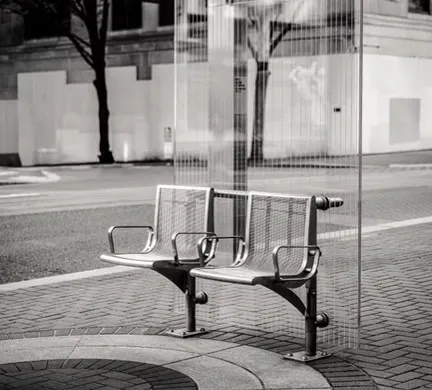
Barbie filmmaker Greta Gerwig recalled how she stood her ground when studio executives wanted a pivotal scene removed from the film. After stopping to rest on a bus stop bench, Barbie turns to an elderly woman sitting beside her and remarks on her beauty. Gerwig explained that she faced pressure from studio executives to cut the scene because it didn’t add to the plot. On paper, their logic was defensible. In practice, it was completely wrong.
The scene with the elderly woman has nothing to do with the plot, strictly speaking, but it’s vital to understanding Barbie’s perception of the real world after she leaves Barbieland. Gerwig described the scene as a “transaction of grace,” connecting it to the idea of a loving, maternal figure who reassures you that you’re doing alright. For Gerwig, the scene was a “key moment” in Barbie’s journey of self-acceptance, and she stood her ground to make sure it made the final cut. The film went on to become one of the highest-grossing movies ever made by a female director.
Bong Joon-ho’s Fish Scene in Snowpiercer: A Lie That Saved Cinema

After The Weinstein Company bought the distribution rights to Snowpiercer in 2012, Harvey Weinstein was adamant about cutting 25 minutes from Bong’s cut. He wanted more Chris Evans and more action-driven momentum. Bong noted that removing 25 minutes of dialogue would have made the final film “incoherent.” The two were fundamentally incompatible in their ideas of what the film should be.
Weinstein insisted that a scene in which guards gut a fish in front of the rebel militia be cut. Bong claimed the fish-gutting scene was of critical importance to him personally, saying his father had been a fisherman. Bong later revealed that the story had been a complete lie, invented on the spot as he needed an excuse to save the scene for the sake of artistic authority. Despite Weinstein’s aggressive attempts to limit the film’s release, Snowpiercer became a critical darling that was too beloved to ignore.
Rocky’s Ending: Stallone’s Refusal to Let Rocky Win
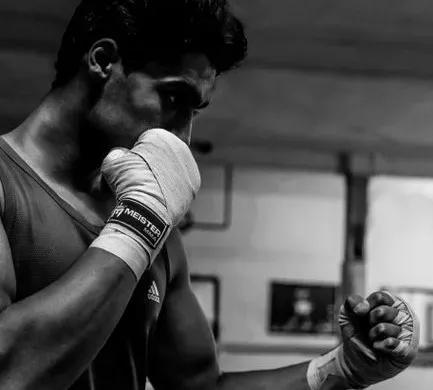
The studio originally wanted a Hollywood ending where Rocky Balboa actually wins the heavyweight title against Apollo Creed. Sylvester Stallone insisted on the loss, believing the film was a story about personal dignity and “going the distance” rather than a traditional sports victory. There was massive pressure to change it, for fear that audiences would leave the theater feeling disappointed or sad. It was a counterintuitive position to defend, and Stallone defended it anyway.
Stallone’s instincts were correct; the loss made the ending more grounded and emotionally powerful, turning Rocky into the ultimate underdog hero for generations. The film won the Academy Award for Best Picture in 1977. A clean victory would have produced a fine sports movie. The defeat produced an enduring myth about what it means to simply show up and refuse to quit.
The Godfather’s Baptism Scene and the Broader Pattern of Resistance
Trusting a director’s vision can lead to powerful moments that drive the entire movie. Directors face challenges from producers, actors, and other creatives, but achieving a shared vision produces consistent results. Directors sometimes have to fight against budgets and studio interference to keep important scenes that add depth and emotion to their films. Looking across these stories, what’s striking is how rarely the studios had better instincts than the directors they were second-guessing.
These movie moments often represent the soul of the film, providing the emotional payoff or the unexpected moment that cements its place in popular culture. In many cases, it took a stubborn director or a last-minute test screening to prove that these scenes were essential to the story’s success. The test-screening process doesn’t sort for quality or artistic merit – it sorts for comfort, and what an audience in a preview theater is comfortable with on a Tuesday night isn’t always the same thing as what makes a film endure for decades.
The Lasting Cost of What Almost Wasn’t

The studio system had obvious restrictions. It was hierarchical, controlling, and often suffocating. Actors did not fully own their careers. Directors, unless they belonged to the very small elite with real bargaining power, worked inside an industrial discipline. That power dynamic hasn’t vanished. It has simply changed shape, from long-term contracts to franchise obligations and global market testing.
Scenes like the Barbie bus stop bench perfectly capture the film’s themes of real womanhood and the beauty of growing old. When scenes like this exist, and everyone knows that directors fought to include them, it’s a wonder that anyone tries to tell a director to cut a scene from their movie. Each of the scenes described here survived because one person cared more about truth than about comfort. That is, it turns out, a surprisingly useful quality in a storyteller.
Partner offer
Planning a trip to Vegas?
Compare hotel rates and show tickets on VEGAS.com.