


Throughout recorded history, powerful men have gathered in secret to shape the world around them. Some of these gatherings were harmless fraternities. Others, however, left behind trails of evidence pointing to something far more serious – the systematic infiltration and potential control of an entire nation. The story of secret societies and state power is not simply the stuff of thriller novels. It is, in documented cases, a matter of parliamentary commissions, criminal indictments, and collapsed governments. What follows is a gallery of the most compelling evidence that secret societies have moved far beyond the ceremonial and into the machinery of power itself.
The Origins: When Secrecy Became a Political Tool

Among the earliest secret societies of which historical evidence exists were the mystery religions of ancient Egypt, Greece, and Rome, which had secret rites, initiations, and revelations of still more ancient wisdom. These early groups were primarily spiritual in nature, but the model they created – hierarchical membership, sworn secrecy, insider loyalty – proved remarkably adaptable. Over centuries, the same structural blueprint was adopted by organizations with far more worldly ambitions.
Some secret societies, even when their ends are not overtly subversive, may operate in ways such that they tend to split larger societies. Supporters of various institutions within the larger society may become quite antagonistic to secret societies in general, resulting in accusations of overtly traitorous or similarly unworthy ends. This tension between open governance and closed brotherhood has defined the relationship between secret societies and political power ever since. The question was never simply whether such groups existed – it was whether they could tip the scales of an entire country.
The Freemasons: Brotherhood at the Heart of Government

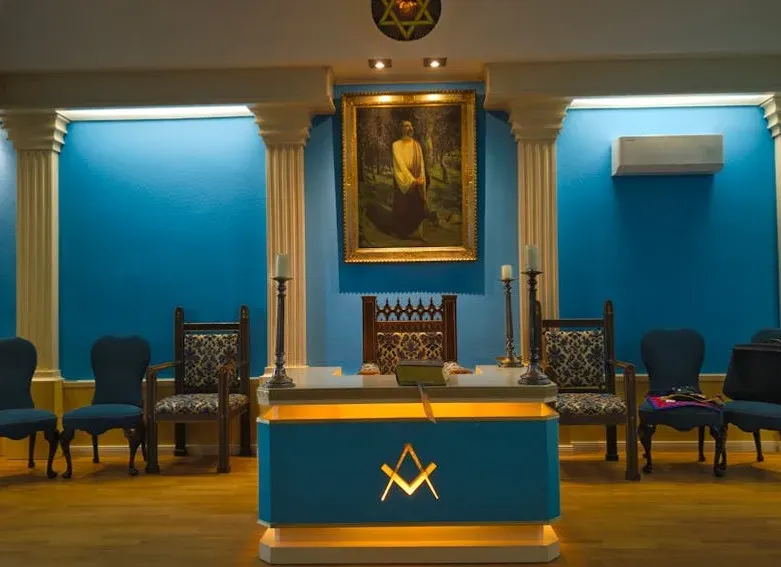
The earliest reference to masons is in the Regius Poem, or Halliwell Manuscript, which was published in 1390, but Freemasonry, as we know it today, was founded in 1717, when four London lodges merged to form England’s first Grand Lodge. Freemasonry quickly spread across Europe and to the American colonies. Its reach into politics was almost immediate. Members of the Freemasons eventually played a pivotal role in the formation of the United States – 13 of the 39 signatures on the U.S. Constitution belonged to Masons – and by the time of the 1820s, they had representatives entrenched at every level of the country’s social, economic and political hierarchies.
According to Adrian Lyttelton, in the early 20th century, Freemasonry was an influential but semi-secret force in Italian politics, with a strong presence among professionals and the middle class across Italy, its appeal spread to the leadership of the parliament, public administration, and the army. Freemasonry was particularly prevalent in France – by 1789, there were between 50,000 and 100,000 French Masons, making Freemasonry the most popular of all Enlightenment associations. These were not fringe figures. These were the architects of modern nations.
Propaganda Due: The Lodge That Toppled a Government

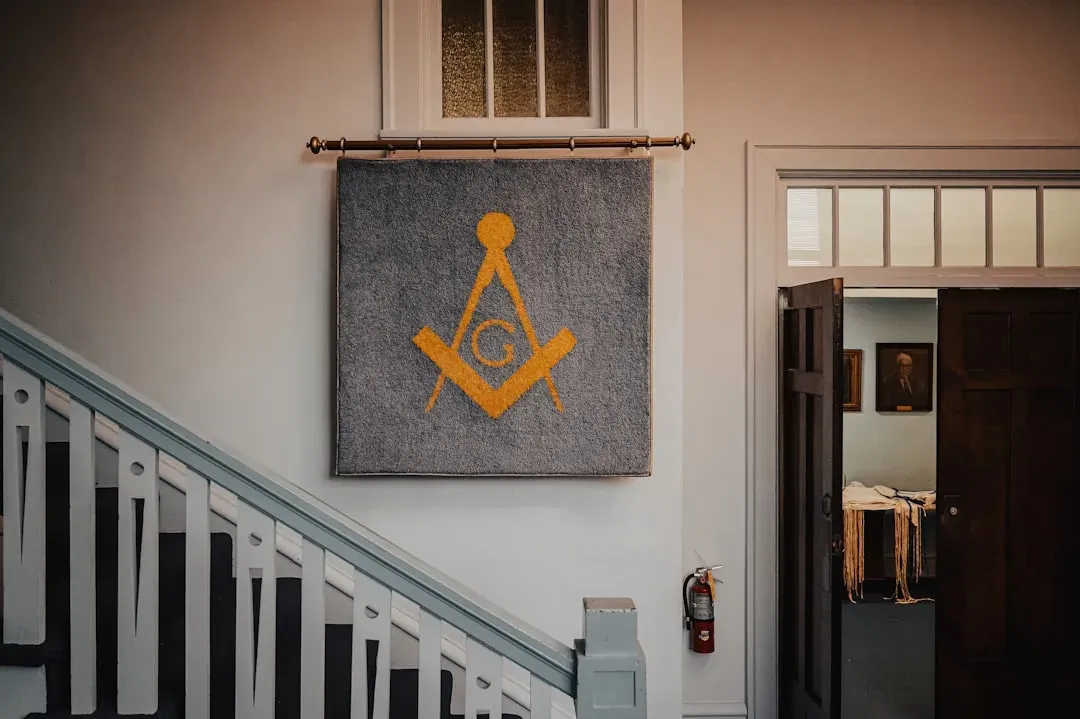
Propaganda Due (P2) was a Masonic lodge, founded in 1877, within the tradition of Continental Freemasonry and under the authority of Grand Orient of Italy. Its Masonic charter was withdrawn in 1976, and it was transformed by Worshipful Master Licio Gelli into an international, illegal, clandestine, anti-communist, anti-Soviet, anti-Marxist, and radical right criminal organization and secret society operating in contravention of Article 18 of the Constitution of Italy that banned all such secret associations. What made P2 uniquely dangerous was not its ideology alone, but the extraordinary reach of its membership. When Italian magistrates raided Gelli’s villa in Arezzo in March 1981 during an investigation into the financial activities of banker Michele Sindona, they discovered a membership list containing 962 names. The list read like a directory of the Italian power structure: cabinet ministers, parliamentarians, generals, admirals, intelligence chiefs, senior judges, police commanders, media executives, and captains of industry.
Over the course of its work, which concluded in 1984, the commission gathered documentary and testimonial evidence confirming that P2 functioned as a clandestine organization with illegal aims. The commission’s final report classified P2 as a “secret and subversive organization” incompatible with the democratic order. In May 1981, Prime Minister Forlani was forced to resign due to the P2 scandal, causing the fall of the Italian government. A single secret society had brought down a sitting head of state – and the documented evidence confirmed it was not an accident.
Partner offer

The Plan for Democratic Rebirth: Evidence of Coordinated Control

A central piece of evidence was the Piano di Rinascita Democratica, a multi-page memorandum seized by authorities in 1982 during a search at the home of Licio Gelli’s daughter. The document served both as a political manifesto and a strategic outline for institutional restructuring in Italy. It detailed the lodge’s intention to alter the constitutional balance of power in favor of the executive branch, arguing that the parliamentary system was inefficient and vulnerable to communist influence. The plan called for the formation of two large political blocs, the disempowerment of trade unions, the reduction of judicial autonomy, and a centralized control over mass communication.
The plan bore striking similarities to political developments in Italy during subsequent decades, particularly media concentration under Berlusconi. Financial evidence mounted too: the collapse of Banco Ambrosiano in 1982 with $1.2 billion in liabilities exposed a web of financial fraud connecting P2, the Vatican Bank, and offshore shell companies. Judicial proceedings later confirmed Gelli’s role in covering up evidence connected to the 1980 Bologna massacre, the deadliest terrorist attack in post-war Italy. These findings positioned P2 not merely as a secret lodge, but as an entity functioning as a covert parallel structure aimed at manipulating state mechanisms for political and ideological objectives.
Skull and Bones: The American Power Network
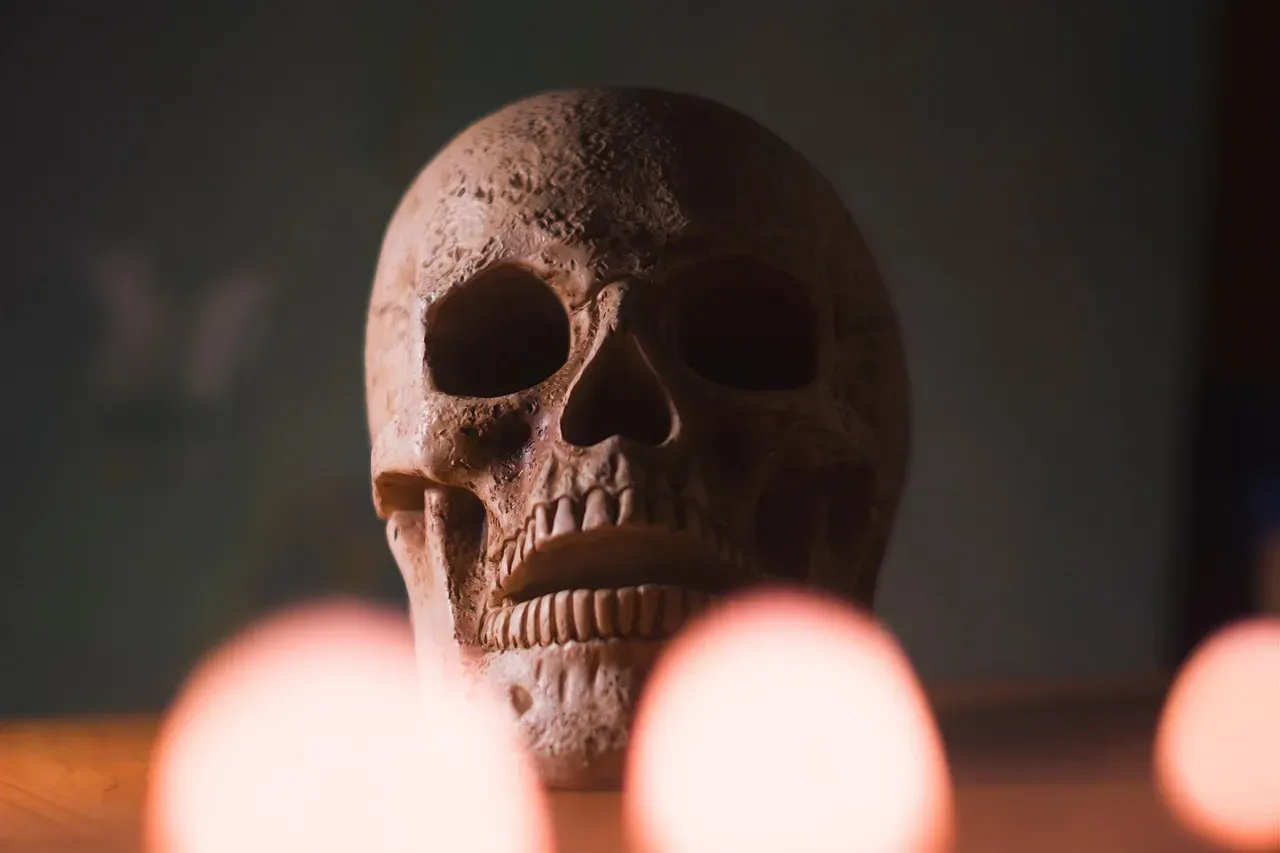
The Order of Skull and Bones is a secret society founded at Yale University in New Haven, Connecticut in 1832. Skull and Bones founder William Huntington Russell was inspired by an occult society he had visited in Germany. His co-founder was Alphonso Taft, future Secretary of War under President Grant and father of president William Howard Taft – who would also be a member of Skull and Bones. The dynastic pattern embedded in the society’s founding has never fully disappeared. Notable members include three former Presidents of the United States – William Howard Taft, George H. W. Bush, and George W. Bush – along with politicians and other social elites.
The 2004 United States presidential election was the only time two members of Skull and Bones, George W. Bush and John F. Kerry, ran against each other for the presidency. When asked on television what it meant that both candidates were Bonesmen, President George W. Bush replied, “It’s so secret we can’t talk about it.” Over the years, Bones has included presidents, cabinet officers, spies, Supreme Court justices, captains of industry, and often their sons and lately their daughters – a social and political network like no other. Whether this constitutes control or simply concentrated influence remains the central debate.
The Anti-Masonic Backlash: When a Country Fought Back

The very first American third party, the Anti-Masonic Party, was founded on the conspiracy theory that an elite group of Freemasons were secretly controlling the U.S. government. The movement had a very specific catalyst. The party was founded following the disappearance of William Morgan, a former Mason who had become a prominent critic of the Masonic organization. Many believed that Masons had murdered Morgan for speaking out against Masonry, and subsequently many churches and other groups condemned Freemasonry. Because judges, businessmen, bankers and politicians were often Masons, ordinary citizens began to think of it as an elitist group. Moreover, many claimed that the lodges’ secret oaths bound Masons to favor each other against outsiders in the courts and elsewhere.
The idea that Freemasons were secretly running the government – and maybe trying to destroy it – may have seemed convincing at the time given that so many political elites actually were in Freemason societies. Those drawn into the Anti-Masonic Party included William H. Seward, who would later be Abraham Lincoln’s Secretary of State; Thaddeus Stevens, who became an influential abolitionist in the House of Representatives; and Millard Fillmore, who became president in 1850. The backlash itself reshaped American political history, introducing the national presidential nominating convention as a democratic institution – a direct legacy of the fear of secret power.
Partner offer
Planning a trip to Vegas?
Compare hotel rates and show tickets on VEGAS.com.


