
Something quietly seismic is happening in American culture right now. Two wildly different visions of womanhood are colliding online, in politics, around kitchen tables, and inside corporate boardrooms. On one side: women building businesses, climbing ladders, and shattering glass ceilings at a record pace. On the other: women baking sourdough in floral aprons, publicly rejecting the hustle culture they were told would set them free.
This isn’t a small aesthetic disagreement. It is a full-blown cultural rift, and the numbers behind it are far more complicated than either side wants to admit. So let’s dive in.
A Nation of Working Women – The Numbers Behind the Headlines


Let’s start with the data, because it is genuinely striking. In 2023, the labor force participation rate for women aged 25 to 54 reached a series high of 77.4 percent, according to the U.S. Bureau of Labor Statistics. That is not just a recovery from the pandemic, it is a historic milestone. Women are showing up to work in numbers no generation before them ever reached.
Women’s labor force participation rate held steady at 57.5% as of early 2025, with women now representing nearly half of the total U.S. labor force. Think about that for a second. Roughly half the entire American economy is powered, at least in part, by women. Women with a bachelor’s degree or higher have played a vital role in shaping this trend, with about 70% of women at that educational level active in the labor force in 2024, compared to only 34% of women who had not completed high school.
By industry, women accounted for more than half of all workers in sectors like education and health services, financial activities, and leisure and hospitality in 2023. These are not fringe contributions. These women are the backbone of entire industries. Yet alongside all this momentum, a very different conversation is gaining volume online.
What Exactly Is a ‘Trad-Wife’ in 2025?

In recent years, social media platforms have seen a growing promotion of the trad-wife lifestyle, where women embrace patriarchal gender norms and identities such as the stay-at-home mother. The movement is not new in substance, but social media gave it something it never had before: reach, aesthetics, and a monetizable audience. Honestly, it is a strange paradox.
In feminist terms, the trad-wife is confusing. These women who embrace the appearance of regressive gender roles are also modern entrepreneurs, some of whom earn a great deal of money for their content. So you have women rejecting careers by building careers around rejecting careers. Hannah Neeleman, known by her TikTok account name ‘Ballerina Farm,’ is one of the most prominent mainstream trad-wife creators, amassing nearly 10 million TikTok followers in 2025.
The phenomenon has risen so much that the Cambridge English Dictionary has officially included “tradwife” as one of the new words in the English language for 2025. When a word makes the dictionary, you know it has crossed from internet subculture into something much larger. Many trad-wife influencers cite their commitment to faith, family, and homemaking, presenting their lifestyle as empowering and intentional rather than restrictive.
The TikTok Pipeline and Why Millions Are Watching

Hashtags like #tradwife and #traditionalwife routinely gather millions of hits. This is not a niche corner of the internet, it is prime-time content. A University of Hawaiʻi at Mānoa study explored anti-feminist themes within TikTok’s tradwife community, where women promote traditional gender roles with men as breadwinners and women as homemakers. The researchers were not just looking at lifestyle content, they found something ideologically deeper underneath the sourdough and linen dresses.
Unlike the prevalent “lean in” culture encouraging women to balance career and family, tradwives advocate for a return to traditional roles, rejecting the idea that women can successfully do both. That message resonates with a lot of women who are genuinely exhausted. Studies indicate that younger audiences exposed to trad-wife content are more likely to hold traditional gender beliefs, even when they themselves hope to pursue careers. That tension, holding two contradictory desires at once, is really at the heart of all of this.
The study found that tradwives are diverse in race, background, and motivation. Nearly half identified as women of color, challenging the perception that the movement is exclusively white. This is an important detail that often gets lost in the debate. It is far too easy to flatten this into a single, monolithic group.
Is the Pay Gap Fueling the Retreat from the Office?

Here is the thing: if the workplace were genuinely fair, would so many women be fantasizing about leaving it? In 2024, women working full time earned a median weekly wage of $1,043, compared to $1,261 for men. This means women earned 83 cents for every dollar earned by men, a 17% gender wage gap. That gap does not exist in one corner of the economy either.
Women earn less than men across all major occupational groups, even ones dominated by women. Let that sink in. Even in fields where women are the majority, they still take home less. On average, women who have children forfeit 15 percent of their earnings to provide family care, which costs them $295,000 in lost wages and related retirement income over a lifetime, according to the Urban Institute.
Women’s median annual income has yet to catch up to men’s 2019 average, suggesting more than a five-year lag in pay parity, according to Bank of America internal data analysis. So when a woman looks at a lifetime of underpayment and thinks “maybe the kitchen doesn’t sound so bad,” it is worth asking whether that is really a free choice, or a rational response to a broken system.
Partner offer

The Childcare Trap – The Hidden Driver Nobody Wants to Talk About

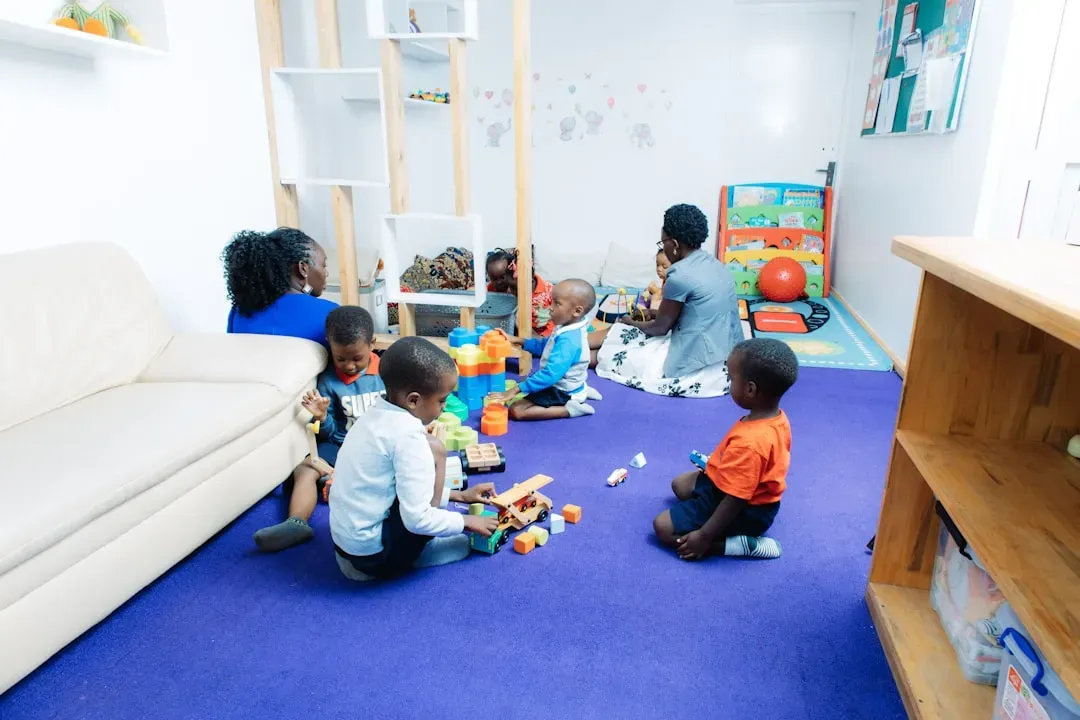
Perhaps nothing explains the trad-wife appeal more clearly than the raw economics of childcare. The national average price of child care in the U.S. for 2024 was $13,128, according to Child Care Aware of America. That is not a luxury expense, that is a second mortgage for many families.
The national average price of child care jumped to $13,128 annually in 2024 from $11,582 in 2023, a staggering difference of $1,546. This cost outpaced inflation by 7%. For a single mother, the math gets even harder. It would take 35% of a single parent’s median household income to afford this national average price. For context, most financial advisors say you should spend no more than 30% of your income on rent.
In 45 states and Washington D.C., the average annual price of child care for two children in a center exceeded annual mortgage payments. When daycare costs more than housing, some families do the math and decide one income can actually go further without it. One of the biggest factors affecting the wage gap is child care, with many women shying away from demanding positions or working only part time because they need time and flexibility to care for their kids, as economists have long noted.
A Warning Sign, Not Nostalgia – What the Research Actually Says

It would be comforting to dismiss the trad-wife trend as simple nostalgia, but researchers are pushing back on that framing hard. The tradwife trend reflects younger women’s frustration with the pressures of balancing work and family life, rather than a genuine return to traditional gender roles. That is a crucial distinction. Frustration and ideology are very different things.
Only a minority of men and women supported traditional gender roles in 2022. Around 10% of women and men across all age groups agreed that a man’s role is to earn money while a woman’s role is to look after the home and family. The silent majority, it turns out, does not actually want to go back. Over 60% agreed that both men and women should contribute to household income, rising to 70 to 80% among young men and women.
Perhaps the reason so many people find the tradwife trend appealing is that it is so clearly a comforting fiction. Zoom out from the tradwife influencers online and you will find a society where gender relations are not at all cozy and welcoming, with men and women ideologically and culturally polarized and becoming averse to marriage and child-rearing. That is not a warm portrait, but it might be the most honest one available.
The Political Battlefield: When Domestic Life Becomes Policy

It would be naive to pretend this debate is purely personal. Throughout history, the family has always been a political structure. What looks like lifestyle content on TikTok has real-world political resonance, and critics have been saying so loudly since 2024. The figure of the tradwife isn’t just advocating for a cultural shift, she’s pushing a political agenda, whether she intends to or not, as observers at Ms. Magazine argued.
In recent years, conservative lawmakers in states like Texas and Louisiana have introduced bills attempting to roll back no-fault divorce, which since the 1970s has allowed people to file for divorce without having to prove spousal misconduct. These legislative moves and the cultural trad-wife moment are not coincidences. The overlap between right-wing political extremism and tradwife communities is of great concern as these narratives are now cemented in mainstream content, and as TikTok saw the recent re-election of Donald Trump, the theme of the ‘Great Replacement’ became even more pronounced in tradwife discourses.
The tradwife trend reflects a complex interplay of nostalgia, gender politics, and economic realities. While it offers some women a sense of empowerment, its broader implications for gender equality and social progress remain contentious. There is no clean villain in this story, which is exactly what makes it so unresolvable at the moment.
Can Both Visions of Womanhood Coexist?

Let’s be real: the sharpest version of this debate treats every woman as a soldier in a culture war she did not enlist in. The trad-wife is seen as betraying the feminist movement. The career-climber is seen as abandoning her family. Neither caricature is fair, and both erase the lived complexity of women’s actual lives. Some tradwives now blend domesticity with careers, reflecting a broader rejection of binary “stay-at-home vs. career” narratives.
At the heart of this conversation lies a central tension: personal autonomy versus societal expectations. Is individual choice truly free if it takes place within structures shaped by history, economics, and culture? That question does not have an easy answer, and anyone who tells you it does is probably selling something. Experts encourage respectful dialogue, recognizing that criticizing women’s lifestyle choices, regardless of their direction, can reinforce divisions and stifle mutual understanding.
A balanced approach acknowledges both the empowerment some women say they feel and the valid concerns about broader social regression. As cultural norms continue to evolve, the trad-wife aesthetic will likely remain a flashpoint for debate. Maybe the real goal is not to win the argument, but to build a society where the choice, whatever it is, doesn’t come with a $13,000 childcare bill or a lifetime wage penalty attached.
The trad-wife vs. career-climber debate is ultimately less about aprons versus briefcases and more about who gets to define what a good life looks like – and who bears the cost of building it. The frustration driving both sides is real. The systems failing both sides are even more real. What would you change first?
Partner offer
Planning a trip to Vegas?
Compare hotel rates and show tickets on VEGAS.com.