There are moments in cultural history where something small, strange, and deeply weird cracks the world open. In February 1968, a baby carriage was pushed through the streets of Haight-Ashbury, San Francisco. Inside it were not diapers or toys but stacks of a thin, psychedelic comic book called Zap Comix No. 1. Priced at twenty-five cents, it would eventually reshape the entire landscape of art, literature, and visual storytelling.
Most people think of comics as the domain of superheroes in capes, printed on cheap paper and stuffed into wire racks at drugstores. What the underground comix movement did was something far more radical. It proved that the comic book was a fully realized art form, capable of carrying the weight of grief, politics, identity, sex, and revolution. Let’s dive in.
The Comics Code That Made Rebels Out of Artists
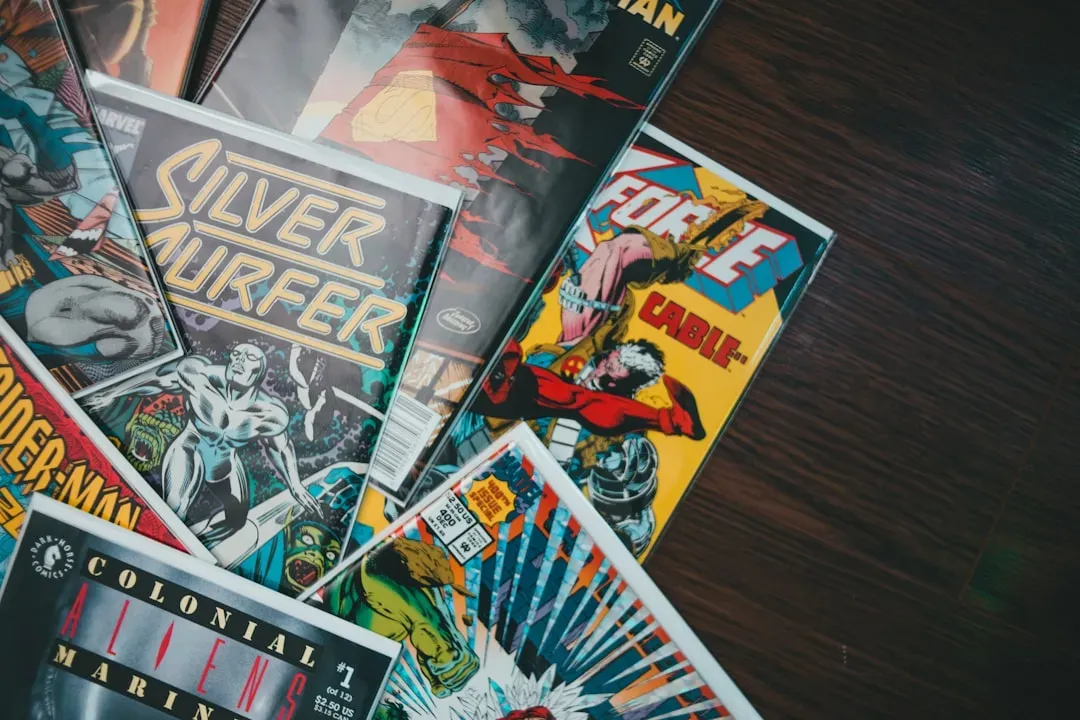
To truly understand why underground comix exploded with such force, you have to go back to the damage inflicted on the previous generation. The Comic Code Authority was established in 1954 and began regulating commercial comics. It was one of the most sweeping acts of cultural censorship in American media history. Imagine having an entire art form lobotomized by committee.
As children, the future underground artists were the very people who had been worst hit. They watched their parents tear up their comics collections, or throw them on the playground fires. Now it was time for payback. That feeling never left them. It festered for years, turning into something potent.
Censorship did not only use its power to stop graphic or obscene content, but also extended to topics such as anti-war sentiments, civil rights, and LGBTQ rights. When you ban that much truth from a medium, what eventually comes roaring back tends to be explosive. The underground comix scene was that explosion, finally ignited.
Zap Comix and the Baby Carriage That Launched a Revolution
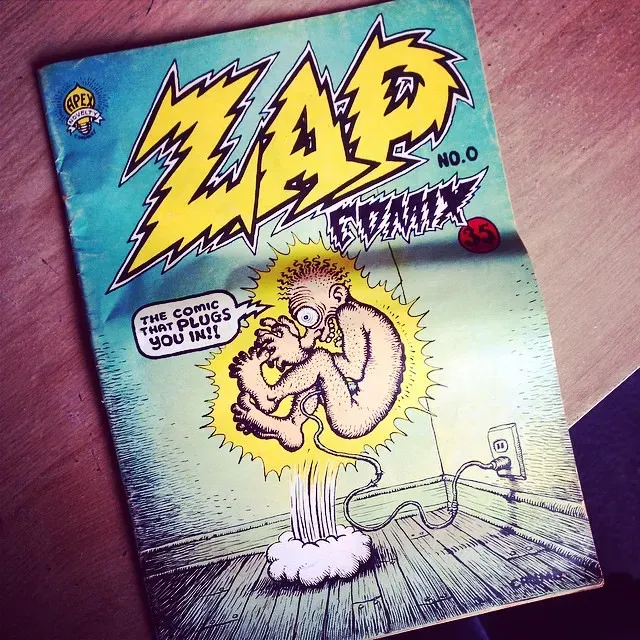
In February 1968, in San Francisco, Robert Crumb published his first solo comic, Zap Comix. The title was financially successful and almost single-handedly developed a market for underground comix. Honestly, the origin story almost sounds like folklore. But it was very, very real.
Zap Comix first began to be sold on the street on February 25, 1968, in the Haight-Ashbury neighborhood by Robert Crumb’s very pregnant wife, Dana, pushing a baby carriage with some copies piled in it. Selling at 25 cents a copy, the first day sales totaled only $20.50. From those humble twenty dollars, a revolution quietly began.
With only 3,500 printed copies printed by Beat writer Charles Plymell, Zap Comix #1 was released by publisher Don Donahue under the Apex Novelties imprint. Due to the unique nature of its distribution channels, Zap’s exact circulation figures remain elusive. However, it is estimated that the first 16 issues sold millions of copies, attesting to the comic’s widespread appeal within the counterculture movement of the 1960s and 1970s.
Robert Crumb: The Strange Father of a Strange Movement
Few artists in the twentieth century are as genuinely difficult to categorize as Robert Crumb. He was beloved and loathed in almost equal measure. He was undeniably brilliant and undeniably problematic, often at the very same time. Crumb was a prolific cartoonist in the late 1960s and early 1970s. At his peak output, he produced 320 pages over two years. That level of output is astonishing for any artist working in any medium.
During this time, inspired by psychedelics and cartoons from the 1920s and 1930s, he introduced a wide variety of characters that became extremely popular, including countercultural icons Fritz the Cat and Mr. Natural, and the images from his Keep On Truckin’ strip. These images bled into T-shirts, posters, walls, and the entire visual grammar of the era.
Premiering in early 1968 as a showcase for the work of Robert Crumb, Zap was unlike any comic book that had been seen before. While working on Zap #1, Crumb saw a Family Dog poster drawn by Rick Griffin which resembled a psychedelic version of a Sunday funnies page. Its surreal, other-worldly imagery inspired him to think about comics in a new way. There it is. The spark. One poster, one artist, and a mind loose enough to run with it.
The Counterculture as Canvas: What Underground Comix Were Really About

The United States underground comics scene emerged in the 1960s, focusing on subjects dear to the counterculture: recreational drug use, politics, rock music, and free love. That sentence sounds almost quaint now, but in the context of that era, it was pure confrontation. These were forbidden subjects in published media, and deliberately so.
In the latter half of the 1960s the hippie movement in America was engaged, to a greater or lesser extent, with protests against the Vietnam War, the civil rights struggle, anarchism, Women’s Lib and Gay Liberation. Add to this an interest in the spiritual value of taking drugs and of “free love” and you had, very simplistically speaking, a thriving counterculture against traditional values.
Artists like Robert Crumb, Gilbert Shelton, and Art Spiegelman used explicit imagery, dark humor, and raw social commentary to deconstruct established cultural narratives. Sexual themes, political satire, and personal storytelling became fundamental elements that defined this artistic revolution. Let’s be real: no mainstream publisher would have touched any of this. That was precisely the point.
The X in Comix: Self-Publishing as an Act of Defiance

Here’s the thing about underground comix that often gets overlooked in the broader cultural conversation. It was not just about the content. It was about the model. These works, often self-published or issued by small presses, bypassed traditional distribution channels like newsstands in favor of head shops and underground networks, enabling creators to retain full artistic control and ownership.
The deliberate spelling “comix” with an ‘x’ underscored their adult-oriented, subversive intent, distinguishing them from sanitized “comics” aimed at younger audiences. Think of it like a badge. That lowercase ‘x’ was a declaration of war on every squeaky-clean spinner rack in America.
They operated outside traditional distribution channels, often being sold in alternative bookstores, head shops, and music venues, which further emphasized their countercultural identity. Enabled by the advance of printing technology that gave small publishers and individual cartoonists the means to publish short-run comic books and still turn a small profit, comix had their heyday from 1968 until the mid-1970s. Cheap printing technology was, in a real sense, the internet of its era. It democratized publishing.
Women Break Into the Boys’ Club: Feminist Comix Emerge
The underground scene had a serious blind spot, one that its own creators would be the first to acknowledge. It was overwhelmingly male, and it showed. Trina Robbins co-produced the 1970 underground comic It Ain’t Me, Babe, which was the first comic book entirely created by women. That single sentence carries an enormous amount of history inside it.
Printed by San Francisco underground comics publisher Last Gasp, it was a swift hit, selling 40,000 copies in three printings. That number matters. It proved there was an audience hungry for a female perspective that the boys’ club had simply never bothered to feed.
Wimmen’s Comix, later retitled as Wimmin’s Comix, is an influential all-female underground comics anthology published from 1972 to 1992. Wimmen’s Comix was a launching pad for many cartoonists’ careers, and it inspired other small-press and self-published titles like Twisted Sisters, Dyke Shorts, and Dynamite Damsels. That is a twenty-year run. Two decades of carving out space in a world that often refused to make room.
Art Spiegelman and the Birth of the Graphic Novel
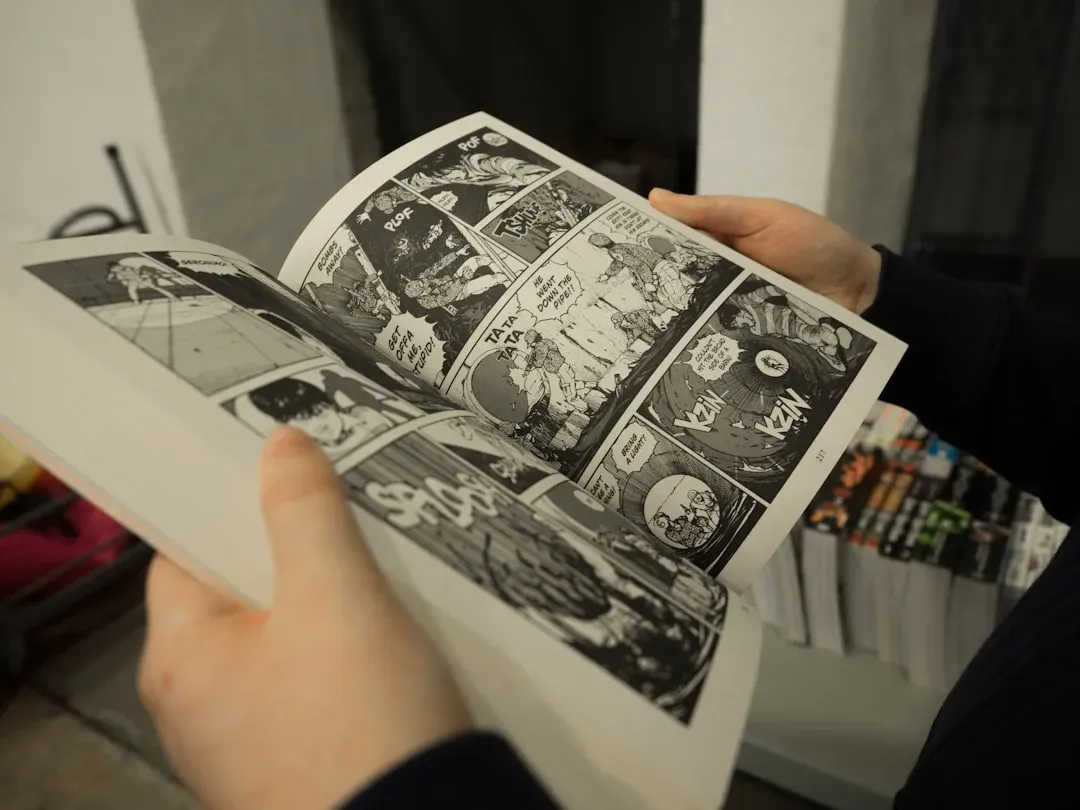
If Robert Crumb was the wild engine at the heart of underground comix, Art Spiegelman was its most cerebral navigator. The two figures are almost mirror opposites, yet both were indispensable. Spiegelman became a key figure in the underground comix movement of the 1970s, both as cartoonist and editor.
Maus is a graphic novel by American cartoonist Art Spiegelman, serialized from 1980 to 1991. It depicts Spiegelman interviewing his father about his experiences as a Polish Jew and Holocaust survivor. The work employs postmodern techniques, and represents Jews as mice, Germans as cats and Poles as pigs. The concept sounds almost absurd when described like that. In practice, it is devastating.
In 1992, it became the first graphic novel to win a Pulitzer Prize. It was considered one of the “Big Three” book-form comics from around 1986-87, along with Watchmen and The Dark Knight Returns, that are said to have brought the term “graphic novel” and the idea of comics for adults into mainstream consciousness. It was credited with changing the public’s perception of what comics could be at a time when, in the English-speaking world, they were considered to be for children. One book. One Pulitzer. Everything changes.
Legal Battles and Obscenity Trials: When the Law Came Knocking

The establishment did not simply roll over. It pushed back, hard. In a related case brought on by Zap #4, the U.S. Supreme Court ruled in 1973 that local communities could decide their own First Amendment standards with reference to obscenity. That ruling had enormous consequences for the distribution of underground comix nationwide.
In the mid-1970s, sale of drug paraphernalia was outlawed in many places, and the distribution network for these comics and the underground newspapers dried up, leaving mail order as the only commercial outlet for underground titles. Overnight, the head shop network that had sustained the entire movement collapsed. It was like pulling the floor out from under a house.
Gil Kane, a mainstream DC Comics artist, expressed his admiration of Crumb and compared his work to that of an expressionist painter. Robert M. Doty, curator of New York’s Whitney Museum of American Art, testified that he displayed Crumb’s art at the Whitney Museum’s exhibit, “Human Concern and Personal Torment: The Grotesque in American Art.” Art world credibility was being deployed as a legal defense. That, too, was a form of revolution.
The Mad Magazine Connection: Underground Comix Did Not Come From Nowhere
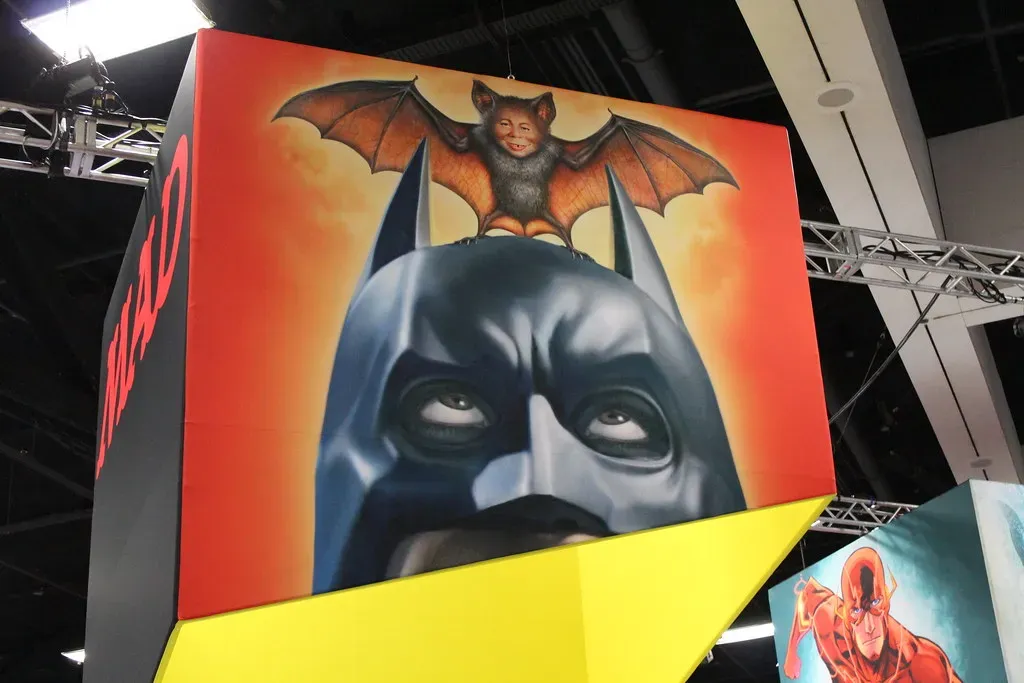
I think it’s important to resist the temptation to treat underground comix as though they appeared fully formed from thin air. Every movement has its parents. American comix were strongly influenced by 1950s EC Comics and especially magazines edited by Harvey Kurtzman, including Mad, which first appeared in 1952.
Harvey Kurtzman had liberated comedy in comics and inspired a new generation of cartoonists to push the boundaries of satire even further. More directly, in his post-Mad magazine, Help!, Kurtzman provided pages devoted to “amateur talent,” where many future undergrounders, like Robert Crumb and Gilbert Shelton, got their first break. Kurtzman is a name that rarely gets the recognition it deserves.
Perhaps the earliest of the underground comic strips was Frank Stack’s The Adventures of Jesus, begun in 1962 and compiled in photocopied zine form by Gilbert Shelton in 1964. It has been credited as the first underground comic. Zap Comix gets all the headlines, but the roots go deeper and stretch wider than most people realize.
The Living Legacy: How Underground Comix Still Shape Art Today
Long after their heyday, underground comix gained prominence with films and television shows influenced by the movement and with mainstream comic books, but their legacy is most obvious with alternative comics. You can draw a straight line from a head shop in Haight-Ashbury in 1968 to virtually every adult-oriented graphic novel published today.
Underground and alternative comics are the closest of any American comics to high culture and the avant-garde and could usefully be compared to art house, New Wave, or independent film as occupying a midway point between the avant-garde and mass culture. That is a genuinely important cultural position. Not quite gallery art, not quite pulp fiction. Something richer and stranger than either.
Both underground comics and avant-garde artbooks have the power to challenge societal norms and provoke conversations about uncomfortable issues. By addressing topics like mental health, identity, and inequality, these art forms encourage readers to reflect on their own beliefs and experiences. Today, Zap Comix stands as a testament to the power of independent creativity and the enduring legacy of Underground Comix. Its influence reverberates through alternative comics, inspiring generations of artists to push the boundaries of artistic expression and challenge societal norms. Half a century on, that baby carriage in Haight-Ashbury casts a very long shadow.
Conclusion
What the underground comix movement ultimately proved is that art does not need permission. It does not need a gatekeeper, a code of approval, or a major distributor willing to stock it in the suburbs. It needs only a pen, a printing press, and the nerve to draw exactly what you mean. From three thousand and five hundred copies of Zap Comix No. 1, an entire visual language was born that has never stopped speaking.
The movement had real flaws. It was often exclusionary of women and other voices until those voices claimed their own space anyway. It was sometimes more provocative than profound. Still, its core conviction, that comics could be genuine art made by free people for free people, cracked open a door that has never quite closed again.
Think about the last graphic novel that moved you. Somewhere behind it, whether the author knows it or not, is a baby carriage rolling down a San Francisco street in 1968. What would you say if someone told you a comic book changed the course of art history?