You’ve seen them countless times. Those striking images that captured moments so powerful they stopped the world in its tracks. The Afghan girl with those piercing green eyes. The Marines raising a flag amid chaos. A lone man facing down tanks. They hang in galleries, dominate textbooks, and haunt our collective memory. Yet what you probably don’t know is that behind each of these iconic photographs lies a story almost as dramatic as the image itself. These aren’t just snapshots. They’re accidents of fate, split-second decisions, and sometimes pure luck that happened to coincide with history unfolding. Some were taken by photographers who almost didn’t show up. Others survived only because someone smuggled film past armed guards. The stories behind these images will change how you see them forever.
The Afghan Girl: A Portrait That Exploited As Much As It Inspired


Steve McCurry photographed twelve-year-old Sharbat Gula in 1984 at a refugee camp in Pakistan during the Soviet-Afghan War, and her portrait appeared on National Geographic’s June 1985 cover. What McCurry didn’t know then was that he’d created what would become one of the most recognized photographs in history. The image was later named “the most recognized photograph” in National Geographic’s history.
Here’s the uncomfortable truth, though. McCurry took photos of several girls inside that tent with their teacher’s permission, before asking Gula, explaining that while it wasn’t correct for a man to photograph Afghan women past puberty, for a girl it was totally permissible. When asked decades later how she felt about the photograph, Gula replied that she was surprised and didn’t like media and taking photos from childhood, but when she found out she had been the cause of support for many refugees, she became happy. Steve McCurry Studios priced their print of Sharbat Gula at $18,000, while larger prints fetched as much as $178,900 in auctions, yet despite the substantial profits generated, Sharbat Gula received nothing.
McCurry made several unsuccessful attempts during the 1990s to find her, until in January 2002 a National Geographic team traveled to Afghanistan and found Gula around age 30 in a remote region, confirming her identity using iris recognition. McCurry noted she had a hard life, pointing out that 23 years of war had killed 1.5 million people and created 3.5 million refugees.
Raising The Flag On Iwo Jima: The Shot That Almost Never Happened

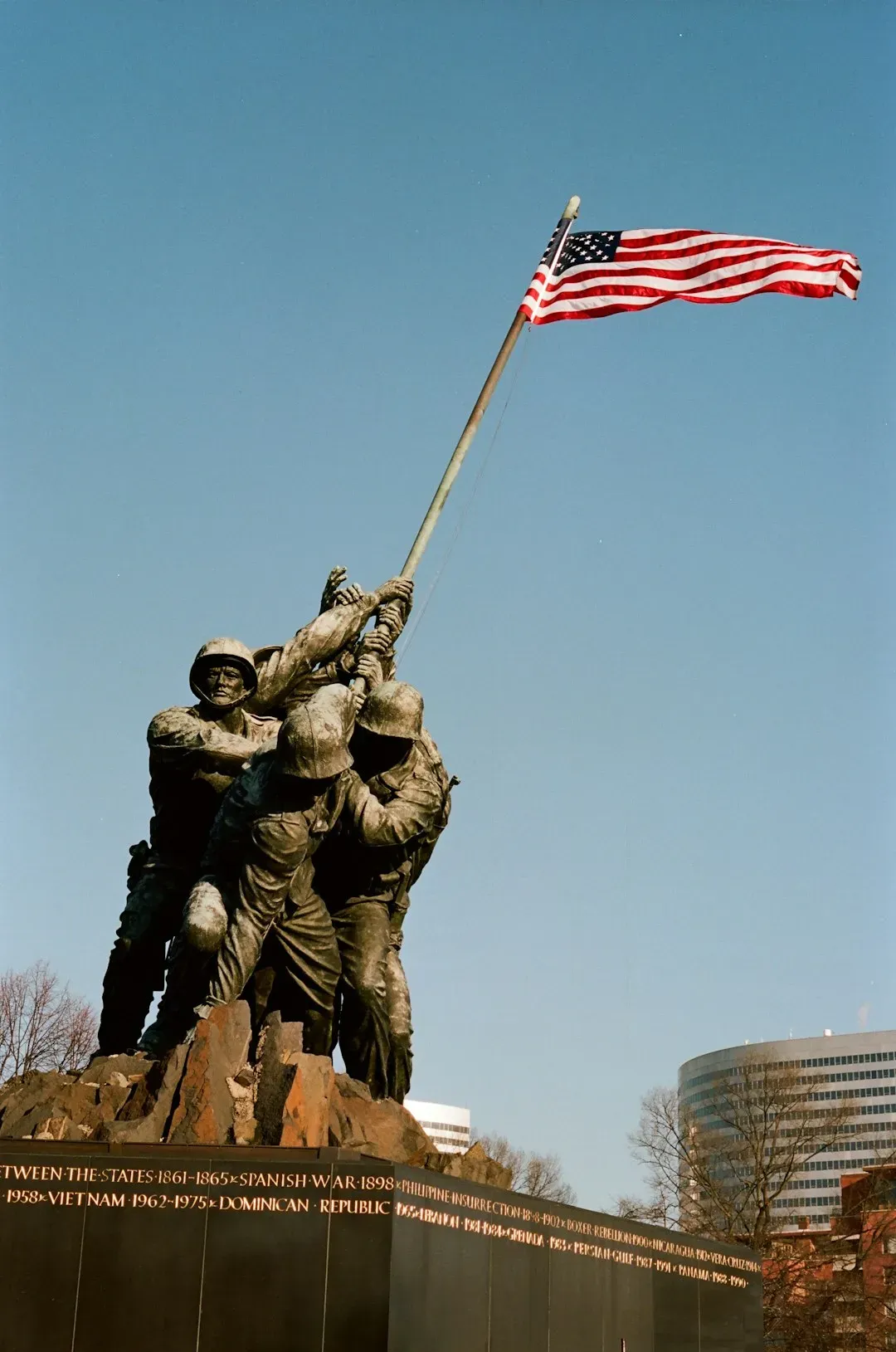
On February 23, 1945, Associated Press photographer Joe Rosenthal captured an image of Marines raising the American flag on Mount Suribachi during the Battle of Iwo Jima, which went on to win the Pulitzer Prize and visually define the Pacific Theater of World War II. The composition looks perfect, almost too perfect. That’s exactly why accusations followed.
The backstory is wild. Before Rosenthal reached the summit, a team of Marines had already raised a small U.S. flag, captured by Marine photographer Louis Lowery who broke his camera while diving for cover from Japanese fire, so he headed down to get new equipment and met Rosenthal still struggling to get to the top, giving him the bad news that the flag was already up. Most photographers would have turned around. Rosenthal kept climbing.
Rosenthal captured the image in 1/400th of a second, later describing the experience as “largely accidental,” noting that the 5-foot 5-inch photographer had to stand on a pile of stones to see the flag raising, then others walked in front of him as he prepared to take the shot, and as the flag went up he swung his bulky Speed Graphic camera toward it. The photograph actually depicts the second flag-raising on the hill, an event that took place when Marines replaced a small American flag with a larger one. Rosenthal didn’t see the photo for another five days until he arrived on Guam, where he was congratulated but initially faced questions about whether he staged the shot, which he denied, with witnesses and the AP verifying it was not staged.
Three of the six Marines in the photograph were killed in action during the battle, and remarkably the identities of the six men weren’t confirmed until 2019.
Tank Man: Film Smuggled In Underwear To Escape Chinese Soldiers

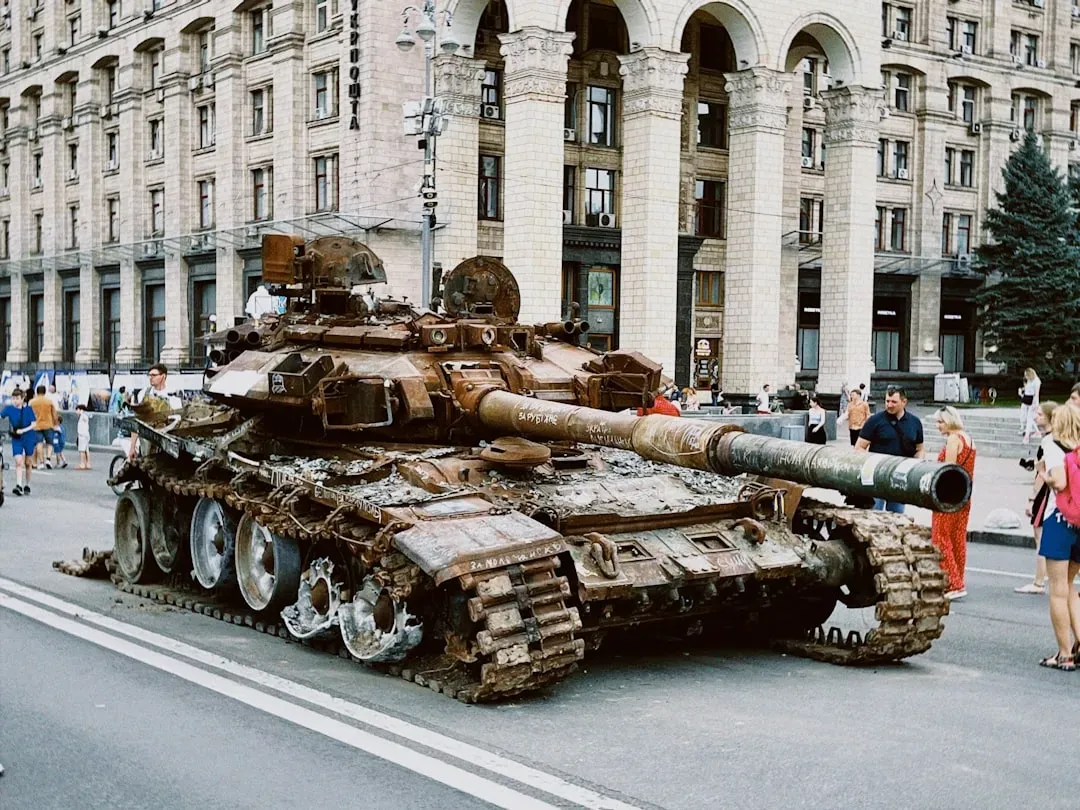
Tank Man is the nickname given to an unidentified individual who stood in front of a column of tanks on Chang’an Avenue near Tiananmen Square in Beijing on June 5, 1989, one day after the government forcibly cleared the square following six weeks of pro-democracy demonstrations that resulted in hundreds of deaths, and when the man carrying shopping bags stepped into the path of the lead tank and refused to move, repeatedly shifting positions to block its movement, the tanks came to a complete stop rather than run him over.
Jeff Widener was present in Beijing at the height of the protests and was injured on the night of June 3, 1989, after a stray rock hit him in the head during a mob scene, but his Nikon F3 titanium camera absorbed the blow, saving his life. The next morning, sick with flu and suffering from a severe concussion, he still went out to document what happened.
Widener eventually ran out of film, so he asked Kirk Martsen to find some, and Martsen found Australian backpacker John Flitcroft in the hotel lobby who said he would give him a roll of film if he could come up to the hotel room overlooking Tiananmen Square, and it was this roll of film which Widener used to take the Tank Man photo, with Martsen later borrowing Flitcroft’s rented bicycle to deliver the film to the Associated Press office.
Several media outlets took a photo of Tank Man, but Widener’s shot was the most used, appearing on front pages of newspapers all around the world and being nominated that year for a Pulitzer Prize. Although the images of Tank Man are regarded as iconic symbols of the 20th century, most young people in China do not recognize the photograph because the Chinese government prohibits the circulation of related images on the Internet.
The Migrant Mother: When A Subject Never Wanted To Be Photographed

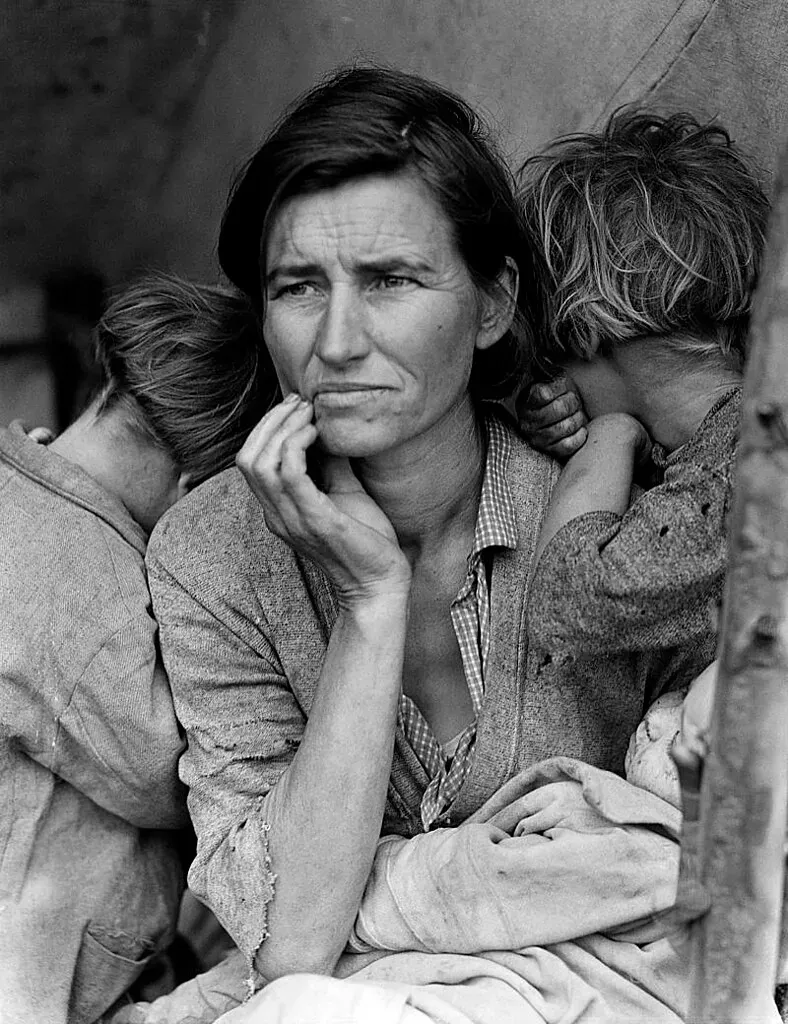
In 1936, photographer Dorothea Lange shot an image of a destitute woman, 32-year-old Florence Owens, with an infant and two other of her seven children at a pea-pickers camp in Nipomo, California. The photograph became the defining image of the Great Depression, a symbol of resilience and suffering that moved an entire nation. Yet the woman at its center never wanted to be photographed at all.
In the late 1970s, a reporter tracked down Owens at her Modesto, California home, where Thompson was critical of Lange, stating she felt exploited by the photo and wished it hadn’t been taken, also expressing regret she hadn’t made any money from it, and Thompson died at age 80 in 1983. In 1998, a print of the image signed by Lange sold for $244,500 at auction.
Lange was a documentary photographer and photojournalist known for her images of the Great Depression humanizing the plight of workers and those most affected, with her iconic image “Migrant Mother” taken in 1936 at a migrant farm workers camp, and her work went beyond photography as activism, using her camera as a tool for social change while working for the Farm Security Administration to expose poverty and injustice. The emotional power of her images helped secure government aid for desperate families. Still, the subject herself never saw a penny and felt betrayed by the lens.
V-J Day Kiss In Times Square: An Unwanted Kiss Frozen In Time

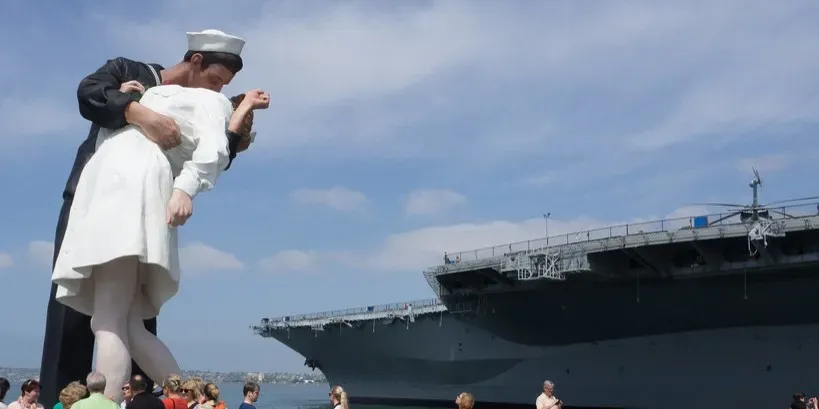
Famed photographer Alfred Eisenstaedt snapped an image of a sailor planting a celebratory kiss on a white-clad woman in Times Square on August 14, 1945, when it was announced Japan had surrendered to the Allies, effectively ending World War II, and his photo was published in Life magazine on August 27. For decades it represented joy, relief, the euphoria of victory.
Neither photographer got a chance to ask the smooching pair their names, and in the years that followed a number of men and several women came forward to claim they were the ones in the photos, which became symbolic of the excitement felt at the end of the war. The couple in the photo remained anonymous for years before a 2016 book revealed them to be George Mendonsa and Greta Zimmer Friedman.
Eisenstaedt said he saw a sailor running along the street grabbing any and every girl in sight, then suddenly in a flash saw something white being grabbed, turned around and clicked the moment the sailor kissed the nurse, and took exactly four pictures done within a few seconds. Modern reexaminations of the photo have sparked debate about consent, with many pointing out that the woman appears to be grabbed rather than willingly participating. What once seemed romantic now looks more complicated through today’s lens.