


The summer of 2026 is shaping up to be like none before it across large swaths of the United States. Taps are still flowing in most places, sure, but the signs on the wall are impossible to ignore. Reservoirs are at historic lows, snowpacks have barely materialized, and water managers from Texas to Colorado are making decisions they haven’t had to make in over a decade.
What’s unfolding right now isn’t just a drought story. It’s a story about neighborhoods, real streets, real families, and the very real prospect of opening a tap this July and wondering if anything will come out. Let’s dive in.
1. Hillcrest, Corpus Christi, Texas – When the Reservoir Goes to Nearly Empty

Honestly, Corpus Christi might be the most striking water story in America right now. With two of its key reservoirs less than ten percent full, Corpus Christi could trigger emergency water restrictions within months. That’s not a projection for some distant future. That’s now, this summer, real.
Hillcrest, Corpus Christi’s historic Black neighborhood, sits just a couple of miles west from the bay, long accustomed to the presence of big refineries and oil companies nearby. The area was once already seen as a “sacrifice zone” to make way for the new Harbor Bridge. Now residents there face yet another form of sacrifice, this time measured in gallons.
A yearslong drought and a recent boom of refineries along Corpus Christi Bay has nearly drained the city’s water supply. Two of the city’s three main reservoirs have shrunk below ten percent capacity. The city is now depending on a patchwork of temporary sources for water, which may run dry by July.
The crisis has exposed a troubling disparity in water allocation. While residents face lawn-watering bans and potential cuts of roughly a quarter of their total usage, the city’s massive petrochemical industry has faced no conservation mandates. That tension is boiling over in neighborhoods like Hillcrest, where the feeling of being left behind runs deep.
2. Northeast Park Hill, Denver, Colorado – A First Since 2013

Think of Denver neighborhoods like Northeast Park Hill, with their leafy streets and well-irrigated yards, and you start to understand what’s at stake when a city declares a drought stage for the first time in over ten years. Denver Water is expected to declare a Stage 1 drought, which would immediately implement mandatory watering restrictions for customers. This would be the first time since 2013 that Denver Water has set use limits beyond the typical summer rules for outdoor watering.
The move comes after Colorado’s warmest winter in recorded state history, resulting in one of the worst snowpacks on record. Denver Water depends on mountain snowpack for roughly ninety percent of its water supply. Think about that for a second. Nine out of every ten gallons rely on mountains that barely got any snow this year.
Stage 1 drought is the first of three levels of mandatory restrictions. Stage 1 restrictions aim to reduce water usage by about twenty percent. For residential neighborhoods, that means sprinkler systems stay off longer, grass turns brown faster, and the city starts watching closely for anyone sneaking an extra watering day.
City parks, golf courses, and other large irrigators will be required to reduce their water use by twenty percent, just like everyone else. Denver Water is expected to declare a Stage 1 drought, setting mandatory limits on watering grass, serving water at restaurants, and more. Even your restaurant glass of water isn’t guaranteed unless you ask for it specifically.
3. Hillsborough County Neighborhoods, Tampa Bay, Florida – An “Extreme” Warning

Florida doesn’t always pop up in drought conversation, but in 2026, it absolutely should. New water restrictions across the Tampa Bay region will impact Hillsborough County residents with tighter allowable irrigation times after the Southwest Florida Water Management District declared a Modified Phase III Water Shortage on March 24. Modified Phase III “Extreme” Water Shortage restrictions will take effect across the region from April 3 to July 1, as the region experiences severe drought conditions.
The district received below average rainfall during its summer rainy season and currently has a nearly fourteen-inch regional rainfall deficit compared to the average twelve-month total. Water levels in the district’s water resources, such as aquifers, rivers and lakes, are continuing to decline and many are severely abnormal. Public water supplies are extremely low for this time of year.
New watering hours are reduced to 12:01 a.m. to 4 a.m. or 8 p.m. to 11:59 p.m. Properties less than one acre in size may only use one of these windows. That’s a narrow and somewhat punishing schedule for any homeowner who relies on an automated sprinkler system.
Restaurants across the district are now required to only serve water upon request. It’s a small rule but it hits differently when you realize entire communities, from suburban neighborhoods to local eateries, are all tightening their grip on every drop at the same time.
4. Sacramento Residential Neighborhoods, California – The New Normal Takes Shape
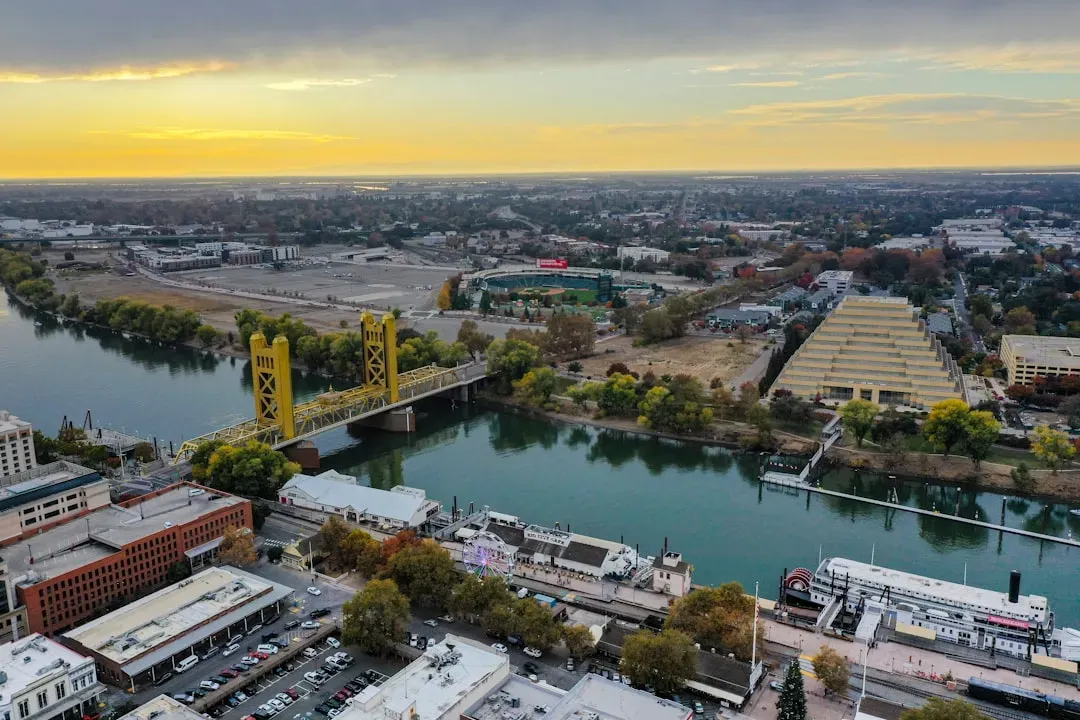
California never really left the water conversation, did it? Sacramento and its surrounding neighborhoods have become something of a case study in what permanent, not just emergency, water management looks like. California experienced a winter of extremes in 2025, with predominantly dry conditions interrupted by brief, intense storms. State water officials project continued uncertainty heading into 2026, with La Niña patterns potentially bringing below-average precipitation across Northern California.
Starting January 2025, new state regulations require major water suppliers to cut water delivery significantly by 2040. This isn’t temporary drought management, it’s permanent infrastructure planning for a drier future. That’s the phrase that should make every Sacramento homeowner pause: permanent infrastructure planning.
These aren’t temporary drought measures, they’re permanent water efficiency requirements that only become stricter when conditions worsen. The pattern is predictable: dry years bring Stage 1 and Stage 2 restrictions with watering day limits, time-of-day restrictions, and mandatory conservation targets.
Los Angeles, a city of around 3.88 million people, relies heavily on water imported from hundreds of miles away and water from the Colorado River, which is running dry from overextraction and climate change. Sacramento faces a similar imported-supply vulnerability, and the upstream pressure isn’t letting up anytime soon.
5. Northeastern Cape Coral, Florida – When the Aquifer Itself Is at Risk
Here’s the thing that makes Cape Coral’s situation genuinely alarming in a way other drought stories aren’t. It’s not just about not having enough water on the surface. It’s about an underground aquifer that could suffer damage that may never fully reverse. As of February 2026, water levels in the shortage area had increased somewhat since a record low in April 2025. However, if the water level falls below a critical threshold, serious and possibly irreversible harm may be caused to the aquifer.
The South Florida Water Management District has a Water Shortage Order imposing Modified Phase IV Water Shortage restrictions in a designated area of Northeastern Cape Coral in Lee County for residents and businesses that use private wells for irrigation. This restriction does not apply to homes and businesses on city water. So two neighbors on the same block could be living under entirely different rules depending on their water source.
In February 2026, the South Florida Water Management District issued a Water Shortage Warning for Collier, Glades, Highlands, Lee, Miami-Dade and Monroe counties amid continuing dry conditions and increasing water supply concerns. That’s a wide swath of South Florida under serious pressure all at once.
The City of Cape Coral started providing city water to the southern portion of the water shortage area. The city utilizes water from a different aquifer, so as residents connect to city water and abandon their Mid-Hawthorn well, the district typically sees aquifer levels improve as demand is reduced. It’s a race against time, and the aquifer is barely winning.
The Bigger Picture: Nearly Half the U.S. Is in Drought Right Now

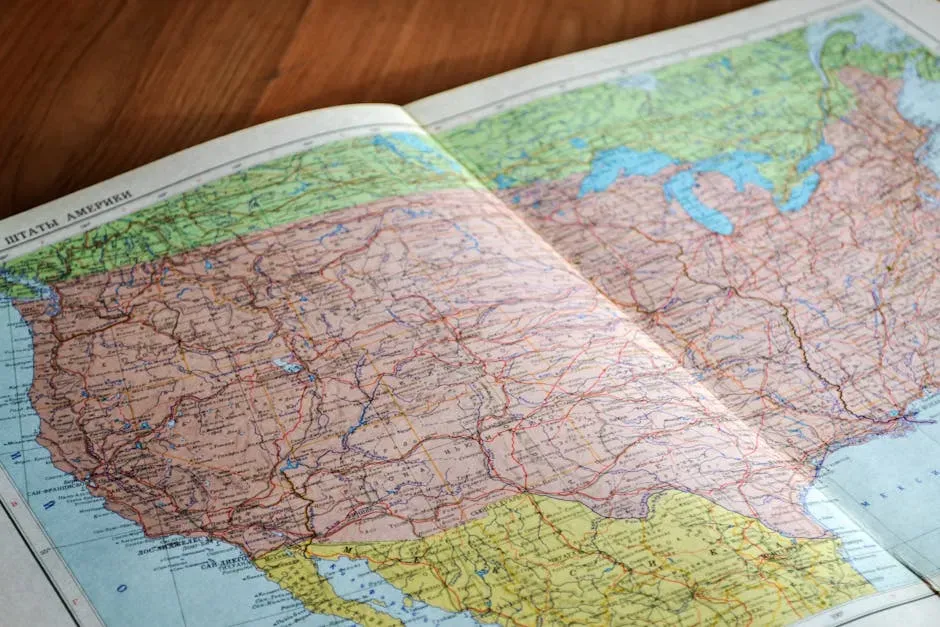
It would be easy to look at these five neighborhoods and think they’re isolated cases. They aren’t. Water scarcity is becoming a real problem in 2026 all over the United States. As of late February 2026, roughly forty-three percent of the United States and Puerto Rico, and more than half of the lower 48 states, are in drought, according to Drought.gov. Let that land for a moment.
Due to reduced water reserves, counties and states are putting up urban water restrictions, either encouraging or requiring homeowners to limit lawn irrigation, reduce household consumption, and adopt water-efficient appliances and sustainable landscaping techniques. Even as demand for drinking water, sanitation, and industrial use increases in cities due to urban growth, there isn’t enough water available to sustain these needs.
Areas that used to get a lot of rainfall and didn’t experience water shortage are now seeing conditions where unpredictable rainfall means unreliable water resources. Extended heat waves are also causing increased evaporation from reservoirs, soils, and rivers, causing water reserves to fall. It’s a compounding problem, not a simple drought cycle that flips off like a light switch.
The Industry Problem: Residents Pay While Big Polluters Pump
I think this is the part that makes people the most frustrated, and honestly, rightfully so. In Corpus Christi, the disparity is stunning. While residents face lawn-watering bans and potential usage cuts of roughly a quarter, the city’s massive petrochemical industry, which consumes between half and sixty percent of the water supply, has faced no conservation mandates. A single plastics plant used nearly five billion gallons in 2024 alone.
A historic drought has gripped Corpus Christi, the eighth-largest city in Texas, placing unprecedented strain on a water system that serves roughly 500,000 people across seven counties, along with one of the nation’s largest petrochemical corridors. Industrial demand accounts for more than half of the region’s water use.
Resentment is simmering among some residents that they must abide by restrictions while industrial water use largely continues unfettered. Companies are technically bound by water shortage rules, but current restrictions are mainly directed at residential use, including watering yards and filling pools. That’s a powder keg of community frustration waiting to ignite.
What the New Federal Water Rules Mean for Your Street This Year

Beyond the local drought crises, 2026 is also bringing a wave of federal water regulation changes that will affect utilities and neighborhoods across the country in quieter but lasting ways. As water issues become more pressing across the United States, from contamination concerns to climate-driven droughts, new federal regulations are on the horizon. In 2026, several major rules will impact water utilities, municipalities, and consumers, especially in how we manage drinking water, wastewater, and public reporting.
New national drinking water standards are being phased in to address PFAS, also known as “forever chemicals,” including PFOA, PFOS, and other harmful compounds. Water systems will need to monitor for specific PFAS chemicals starting in 2026. These are the invisible threats that neighborhoods rarely see until the problem is years old.
The federal government is also finalizing a sweeping update to how utilities manage lead in drinking water, one of the most critical public health issues in water infrastructure today. Neighborhoods with older pipes should be watching this development particularly closely. It’s not just about quantity. It’s about safety.
What Residents Are Actually Doing – Small Changes, Big Stakes
Across all five neighborhoods and beyond, ordinary people are making decisions every single day that feel both deeply personal and strangely symbolic. A local high school canceled its annual car wash fundraiser. Locals have been, begrudgingly, limiting their shower times and laundry runs, and letting their lawns turn brown. These aren’t dramatic policy gestures. They’re small daily surrenders.
Hand-watering trees, shrubs and vegetables is permitted any day in Denver, but not between 10 a.m. and 6 p.m. It’s one of those rules that sounds simple until you actually try to fit it into a family schedule, work commitments, and a summer heat that makes mid-day the only time you’re even thinking about going outside.
Restaurants, catering businesses, and other food establishments will be restricted to only serving water when guests specifically request it. Hotels and lodging businesses will limit how often they wash sheets and towels unless requested by guests. They will be prohibited from changing sheets more often than every four days for multi-night guests. These rules are creeping into every corner of daily life, whether you live in an affected neighborhood or just visit one.
Where This Is All Heading And Why It’s Not Going Away
Let’s be real: the neighborhoods on this list aren’t unlucky exceptions. They’re previews. The drastically low water levels amount to a crisis so severe that, in just a few months, it could force Corpus Christi into emergency water use restrictions to prevent taps running dry and businesses grinding to a halt. What’s happening in Corpus Christi offers a warning to other water-scarce, industry-heavy cities as climate change fuels more prolonged droughts and commercial demands for water ramp up.
While the water systems in each of these cities face very different pressures, they have one thing in common: they are being stretched to their limit, putting the ongoing supply at risk. Some are dealing with aging and undermaintained infrastructure, while others are overwhelmed by climate change effects or population growth. Across the board, deferred maintenance, underinvestment, outdated infrastructure, and leadership gaps continue to plague water systems.
For homeowners in places like Sacramento, the message is clear: water restrictions that come and go with drought cycles are becoming the new normal. That phrase, “the new normal,” gets thrown around a lot. Here, it actually fits. This isn’t a glitch in the system. It is the system now.
The neighborhoods on this Water Watch list are living proof that water is no longer something we can simply take for granted. It’s a resource that requires attention, respect, and a serious rethinking of how entire communities use it every single day. What’s your neighborhood’s plan?


