


There are moments that split a neighborhood’s history into “before” and “after.” A late-night industrial explosion does that with chilling efficiency. One moment people are asleep in their beds, and the next, windows are rattling, the sky is glowing amber, and the air smells like something that probably shouldn’t be breathed in.
Across American cities, communities living near industrial corridors know this feeling too well. The story playing out on the West Side is not unique in its facts, but it is uniquely personal to everyone it touches. Here is what residents, safety experts, and federal data all say about what happens when industrial facilities and neighborhoods collide in the dark. Let’s dive in.
A Blast in the Night: What Actually Happened

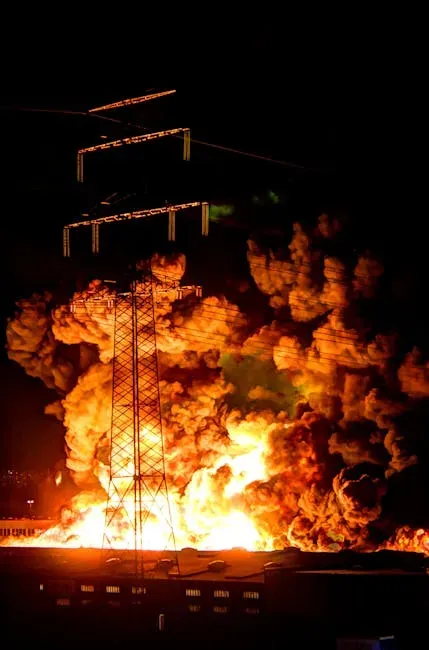
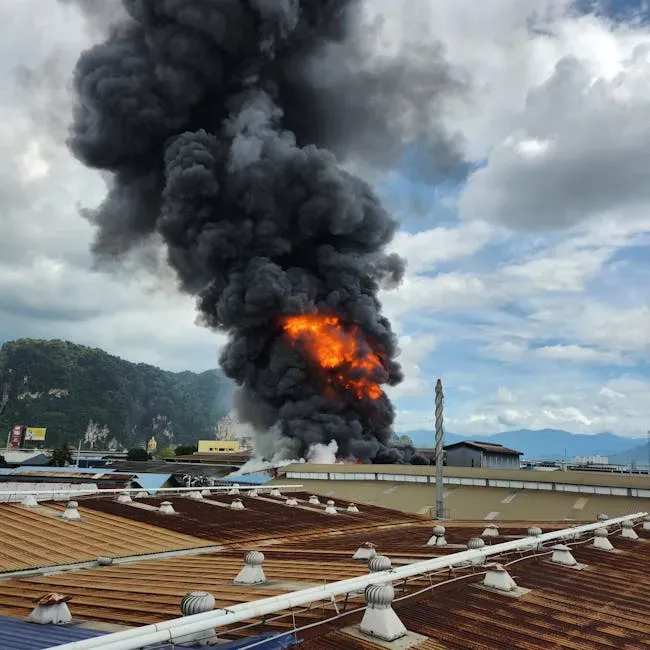
Late-night industrial explosions carry a particular kind of terror that daytime incidents simply don’t. People are disoriented, phones are ringing with emergency alerts they barely understand, and the chaos is total before most residents even get their shoes on. A large plume of black smoke and fire shooting skyward, prompting authorities to scramble and issue shelter-in-place orders for nearby residents, is a scene that has now become alarmingly familiar in industrial American communities.
The pattern is consistent across incidents: massive industrial events send smoke into the air while prompting officials to issue shelter-in-place orders, often at facilities that process hundreds of thousands of barrels of raw material every single day and employ hundreds of workers. That scale matters. It tells you just how much hazardous material is sitting next door to people who are simply trying to get a good night’s sleep.
Videos shared on social media quickly show towering flames and thick columns of dark smoke rising from facilities, and those images circulate before official communication even begins. It’s honestly one of the most jarring parts of living in the information age during a crisis.
The Numbers Behind the Danger: Chemical Incidents Across the U.S.

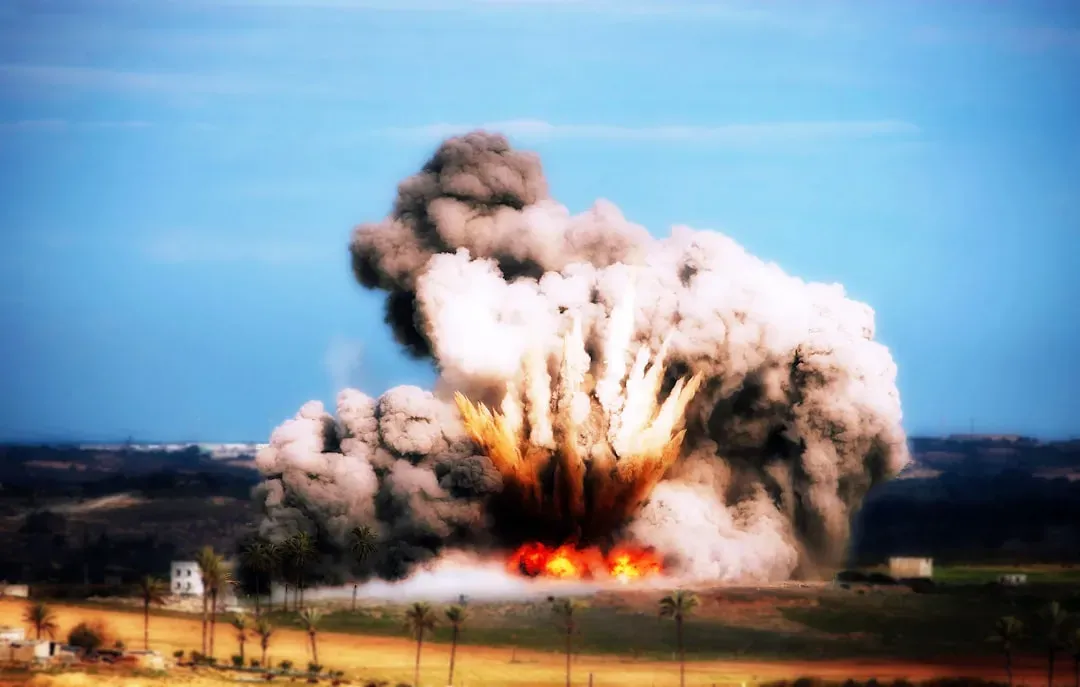
The U.S. Chemical Safety and Hazard Investigation Board’s incident reports collectively cover 81 serious chemical incidents in 31 states, involving 16 fatalities, 75 serious injuries, and over $4.5 billion in property damage. Let that sink in for a moment. Billions in damage, dozens of lives irreversibly altered, all within a recent reporting window.
A report by a coalition of community and health organizations identified 825 hazardous chemical incidents in the U.S. since January 2021, a number far higher than those previously identified by government bodies responsible for collecting accident information. A majority of those incidents, 344, occurred in the plastics and petrochemical sectors.
The study found 43 people were killed in these incidents, while more than 150 resulted in injury, hospitalization, or reports of acute symptoms. These are not abstract statistics. Behind every number is a family, a street, a neighborhood that woke up one morning fundamentally changed.
Why Nighttime Explosions Are So Much More Dangerous

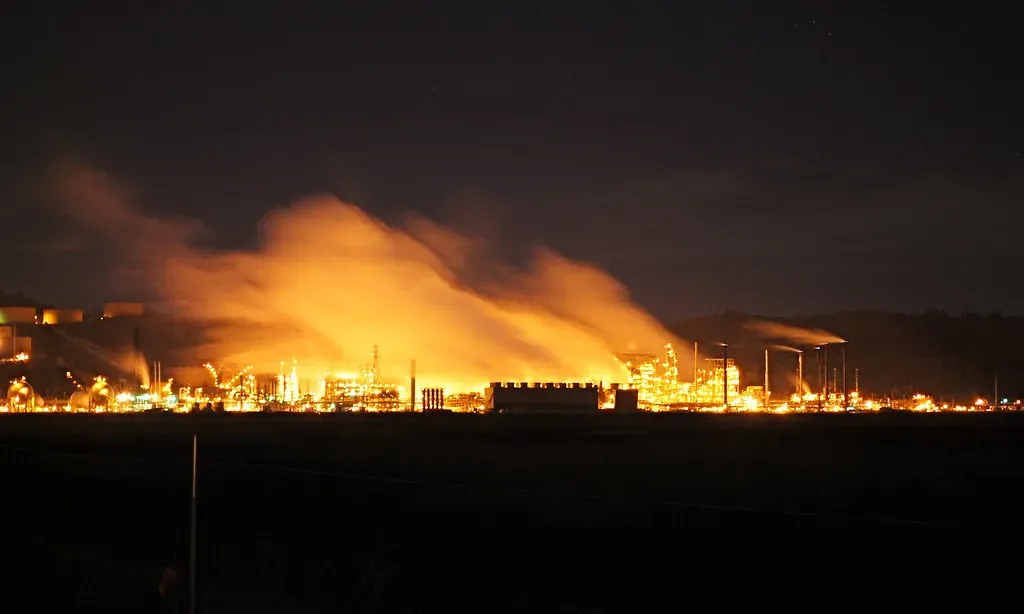
Here’s the thing about industrial accidents that happen after midnight: the entire safety infrastructure around them is weakened. Emergency response times are longer. Staffing at the facility is leaner. Residents are in deep sleep and not watching their phones for alerts. It’s a cascade of small disadvantages that compounds quickly.
Depending on the nature of a chemical incident, people in the affected area may need to evacuate or shelter-in-place at a specific location to prevent them from being exposed and/or contaminated, but that guidance is only effective if people actually receive it in time. At 2 a.m., reception is a real problem.
A shelter-in-place directive is commonly used in industrial incidents where there is a risk of airborne hazards or chemical release, and in refinery incidents, the potential for a toxic gas release is a major concern. Even when no immediate injuries are reported, exposure to hazardous substances can pose serious health risks. That quiet, invisible danger after the smoke appears to clear is something residents and authorities don’t always communicate well enough.
What the Blast Zone Looks Like: Communities Living on the Edge

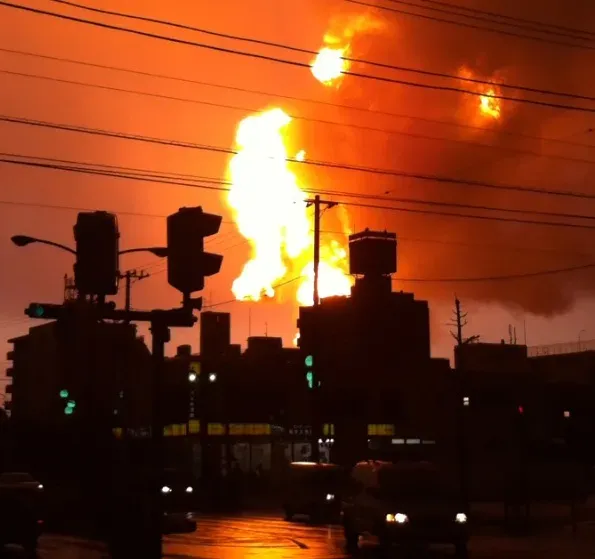
Facilities are often situated dangerously close to homes, schools, and nursing homes, exacerbating the extent of damage caused by explosions. Since incidents like these have occurred, state and local authorities have started reevaluating their zoning and land-use policies, placing greater emphasis on separating hazardous industrial facilities from residential and other sensitive areas.
Think about that geometry for a second. You’re essentially asking families to live in the shadow of facilities that, on a bad night, can turn a neighborhood into a disaster zone. The EPA’s Risk Management Program is intended to protect communities near facilities that handle large amounts of hazardous chemicals, and the program affects roughly 12,500 facilities and more than 100 million people living near those plants. Roughly one in three Americans live within meaningful proximity to one of these sites.
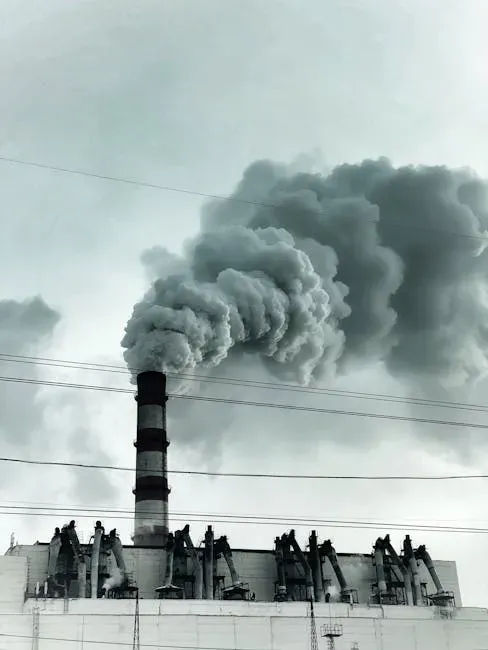
Incidents at industrial plants can shut down pollution control equipment and lead to repeated releases of sulfur dioxide and hydrogen sulfide. In the wake of such events, counties have warned residents to limit outdoor activities, with residents reporting for weeks afterward that the air smelled like rotten eggs and was hard to breathe. Weeks. Not hours.
Root Causes: Equipment Failure, Human Error, and Aging Infrastructure

It’s tempting to assume these explosions are freakish, one-in-a-million events. They’re not. For 27 years, the U.S. Chemical Safety and Hazard Investigation Board has investigated nearly 180 major chemical incidents resulting in more than 200 fatalities. That’s a grim but steady pace. Not a rarity. A pattern.
Partner offer

Volume 4 of the CSB’s incident reports examines two high-consequence incidents in 2025 that were caused by workers mistakenly disassembling the wrong equipment. In one incident, contract workers at a California refinery inadvertently opened a pipe flange on an active system during maintenance preparation, releasing and igniting flammable hydrocarbons, with the resulting explosion and fire causing approximately $924 million in property damage. Nearly a billion dollars from one procedural mistake.
Key safety issues identified in CSB reports include the lack of a comprehensive process safety management program and an ineffective emergency response plan. In one investigated case, the cause of an accidental release was a degraded and poorly crimped rubber welding hose that disconnected from its fitting inside a coating booth. A rubber hose. Ordinary, unremarkable, catastrophically overlooked.
The Health Fallout That Lingers Long After the Smoke Clears

I think this is the part of the story that gets the least attention, and honestly, it’s the part that matters most for the people actually living through it. The explosion is dramatic. The health consequences are slow, quiet, and drawn-out over months or years.
Even when no immediate injuries are reported, exposure to hazardous substances can pose serious health risks. Air monitoring by environmental agencies helps determine whether it is safe for residents to resume normal activities, and these measures are critical in protecting communities located near industrial facilities. The monitoring helps, but it also reveals something sobering: communities shouldn’t need to wait for air quality results to know whether they can breathe safely outside their own front doors.
Industrial events can result in the simultaneous release of large masses of dust, asbestos, and other particulate matter into the atmosphere, and thick clouds of these materials can descend on nearby communities, coating them in grime and soot. Long-term respiratory consequences in these neighborhoods are not hypothetical. They are documented and ongoing.
Regulatory Battles: Who Is Actually Protecting These Communities?

The regulatory landscape surrounding chemical plant safety is, to put it plainly, a tug of war. And communities are the rope. In March 2024, the EPA published the Safer Communities by Chemical Accident Prevention rule, finalizing revisions to the Risk Management Program to better protect vulnerable communities from chemical accidents, especially those living near facilities in high-accident sectors. The final rule included new safeguards such as identifying safer technologies and chemical alternatives, requiring implementation of safeguard measures, more thorough incident investigations, and third-party auditing.
On March 12, 2025, EPA announced the agency is reconsidering the 2024 Risk Management Program Safer Communities by Chemical Accident Prevention final rule. That’s a significant reversal, and one that has alarmed environmental advocates nationwide. The back-and-forth is exhausting to follow, but the stakes for communities like the West Side are anything but abstract.
Civil penalties for RMP violations can now be assessed at a statutory maximum of $121,275 per violation per day. In 2023 alone, EPA entered into more than 80 RMP settlements, which frequently involve amounts in the six-figure range. High penalties sound powerful on paper, but they only work if enforcement is consistent and communities have genuine access to information about what’s happening at facilities near their homes.
Residents Fight Back: Demanding Transparency and Accountability

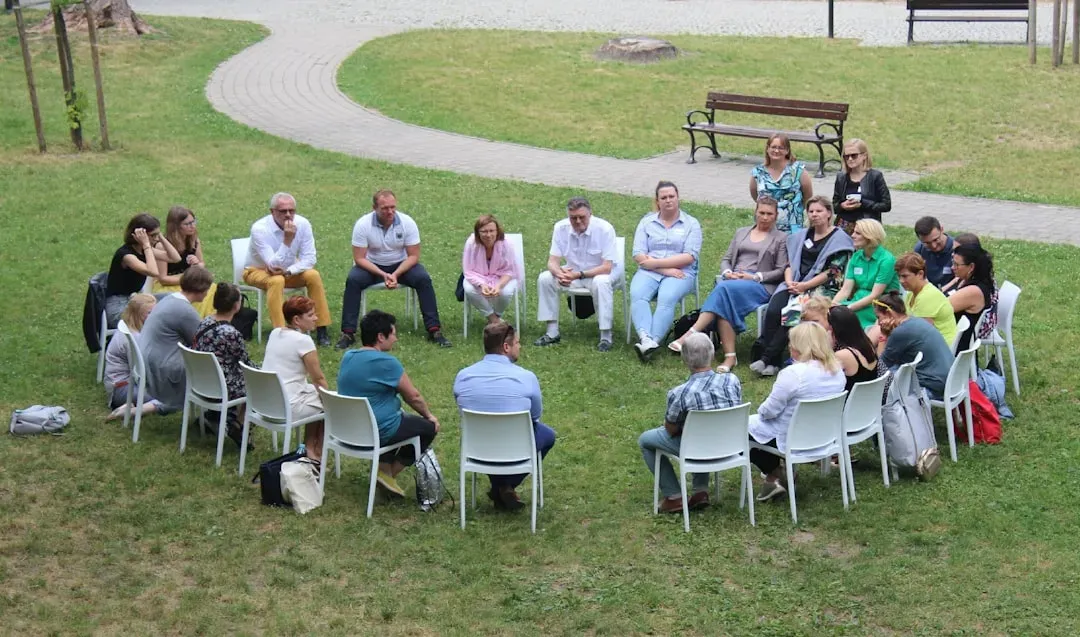
What happens in the weeks after a community explosion is often as important as the explosion itself. Industrial explosions have demonstrated the importance of community awareness and preparedness, and public awareness campaigns such as the EPA’s Local Emergency Planning Committees have been initiated to foster increased communication between facilities, emergency responders, and residents. These campaigns aim to educate communities about the potential risks associated with hazardous materials and the appropriate steps to take in case of an emergency.
Communities can further enhance preparedness by conducting regular town hall meetings, discussing safety concerns, and establishing clear channels of communication with local industries. Ensuring that residents are aware of potential hazards in their neighborhoods and are equipped with the necessary information to respond effectively can significantly reduce the impact of future incidents. That’s less a feel-good suggestion and more a survival strategy for neighborhoods like this one.
Under the amended 2024 RMP final rule, members of the public living, working, or spending significant time within a six-mile radius of an RMP-covered facility may submit a request for chemical hazard information, including names of chemicals, safety data sheets, accident history, and certain information about emergency response procedures. Residents who use these rights are often the ones who change outcomes. It’s hard, slow work, but it’s real power sitting on the table for anyone willing to pick it up.
Conclusion: A Wake-up Call That Demands More Than Sympathy

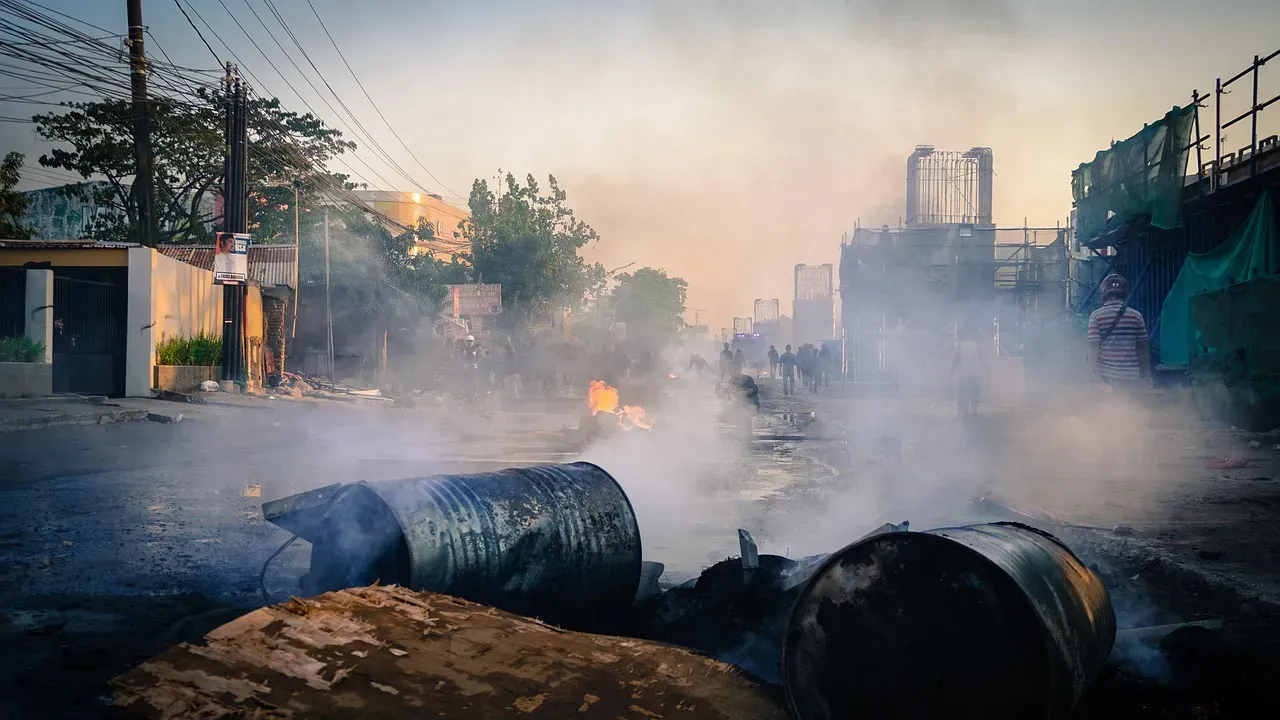
The West Side explosion is shocking in the moment. What should be equally shocking is how predictable the broader pattern is. Aging infrastructure, regulatory uncertainty, communities built in the shadows of high-risk facilities, and a gap between official response and real community need. These are not new problems. They are just newly visible when the sky lights up at 2 a.m.
The residents demanding answers deserve more than a press conference. They deserve enforceable transparency, genuine long-term health monitoring, and zoning policies that stop treating industrial risk as someone else’s problem to absorb. Explosions at refineries and industrial plants can have serious consequences for workers, nearby residents, and surrounding communities, and even when no injuries are immediately reported, these incidents often raise important questions about safety practices and regulatory compliance.
The real measure of a community’s response to a disaster is not how loudly people react in the first 48 hours. It’s what they’re still demanding six months later. What would it take for your neighborhood to be next, and who would you hold accountable? Tell us in the comments.
Partner offer
Planning a trip to Vegas?
Compare hotel rates and show tickets on VEGAS.com.


