
Higher education has always been a mirror of its time. From medieval European universities built around theology and law, to the sprawling research campuses of the twentieth century, the institution has constantly reinvented itself in response to social, economic, and technological pressure. What is happening right now, though, feels different. Faster, louder, and in many ways, more unsettling.
The question is no longer whether colleges and universities will change. They already are. The real question is whether they can keep up. Let’s dive into where higher education has been, where it stands today, and what the future looks like from here.
From Ancient Academies to the Modern Campus

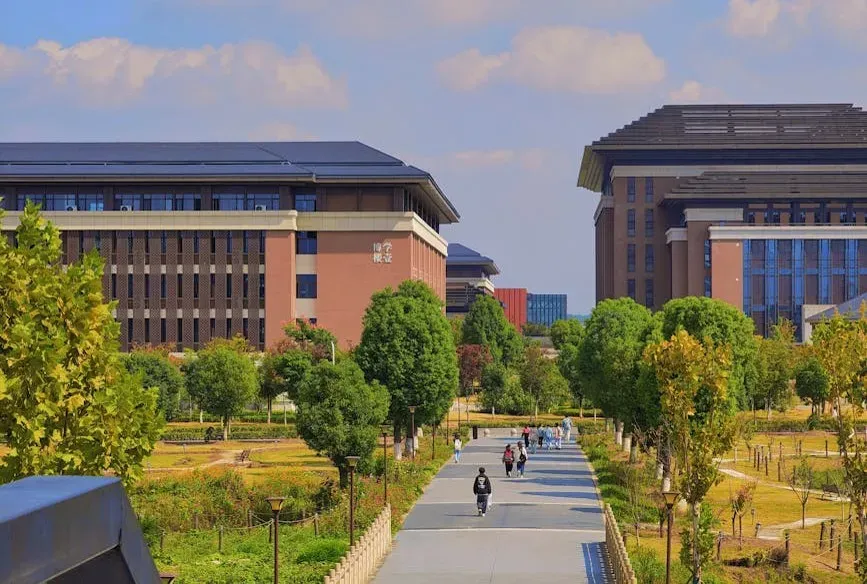
The idea of organized higher learning stretches back thousands of years – from Plato’s Academy in Athens to the great library of Alexandria. The first recognizable universities emerged in Europe in the eleventh and twelfth centuries, centered on theology, philosophy, and law. These were fundamentally elite institutions, designed for a narrow stratum of society.
By the twentieth century, higher education had transformed dramatically. The GI Bill in the United States after World War II opened college doors to millions of veterans who would never previously have considered a degree. Mass enrollment became a reality, and universities multiplied. Honestly, it was one of the most democratizing social experiments in modern history. The campus as a place of broad civic and intellectual life became a deeply rooted cultural ideal – one that is now under serious pressure.
The Enrollment Crisis Nobody Saw Coming

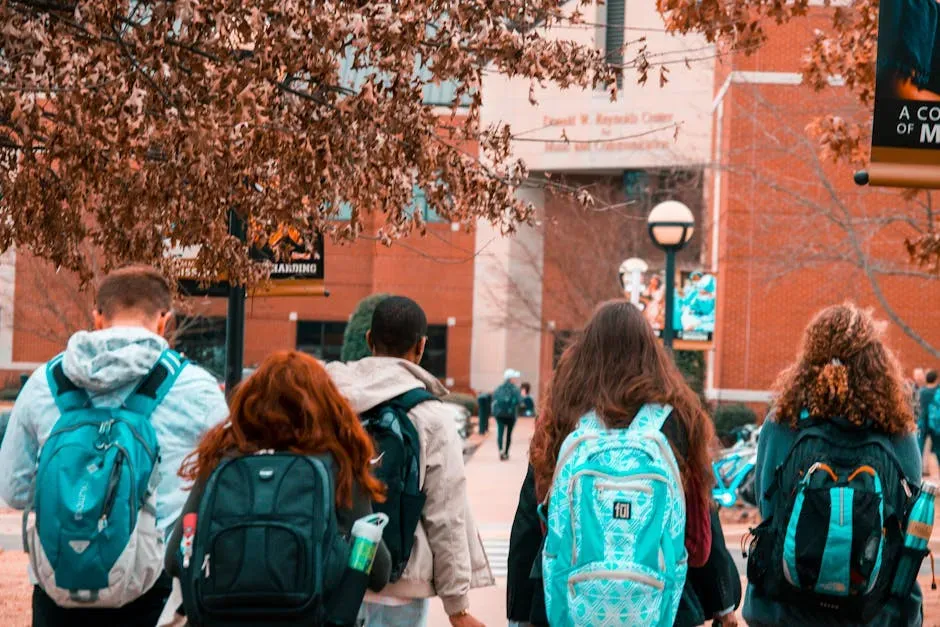
Roughly 18 million students are now enrolled in U.S. colleges and universities, but enrollment patterns are no longer predictable. The numbers might sound healthy at first glance, but zoom in and a more troubling picture emerges. Last year, colleges slashed spending on staff, faculty, programs and more in response to difficult enrollment realities and rising costs.
According to the National Student Clearinghouse Research Center, undergraduate enrollment has decreased by approximately three percent compared to pre-pandemic levels. While total enrollment remains slightly below historical highs, the stabilization suggests institutions are adjusting to the new normal of student preferences, financial pressures, and changing demographics. Some smaller institutions haven’t been able to weather the storm at all. Colleges are now closing at a pace of one a week, raising urgent questions about what happens to the students left behind.
The Online Learning Revolution – More Real Than Ever

Here’s the thing: online learning went from a novelty to the backbone of modern higher education almost overnight. Nearly one in four higher education students were enrolled exclusively online in 2024, and exclusively distance enrollment remained stable at roughly twenty-eight percent for undergraduates through the 2024 to 2025 academic year. That is not a temporary blip – it is a structural shift.
Graduate enrollment in fully online study reached forty-five percent in the 2024 to 2025 academic year, outpacing traditional classroom formats. Looking ahead, the share of graduate students studying fully online is expected to reach more than half by 2030. Half of all institutions noted that online program enrollment is increasing faster than on-campus enrollment in 2024, and a clear majority of institutions observed that online classes tend to fill first, indicating strong student preference. The campus experience is still valued, but the classroom is no longer sacred.
Artificial Intelligence Is Rewriting the Rules

I think it’s fair to say that no technological shift has rattled higher education quite like artificial intelligence. Several surveys conducted in 2024 and 2025 revealed that a significant majority of students are using AI in their studies. A global survey by the Digital Education Council found that eighty-six percent of students use AI in their studies, with more than half using it weekly and nearly one in four using it daily.
Roughly two-thirds of students say they use AI daily or weekly to get help with coursework they do not understand, and three in five report using it to check answers on homework or classroom assignments. More than half say they frequently use AI to edit or improve their writing or to summarize lectures or notes. Yet institutions are still scrambling. Some sixty-seven percent of higher education leaders say they have not acted or have no clear AI strategy, according to a recent survey administered by The Chronicle of Higher Education. The technology is already in the classroom. The policies are not.
The Staggering Cost of a Degree
Let’s be real: college has become breathtakingly expensive. Average published tuition and fees for full-time in-state students at public four-year colleges rose to $11,610 in the 2024 to 2025 school year, while private nonprofit four-year institutions reached an average of $43,350 – an increase of nearly four percent in a single year. That gap between public and private is almost like choosing between two entirely different financial realities.
Student loan debt in the United States now totals over $1.8 trillion, and the outstanding federal student loan balance alone is $1.693 trillion, with 42.8 million student borrowers carrying federal loan debt. Rising living costs, coupled with stagnant wage growth, have left many Americans questioning whether a university degree is still worth the financial sacrifice. A Bankrate survey found that more than half of Americans believe college is too expensive, while nearly one in three see student loans as a national crisis. It is hard to argue with that sentiment.
Partner offer

The Shift Toward Career-Aligned Education


One of the most significant trends in higher education is the growing alignment between educational programs and career outcomes. With nearly three-quarters of prospective students citing affordability concerns, the return on investment of a college degree is under intense scrutiny. Students simply are not willing to spend four years and tens of thousands of dollars on a credential that does not lead somewhere concrete.
Spring 2024 saw significant growth in certificate enrollments, with graduate programs seeing nearly a ten percent increase and undergraduate certificates growing by nearly four percent. This growth reinforces that modern learners are increasingly prioritizing education opportunities that yield a high return on investment. The idea of a traditional four-year degree is being reconsidered as many students seek faster, more affordable ways to graduate. The “degree in three” trend is gaining momentum, with many universities offering accelerated programs. This trend is driven by students’ desire to enter the workforce sooner and avoid the high costs of a four-year education.
A Changing Global Landscape – America Is No Longer Alone at the Top

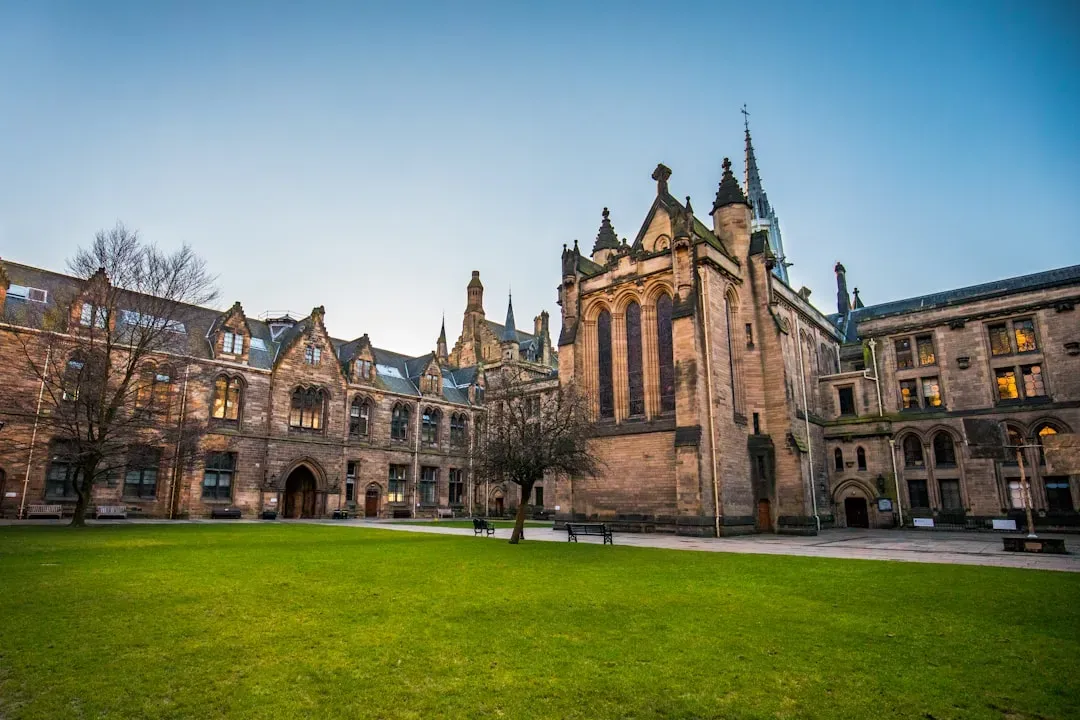
For much of the twentieth century, the United States and the United Kingdom dominated global higher education rankings without serious competition. That is changing fast. Data evaluating more than 3,100 universities from 136 countries shows a powerful and accelerating trend: the traditionally dominant Western powers, across North America and Western Europe, are steadily losing ground to a rising Asia, led by China.
Every one of Hong Kong’s six ranked universities has risen in the Times Higher Education World University Rankings 2026, with Hong Kong now securing a record six universities in the top 200. South Korea has also risen significantly in all four research quality metrics, and now has a record four higher education institutions in the top 100. Meanwhile, the deep research funding cuts and international talent visa restrictions implemented in the U.S. in recent months could signal an accelerating shift in the direction of global academic leadership. It’s hard to say for sure how dramatic that shift will be, but the trajectory is clear.
The Rise of the Non-Traditional Student

The image of the eighteen-year-old freshmen moving into a dormitory is a cultural archetype that no longer reflects the statistical reality. There is an increase in diversity among students and faculty, as well as a growing number of non-traditional students, including full-time employees, parents, caregivers, and retirees. These students bring different needs and they demand a different kind of institution.
Colleges are experiencing growth in non-traditional student populations, including adult learners returning to school for career advancement or reskilling. The Lumina Foundation reports that adults seeking professional credentials, certifications, or online degrees are becoming a larger share of total enrollment. Think of it this way: the university is becoming less like a four-year rite of passage and more like a gym membership – something you return to whenever your life requires it. According to Coursera, roughly half of global leaders have incorporated micro-credentials within their institutions, and nearly three-quarters of students prefer to enroll in degree programs that acknowledge or allow micro-credential credits.
Federal Policy Turbulence and the Funding Crisis

This year has already brought big challenges to the higher education sector, from major shifts in federal policy to massive cuts in government research funding. As college leaders gear up for the 2025 to 2026 academic year, they are staring down even more change ahead. The political environment around universities has grown sharper and more adversarial in ways that were difficult to predict just a few years ago.
Federal agencies suspended nearly $600 million in funding from the University of California, Los Angeles over allegations that it violated civil rights law. Institutions large and small are recalibrating in real time. The sea changes taking place in higher education are significant and fast-paced, more complicated than might have been predicted over past decades. Budgets, autonomy, research funding, and even ideological direction are all in play simultaneously – and universities are being asked to navigate all of it at once.
Where Higher Education Is Headed Next

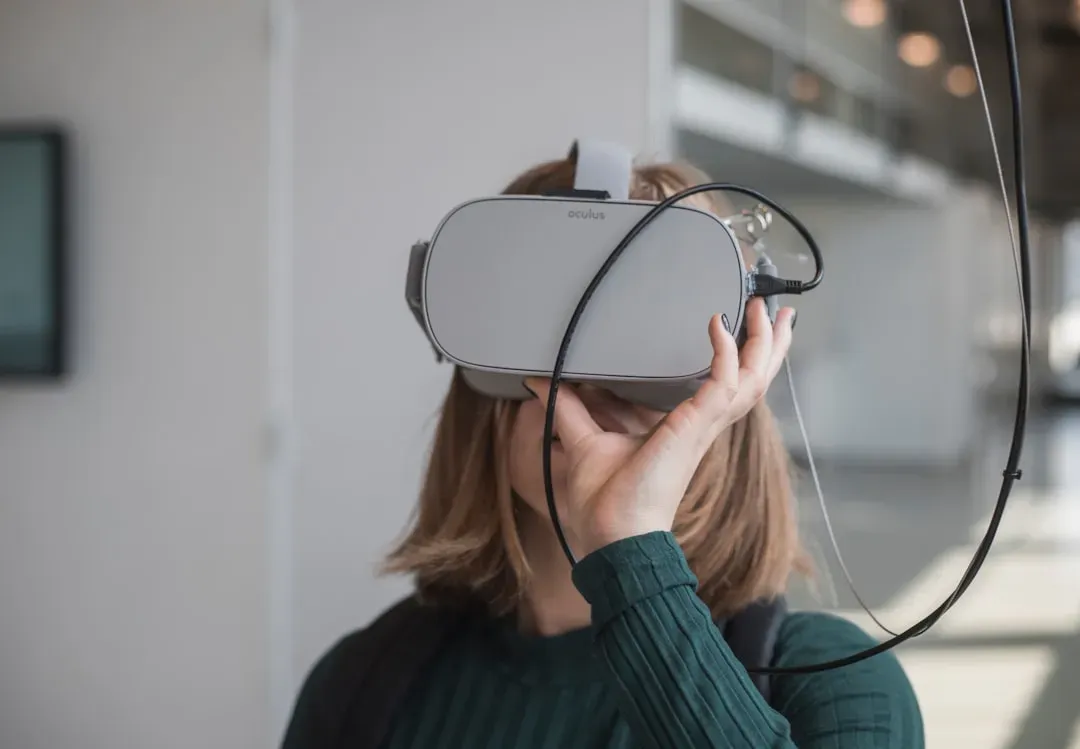
Predicting the future of any institution this complex is a tricky business. Still, the signals are reasonably clear. As we move further into this decade, higher education is evolving in response to changing technologies, student expectations, and workforce needs. We are seeing significant shifts in how students approach education, how universities deliver learning experiences, and how industries define the skills required for success. These trends are pushing universities to adapt quickly and embrace innovation.
In 2026, higher education institutions are bridging the skills gap by partnering with industries, updating curricula to include technology-driven skills, and offering modular learning. Institutions are increasingly focusing on experiential learning to provide practical skills that align with current job market demands. The universities that will thrive are the ones that treat flexibility not as a compromise, but as a core value. The most successful approaches balance technological innovation with sound pedagogical principles, using technology to enhance rather than replace meaningful human interaction in the learning process. That balance – between efficiency and humanity – may turn out to be the defining challenge of higher education for the next generation.
So, what does a university even look like in twenty years? Will the traditional campus survive? What do you think – and does the answer change depending on who gets to afford it?
Partner offer
Planning a trip to Vegas?
Compare hotel rates and show tickets on VEGAS.com.