
There’s a reason certain cities, environments, and even corners of the internet seem to turn ordinary people into entirely different versions of themselves. Strip away familiar social cues, remove the people who know your name, and something shifts in how the brain processes accountability. It’s not magic. It’s psychology. The phrase “what happens in Vegas, stays in Vegas” is more than a marketing slogan. It’s a cultural acknowledgment of a deeply studied human phenomenon: that anonymity, whether physical, social, or digital, changes the way we behave, the risks we take, and the moral guardrails we normally rely on.
The Science of Losing Yourself in a Crowd

Deindividuation is a psychological phenomenon that occurs when individuals in a group lose their sense of personal identity and self-awareness, often leading to behaviors they might not typically engage in. This process is particularly evident in crowd situations where anonymity and a lack of personal responsibility can result in disinhibited actions.
The term was first coined in 1952 when Festinger, Pepitone, and Newcomb described what happens when persons within a group are not treated as individuals. Since then, decades of research have built on this foundation, revealing how identity dissolution operates across contexts far beyond riots or protest crowds.
Early theorist Gustave Le Bon proposed that a loss of personal responsibility in crowds leads to an inclination to behave primitively and hedonistically. The resulting mentality, he argued, belongs more to the collective than any individual, so that individual traits are submerged. It’s a striking idea, and one that holds up remarkably well when you look at behavior in nightlife districts, casinos, or online comment sections.
Factors contributing to deindividuation include anonymity, sensory overload, and heightened emotional arousal – all three of which are present in abundance in a place like Las Vegas on a Friday night. The Vegas effect isn’t accidental. It’s structural.
Philip Zimbardo and the Power of the Hidden Identity

To test his theory, Zimbardo conducted two experiments. The first analyzed the relationship between anonymity and aggression. Groups composed of four participants were formed, but half were under anonymous conditions – the participants were never called by their names, and the room they were in was poorly lit – whereas the other half were under identifiability conditions where they wore large nametags and their unique reactions were emphasized.
Through innovative design and rigorous experimentation, the study revealed the profound impact of anonymity and group immersion on individual conduct, challenging our understanding of moral decision-making and personal responsibility. The anonymous participants delivered more intense responses than those who remained identifiable.
Deindividuation is caused by a reduction in objective self-awareness, and factors that can reduce self-awareness – such as anonymity or being in a group – can bring about deindividuation. Under conditions of deindividuation, attention is drawn away from the self, and people are less capable of monitoring their behavior in relation to internal norms and standards.
To support this idea, Diener and colleagues observed the behavior of more than 1,300 children one Halloween, focusing on homes where trick-or-treaters were invited to take one candy. Half of the children were asked for their names; half were not. Results revealed that deindividuated children and children in groups were more than twice as likely to take more than one candy. Diener argued that the anonymous children transgressed because deindividuating conditions reduced their objective self-awareness and freed them from normal constraints.
The Online Disinhibition Effect: Vegas Goes Digital
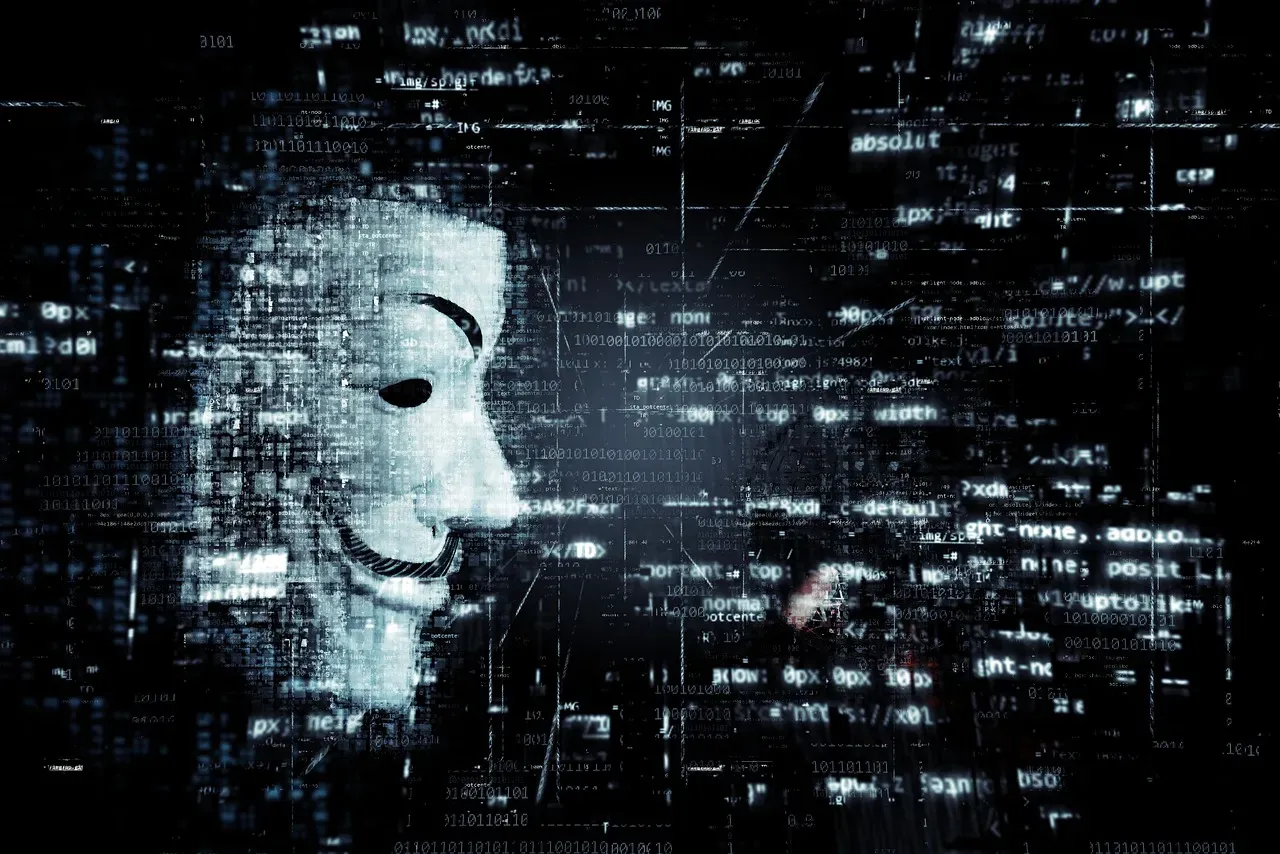
The term “online disinhibition effect” was originally introduced by Dr. John Suler, a professor of psychology at Rider University, in his 2004 paper published in the journal CyberPsychology and Behavior. What Suler mapped out was essentially the Vegas phenomenon, but translated to digital spaces where anonymity is automatic and consequences are often invisible.
People tend to feel safer saying things online that they would not say in real life because they have the ability to remain completely anonymous and invisible on particular websites, and as a result, feel free from potential consequences such as physical harm and other punishments.
The online disinhibition effect involves six interacting factors: dissociative anonymity, invisibility, asynchronicity, solipsistic introjection, dissociative imagination, and minimization of authority. Together, these elements create a psychological environment where the usual social brakes don’t engage.
As Suler described, anonymity is one of the principal factors that creates the disinhibition effect. When people have the opportunity to separate their actions online from their in-person lifestyle and identity, they feel less vulnerable about self-disclosing and acting out. Whatever they say or do cannot be directly linked to the rest of their lives. In a process of dissociation, they don’t have to own their behavior by acknowledging it within the full context of an integrated online or offline identity. The online self becomes a compartmentalized self. In the case of expressed hostilities or other deviant actions, the person can avert responsibility for those behaviors, almost as if superego restrictions and moral cognitive processes have been temporarily suspended.
Toxic vs. Benign Disinhibition: Not All Anonymity Is Destructive

The manifestations of the online disinhibition effect can go in both positive and negative directions; online disinhibition can be classified as either benign disinhibition or toxic disinhibition. This is an important nuance that often gets lost in popular discussions about the psychology of anonymity.
One example of benign online disinhibition is self-disclosure. With the help of internet anonymity, people can share personal feelings or disclose themselves in ways they are reluctant to exhibit in real life. Young people feel relieved when revealing untold secrets or personally embarrassing details in online chats. Such self-disclosures can enable people to establish an intimate interpersonal relationship sooner and more strongly than through face-to-face communication.
Anonymity acts like a psychological mask, but it’s more nuanced than simply people behaving badly when they think they won’t get caught. Research suggests that anonymity can actually facilitate both positive and negative disinhibition. Some individuals become more helpful, empathetic, and willing to share vulnerable experiences when their identity is protected. However, anonymity can also trigger what researchers call “accountability diffusion” – the sense that actions have fewer real-world consequences.
When individuals feel emboldened to act aggressively or believe that anonymity and reduced accountability shield them from consequences, this is referred to as toxic online disinhibition. For instance, an individual who avoids derogatory language face-to-face to maintain their social image may feel empowered to use it online, where they perceive greater anonymity and reduced accountability.
Casino Architecture and the Deliberate Erasure of Time

Many casinos have no windows or clocks within eyeshot of the gaming floor, so gamblers may not realize how long they’ve been playing or that the sun has set and risen since they last saw it. This is not an oversight. It is a deliberate psychological strategy, baked into the architecture of nearly every major gambling venue in the world.
Casino designers rely on principles from behavioral psychology and neuroscience. Many of these design elements work subtly, influencing attention, comfort, and decision-making without players consciously realizing it.
Casino operators employ psychological methods when designing the physical layout, color schemes, gameplay, and even fragrance in the air to encourage spending. Most casinos have no clocks and few windows, so players are apt to lose track of time. They also control the temperature, air quality, and even the lighting inside the building. A study published in the Journal of Neuroscience suggests that sensory features in casinos may directly influence a player’s decisions and encourage riskier choices.
Free drinks are offered because casinos know that alcohol decreases inhibitions, which makes people more likely to take risks and spend their money. A tipsy gambler is expected to make poor decisions, which means more profits. Strip away time, remove familiar social anchors, add alcohol, and you have a near-perfect environment for erasing the usual self-monitoring that keeps behavior in check.
The Tourist Mind: Behavioral Shifts in Unfamiliar Places

Research confirms that tourists exhibit a higher intention to misbehave in a given service situation compared to non-tourists. Tourists also feel less close to fellow consumers who share the same service environment, and perceive a lower likelihood of informal social control from fellow consumers. In other words, being a stranger in a strange place removes the social accountability that normally keeps behavior aligned with personal values.
Social identity cues are an effective inhibitor of deviant tourist behavior; however, previous research has focused on the influence of the interdependent and interactive nature of social identities, neglecting the inclusive nature of social identities. This tells us something important: it’s not just anonymity that drives behavior change in unfamiliar environments, it’s the structural absence of the people and cues that normally reinforce who we are.
Generally, tourists try to avoid travelling to a destination if they consider it risky, while many of them actually take risk as part of the excitement of travel. The desire for novelty and the loosening of identity constraints work together, making places designed for fun and escape particularly powerful behavioral laboratories.
The situational identity shift that occurs when people travel isn’t necessarily a moral failure. Often, it’s simply that the environmental scaffolding of familiar life – neighbors, colleagues, routines – has been temporarily removed, and behavior naturally adjusts to reflect the new context. The problem arises when that adjustment pushes past personal boundaries people would otherwise never cross.
Masks, Disguises, and the Accountability Gap

Zimbardo designed a laboratory experiment involving female college students. Participants were divided into two groups, each tasked with administering electric shocks to another student. The first group wore bulky lab coats and hoods that concealed their identities, effectively creating a sense of anonymity. The second group wore normal clothing and name tags, ensuring they remained identifiable. The study manipulated the level of anonymity to observe its effect on participants’ willingness to administer shocks, which ranged from mild to severe.
Public self-awareness is said to decrease as a result of anonymity, so that people become less aware of how they appear publicly to others. When the face is hidden, the gap between private impulse and public behavior narrows – and the impulse often wins.
Anonymity may offer an opportunity for individuals to disassociate their behaviors from their real identity to avert responsibilities and free themselves from societal norms, resulting in more aggressive behaviors than they would typically exhibit.
Visual anonymity induced a sense of freedom from social norms and restrictions, allowing people to manifest their feelings, whether aggressive or affectionate, in more meaningful ways. What’s fascinating here is that concealment doesn’t always increase negative behavior. The direction the behavior takes depends heavily on the social context and the norms that are being reinforced in that moment.
Can Accountability Be Rebuilt? The Limits and Possibilities of the Anonymous Self

Research has shown that deindividuation also strengthens adherence to group norms. Sometimes those norms conflict with the norms of society at large, but they are not always negative. Indeed, the effects of deindividuation can be rather inconsequential – such as “letting loose” on the dance floor – or even positive, such as helping people.
When norms and standards instead promote positive, non-aggressive behavior – for example, nurses dressed in uniform may trigger norms associated with caring and helping – the resulting behavior may be far from negative. In other words, deindividuated behavior increases adherence to the salient norms of the situation.
Research highlights the importance of addressing situational factors that can lead to deviant behavior and promoting environments that foster personal accountability and ethical conduct. It underscores the significance of thoughtful and ethical approaches to studying and managing group dynamics.
Paying attention to one’s personal values through self-awareness increases the ability of a person to self-regulate. In a group context, when attention is distributed outward away from the self, the individual loses the ability to plan actions rationally and substitutes planned behaviors with a heightened responsiveness to environmental cues. The practical implication is clear: rebuilding accountability means rebuilding self-awareness, whether through mindful practice, environmental cues, or simply pausing to ask if you’d make the same choice with your name attached.
The “what happens in Vegas” ego is not some character flaw unique to thrill-seekers or troubled individuals. It’s a predictable feature of human psychology – one that emerges whenever anonymity removes the reflective friction of being known. The more we understand that mechanism, the better positioned we are to recognize it in ourselves before the behavior we’d rather forget follows us home.