History tends to arrive pre-packaged. A hero rides alone through the night. A crowd of patriots dumps tea into the harbor out of righteous anger. A fire burns while an emperor plays music. Clean, vivid, memorable. The problem is that the most dramatic version of a story is rarely the whole one.
What gets left out of the record is sometimes just as important as what gets written in. Political agendas, wounded pride, a poet’s love of rhyme, or plain convenience have all shaped how events were handed down. Some of the most famous moments in history look entirely different the moment you start asking what the documents didn’t say.
1. The Boston Tea Party Was Partly a Smuggler’s Business Decision


The image is irresistible: patriots in Mohawk disguise, hurling chests of British tea into Boston Harbor in a pure act of political defiance. The event was actually a carefully orchestrated political action with strong economic motivations, not a spontaneous uprising by ordinary colonists defending liberty. That distinction matters more than most history textbooks let on.
Smugglers like John Hancock and Samuel Adams were trying to protect their economic interests by opposing the Tea Act, and Samuel Adams sold the opposition of British tea to the Patriots on the pretext of the abolishment of human rights by being taxed without representation. It’s often forgotten that before the Tea Act, the British government had already reduced the price of East India tea, and by 1773, the taxed tea was actually less expensive than Hancock’s smuggled product. The cause was real, but the money was very real too.
2. Paul Revere Didn’t Ride Alone, and He Never Made It to Concord
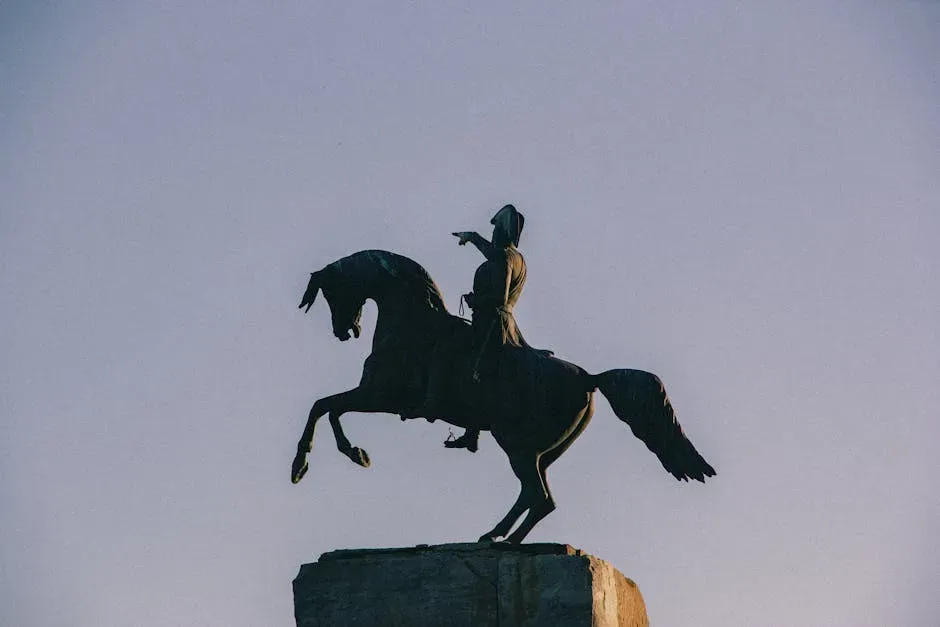
Revere’s midnight ride was not widely celebrated immediately after it happened. Its legendary status grew decades later, largely due to Longfellow’s 1861 poem “Paul Revere’s Ride,” which dramatized the event and helped cement Revere’s place in American folklore, even though it simplified and embellished parts of the story. What the poem quietly omitted was an entire network of riders.
Revere and Dawes were not the only riders. They were the only two to be noted in poetry. Samuel Prescott and Israel Bissell were also tasked to undertake the mission, Bissell being the person to ride the farthest distance of all. Although Longfellow writes that Revere went to Concord in his poem, Prescott was the only one of the trio to make it there and deliver the message. One poem, one man’s name, and a much larger story quietly erased.
3. The Salem Witch Trials Involved No Burnings at All


Ask most people how the Salem accused died and they’ll say burned at the stake. The image comes so naturally that almost nobody questions it. Not a single accused witch in 17th century Salem suffered a fiery fate. All but one of the 20 people executed for practicing witchcraft in the colonial Massachusetts town were hanged, while the twentieth victim was crushed to death with heavy rocks.
The widespread idea that witches were burned most likely stems from witch hysteria that took place in Europe. In the 15th to 18th centuries primarily, anti-witch hysteria did rage throughout western Europe and Scandinavia, and many of those accused witches were burned at the stake. Two different places, two different methods, and somewhere in the retelling they merged into one single, wrong image.
4. Nero Fiddling During the Fire of Rome Is Almost Entirely Invented


Few historical images are as stubbornly persistent as Nero strumming away while Rome burned around him in AD 64. While this first-century Roman emperor certainly isn’t blameless in the story of Rome’s fiery fall, he definitely wasn’t playing the fiddle during it. For one thing, Nero wasn’t even in the city when the fire began; he was in Antium, about thirty miles outside of the city. For another, there was no such thing as a fiddle in ancient Rome.
This legend came about in part from Shakespeare, who wrote facetiously that Nero played the lute while the city burned. Somewhere in translation, a lute was changed to a fiddle, and the legend has become almost fact. What actually happened in Rome that week is still debated by historians, but a man playing an instrument that wouldn’t exist for another thousand years definitely wasn’t part of it.
5. The Trial of Socrates Was About Far More Than Philosophical Disagreement
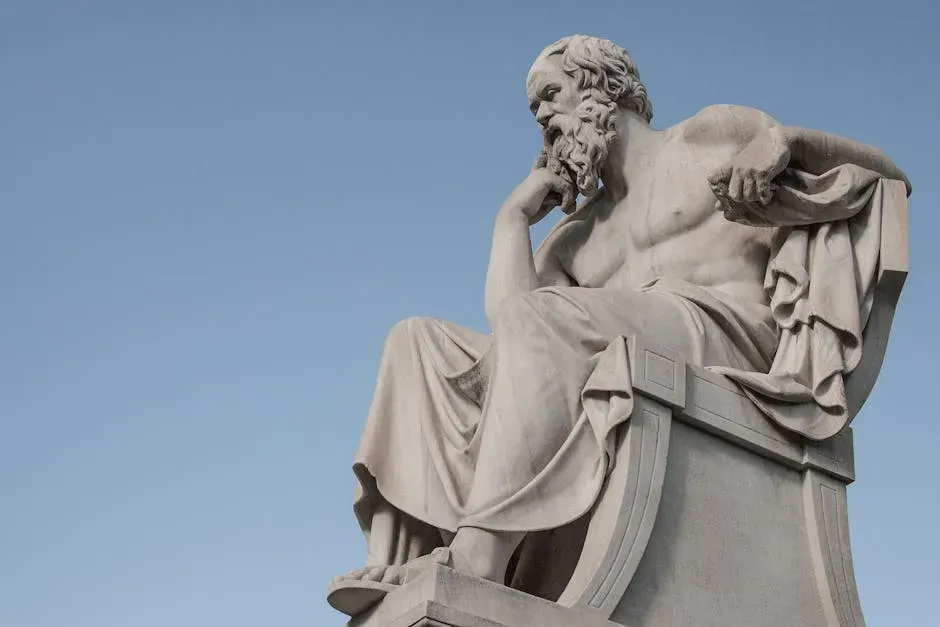
The death of Socrates is usually taught as a tragedy of intolerance, a great thinker brought down by irrational Athenians who couldn’t handle his questions. Most know of it only as a miscarriage of justice by irrational Athenians, but that ignores the context of a trial that occurred soon after a popular revolution had overthrown a tyrannical regime dominated by Socrates’ students, which had murdered thousands. Seen from that perspective, public resentment of the tyrants’ teacher might explain why the Athenians were so sore at Socrates.
The context that took him from an irritant to a hated menace was the rise of the Thirty Tyrants, a cabal of rich Athenians who overthrew the democratic government. Their leader was Socrates’ student Critias, and their numbers included other pupils of the famous philosopher. They installed a collaborationist regime supported by Sparta, Athens’ longtime enemy which had defeated it after a decades-long Peloponnesian War. The Thirty Tyrants’ government was an oligarchy dominated by aristocrats, and a bloodthirsty one at that. The Athenians voting to execute Socrates weren’t simply afraid of new ideas. They were freshly traumatized.
6. The Fall of the Berlin Wall Was Accidentally Triggered by a Confused Official


The footage is iconic: jubilant crowds hammering at the wall on November 9, 1989, as if history had finally relented. While that night was certainly pivotal, the “fall” actually resulted from months of protests, emigration pressure, and political upheaval across Eastern Europe. The wall didn’t come down because East Germany decided to change course.
A confused East German official accidentally accelerated the timeline when he misspoke during a press conference, sending crowds rushing to the checkpoints where overwhelmed guards simply opened the gates. That official, Günter Schabowski, had not even attended the meeting where the new travel rules were discussed. He read from a note he’d been handed, answered a question about timing with “immediately, without delay,” and the rest happened because no one corrected him in time.
7. The Radium Girls’ Suffering Was Covered Up by the Companies That Caused It

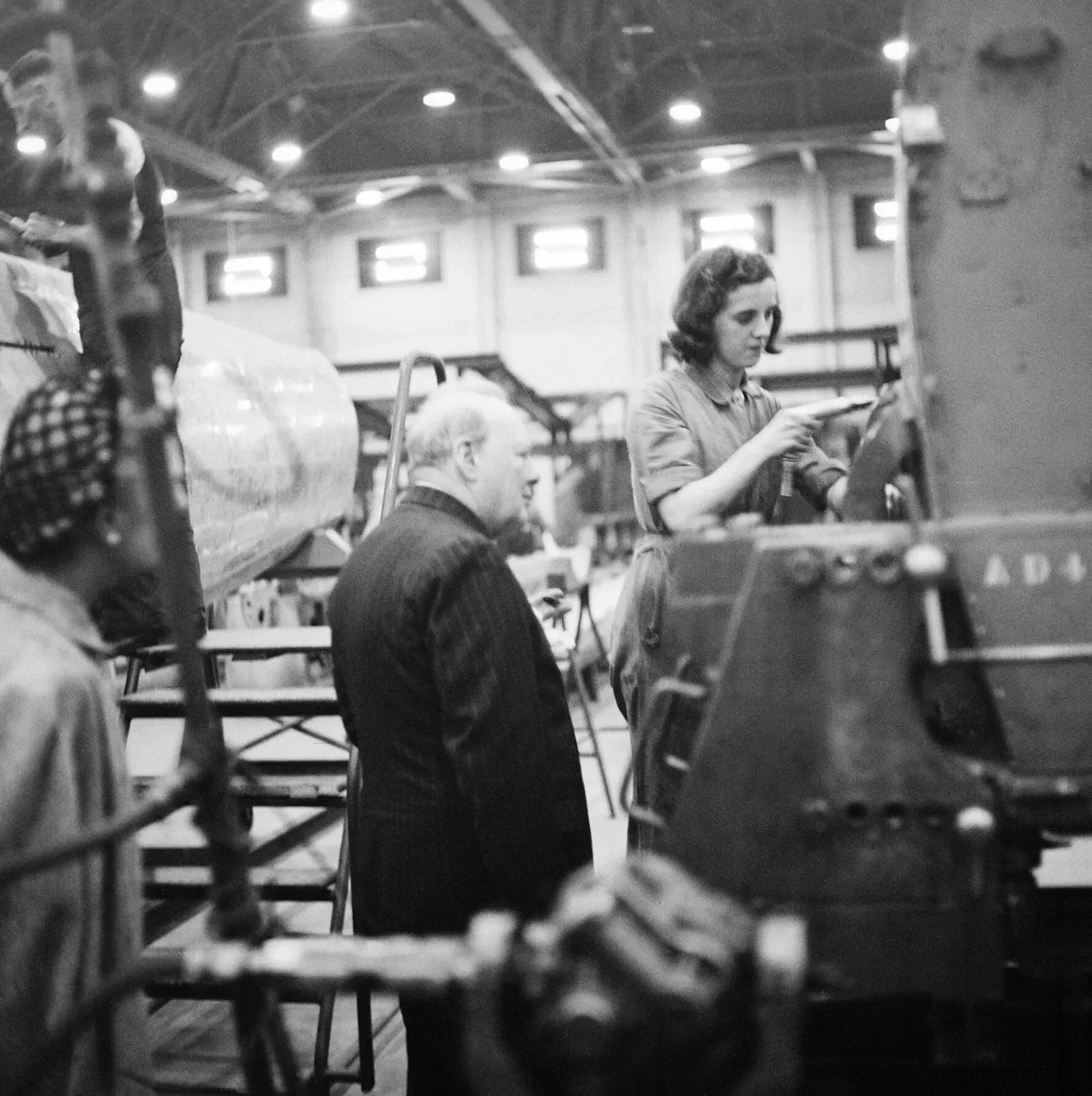
In the early 20th century, glow-in-the-dark watches became all the rage. The watches were covered in shiny paint that gave the glow effect. Soon, companies began opening factories to create the coveted watches, hiring many women for the high-paying jobs. Because the watches were so small, women would use their lips to hold the brushes. The paint was made with radium, and the women who used their lips to paint were ingesting the radioactive element.
When some of the factory workers questioned the painting technique, factory bosses assured the women that the paint was totally safe. Others loved that they felt so energized after ingesting the radium, and believed they were healthier than ever. In 1925, Grace Fryer decided to file a lawsuit but struggled to find a lawyer who would represent her. Two years later, she was finally able to file her case alongside four other women. In 1928, the case settled in favor of the women, sparking more lawsuits from others who had been affected by the radium. The companies knew the dangers long before the workers did.
8. Columbus Was Opposed Not Because of Flat Earth Beliefs, but Because of His Terrible Math

One of the most persistent myths taught in schools is that Columbus bravely sailed west while skeptics insisted he’d fall off the edge of a flat Earth. Columbus’ efforts to obtain support for his voyages were not hampered by belief in a flat Earth, but by worries that the East Indies were farther than Columbus presumed. In fact, Columbus grossly underestimated the Earth’s circumference because of two calculation errors. His critics were actually right.
Columbus wasn’t trying to prove the world was round, as most educated Europeans already knew that. His real miscalculation was dramatically underestimating the distance to Asia while overestimating the size of Eurasia. Columbus thought he could reach the Indies by sailing west, and he got incredibly lucky by bumping into previously unknown continents instead. Had there been no Americas in the way, his ships would almost certainly have run out of supplies far short of Asia.
9. Claudette Colvin Refused to Give Up Her Bus Seat Nine Months Before Rosa Parks – and Was Deliberately Left Out of History


Rosa Parks was not the first Black woman to do what she did. Just nine months prior, in the same city of Montgomery, Claudette Colvin also refused to give up her seat for a white person. She was arrested, she fought back, and her act of defiance preceded Parks’ in every factual sense. Yet her story was quietly set aside.
At the time of the event, Colvin was just 15 years old and pregnant with the child of a married man. The NAACP felt that the scandal surrounding her would not be beneficial for their cause, so they chose to wait until someone else repeated the act. Rosa Parks had been active with the NAACP and the civil rights movement since the 1940s, and when the bus event happened, Parks was secretary to local NAACP leader E.D. Nixon. Parks was courageous, and her role was genuine. The timing, though, was a deliberate organizational choice made possible by what was never put into the official story.
What these nine moments share isn’t that they were deliberately lied about, though some were. It’s that the written record naturally favors the cleaner story, the quotable hero, the satisfying arc. The messy parts, the inconvenient motivations, the people without poets to write about them, tend to fall away. History doesn’t just depend on what was written down. It depends, quietly and powerfully, on what was left out.