You don’t need a passport to set foot in the souks of Morocco, the ancient ruins of Nigeria, or the rain-soaked streets of Paris. Some of the most vivid travel experiences in the world happen entirely within the pages of a great novel. Books have always done something that even the best airline ticket can’t quite pull off. They don’t just take you somewhere. They make you feel it.
Travel books can transport readers to far-off destinations, ignite the desire for new adventures, and inspire the planning of their own trips. The best ones don’t just recount vacations; they delve into the deeper aspects of self-discovery, culture, history, and the human experience. That’s the magic. And honestly, I think a great novel does this better than any travel guide ever could.
What follows is a gallery of fifteen unforgettable novels, each one a doorway into a corner of the world you may never have visited but will feel, after reading, like you somehow know.
1. The Alchemist by Paulo Coelho – Andalusia, Morocco, and Egypt

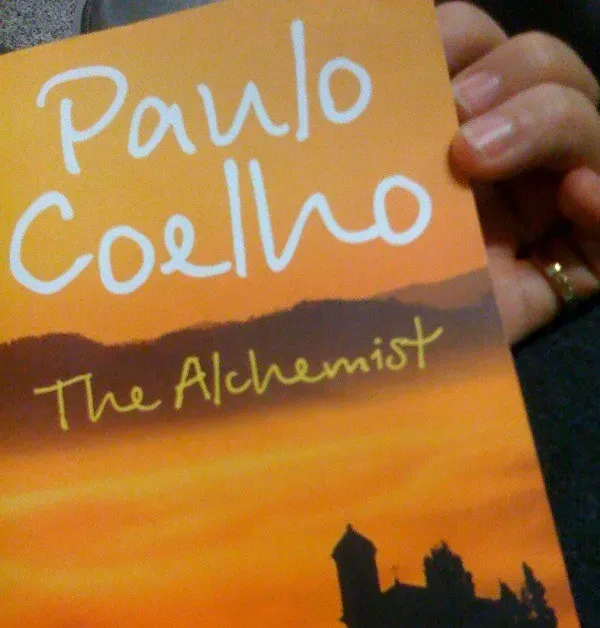
Few novels have circled the globe quite like this one. The Alchemist has been translated into more than 65 languages and has sold more than 150 million copies worldwide. In 2009, Paulo Coelho was recognized by the Guinness World Records as the world’s most translated living author. That’s an extraordinary reach for a book that started life as a tiny print run.
The Alchemist was first published in 1988 in Portuguese as O Alquimista and has since sold more than 65 million copies worldwide. When a small Brazilian publisher took a chance on The Alchemist in 1988, it hedged its bets by only printing 900 copies. Coelho later wrote that his publisher told him, “This title will never sell more than 900 copies.”
Paulo Coelho’s The Alchemist is a philosophical novel that follows the journey of a shepherd named Santiago as he seeks his legend. The story is rich with symbolism and explores themes of destiny, dreams, and self-discovery. From the sun-baked hills of Andalusia to the labyrinthine markets of Tangier and the vast Sahara stretching toward the Egyptian pyramids, every page hums with a sense of place.
2. The God of Small Things by Arundhati Roy – Kerala, India

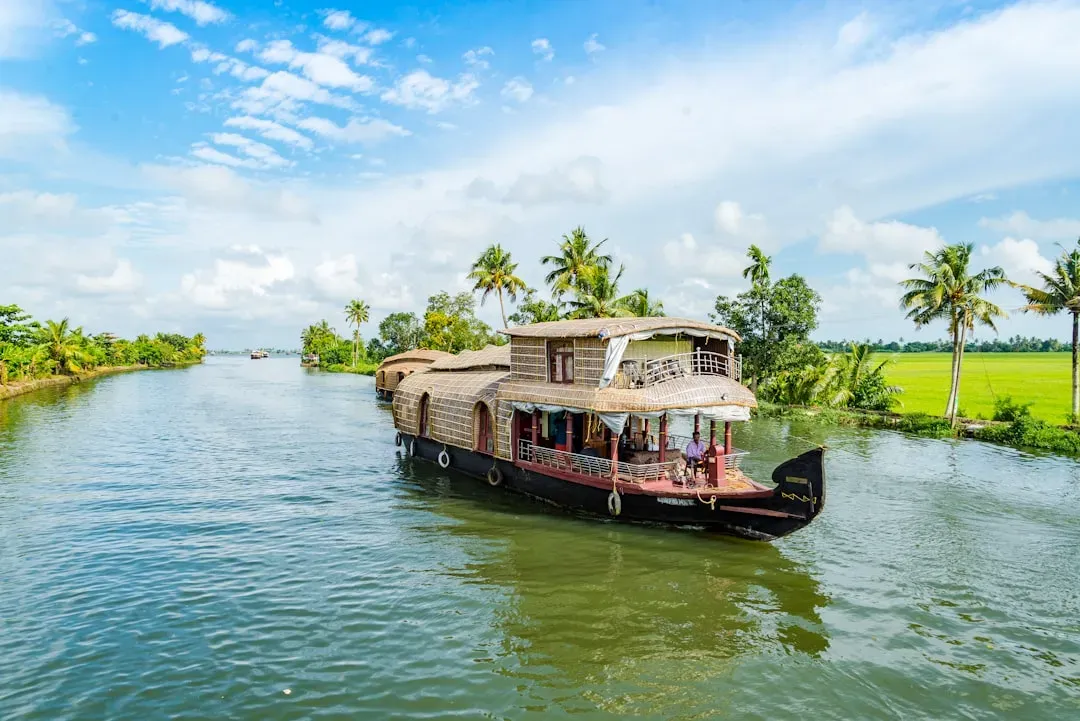
Though not a traditional travel book, Arundhati Roy’s “The God of Small Things” is infused with a strong sense of place, transporting readers to the vibrant world of Kerala, India. Roy’s lyrical prose and exploration of family, caste, and societal divides provide a powerful narrative that immerses readers in the culture and history of this region.
Highly recommended for travelers heading to India, it shares an intricate portrayal of a family’s life in Kerala, blending political and social commentary with a poignant narrative. Roy’s rich prose and keen observations bring to life the lush landscapes and intricate social structures of Southern India.
Kerala feels almost like a character itself here. The backwaters, the monsoon-drenched mango trees, the smells of cardamom and river mud. Roy doesn’t describe India so much as she breathes it onto the page. India’s emergence in the global literary tourism market can be attributed to its rich cultural heritage and the global popularity of its literary figures and works. India has diverse literary landscapes that span centuries and languages, offering a unique appeal to literary enthusiasts worldwide. Iconic authors like Rabindranath Tagore, Salman Rushdie, Arundhati Roy, and Jhumpa Lahiri have gained international acclaim.
3. Things Fall Apart by Chinua Achebe – Nigeria, West Africa


Let’s be real. No single novel has done more to put West African life and culture on the world’s literary map than this one. Chinua Achebe’s “Things Fall Apart” is a seminal work of African literature that provides a nuanced portrayal of traditional Igbo society and the impact of colonialism. Set in Nigeria, this book offers readers a deep dive into the cultural and societal shifts that have shaped modern Africa.
What Achebe achieves is remarkable. He places you inside a community before colonialism tears it apart, so when the rupture comes, you feel it as personal loss. The markets, the wrestling festivals, the harvest rituals of Umuofia, all of it is painted with such precision you can almost smell the palm wine. It’s the kind of reading experience that makes you want to rebook a flight.
Literary tourism is where place and page intersect. It’s where travelers go not just to see, but to experience the destinations authors have so thoughtfully described. These cultural pilgrimages can take readers to places like Platform 9¾ at King’s Cross Station or Paddington’s deepest, darkest Peru. It’s a way for readers to step inside the minds of both authors and characters and to immerse themselves in the settings of books they adore. Nigeria, for lovers of Achebe, is exactly that kind of destination.
4. The Sun Also Rises by Ernest Hemingway – Paris and Pamplona


Ernest Hemingway’s The Sun Also Rises plunges readers into the 1920s, following war-scarred American expatriates through Paris cafés and Pamplona’s dusty streets. At its core is Jake Barnes, a journalist rendered impotent by war, hopelessly in love with the alluring Lady Brett Ashley. As the group descends upon the frenzied San Fermín festival, Hemingway’s writing crackles with tension, vividly portraying bullfights, drunken revelry and smoldering passions.
This groundbreaking novel not only defined the Lost Generation but revolutionized 20th-century literature with its raw emotion and deceptively simple style. Hemingway’s Paris is the Paris of cigarette smoke and café terraces at three in the afternoon. His Pamplona is dust and danger and a kind of beautiful, reckless waste. Both cities have never quite left my imagination.
Hemingway makes you feel the geography the way a good map never could. You don’t just read about the Boulevard du Montparnasse. You hear the click of billiard balls in the backroom. London, New York, Paris, San Francisco and Rome are leading destinations for literary tourism, and Paris, thanks in no small part to Hemingway, remains one of the most visited literary cities on earth.
5. Memoirs of a Geisha by Arthur Golden – Kyoto, Japan

Memoirs of a Geisha is a captivating fictional narrative that transports readers to the enigmatic realm of Kyoto’s geisha culture and the journey of Chiyo Sakomoto, a young woman whose life unfolds against the backdrop of World War II. Arthur Golden weaves an intricate tapestry of tradition and human resilience, offering readers a window into a secretive and often misunderstood society.
Drawing inspiration from the experiences of one of the era’s most renowned geishas, Golden’s work blurs the lines between fact and fiction, creating a rich, immersive experience that has captivated millions of readers worldwide. The hanamachi districts of Gion, the ochaya teahouses, the sound of wooden geta on stone pavements at night. Golden constructs a Kyoto that feels utterly tactile.
Kyoto has long attracted literary tourists drawn to its ancient districts and preserved heritage. There’s something about reading this book and then walking the stone lantern-lit path of Fushimi Inari that feels genuinely transformative. It’s hard to say for sure, but I’d bet a significant number of visitors to Kyoto carry Memoirs of a Geisha somewhere in their emotional luggage.
6. Life of Pi by Yann Martel – India and the Pacific Ocean


Life of Pi is a simply brilliant fictional novel about a 16-year-old Indian kid who is adrift and lost in the middle of the Pacific Ocean on a small lifeboat, accompanied by some zoo animals including a 450-pound Bengal tiger. Piscene (“Pi”) Molitor Patel is a curious kid who thinks deeply about religion at an early age, deciding to embrace Christianity, Hindu, and Islam all at once, and that spirituality affects his experience while lost at sea.
The novel begins in Pondicherry, in South India, a former French colonial town of pink buildings and bougainvillea. Then it throws Pi into the open Pacific, which becomes its own terrifying, luminous landscape. Martel makes the ocean itself a country with its own laws, its own weather, its own moods that shift by the hour.
What’s extraordinary is how the novel handles geography. The sea is not just a backdrop. It is an active, almost predatory presence. Readers come away with a vivid sense of both the warmth and chaos of coastal India and the humbling vastness of the Pacific. Travel books have a unique ability to shape our imaginations and transport us to far-off lands, even when we’re physically grounded. These narratives bring to life the sights, sounds, and food of foreign lands, making us feel as if we’re walking the streets of Paris or trekking through the Amazon rainforest.
7. The Beach by Alex Garland – Thailand


Dive into the intoxicating world of The Beach, Alex Garland’s debut novel that catapulted him to literary stardom. This gripping tale follows a young, adventurous backpacker who stumbles upon a hidden Eden in the crystal-clear waters of Thailand.
Garland’s Thailand is the Thailand of the early 1990s backpacker trail, gritty guesthouses in Bangkok, overnight buses, the shimmer of the Gulf of Thailand, and the dangerous allure of a perfect place kept secret. The novel captures exactly what it feels like to be young and convinced that the authentic version of a place is always one step further off the beaten path.
Here’s the thing about The Beach. It’s also quietly a cautionary tale about what travel fantasies can do to us. The paradise becomes a trap. The more beautiful the setting, the darker things get beneath the surface. Travel inspired by art, literature or cinema can be a tricky thing, as the destination often doesn’t live up to the prose or subjective vision of the creator, or even how you felt when you first encountered it. Here, the author takes on that doubt head first by seeking out specific scenes or feelings inspired by cultural works.
8. The Nightingale by Kristin Hannah – Nazi-Occupied France


The Nightingale by Kristin Hannah is a powerful and inspiring novel that takes readers on a journey through the triumphs and hardships of two sisters living during the horrors of Nazi-occupied France during World War II. With unforgettable characters and gripping prose, it transports you to a world where ordinary people become extraordinary heroes. The story is both heart-wrenching and heartwarming, a must-read for anyone who wants to be inspired by the resilience and courage of humanity, even in the darkest of times.
Hannah’s France is not the France of tourist brochures. It is a country under occupation, fragile and terrified, where the Loire Valley villages become stages for courage and betrayal in equal measure. The landscape itself carries the weight of what’s happening. You feel the cold of winter differently here. The fog on the rivers feels like more than fog.
Few novels manage to make a physical place inseparable from an emotional story quite so effectively. After reading this, visiting the villages of the Loire Valley feels like an act of remembrance rather than mere sightseeing.
9. Eat, Pray, Love by Elizabeth Gilbert – Italy, India, and Bali

Elizabeth Gilbert’s memoir Eat, Pray, Love follows her journey across three countries as she seeks to find herself after a difficult divorce. The book is divided into three sections, each focusing on a different aspect of her quest for fulfilment. Italy gives her pleasure, India gives her devotion, Bali gives her balance. It’s a tidy structure that somehow doesn’t feel contrived because Gilbert’s writing is so disarmingly honest.
Italy, in particular, is rendered with a sensuality that makes you want to immediately book a flight to Naples and order a pizza you can barely lift. Gilbert makes the case that truly experiencing a country means learning to slow down enough to actually taste it. Not a bad life philosophy.
The book sparked a genuine wave of interest in all three of its destinations. Bali especially saw a surge in visitors described as seeking experiences beyond conventional tourism. Travelers today seek unique and immersive experiences that go beyond traditional sightseeing. Literary tourism offers an opportunity to engage with literature on a personal level, exploring the settings and inspirations behind beloved books.
10. The Songlines by Bruce Chatwin – The Australian Outback


Bruce Chatwin’s “The Songlines” is a mesmerizing exploration of Aboriginal Australian culture and the concept of songlines, traditional navigation paths that hold deep spiritual significance. Chatwin’s poetic and reflective travel writing transports readers to the vast Australian outback, offering a glimpse into a world where mythology and the physical landscape are deeply intertwined.
Here’s something I find genuinely mind-bending about this book. The central idea is that Aboriginal Australians mapped their continent entirely through song, creating invisible pathways across the landscape through melody and story. The land and the narrative are one. It’s a concept that redefines what we even mean by travel.
Chatwin’s narrative is both poetic and informative, offering readers a deep dive into one of the world’s most intriguing destinations. This book is perfect for those who crave adventure and wish to explore lesser-known parts of the globe through compelling prose. The red dust roads and the silence between characters here hit differently once you understand what the land actually means.
11. The Pillars of the Earth by Ken Follett – Medieval England


Ken Follett’s The Pillars of the Earth brings readers on an epic journey, weaving a tapestry of suspense, historical detail, and unforgettable characters. As the spires of a majestic cathedral reach for the heavens, political intrigue, forbidden love, and the struggle for power unfold in a narrative so gripping you’ll lose track of time.
The setting is 12th-century England, a world of stone masons and market towns, of monks and nobles clashing in the shadow of half-built cathedrals. Follett spent years researching medieval architecture to make Kingsbridge, his fictional town, feel as real as Winchester or Wells. And it does. You can almost feel the scaffolding sway.
Reading this novel before visiting England’s great cathedrals changes the experience entirely. You stop seeing the stone as ancient. You start imagining the extraordinary human effort behind every arch, every column, every nave. Literary tourism is where place and page intersect. It’s where travelers go not just to see, but to experience the destinations authors have so thoughtfully described. Follett’s medieval England is exactly the kind of place that calls readers back.
12. House of Doors by Tan Twan Eng – Penang, Malaysia


House of Doors, by Tan Twan Eng, is a brilliantly illustrative novel, set in 1910 Penang, following a fictional interpretation of W. Somerset Maugham’s life, alongside other richly written characters. Eng’s description of Penang, its blend of Chinese, Malay, and Indian communities, is vivid and alive. Whether describing the fragrance of a frangipani or the terror of an oncoming monsoon, the book is transporting and gives readers a unique glimpse into British colonial Malaysia.
Penang is one of those places that rewards slow visitors. The old shophouses of George Town, the street food lanes, the temples squeezed between colonial administrative buildings. Eng captures all of it in prose that feels almost like climate. You sense the humidity in the sentences themselves.
The novel also explores the collision of cultures that defines Penang. It is not a simple postcard image of Southeast Asia. It is complicated, layered, and more interesting for it. Every spring, the judges of the Edward Stanford Travel Writing Awards draw up a shortlist for the title of the travel book of the year, highlighting fascinating recent works that wrestle with political and environmental issues, and explore the contrast between the outsider and the insider gaze. House of Doors captures that tension beautifully.
13. Lonesome Dove by Larry McMurtry – The American West

Lonesome Dove, by Larry McMurtry, is one of those books that captures the raw and majestic beauty of the American West like very few others. McMurtry’s Pulitzer Prize-winning novel is one of those books. The Texas plains, the cattle trails stretching north toward Montana, the rivers and the storms and the immense sky above it all. McMurtry makes the landscape feel mythic without making it feel false.
The American West in this novel is not the cleaned-up, cinematic version. It is brutal, beautiful, and indifferent to human ambition. Characters die of things as casual as a snakebite. The land doesn’t care. And yet readers fall in love with every mile of it. It’s hard not to after spending time with Gus and Call.
Lonesome Dove makes a strong case for the kind of novel that turns a landscape into legend. Texas ranching country and the old Chisholm Trail region have drawn readers-turned-travelers ever since. The sense of place here is so powerful it functions almost like a travel document.
14. A Kite Runner by Khaled Hosseini – Afghanistan


Before The Kite Runner, the image of Afghanistan in the Western imagination was almost entirely defined by news broadcasts and conflict reports. Hosseini’s debut novel did something extraordinary. It gave readers the Kabul that existed before the wars. A city of pomegranate trees and kite tournaments, of laughter in narrow streets, of friendship between boys from different worlds.
The descriptions of the old Kabul neighborhoods, the Paghman gardens, the Friday bazaars, and the Hazara neighborhoods are rendered with the kind of personal tenderness that only someone who carries a place in their bones can achieve. Hosseini left Afghanistan as a child, and his writing vibrates with grief for what was lost. That grief is what makes the geography so vivid.
Whenever traveling for work or pleasure, reading local literature and travel writing about a place gives a different insight into the culture and history of the places you are experiencing. The Kite Runner is precisely that kind of read. It doesn’t just describe Afghanistan. It mourns it, celebrates it, and insists you cannot look away.
15. Eat, Pray, Love… No, Wait: The Prince of Tides by Pat Conroy – South Carolina, USA


Pat Conroy’s bestselling novel The Prince of Tides is a captivating exploration of family dynamics set against the lush backdrop of South Carolina’s Low Country. This acclaimed work weaves a tapestry of raw emotion, complex relationships, and the enduring influence of place. Conroy’s vivid prose brings the coastal landscape to life, elevating it beyond mere setting to become an integral part of the narrative. Through his masterful storytelling, readers are immersed in an authentic American saga that resonates with both heart-wrenching drama and lyrical beauty.
The South Carolina coast. Salt marshes and Spanish moss, the smell of pluff mud at low tide, the call of herons at dusk. Conroy grew up in this landscape and writes it the way a painter who has studied the same light for forty years paints a scene. It is deeply known. The Low Country in this novel is not simply beautiful scenery. It is a psychological space that shapes every character who lives within it.
What makes The Prince of Tides stand out among American regional novels is how inseparable the family’s wounds are from the land itself. The barrier islands, the tidal rivers, the storms rolling in off the Atlantic. Conroy makes the case that where we are from is not merely geography. It is destiny. And that, ultimately, is the argument every novel on this list makes in its own way.
The Bigger Picture: Literature and the Growing Love of Literary Travel

The appetite for this kind of reading is not just a personal experience. It reflects a genuine global trend. The global literary tourism market size stands at approximately 2.4 billion US dollars in 2024, up from 2.3 billion in 2023. The industry is progressing toward a valuation of nearly 3.3 billion US dollars by 2034, registering a steady growth rate through the decade.
The literary tourism market has experienced substantial growth over the past decade, driven by the increasing interest in literature, the desire for unique travel experiences, and the rise of digital media that promotes literary destinations. Research reveals that roughly nine in ten UK adults read more while travelling, with the airport remaining a crucial nexus for literary pursuits, with the majority of leisure readers purchasing books before their flights.
Screen tourism convergence represents a powerful growth driver as successful film and television adaptations generate renewed interest in source material and filming locations. This phenomenon has created hybrid literary-cinematic tourism experiences that attract both book readers and screen audiences, significantly expanding the potential customer base. The fifteen novels above are more than stories. They are invitations. Which destination will you visit first?
What do you think? Is there a novel that completely changed how you saw a country? Drop it in the comments below.