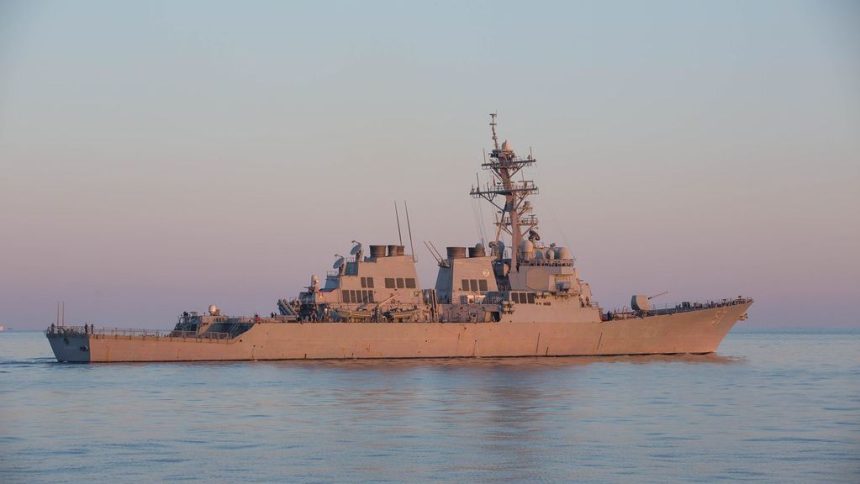
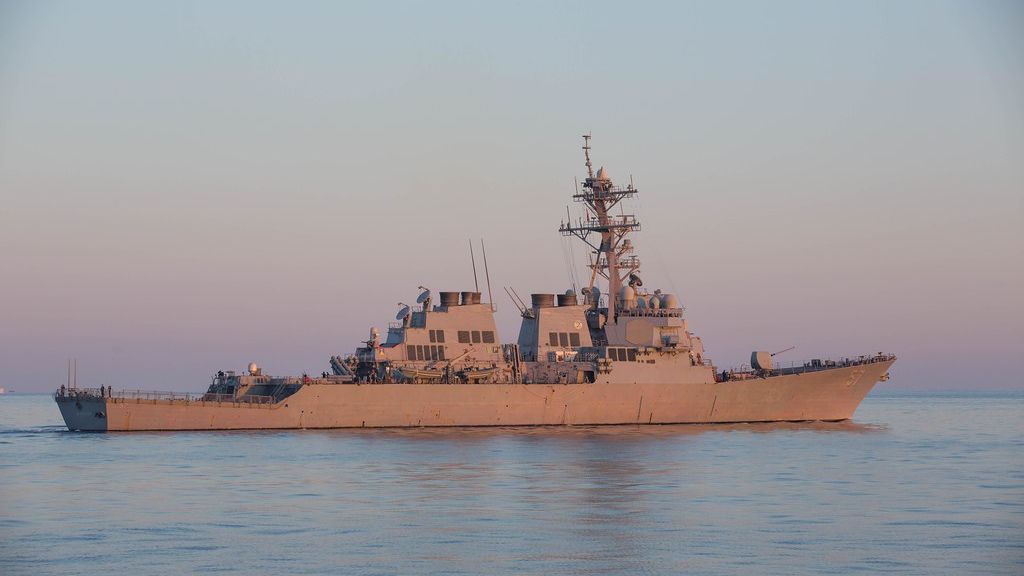
US military leaders say ceasefire with Iran holding despite attacks in the Strait of Hormuz – Image for illustrative purposes only (Image credits: Flickr)
Washington – Warships cut through the narrow Strait of Hormuz on Tuesday, their decks alive with the hum of operations to escort commercial vessels past Iranian threats. Defense Secretary Pete Hegseth struck a note of resolve during a Pentagon briefing, declaring the month-old truce with Tehran still in force despite a flurry of attacks.[1][2] U.S. forces reported sinking Iranian boats and downing drones, yet pressed ahead to reopen the waterway that carries one-fifth of the world’s oil.[3]
Clashes Intensify in Critical Waterway
Iranian forces targeted U.S.-flagged merchant ships and a Navy destroyer with missiles, according to military accounts. Tehran also struck vessels linked to the United Arab Emirates and launched drones toward American positions.[4][5] The U.S. response came swiftly: forces destroyed six small Iranian boats, along with cruise missiles and additional drones.[6]
No American ships sustained damage, and no personnel suffered injuries in the exchanges. These incidents marked the most intense activity in the Gulf since President Donald Trump announced the ceasefire around April 8.[7] Iran had effectively sealed the strait earlier in the conflict, prompting a U.S. naval blockade of its ports.
Pentagon: ‘Ceasefire Is Not Over’
Hegseth addressed reporters directly after the latest firefight. “No, the ceasefire is not over,” he stated, framing the Hormuz operations as a “separate and distinct project” from the broader truce.[2] He noted that officials anticipated initial resistance, or “churn,” and pledged aggressive defense.
Joint Chiefs Chairman Gen. Dan Caine echoed the assessment during the briefing. Iran’s actions had not breached the agreement so far, he indicated, though vigilance remained high.[8] The truce originated as a two-week pause but received an indefinite extension from Trump last month, even as the blockade on Iranian exports persisted.[9]
Project Freedom: Restoring Safe Passage
The U.S. initiative, dubbed Project Freedom, aims to guide tankers and cargo ships through the strait unilaterally. Two American-flagged vessels, protected by destroyers, completed safe transits in the past day alone.[10] This effort followed Iran’s repeated closures, which disrupted global supply chains and spiked fuel costs.
Military planners have prepared contingency options to neutralize Iranian assets in the area if tensions boil over further. Sources described these as targeted measures to secure the chokepoint without upending the truce.[11] Trump directed the mission amid stalled peace talks, emphasizing the need for “complete, immediate, and safe” access.[9]
Earlier seizures of Iranian cargo ships and reports of vessel attacks had already strained relations. Yet U.S. officials reported early successes, with the lane now clear for more traffic.[12]
- U.S. sinks six Iranian boats attempting to block passage.
- Destroyers down missiles and drones aimed at escorts.
- Two commercial ships transit safely under protection.
- Iran targets UAE-linked tankers and U.S. destroyer.
Global Energy at Stake
The strait funnels nearly 20% of worldwide oil and gas shipments. Disruptions have pushed prices toward $100 a barrel and rattled markets.[13] Reopening it stands as a core truce condition, though both sides accuse the other of violations.
China urged Iran to ease restrictions at the United Nations, calling the ceasefire’s preservation urgent. Negotiations proceed slowly, with the waterway’s status a flashpoint.[14]
For now, the delicate balance holds. U.S. forces continue patrols, watching for the next move in this high-stakes corridor.