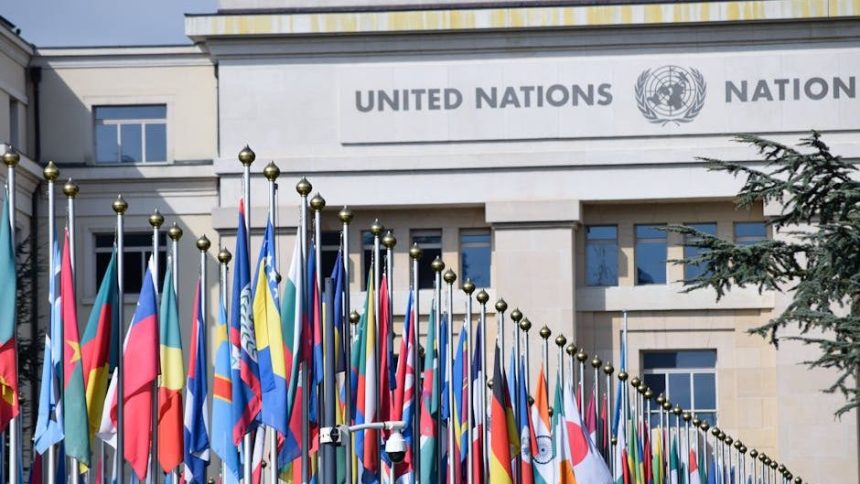

UNGA heeds Pacific voices, backs world court on states’ climate obligations – Image for illustrative purposes only (Image credits: Pexels)
New York, United States – On 21 May 2026, the United Nations General Assembly took a decisive step toward turning an advisory opinion from the International Court of Justice into practical guidance for governments worldwide. The vote followed months of advocacy by small island nations that have long argued their survival depends on clearer legal standards for climate action. With 141 countries supporting the measure, the outcome signals a shift in how the international community intends to hold states accountable for emissions and environmental harm.
A Clear Majority Signals Growing Consensus
The resolution, sponsored by Vanuatu along with twelve partner nations, passed comfortably despite opposition from eight members and abstentions by twenty-eight others. Australia joined the majority but chose not to co-sponsor the text, a distinction that drew notice from observers tracking regional diplomacy. The measure formally endorses the July 2025 ICJ findings and urges countries to align national policies with the legal duty to limit warming to 1.5 degrees Celsius.
Among the specific expectations outlined are rapid and sustained cuts in greenhouse gases, tighter oversight of fossil fuel producers, and stronger safeguards for the right to a healthy environment. These elements reflect the court’s view that states must act urgently and equitably to protect the climate system for present and future generations.
From Advisory Opinion to Concrete Follow-Up
The ICJ opinion issued last year established that international law imposes binding obligations on governments to prevent significant climate damage. It highlighted duties to reduce emissions, cooperate across borders, regulate corporate actors, and avoid actions that worsen harm to vulnerable populations. The new UNGA resolution builds directly on that foundation by requesting a formal report from the Secretary-General in 2027 that will track how nations are meeting those obligations.
This reporting mechanism is expected to keep the issue visible in diplomatic forums, national legislatures, and courtrooms where climate litigation is expanding. By embedding the court’s conclusions into ongoing UN processes, the resolution gives advocates and policymakers a recurring reference point for evaluating whether policies match legal requirements. The approach avoids creating new enforcement bodies yet increases the political cost of inaction through sustained scrutiny.
Stakeholders most directly affected include low-lying Pacific communities already experiencing rising seas and extreme weather, as well as governments balancing domestic energy needs against international commitments. Larger economies with significant fossil fuel sectors now face clearer expectations that their regulatory choices will be measured against the 1.5-degree benchmark.
Pacific Advocates See Both Progress and Room for Stronger Alignment
Shiva Gounden, Head of Pacific at Greenpeace Australia Pacific, welcomed the outcome as evidence that frontline voices are shaping global priorities. He noted that Pacific nations have repeatedly placed climate justice at the center of negotiations and that the resolution reflects their persistence. At the same time, he observed that Australia’s decision to support the text without co-sponsoring it fell short of the fuller solidarity the region had sought ahead of Australia’s upcoming role hosting COP31.
Gounden emphasized that governments can no longer separate their stated climate goals from the continued expansion of fossil fuel projects. He linked the resolution to the broader demand for a rapid, fair, and adequately funded transition away from those fuels, arguing that only such a shift can secure human rights for current and future generations.
What Matters Now
The resolution calls on states to deliver deep emissions reductions, regulate fossil fuel companies, and protect the right to a healthy environment. A 2027 UN report will track compliance, keeping pressure on governments to match legal duties with policy choices.
Implications for Future Negotiations and National Policy
Diplomats and legal experts anticipate that the resolution will carry weight in upcoming climate talks and in domestic courts considering challenges to government approvals for new energy projects. Its emphasis on equity and cooperation may also influence how developed nations structure support for adaptation and loss-and-damage measures in vulnerable regions.
While the text stops short of imposing new sanctions, the combination of reaffirmed legal obligations and scheduled reporting creates a framework that civil society groups can use to monitor progress. Over time, this steady accumulation of expectations could narrow the gap between international pronouncements and the concrete steps required to stabilize the climate system.