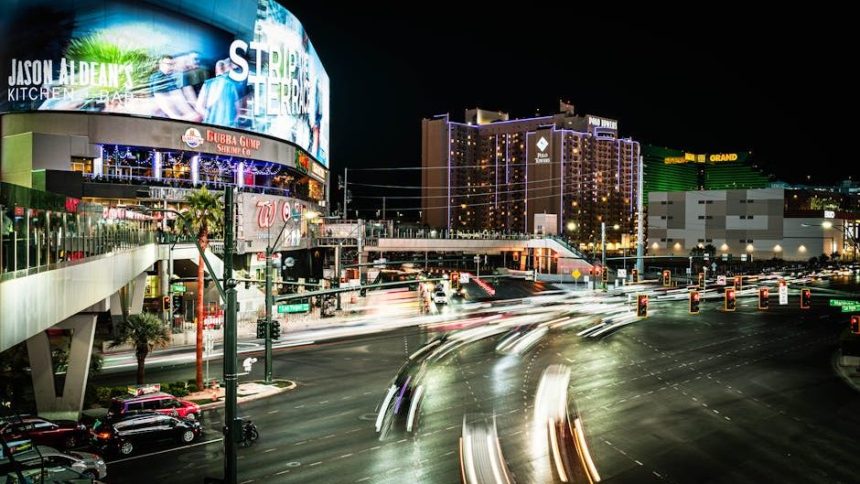
Las Vegas has a well-earned reputation as a city built around the car. Las Vegas has a Walk Score of just 42, which means most daily errands require driving. For a metro area that hosts tens of millions of visitors each year and a growing permanent population, that number tells a story about how the valley was designed. Still, pockets of genuine walkability do exist here, and a few of them are surprisingly good.
The contrast is part of what makes these neighborhoods interesting. Step into the right part of the valley and the experience shifts entirely. Wide sidewalks, shaded paths, connected retail, and a sense of human scale replace the usual sea of parking lots and fast-moving traffic. Here are the five spots that do it best.
1. The Las Vegas Strip: High Foot Traffic, High Infrastructure
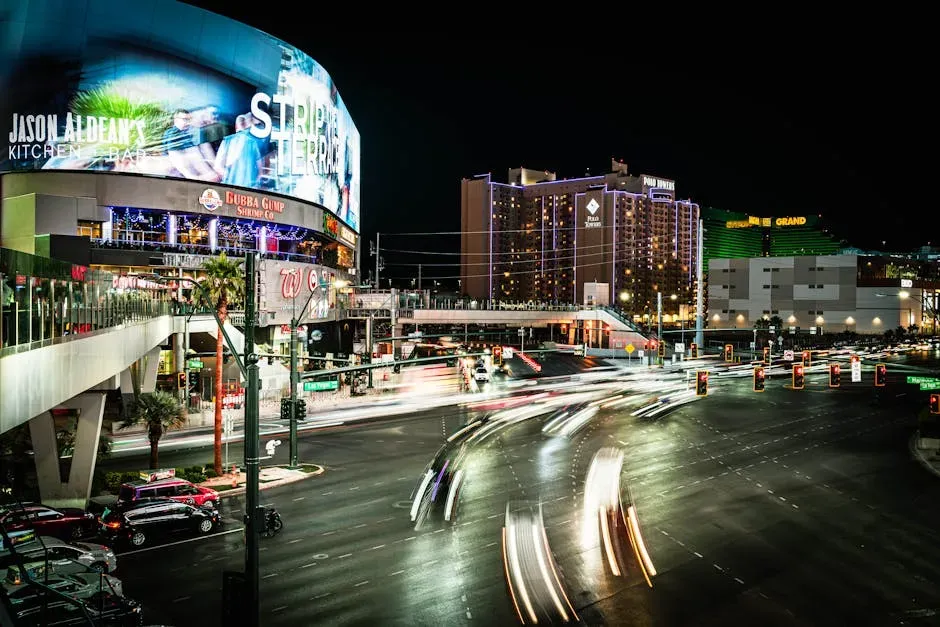
Few places in the world concentrate as many pedestrians into as small a footprint as the Las Vegas Strip. Stretching roughly 4.2 miles along Las Vegas Boulevard, it comes equipped with continuous sidewalks, elevated pedestrian bridges connecting major resorts, and a near-constant flow of foot traffic at all hours. For a city with such a low overall walkability score, this corridor is genuinely anomalous.
The bridges themselves have become a point of public policy discussion. The Clark County Board of Commissioners recently approved an ordinance making it a misdemeanor to stop along pedestrian bridges on the Strip, which reflects just how serious the pedestrian congestion has become. The volume of people on foot here is no longer a curiosity. It’s a crowd management challenge. The sidewalks are wide, the signage is clear, and the density of hotels, restaurants, and attractions means you can spend an entire day on foot without ever needing a car, a fairly rare achievement anywhere in the Las Vegas Valley.
2. Fremont Street and Downtown Las Vegas: A Pedestrian Zone in Progress
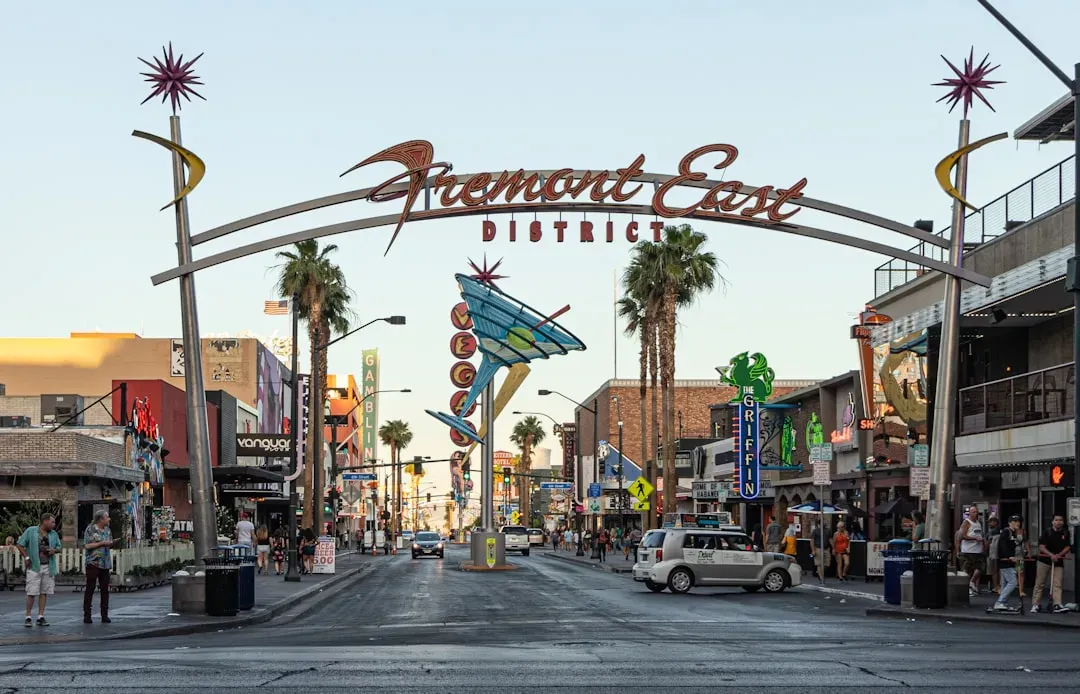
The Fremont Street Experience is a pedestrian mall and attraction in downtown Las Vegas, occupying the westernmost five blocks of Fremont Street. It draws over 20 million visitors annually, and the fully car-free zone under its iconic LED canopy gives it a character unlike anywhere else downtown. The majority of those visitors walk the Fremont Street Experience, the five-block outdoor destination featuring a massive LED canopy, lined with shops, restaurants, and casinos with multiple pedestrian crossings along the corridor.
Beyond the Experience itself, downtown has been investing heavily in making the broader street grid safer and more walkable. Las Vegas received $1.4 million from the Bipartisan Infrastructure Law to improve pedestrian safety on Fremont Street, with the city testing an artificial intelligence system that could train crosswalk signs to time themselves. New camera and sensor systems are being installed at 17 intersections near Fremont Street, an area known for having a lot of foot traffic and close calls. The broader Downtown corridor, including the Fremont East Entertainment District, comprises six blocks as of late 2025, giving walkers a genuinely connected stretch to explore on foot.
3. The Arts District (18b): Las Vegas’s Most Walkable Neighborhood
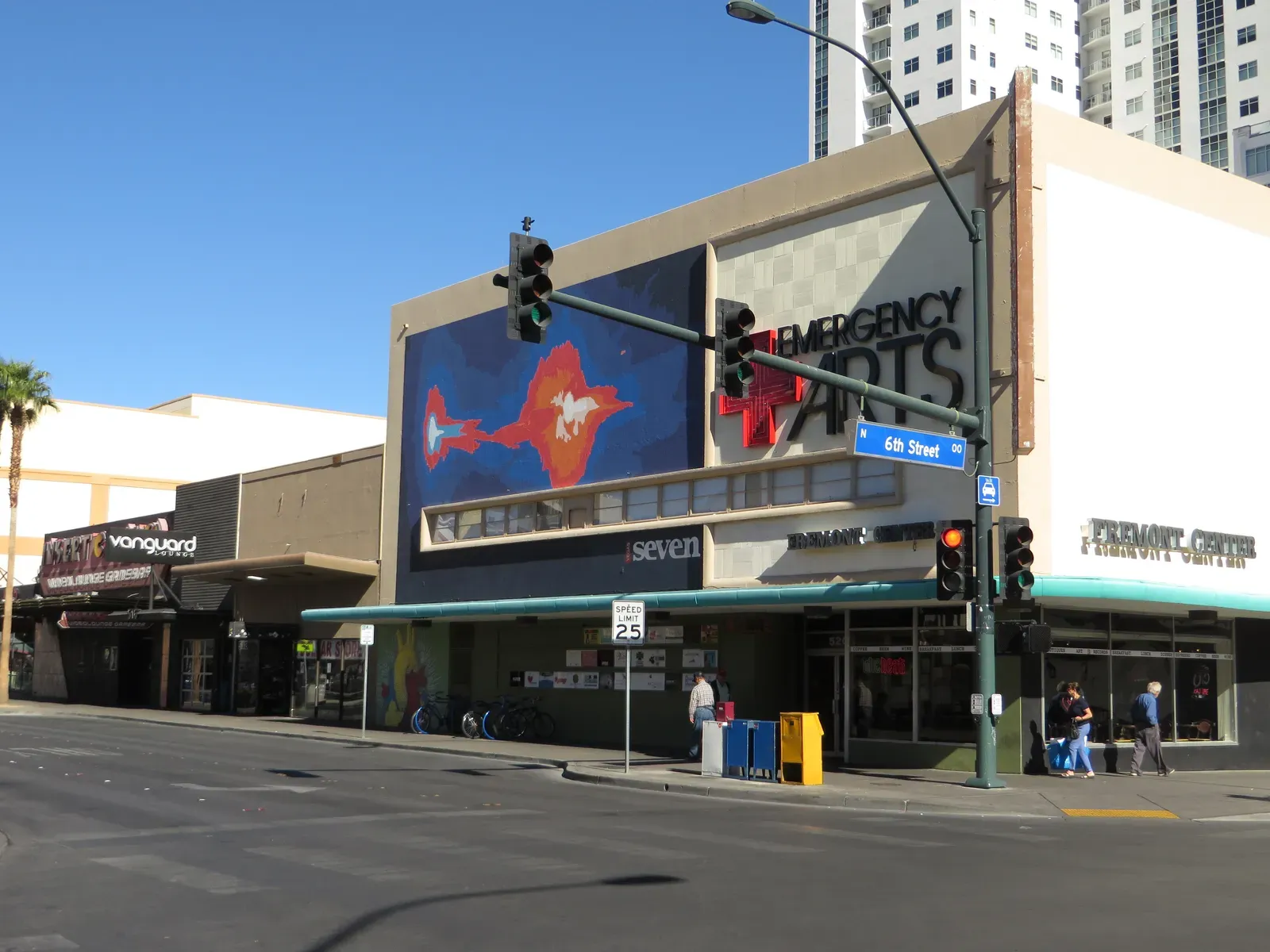
The Arts District in Las Vegas has a Walk Score of 86, making it the most walkable part of the city. Known officially as 18b, a nod to its original 18-block footprint, the neighborhood sits just south of the Fremont Street corridor and feels like a completely different version of Las Vegas. With its walkable streets, colorful murals, and welcoming energy, the Arts District offers an authentic taste of the city’s artistic spirit beyond the neon lights of the Strip. In 2024, CNN called the Arts District “the most exciting neighborhood” in Las Vegas.
The Arts District is home to various galleries, clothing and antique stores, restaurants, bars, and breweries. The rhythm of the neighborhood is genuinely pedestrian, with short blocks, low-rise buildings, and enough visual interest to hold attention at walking pace. The monthly First Friday event is a direct expression of that walkability at its most social. The event draws nearly 20,000 people to the neighborhood, with galleries and studios open for business, artists and creative retailers setting up outdoor booths, and food trucks and live music along Main Street, during which the city closes off part of Main Street and various side streets to pedestrians only.
Partner offer
4. Summerlin: Suburban Walkability Done Right
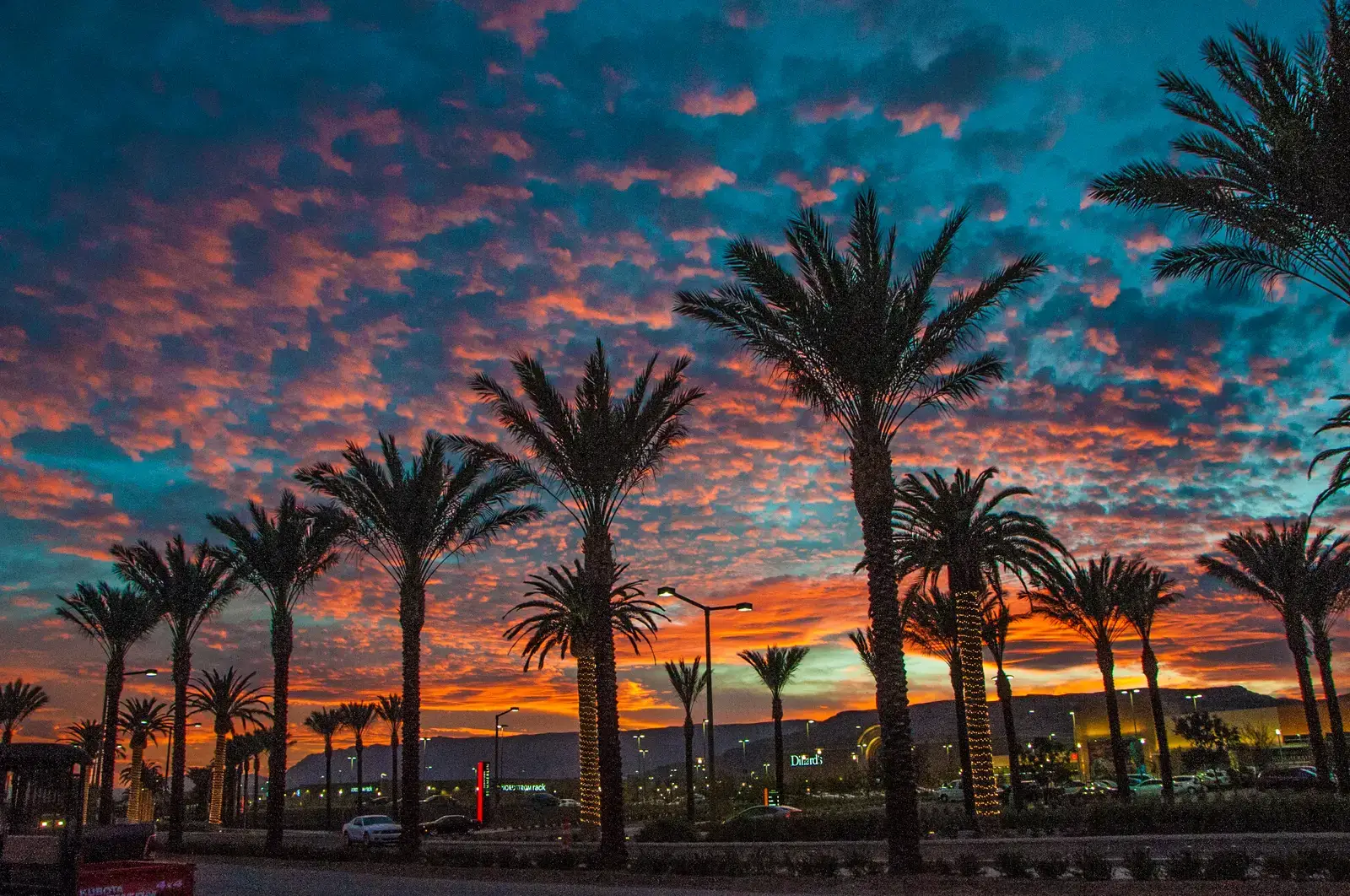
Summerlin occupies the western edge of the Las Vegas Valley, pressed up against the Spring Mountains and Red Rock Canyon. It’s a master-planned community, which means its walkability was designed in from the beginning rather than retrofitted later. Nestled against the scenic Red Rock Canyon, the community offers a perfect blend of natural beauty and modern convenience, with the downtown Summerlin area standing out for its pedestrian-friendly design, featuring a vibrant mix of shopping, dining, and entertainment options. The trail system running through the community is one of the most extensive in the valley, totaling more than 150 miles of connected paths.
While the broader Summerlin area leans more suburban, Downtown Summerlin earns a Walk Score over 70, making it easy to live and explore the area by foot. The outdoor Downtown Summerlin shopping center gives residents a genuine town-center experience where a trip to the grocery store, a meal out, or a weekend morning at a farmers market can all happen on foot. Farmers markets, outdoor movie nights, and seasonal celebrations keep the area lively year-round. For families and active residents who want suburban calm without total car dependence, Summerlin genuinely delivers. The proximity to Red Rock Canyon also means that walkability here extends well beyond retail and into serious recreational hiking territory.
5. Henderson and Green Valley: Trails, Connectivity, and a Livable Scale
Henderson is often overlooked in conversations about Las Vegas walkability, but the city has quietly built one of the most extensive trail networks in the entire state. Henderson features one of the most extensive trail systems in Nevada, totaling over 300 miles. The Green Valley area, in particular, offers a combination of paved trails, connected neighborhood streets, and mixed-use commercial areas that make daily walking a practical reality rather than an aspiration. The District at Green Valley Ranch enhances the walkability of the area thanks to its large outdoor shopping center with restaurants, stores, and entertainment.
Henderson’s investment in pedestrian infrastructure has continued to grow in recent years. As the city continues its Reimagine Boulder Highway Project, leaders are asking for feedback from those living in the area on pedestrian safety, bringing an urban design advocate to walk the surrounding areas and identify high-traffic zones that can be enhanced. A community audit attended by more than 165 residents identified key areas along Boulder Highway in need of pedestrian and cyclist improvements. The city’s growth has been rapid, with Henderson seeing a population increase of roughly 60,000 people, a rise of approximately 25%, over the past decade, and its walkability investments are clearly trying to keep pace with that expansion. For residents who want trails for recreation and enough neighborhood connectivity to reduce car trips, Green Valley remains one of the valley’s strongest options.
What These Neighborhoods Have in Common
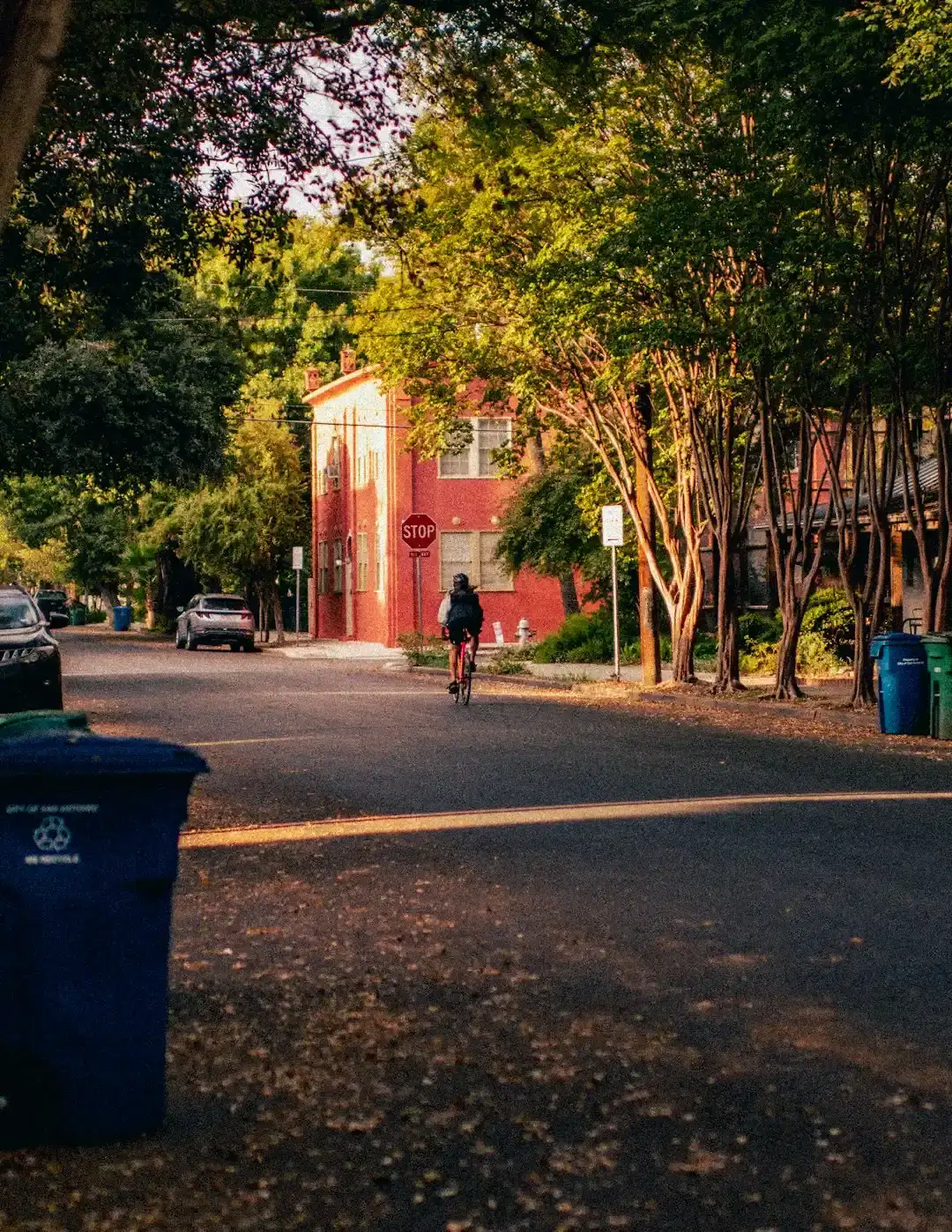
Each of these five areas shares something important: they were either intentionally designed for pedestrians or have received focused investment to bring infrastructure up to a functional standard. The wider valley, with its sprawling arterials and car-centric strip malls, makes these pockets feel almost like exceptions to a rule. The Regional Transportation Commission of Southern Nevada has been making a valley-wide effort to improve pedestrian crossings, including the construction of curb extensions, ADA ramps, and new crosswalk markings. That work is incremental, but it’s real.
Walkability also carries financial weight. Studies have consistently shown that pedestrian-friendly neighborhoods can increase property values by as much as roughly a fifth, making these areas attractive not just for their lifestyle benefits but for the investment they represent. An annual clean energy assessment has knocked Las Vegas for its inefficient transportation, and the city is working through agencies like the RTC to address it systematically. The gap between Las Vegas as it is and Las Vegas as it could be is still significant. What’s encouraging is that the places profiled here show what’s already possible when the design gets it right.
A Final Thought on Walking in the Desert

There’s something quietly subversive about walking in Las Vegas. The city wasn’t built for it, and the summer heat doesn’t help. Yet these five neighborhoods prove that good infrastructure, thoughtful design, and genuine investment can create places where putting on your shoes and heading out the door is a reasonable, even enjoyable, choice. The valley still has a long road ahead when it comes to overall walkability. These pockets, though, are worth knowing about, worth visiting, and increasingly, worth living near.
Partner offer
Planning a trip to Vegas?
Compare hotel rates and show tickets on VEGAS.com.