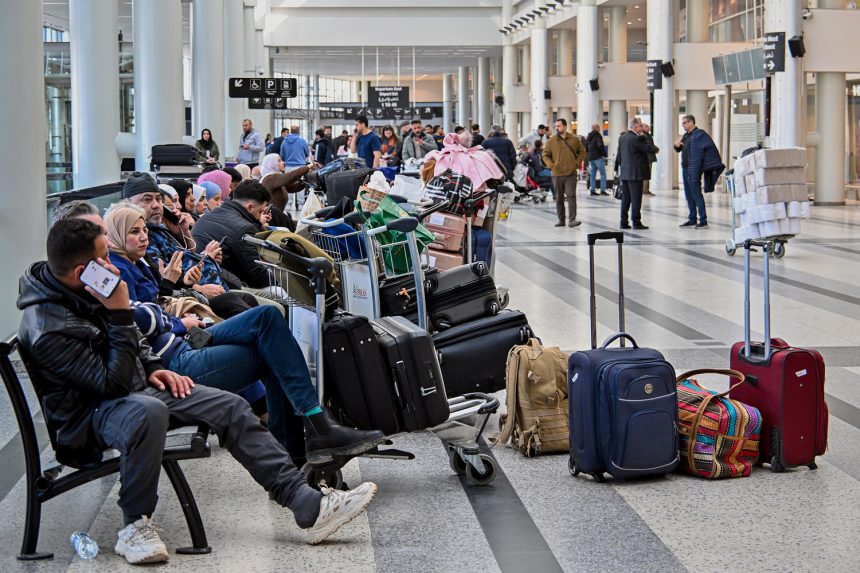
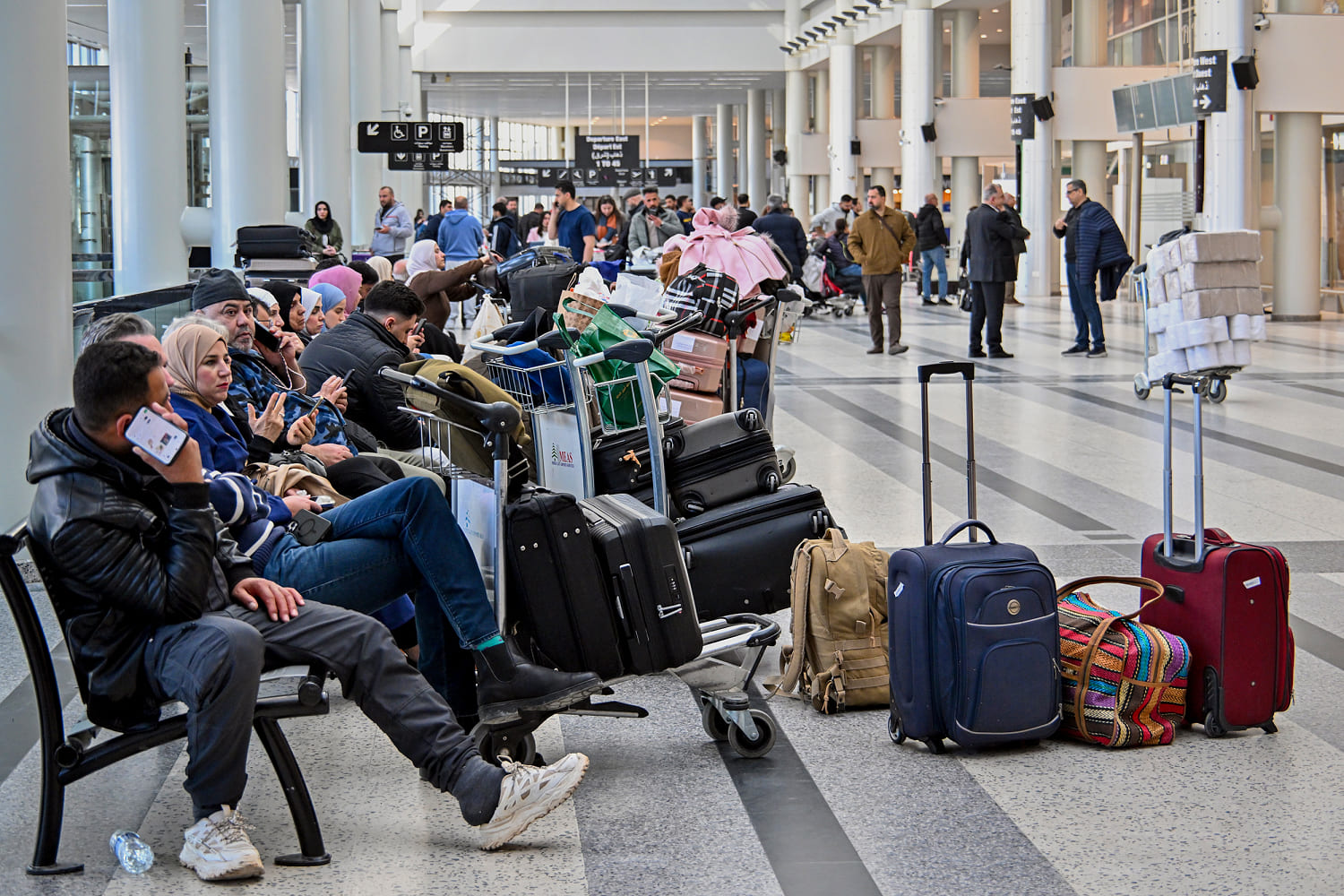
Sudden Strikes Catch Travelers Off Guard (Image Credits: Media-cldnry.s-nbcnews.com)
A sudden escalation between the United States, Israel, and Iran has left thousands of American citizens unable to leave countries across the region amid closed airspaces and canceled flights.[1][2]
Sudden Strikes Catch Travelers Off Guard
U.S. and Israeli forces launched large-scale airstrikes on Iranian targets over the weekend of February 28, 2026, killing Supreme Leader Ayatollah Ali Khamenei and other senior officials.[2][3] Iran responded with drone and missile attacks on U.S. facilities in Kuwait, Saudi Arabia, Jordan, and the United Arab Emirates, prompting immediate embassy closures and evacuations.[1] Six American service members died in one such strike in Kuwait, though no civilian deaths were reported.[2]
Airports shuttered across the region, canceling over 12,300 flights since the strikes began.[2] Travelers described chaos at hubs like Dubai International Airport, where smoke from nearby attacks added to the panic. Many Americans, including tourists and business visitors, found themselves sheltering in hotels with no clear path home. The State Department issued a “DEPART NOW” advisory on Monday for 14 countries, but by then, commercial options had vanished.[2]
Lack of Preparation Draws Bipartisan Fire
Democratic lawmakers and former diplomats lambasted the administration for failing to anticipate the need for civilian evacuations before initiating the conflict.[1] A letter from dozens of congressional Democrats to Secretary of State Marco Rubio called the response “unacceptable and a violation of the State Department’s basic mission.”[1] Senator Andy Kim highlighted the late warnings amid closed skies as evidence of “ZERO strategy and planning.”[2]
Critics pointed to prior budget cuts that halved State Department resources and left key ambassador posts unfilled.[2] Retired Maj. Gen. Randy Manner, speaking from the region, said embassies appeared in “survival mode.” Former officials like Gerald Feierstein described the operation as “ad hoc,” with no evident pre-war planning for citizens abroad.[3] Governors including JB Pritzker of Illinois urged faster action to bring constituents home.[3]
Scrambling for Solutions Amid Airspace Closures
The State Department established a 24/7 task force that provided guidance to over 6,500 Americans by midweek.[1][3] Officials reported that more than 17,500 citizens had returned home since February 28, often via self-arranged commercial flights before the full shutdown.[3] Military C-17 planes and chartered flights began operating, with one charter departing late Wednesday.
Secretary Rubio acknowledged airspace challenges but assured, “we are confident that we are going to be able to assist every American.”[1] President Trump attributed delays to the rapid onset of events, stating, “It happened all very quickly.”[1] White House press secretary Karoline Leavitt noted prior Level 4 advisories issued in January.[1]
Key Challenges Facing Stranded Citizens
Americans faced inconsistent embassy advice, busy phone lines, and automated messages directing self-evacuation.[1] One citizen in Jordan lamented missing his son’s first birthday, feeling “betrayed and left out to dry.”[1]
| Country | Reported Issues |
|---|---|
| Jordan | Embassy evacuated; conflicting departure orders |
| Kuwait | Drone strike on embassy compound |
| UAE (Dubai) | Consulate parking lot ablaze; airport chaos |
| Saudi Arabia | Embassy fire from drones |
Path Forward Remains Uncertain
Estimates place up to 1 million U.S. nationals in the broader Middle East, complicating full-scale rescues.[2] While some progress emerged with chartered options, the conflict showed no signs of abating, with Rubio warning of a more intense phase ahead.[2]
- Thousands remain stranded due to sudden war and flight halts.
- Critics decry absent pre-conflict evacuation plans.
- Admin activated task force, flights; 17,500+ already returned.
The scramble underscores tensions between military action and citizen safety. As operations continue, pressure mounts for swift resolutions. What steps should the U.S. prioritize next? Tell us in the comments.