Most people think of time zones as a practical, almost boring matter of convenience – just a way to know when to schedule a phone call with someone in another country. But honestly, there is so much more going on beneath the surface. Time zones have shaped political alliances, dictated the outcome of battles, rewired national identities, and even altered the daily rhythms of entire civilizations.
The story of how humans decided to slice the world into slabs of time is far stranger, more political, and more consequential than any textbook ever let on. From wartime manipulation to postcolonial defiance, time has been wielded as a weapon, a symbol, and a tool of control. Let’s dive in.
The World Before Time Zones Was Delightfully Chaotic

Every city in the United States once used a different time standard, meaning there were more than 300 local sun-times to choose from. Think about that for a second. Imagine planning a trip today and having to reset your watch at every county line. Since human beings first began keeping track of time, they set their clocks to the local movement of the sun, and even as late as the 1880s, most towns in the U.S. had their own local time, generally based on “high noon” – the moment when the sun was at its highest point in the sky.
This made traveling by train a confusing ordeal; passengers needed to keep track of the different time standards used for the arrival and departure of trains, and stations used multiple clocks to keep track of the standards used by each railroad. It was a scheduling nightmare on a continental scale, the kind of logistical mess that seems almost funny in hindsight – until you realize how dangerous it actually was.
The Railroads That Literally Forced Time Into Order

The need for continental time zones stemmed directly from the problems of moving passengers and freight over the thousands of miles of rail line that covered North America by the 1880s. This wasn’t a philosophical problem – it was a safety and economic crisis. Railroad managers tried to address the problem by establishing 100 railroad time zones, but this was only a partial solution to the problem.
On November 18, 1883, America’s railroads began using a standard time system involving four time zones – Eastern, Central, Mountain, and Pacific – and within each zone, all clocks were synchronized. That day is sometimes remembered as “the day with two noons,” when most places in the continental United States adopted the system of four time zones originally known as Standard Railway Time. It sounds almost poetic, until you remember that a single industry essentially rewrote how an entire continent experienced time.
One Engineer’s Missed Train Changed the Whole World

Here’s the thing – the global standardization of time zones may have been born from something as simple and frustrating as missing a train. Sir Sanford Fleming, who worked as an engineer for Canadian railways, knew this problem firsthand when he missed a train in 1876, and the experience gave him the idea for a standard time with hourly variations according to different zones around the world, so that time would still be set according to daylight but also standardized to solve the problem of different times in different places.
Fleming was the first person to formally propose the use of worldwide time zones in 1878, with the idea to divide the world into 24 time zones that were each 15 degrees of longitude apart, because the Earth rotates 15 degrees every hour, or 360 degrees in 24 hours. One missed train. One irritated engineer. The entire planet operating on a shared clock system. I think that’s one of the most unexpectedly consequential personal moments in modern history.
Greenwich Gets Its Moment in the Sun

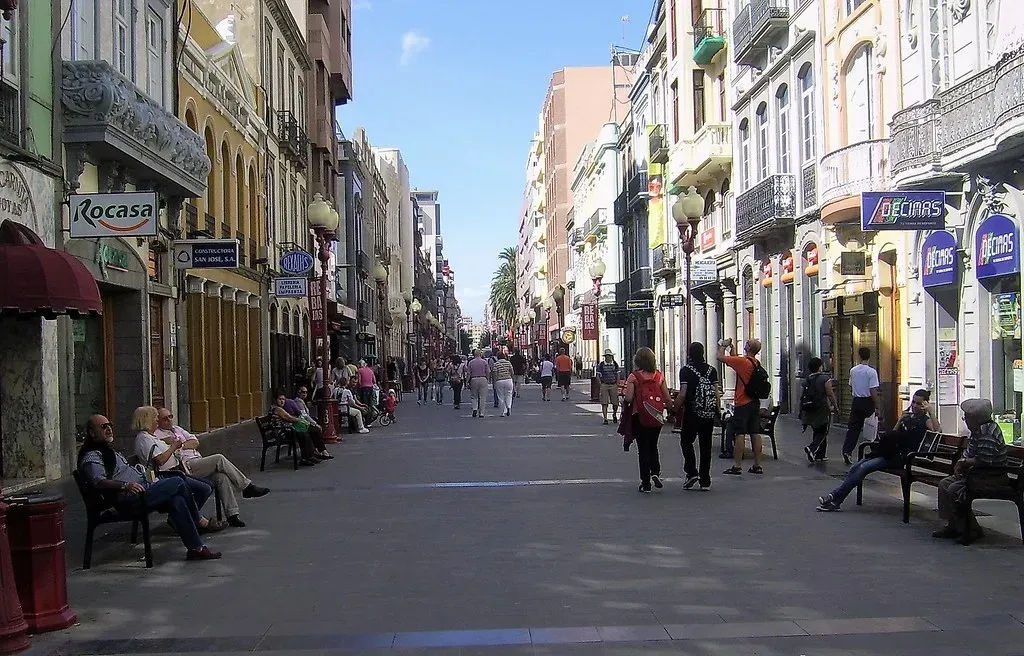
In 1884, delegates from more than two dozen nations met at the International Meridian Conference in Washington, D.C., where they chose the line of longitude running through the Royal Observatory in Greenwich, England, as the official prime meridian, or zero point of longitude. It wasn’t a unanimous choice – France, for instance, held out for years in favor of a Paris-based meridian. The politics of deciding whose city gets to anchor the world’s clock were surprisingly fierce.
The adoption of time zones was made easier by establishing Greenwich Mean Time as the benchmark, and British astronomer John Flamsteed, employed at the Royal Observatory in Greenwich in the 1670s, figured out how to convert apparent solar time to mean solar time – a system whose catalog of stars became crucially important as the UK became a modern naval power. In other words, Britain’s maritime dominance is part of why your phone shows GMT as the anchor of the global clock today.
World War II and the Clock as a Weapon

If you thought politics couldn’t get weirder than a missed railway connection changing the world’s timekeeping, consider this: during the Second World War, entire countries manipulated their time zones as instruments of war. During World War II, some governments battled time itself – from 1940 to 1947, the United Kingdom was not on its usual Greenwich Mean Time at any point in the year, as when British Summer Time ended in 1940 the clocks weren’t put back, keeping the country on UTC+1, and then the clocks were put ahead again, to UTC+2, meaning Britain stayed outside of its normal time zone through the remainder of the war, with up to two hours of extra daylight at the end of the day.
According to historical records, the British government made the switch to support the war effort – extra evening daylight saved fuel and, during the Blitz, gave workers extra time to get home before the blackout began. Year-round daylight saving time was also reinstated in the United States on February 9, 1942, as a wartime measure to conserve energy resources. Time itself was conscripted into military service. It’s hard to say for sure how many hours of productive labor or fuel savings this generated, but the scale was enormous.
Franco, Hitler, and the Time Zone That Never Reversed

This is where history gets genuinely eerie. In 1940, Francisco Franco changed Spain’s time zone by moving clocks from Greenwich Mean Time to Central European Time, and this was made permanent in 1942 in order to be in line with German-occupied Europe. Most of Spain had used GMT before the Second World War, but Spain adopted Central European Time in 1940 and continues to use it, with sunrise and sunset falling an hour later than GMT would produce.
Due to its geographical position, Spain should share a time zone with Portugal or the United Kingdom – the Greenwich meridian – yet since 1940 the country uses Central European Time, a change that occurred during the dictatorship of Francisco Franco, who decided to advance the clock one hour to align with continental Europe. The measure was proposed as temporary. It was never reversed. Some observers believe that this time zone shift plays a role in the country’s more unique daily schedule – including famously late meals and sleep times – compared with its European neighbors. A political decision made over 80 years ago still shapes when Spaniards eat dinner.
China Bends Time for the Sake of National Unity
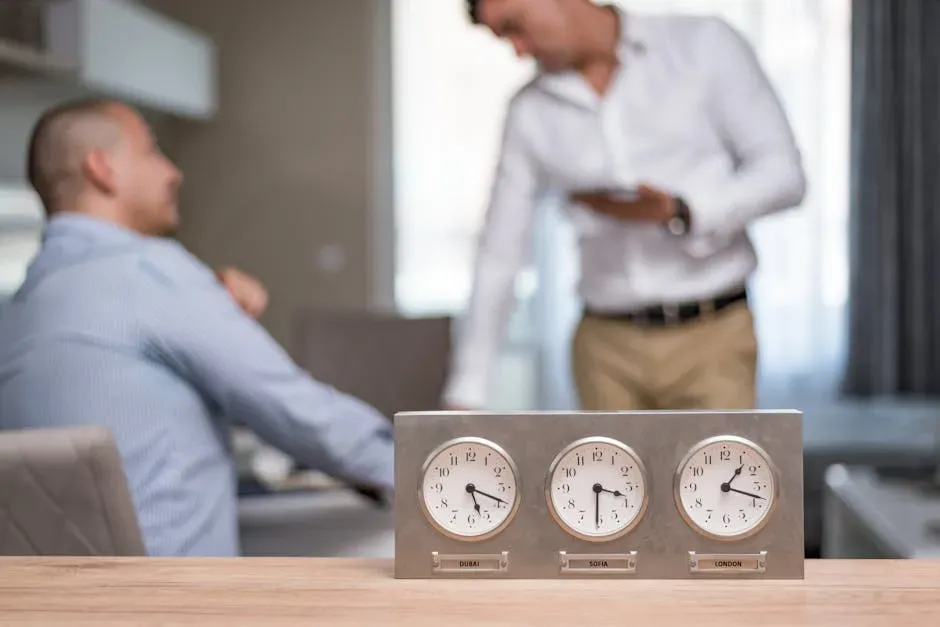
Let’s be real – China’s time zone situation is one of the most striking examples of a government using timekeeping as a tool of political control. Russia, the world’s largest nation in terms of land mass, has 11 time zones, while China, the fourth-biggest by area, has just a single zone; before 1949, the Chinese had five time zones, but after the Communist Party came to power, the government required the entire country to operate on Beijing Standard Time for the sake of national unity.
Although there are practical and economic advantages to a single time zone, the impetus for standardization was more about a signal the Chinese Communist Party wanted to send when it came to power in 1949 – the party sought to consolidate and legitimize its power in China, and controlling time became part of an official narrative about a China united under the party’s rule, which spurred the creation of a single time zone that temporally aligned the entire country with Beijing. In the western city of Kashgar in Xinjiang, children would watch the summer sun set at about midnight – a city not particularly far north, roughly at the same latitude as Ankara in Turkey, but whose sun sets so late because the Chinese Communist Party decided all of China must operate in the same time zone as Beijing.
North Korea Splits the Clock to Erase a Colonial Legacy
Perhaps no modern time zone change was more deliberately theatrical than North Korea’s. On August 15, 2015, North Korea turned its clocks back 30 minutes to create Pyongyang Time at UTC+8:30, splitting from the UTC+9 zone shared with South Korea and Japan – a move explicitly political, chosen because August 15 is the anniversary of Korea’s liberation from Japanese colonial rule, framing the new time zone as erasing a legacy of Japanese imperialism. The experiment lasted less than three years.
On May 5, 2018, ahead of a historic inter-Korean summit, North Korean leader Kim Jong-un ordered clocks moved forward 30 minutes to return to UTC+9, realigning with South Korea. Kim Jong-un reportedly decided to reverse the change after seeing two clocks on the wall at the Panmunjom summit – one labeled “Pyongyang,” one labeled “Seoul” – showing different times. A single glance at two wall clocks, and the political theatre was over. The whole episode is, I think, one of the most vivid illustrations of how a clock face can become a geopolitical statement.
Crimea and the Clock Change That Announced an Annexation

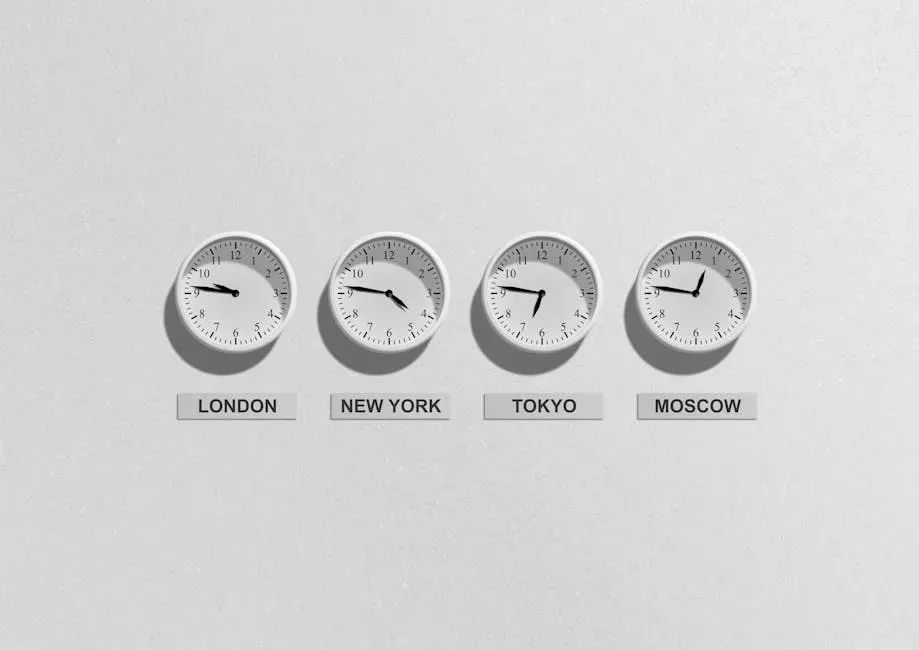
When Crimea voted to join Russia in 2014, it moved its clocks two hours ahead to join Moscow’s time zone. The physical act of turning back the hands of a clock at a railway station became a ceremony of political allegiance. One of the odder consequences of the Russian annexation of Crimea in 2014 was that it shifted the peninsula to Moscow time – a ceremony was held at the main railway station in Simferopol, and as the hands of the station clock were turned, several hundred people waved Russian flags, leaving Crimea two hours ahead of the rest of Ukraine.
Political gestures of this sort are a dramatic way of declaring allegiance and schism – the rhythms of life are reoriented, and Crimeans now wake and sleep in lockstep with Muscovites. It’s a subtle but profound kind of control: not just governing laws or borders, but governing the daily pulse of human life. Time, it turns out, is one of the most intimate things a government can touch.
The Military Invented Its Own Time System to Avoid Catastrophe

Given how badly time confusion can go wrong – and history has shown it can go spectacularly wrong – it’s little surprise the military developed its own international time system. The military time zones are a standardized, uniform set of time zones for expressing time across different regions of the world, named after the NATO phonetic alphabet, with the Zulu time zone equivalent to Coordinated Universal Time and often referred to as the military time zone, a system that ensures clear communication in a concise manner and avoids confusion when coordinating across time zones.
When World War II ended in 1945, just as in WWI, standardized wartime time laws were repealed, and for approximately 20 years the U.S. had no nationwide standard in terms of time, which caused a great deal of confusion – even Pentagon officials were late to a crucial military conference in Alaska because no one knew exactly what time it would be at their location when they arrived. The idea that senior defense officials missed a meeting because of a time zone mix-up is almost funny. Almost. It directly led to reforms that produced the unified military time system still in use across NATO today.
Time Zones Continue to Shape Politics Right Now

You might think all of this is ancient history, but time zone politics are very much alive in 2026. As of late 2025, Spain remains on Central European Time, and the Spanish government continues to explore options with a focus on finding a solution that balances economic considerations with public health and well-being. In recent years, the time change debate in Spain has gone from being a routine matter to becoming a political, scientific, and social debate.
As our world becomes more connected, especially online, some advocate doing away with time zones altogether, with everyone using Coordinated Universal Time. Meanwhile, time zones can be as much about politics as logistics. From colonial subjugation to wartime energy conservation, from authoritarian symbolism to diplomatic gestures between two Koreas, the clock on the wall has always told two stories at once: what time it is, and who is in charge.
What would you have guessed – that something as mundane as a time zone could topple alliances, reshape cultures, and even delay a military operation? Tell us your thoughts in the comments.