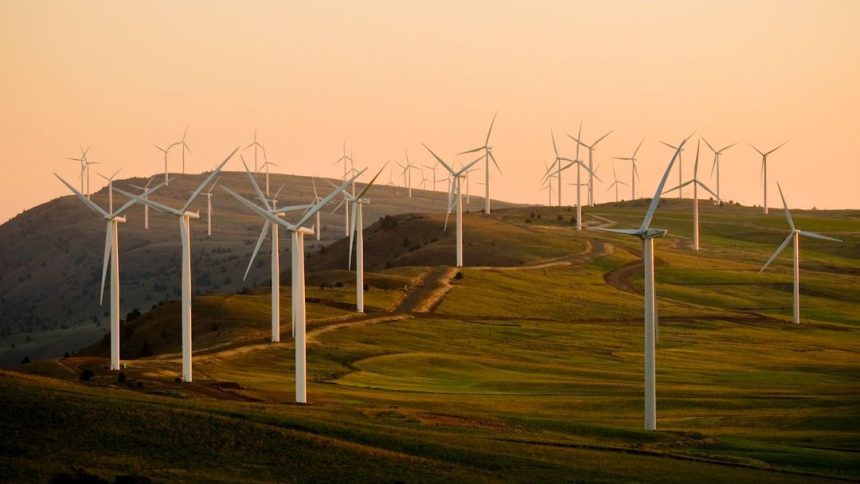


This Vermont town embraced a wind farm. Solar is a different story. – Image for illustrative purposes only (Image credits: Unsplash)
Lowell, Vt. – Residents of this small mountain community have long prized the sweeping views that define daily life. Doug Manning designed his three-story home specifically to capture those peaks, which encircle the town of roughly 800 people. Just steps from his back porch lies a 44-acre hayfield that functions as an informal public square, drawing locals for carnivals, sledding runs, and snowmobile trails throughout the seasons.
Landscape Shapes Energy Preferences
The open terrain and visual character of Lowell have influenced how the town evaluates renewable projects. Wind turbines, positioned to take advantage of consistent ridge winds, were integrated without major disruption to the central hayfield or the sightlines from homes like Manning’s. The turbines sit at a distance that preserves the sense of open space residents value most. Community members have described the wind installation as compatible with existing land uses. The project generates power while leaving the 44-acre field available for gatherings and recreation. This balance appears to have eased acceptance of the wind farm as a practical addition rather than a threat to the town’s character.
Why Solar Faces Greater Scrutiny
Proposals for solar arrays have encountered different reactions. Ground-mounted panels would require larger contiguous sections of open land, potentially altering the hayfield that serves as the town’s shared gathering spot. Residents have raised concerns about how such installations might change both the visual profile and the practical uses of that space. Unlike the elevated wind turbines, solar development tends to occupy flatter, more visible ground. This difference in footprint has prompted questions about long-term impacts on recreation and aesthetics. The town’s experience shows that not all renewable technologies are viewed through the same lens when local land and views are at stake.
Balancing Growth and Tradition
Lowell’s approach illustrates how small communities weigh the benefits of clean energy against the preservation of familiar landscapes. The wind farm has become part of the backdrop without displacing the activities that bring people together in the central field. Solar projects, by contrast, have yet to find a similar fit. Local decisions continue to reflect careful consideration of scale and placement. As discussions move forward, the town’s handling of these two technologies offers a clear example of how geography and daily life shape support for different forms of renewable power.