Most people picture a recording studio as a windowless room stacked with gear, foam panels, and a producer nodding along behind a mixing board. Reality has often looked a little stranger than that. Over the decades, some of the most acclaimed albums in popular music came together in basements, converted swimming pools, mansions with unsettling histories, and buildings that had no business hosting a recording session in the first place. What follows is a look at ten records where the setting became part of the story, sometimes shaping the sound itself and sometimes just adding a strange footnote to an already famous album.
1. Exile on Main St. by The Rolling Stones

Recording began in 1969 at Olympic Studios in London during sessions for Sticky Fingers, with the main sessions beginning in mid-1971 at Nellcôte, a rented villa in the South of France, after the band members became tax exiles. Due to the lack of a professional studio nearby, they worked with a mobile recording studio and recorded in-house. That meant running cables down into the villa’s basement, a damp, low-ceilinged space that had nothing in common with a proper studio.
The location carried its own baggage too. It is rumoured that the Rolling Stones chose Villa Nellcôte due to it being a large secure property to stop prying eyes, and its dark history of being a Gestapo interrogation centre in World War Two. The loose and unorganised Nellcôte sessions went on for hours into the night, with personnel varying greatly from day to day. That chaos, oddly enough, is a big part of why the record still sounds so alive.
2. () by Sigur Rós

Before they found their strange home base, Sigur Rós had an even stranger idea in mind. The band originally intended to record their third album, titled ( ), in an abandoned NATO tracking base in the northernmost mountain in Iceland, but after inspection decided it was too impractical. The location they settled on instead was originally a swimming pool built in the 1930s which had been abandoned when Sigur Rós purchased it in 1999 and converted it and adjacent buildings into a studio.
Turning a drained pool into a working studio wasn’t simple. In order to fit the massive mixing console into the building, part of the roof was opened up and the console was lowered with a crane. The setting ended up matching the band’s sound perfectly, since as guitarist Jónsi described it in one interview, it’s a really nice place and it’s in the countryside and it’s really quiet, and it’s nice to be outside the city. That quiet rural pool, named Sundlaugin, went on to host several more of the band’s albums.
3. For Emma, Forever Ago by Bon Iver

Justin Vernon didn’t set out to make an indie folk landmark when he left North Carolina. While living in Raleigh, North Carolina, Vernon fell ill with mononucleosis and a liver infection, and grew frustrated with his songwriting and life. He left Raleigh and drove to his father’s remote hunting cabin an hour northwest of his hometown, Eau Claire, Wisconsin, hoping to be alone. There was no studio, no engineer, and barely any equipment beyond what he’d packed into his car.
The isolation was total in a way few recording sessions ever are. The album was written, produced, and recorded over three months in a remote hunting cabin in the woods of Wisconsin. Vernon lived off the land during that stretch, and one music writer noted that during the recording of his debut album, For Emma, Forever Ago, Vernon slaughtered, butchered and ate two deer. That level of solitude is baked into every hushed, echoing track on the record.
4. Blood Sugar Sex Magik by Red Hot Chili Peppers

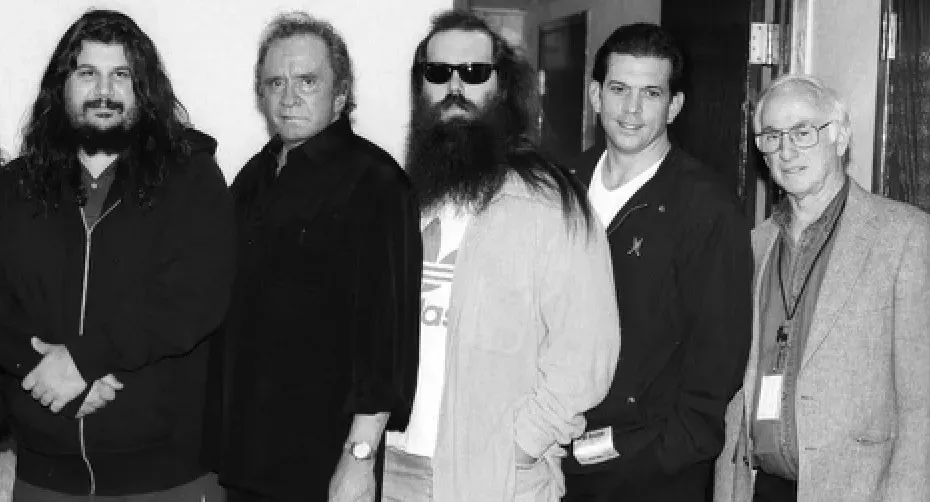
Rick Rubin had an unconventional pitch for the Chili Peppers heading into their fifth album, and it worked. After initial writing sessions between Kiedis and Frusciante to arrange song structures, the band and Rubin relocated to a sprawling 10-bedroom Laurel Canyon mansion, once owned by magician Harry Houdini, which was supposedly haunted. Instead of booking studio time, the band simply moved in and lived there while they worked.
The house itself became the recording rig. The recording console was set up in the living room and Kiedis chose to record his vocals in his second floor bedroom. Not everyone was comfortable with the arrangement, since the band jumped at the idea, except for drummer Chad Smith, who refused to stay overnight. Whatever unease lingered in the halls didn’t slow the band down, since basic tracking wrapped in under a month.
5. A Storm in Heaven by The Verve

Cornwall’s Sawmills Studio has hosted more famous sessions than almost any other building of its size, largely because of where it sits. It’s actually located between Golant and Fowey in an idyllic location only accessible by boat, or a long forest walk. The building itself has deep roots too, since the main building is a 17th century water mill, and the site has a documented history stretching back to the 11th century.
For The Verve’s 1993 debut, that seclusion offered exactly the kind of headspace the band’s swirling, psychedelic sound needed. Sawmills has since become something of a rite of passage for British guitar bands, and it has seen a host of famous musicians record there over the years including Robert Plant, the Stone Roses, The Verve and Supergrass alongside Oasis and Muse. Getting gear, band members, and takeaway food to the studio meant timing everything around the tides, which is not a normal studio problem to have.
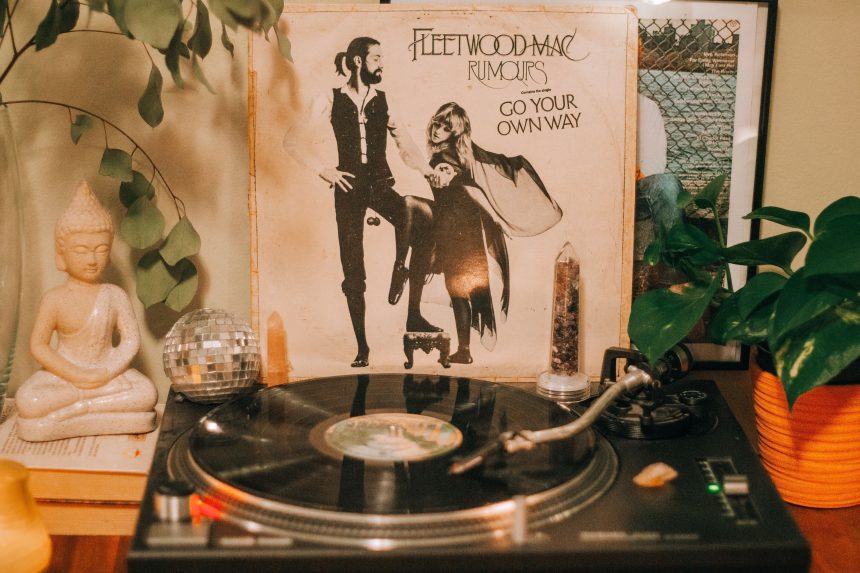
6. Tusk by Fleetwood Mac
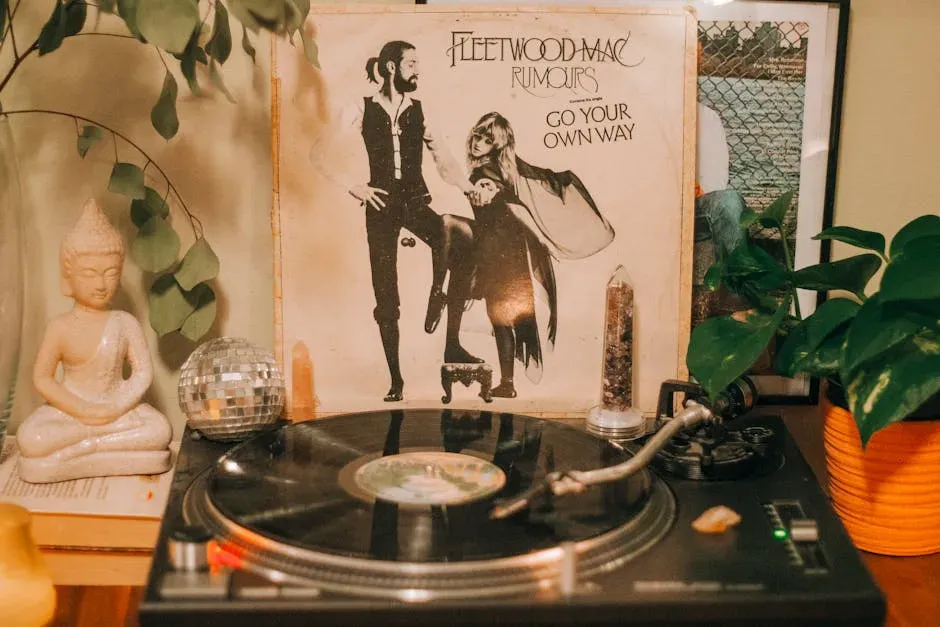
By the time Fleetwood Mac started work on the follow up to Rumours, Lindsey Buckingham was chasing sounds that a conventional drum booth couldn’t give him. Engineers ended up experimenting with tiled, bathroom-style acoustics to get a sharper, more percussive drum tone for parts of the record. It’s one of those studio legends that has been repeated so often in liner notes and retrospectives that it’s become part of the album’s identity.
The band also took things well outside the studio walls for the title track. Sections of “Tusk” were recorded live with the University of Southern California’s Trojan Marching Band, with some of the horn and drum parts captured inside Dodger Stadium. It’s a strange pairing on paper, a moody art rock record and a college football marching band, but it gave the song its stomping, oddly triumphant energy.
7. My Beautiful Dark Twisted Fantasy by Kanye West

For his fifth album, Kanye West didn’t book a single studio in Los Angeles or New York. He instead set up at Avex Recording Studio in Honolulu, Hawaii, and flew in a rotating cast of collaborators, producers, and vocalists for months at a time. The tropical setting was less about relaxation than about removing every distraction that a major city studio usually brings with it.
Sessions there stretched late into the night and pulled in a wide range of contributors, from established hitmakers to newer names West was championing at the time. Being thousands of miles from the industry’s usual centers seemed to loosen everyone up, which is part of why the album feels so sprawling and unrestrained. It remains one of the more unusual production stories behind a mainstream hip hop record of that era.
8. In Rainbows by Radiohead

Radiohead spent part of the sessions for this 2007 album at Tottenham House, an old manor house in Wiltshire with a long standing reputation for being haunted. The band was drawn less to the ghost stories and more to the building’s cavernous, unconventional rooms, which offered acoustics no purpose built studio could replicate. Large stone hallways and high ceilings gave certain tracks a natural sense of space and decay.
The band eventually finished the record elsewhere, but the Tottenham House sessions left a mark on the album’s atmosphere. It’s a fitting setting for a band that has always leaned toward unsettled, slightly eerie textures in its music. The mansion has since become a recurring footnote in Radiohead retrospectives, mentioned almost as often as the album’s famous pay what you want release strategy.
9. Early albums by My Morning Jacket

Before My Morning Jacket had much of a recording budget, the Louisville band found an unlikely solution to getting a big, atmospheric sound on the cheap. They recorded portions of their early material inside a converted grain silo near La Grange, Kentucky, using the structure’s natural reverberation instead of expensive studio effects. The result was a wash of echo that became something of a sonic signature for the band’s first few releases.
Working in a former agricultural building came with obvious limitations, from temperature swings to the sheer strangeness of setting up amps and microphones where grain used to be stored. Even so, the silo gave frontman Jim James’s vocals and the band’s guitars a haunted, expansive quality that critics singled out repeatedly in early reviews. It’s a good example of a limitation turning into a defining creative choice.
10. Remain in Light by Talking Heads

For their fourth album, Talking Heads decamped to Compass Point Studios in Nassau, Bahamas, working with producer Brian Eno far away from their usual New York surroundings. The tropical, relatively isolated setting encouraged the band to experiment more freely with rhythm, layering, and the polyrhythmic textures that define the record. Being removed from the city seemed to push the band toward a looser, more collaborative way of building songs in the studio.
The sessions leaned heavily on jamming and improvisation before lyrics or fixed structures were added, a process that suited the relaxed, unhurried pace of recording on the island. That approach helped produce some of the band’s most adventurous and influential work. Decades later, Remain in Light is still cited as a turning point for how rhythm driven, studio built records could sound.