
There is something quietly humbling about standing before an ancient artifact and realizing, with all of our satellites, supercomputers, and electron microscopes, we still have no clue how it was made. We have mapped the surface of Mars, sequenced the human genome, and built artificial intelligence that writes poetry. Yet certain things our ancestors left behind continue to stump us completely.
We often think about our distant ancestors as primitive, equipped with the crudest of tools and a limited set of skills. More often than not, we are terribly mistaken. Ancient civilizations are usually underestimated. History shows us that they repeatedly demonstrated incredible ingenuity and engineering prowess, even in the most distant past. What follows is a gallery of ten of the most jaw-dropping examples. Some of them will make you question everything you thought you knew about the ancient world. Let’s dive in.
1. The Antikythera Mechanism: The World’s First Computer

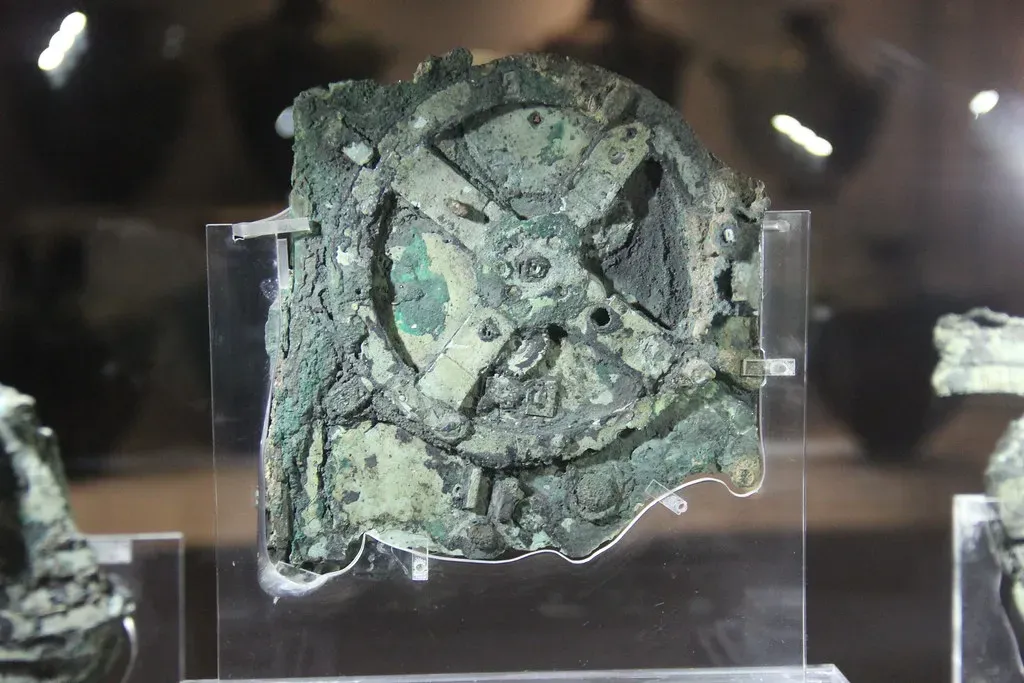
Discovered in a Roman shipwreck off the Greek island of Antikythera in 1901, this bronze device initially appeared to be nothing more than corroded metal fragments. Decades of careful analysis, however, revealed one of archaeology’s most stunning finds: a sophisticated mechanical computer dating back over 2,000 years. Think about that for a moment. Two thousand years.
The Antikythera Mechanism contains at least 30 precision bronze gears that work together to predict astronomical events with remarkable accuracy. It could calculate the positions of the sun, moon, and known planets, predict solar and lunar eclipses, and even track the four-year cycle of the Olympic Games. That is not primitive. That is extraordinary.
Similar mechanical sophistication would not appear again in European technology until the 14th century. The craftsmanship required to create such precise gears and intricate mechanical systems suggests ancient Greek technology was far more advanced than previously believed. Research is still actively ongoing. In July 2024, astronomers from the University of Glasgow used statistical modelling techniques developed for analysing gravitational waves to establish the likely number of openings in one of the device’s broken rings, and the results were published in the Official Journal of the British Horological Institute.
There must have been predecessors, simpler devices, prototypes, and teaching instruments, of which no trace survives. An entire tradition of computational mechanics, spanning potentially centuries of development, left behind exactly one artifact. That thought alone should send a chill down your spine.
2. Roman Concrete: The Material That Gets Stronger Over Time


The Romans were master builders, but one of their greatest innovations was their concrete. While modern concrete starts to deteriorate within decades, Roman concrete has lasted for thousands of years, as seen in structures like the Pantheon and aqueducts that are still standing today. Let that sink in. Our modern mixes crumble in a generation.
Roman concrete was “alive.” They used a specific mix of volcanic ash and lime, and when seawater hits it, it triggers a chemical reaction that grows a rare mineral called aluminous tobermorite. This self-reinforcing chemistry is something modern engineers are still scrambling to replicate at scale.
In December 2025, a research team published a remarkable paper in Nature Communications. They had gained access to an active Roman construction site in Pompeii, rooms that were literally mid-renovation when Vesuvius erupted in 79 CE. The volcanic ash preserved everything: raw material piles, partially built walls, even measuring tools. It was like walking into a 2,000-year-old construction site that had been flash-frozen in time. The Pompeii evidence confirmed the hot-mixing theory definitively and revealed that the volcanic pumice in Roman concrete continued reacting with the surrounding material for centuries, forming new mineral deposits that made the concrete stronger over time.
Modern concrete degrades with age. Roman concrete improved. The implications are staggering. Cement production currently accounts for roughly eight percent of global CO₂ emissions. Cracking this ancient formula could change everything about how we build our future cities.
3. Damascus Steel: Nanotechnology Before Nanotechnology Existed


Between 1100 and 1700 CE, Middle Eastern smiths produced Damascus steel blades renowned for their exceptional strength, flexibility, and distinctive watered patterns. These weapons could cut through European armor and bend significantly without breaking. The steel was created using wootz steel imported from India, but the exact forging techniques died out in the 18th century.
Modern electron microscopy has actually found carbon nanotubes and nanowires inside authentic Damascus blades. Somehow, ancient smiths were practicing nanotechnology at 2,000 degrees Fahrenheit without even knowing what a molecule was. That is one of the most mind-bending sentences in the history of materials science, honestly.
Modern metallurgists have identified carbon nanotubes and other advanced structures within Damascus steel samples, but replicating the original manufacturing process remains challenging. Recent research suggests the superior properties resulted from specific trace elements in the original ore combined with particular forging temperatures and techniques. However, authentic Damascus steel production methods remain incompletely understood.
The technology may not be easily accessible in newfound formats due to the loss of Wootz, a crucial material originating from ancient India, and the patterned forms from the Middle East. University researchers tried to reverse-engineer the microstructures of steel materials, but they do not share the same metallurgical aspects. The recipe, it seems, died with its makers.
4. Greek Fire: The Weapon That Burned on Water


Used by the Byzantine Empire from the 7th to 14th centuries, Greek fire was an incendiary weapon that could burn on water and was nearly impossible to extinguish. This liquid fire gave the Byzantines a crucial military advantage, particularly in naval warfare. Contemporary accounts describe Greek fire being deployed through bronze tubes or clay pots, creating devastating flames that could destroy entire enemy fleets.
Greek fire was so effective that it saved Constantinople from multiple sieges and maintained Byzantine naval supremacy for centuries. The formula was so closely guarded that only a handful of people knew it, and when the empire fell, the secret died with them. No one handed it down. No manuscript survived. It simply vanished.
Modern chemists have theories about what Greek fire might have contained, including petroleum, quicklime, and sulfur, but no one has successfully recreated a substance that matches all the historical descriptions. Here’s the thing: some historians believe it may have used a form of calcium phosphide, which reacts spontaneously with water. But that is still speculation, and the debate rages on.
The exact composition remained a closely guarded state secret, known only to a select few chemists and engineers. Despite extensive research, the precise formula for Greek fire remains unknown. In a world where almost nothing stays secret for long, this one endured for over a thousand years of silence.
5. The Baghdad Battery: Ancient Electricity, or Sacred Ritual?

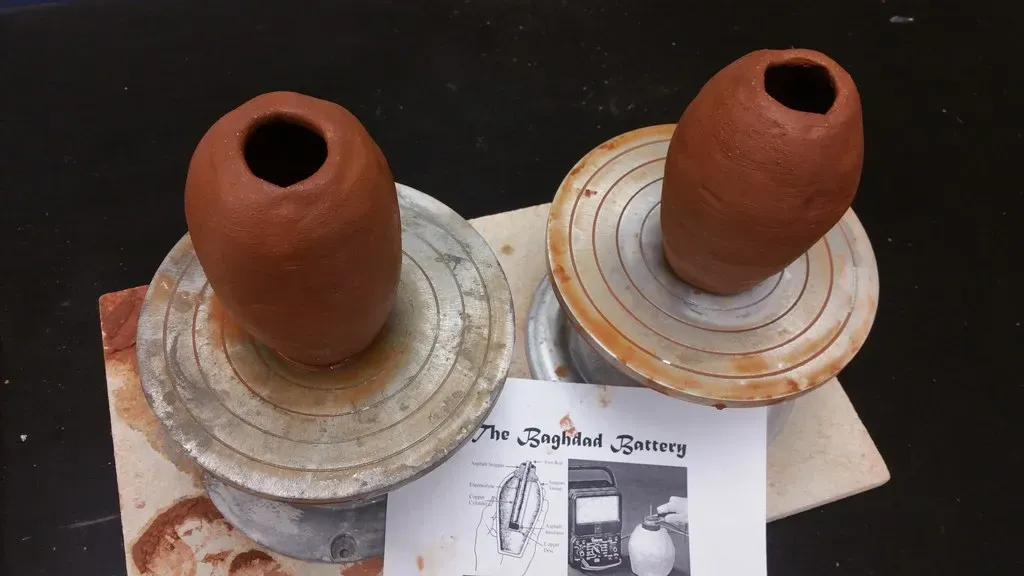
The so-called Baghdad Battery is among the most mysterious artifacts in the annals of ancient technology. Unearthed in 1936 near the ruins of Ctesiphon, this assembly of a ceramic pot, copper tube, and iron rod presents a puzzle that has baffled the scientific community for nearly a century.
The Baghdad Battery, also known as the Parthian galvanic cell, was discovered in 1936 during excavations a few miles from Baghdad. It is thought to date from between the 1st and 3rd centuries. The artifact was found in fragments, but it seems to have consisted of a clay jar containing a sealed copper vessel surrounding an iron rod.
A reconstruction of the Baghdad Battery suggested the clay jar surrounding the artifact was key to the design. One researcher argues that the unglazed jar acted as a porous separator between an alkaline electrolyte and the ambient air, and this design meant the two combined cells could have produced over 1.4 volts, much more useful than the roughly 0.5 volts achieved by earlier reconstructions.
University of Pennsylvania archaeologist William Hafford has researched the Baghdad Battery extensively, and argues that the idea the artifact was a battery is not persuasive. He suggests that similar finds in the region, including one clay jar with ten nested copper vessels, point instead to a supposedly magical device that once contained a prayer or “curse” inscribed on paper. The artifact itself was lost during the 2003 invasion of Iraq, making definitive answers nearly impossible now.
6. The Iron Pillar of Delhi: 1,600 Years Without a Single Spot of Rust

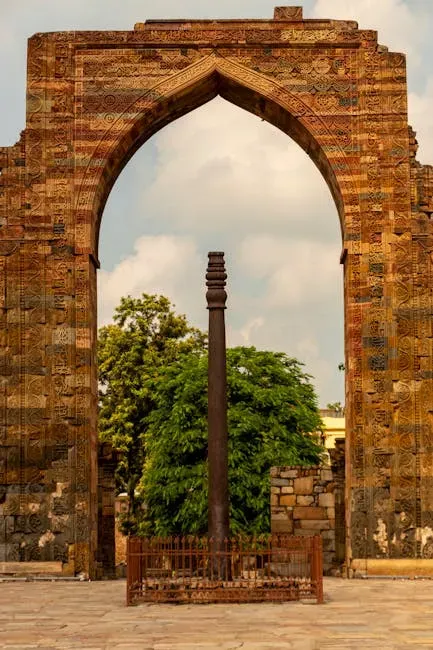
Standing rust-free for over 1,600 years, Delhi’s Iron Pillar defies time and science. Its ancient phosphorus-rich alloy holds secrets modern metallurgy still can’t crack. No protective coating. No special shelter. Just standing in the open air through monsoons, scorching summers, and centuries of pollution.
Partner offer

Unlike modern iron, the structure lacks sulfur and magnesium, with ancient craftsmen using a technique called “forge-welding” to construct the iron pillar. In this technique, the iron is heated and hammered, which keeps the high phosphorus content intact, a method relatively unseen in modern practices. It is an elegant solution nobody fully understands how to reproduce today.
The pillar’s 1,600-year-old rust-free state is due to high phosphorus content and ancient forge-welding techniques, as revealed by a 2003 IIT-Kanpur study. Yet even that study left crucial questions unanswered. Knowing the what is not the same as knowing the how. And replicating that precise combination of technique, temperature, and alloy composition at scale still eludes modern metallurgists completely.
7. The Nazca Lines: Massive Art That Only Makes Sense from the Sky

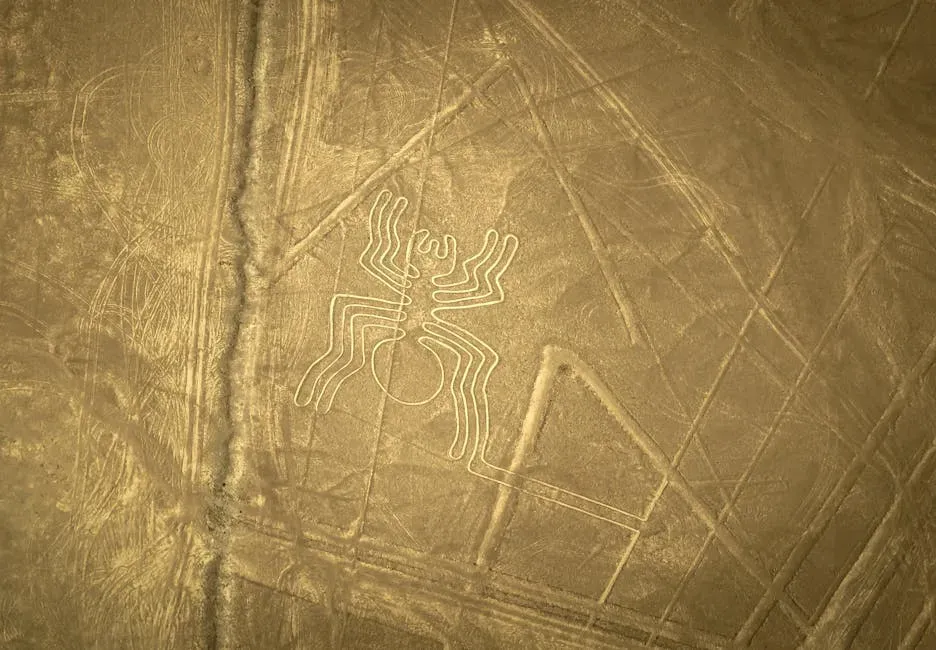
Carved into the desert floor of southern Peru between 500 BCE and 500 CE, the Nazca Lines consist of hundreds of enormous geoglyphs depicting animals, plants, and geometric shapes. Some of these figures stretch over 1,200 feet in length and can only be fully appreciated from the air. The ancient Nazca people had no aircraft. They had no satellites. Yet the proportions are nearly perfect.
Creating such massive, proportionally accurate designs would require advanced planning, mathematical knowledge, and sophisticated surveying techniques. The lines have survived for over 1,500 years due to the desert’s stable climate and lack of wind erosion. That the landscape itself acted as a perfect preservation chamber seems almost too convenient.
Various theories attempt to explain their purpose, including an astronomical calendar, religious ceremonies, water rituals, or even ancient airfields. While most scholars believe they served ceremonial or astronomical functions, the exact methods used to create such precise large-scale artwork without aerial perspective remain unclear.
I think the more you study the Nazca Lines, the less confident any single explanation feels. The sheer scale of the mystery, and the perfect geometry of it, is either an incredible feat of ground-level planning, or something we simply don’t have a framework to understand yet.
8. The Great Pyramid of Giza: Engineering That Still Defies Logic


Finished over 4,600 years ago near modern-day Cairo, Egypt, this extremely well-known ancient structure still perplexes archaeologists and engineers alike. Considered one of the seven ancient wonders of the world and a UNESCO World Heritage Site, the Great Pyramid of Giza is a royal tomb of epic proportions, standing around 450 feet tall.
These colossal stone monuments have stood for over 4,500 years, defying erosion and even earthquakes. The largest of the three, the Great Pyramid, was built with over 2.3 million limestone blocks, each weighing several tons. Moving a single one of those blocks would challenge a modern crane operator. Moving millions of them, with precision alignment, staggers the imagination.
The biggest mystery of this discovery is its construction, a feat that we have still not been able to conclusively understand. Theories on how the giant stone blocks that make up the pyramid were moved and positioned range from the expert use of levers to some more eccentric explanations, like long-lost sound devices that can levitate objects.
One popular theory is that the Egyptians used a system of ramps to move the stones into place, but even that doesn’t fully explain the insane precision with which the pyramids were built. The alignment of the pyramids with the stars, especially Orion’s Belt, is so exact that some theorists suggest extraterrestrial help might have been involved. Regardless of the theories, the truth is that we still don’t really know how these ancient people managed to pull off one of the greatest architectural feats in human history.
9. The Lycurgus Cup: Roman Nanotechnology in Glass Form


This 4th-century Roman glass cup demonstrates a sophisticated understanding of materials science that would not be replicated until the 20th century. The cup appears jade green when lit from the front but glows ruby red when illuminated from behind. It is like a magic trick trapped in glass for 1,700 years.
Modern analysis revealed the glass contains gold and silver nanoparticles precisely sized to create this optical effect. The Romans somehow incorporated these particles at exactly the right proportions and sizes to achieve the desired color-changing properties. Creating such precise nanostructures requires advanced knowledge of materials science and sophisticated manufacturing techniques.
How Roman craftsmen achieved this level of precision remains unexplained by current archaeological understanding. It’s hard to say for sure whether this was a deliberate discovery or a happy accident that skilled artisans learned to reproduce. Either way, the result is a piece of glass that would make a modern nanotechnologist genuinely envious.
The precise knowledge required to develop this technology suggests a sophisticated understanding of materials science. Only recently have modern scientists begun to understand and replicate these ancient engineering principles. And even now, reproducing it at will is far from straightforward.
10. The Chinese Seismoscope: Detecting Earthquakes 400 Miles Away

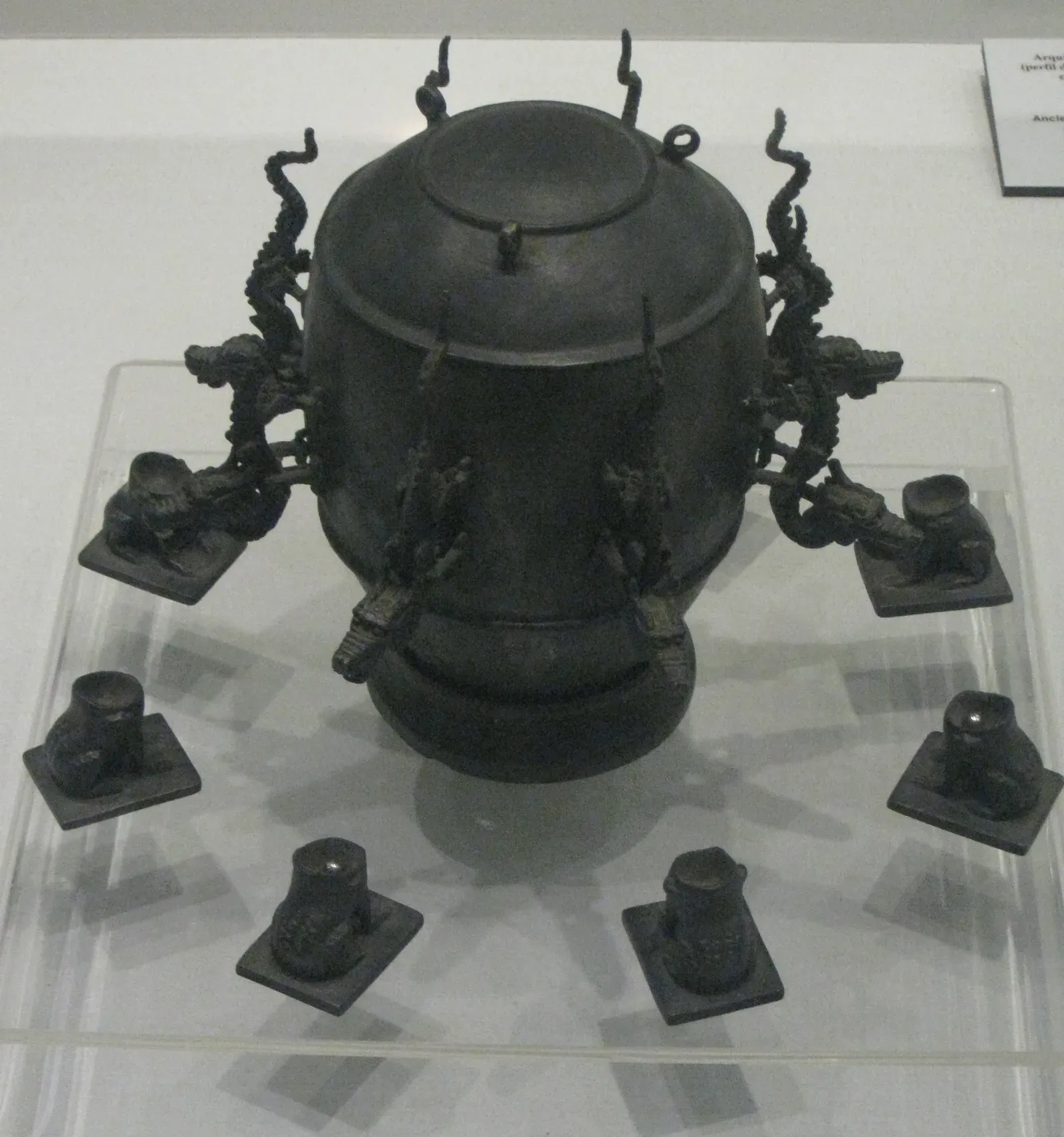
The first earthquake-detecting tool in history was an ornate, golden, dragon-festooned, toad-surrounded vessel from around 132 AD. The basic premise was as follows: when the earth quakes, one of the dragons, each representing principal directions of the compass, would spit out a bronze ball into a toad’s mouth, indicating the direction of the quake. It sounds more like mythology than engineering. Yet it actually worked.
The instrument was said to have “detected a four-hundred-mile distant earthquake which was not felt at the location of the seismoscope.” That is a staggering claim. For context, modern seismographs only became widely operational in the late 19th century, nearly 1,700 years later.
One aspect that makes the seismoscope not prevalent in modern times is that it had little to no written evidence left from its past. Ancient texts could only be translated so far back. Reconstructing the design is also considered nearly impossible, as the mechanisms used are not something current practitioners can replicate, aside from one that came into existence around 2005. There was a replication by the Chinese Academy of Sciences, but it unfortunately produced results that did not correlate with the original model.
Advanced imaging techniques, chemical analysis, and computer modelling continue to provide new insights into these ancient mysteries. While some puzzles may never be fully solved, they serve as humbling reminders that human ingenuity has flourished throughout history in ways we’re still discovering. The seismoscope is perhaps the most haunting example of all: a tool that worked, a tool we know worked, and a tool we cannot build again.
Conclusion: The Humility of Modern Science


Here’s the uncomfortable truth these ten technologies force us to confront: progress is not always linear. Early humans accomplished feats that, in some cases, we still struggle to replicate today. Some mainstream archaeologists dismiss these anomalies, preferring simpler explanations that fit neatly into established timelines, but others see evidence of sophisticated knowledge that history books rarely acknowledge.
Certain ancient innovations and technologies remain a great enigma, as they cannot be replicated and fully understood. The mystery of ancient engineering challenges modern perception of the world’s first civilizations. These are not fringe theories or tabloid curiosities. These are objects studied by top universities, research projects, and scientific journals.
The Baghdad Battery sits at the intersection of chemistry and religion. The Antikythera Mechanism rewrites the timeline of computing. Roman concrete is actively inspiring sustainable architecture research in 2026. Each of these technologies tells the same story: that knowledge, when not recorded, transmitted, and protected, can vanish entirely.
Knowledge is lost when it depends on a single material source that can be depleted, like Damascus steel. It is lost when it lives inside secrecy rather than shared documentation, like Roman glass. That should terrify us, and inspire us, in equal measure.
What else might be buried out there, in a shipwreck, a sealed tomb, or a desert floor, waiting to rewrite what we think we know about human history? What would you have guessed?
Partner offer
Planning a trip to Vegas?
Compare hotel rates and show tickets on VEGAS.com.