
A Broadway run, however celebrated, reaches a limited crowd. A theater seats a few hundred to a couple thousand people a night, and tickets cost real money. A film print could play in towns that never saw a touring company.
That gap is why studios have raided the stage for more than a century. The ten plays below all started in New York and later found much larger audiences on screen. Some kept their original stars, some rewrote their endings, and a few picked up Oscars along the way.
A Streetcar Named Desire


Tennessee Williams’s drama opened on Broadway in 1947 and won the Pulitzer Prize for Drama the following year. Elia Kazan directed the original production, and Marlon Brando’s turn as Stanley Kowalski made him a name beyond theater circles.
Kazan also directed the 1951 film, and Brando came along with him. Vivien Leigh, Karl Malden and Kim Hunter all won Academy Awards for their performances. That’s three of the four acting prizes that year, which says a lot about how well the material survived the move.
Who’s Afraid of Virginia Woolf?


Edward Albee’s play reached Broadway in 1962 and shocked audiences with its bitter, boozy portrait of a faculty marriage. It ran for hundreds of performances and cemented Albee as a leading American playwright.
Mike Nichols made his feature directing debut with the 1966 film, starring Elizabeth Taylor and Richard Burton. It earned Oscar nominations in every category it was eligible for, thirteen in all, and won five. Taylor took home Best Actress, and the film was bold enough to challenge Hollywood’s content rules of the time.
Fences


August Wilson’s play about Troy Maxson, a former Negro League ballplayer working as a sanitation worker, premiered on Broadway in 1987. It won the Pulitzer Prize and a Tony Award for Best Play. A 2010 revival starring Denzel Washington and Viola Davis won Tonys for both leads.
Washington directed and starred in the 2016 film, reuniting much of that revival’s cast. Davis won the Oscar for Best Supporting Actress for her role as Rose. Wilson wrote the screenplay before his death in 2005, so the film kept his language largely intact.
Doubt


John Patrick Shanley’s play, set in a Bronx Catholic school in 1964, opened on Broadway in 2005. It won both the Pulitzer Prize and the Tony Award for Best Play. Its central question, whether a priest is guilty of misconduct, is deliberately left unresolved.
Shanley directed the 2008 film himself. Meryl Streep, Philip Seymour Hoffman, Amy Adams and Viola Davis each earned an Oscar nomination for their work. Davis got hers for a single scene, a reminder of how much a small part can carry.
August: Osage County


Tracy Letts’s family saga about the Weston clan in Oklahoma came out of Chicago’s Steppenwolf Theatre and arrived on Broadway in late 2007. It won the Pulitzer Prize for Drama in 2008, as well as the Tony for Best Play. The running time was long, and audiences stayed with it anyway.
Partner offer

John Wells directed the 2013 film, with Letts adapting his own play for the screen. Meryl Streep and Julia Roberts played the warring mother and daughter, and both received Oscar nominations. The film trimmed the story considerably, which is common when a three act epic becomes a two hour movie.
Glengarry Glen Ross


David Mamet’s play about desperate real estate salesmen debuted on Broadway in 1984 and won the Pulitzer Prize for Drama that year. Its rapid, profane dialogue became a signature of Mamet’s style. The setting is almost entirely a Chinese restaurant and a sales office.
The 1992 film, directed by James Foley, assembled a remarkable cast including Al Pacino, Jack Lemmon, Alec Baldwin and Kevin Spacey. Mamet adapted his own script and wrote a new scene for Baldwin’s character, which became one of the film’s most quoted moments. Pacino received an Oscar nomination for Best Supporting Actor.
Harvey

Mary Chase’s comedy about a man whose best friend is an invisible six foot rabbit opened on Broadway in 1944. It won the Pulitzer Prize for Drama in 1945, a surprising honor for such a gentle comedy. Wartime audiences seemed to welcome the warmth.
The 1950 film starred James Stewart as Elwood P. Dowd, a role that earned him an Oscar nomination for Best Actor. Josephine Hull, who had played the sister on stage, repeated the part on screen and won the Academy Award for Best Supporting Actress. Henry Koster directed.
Arsenic and Old Lace


Joseph Kesselring’s dark comedy about two sweet aunts who poison lonely gentlemen opened on Broadway in 1941. It was a hit, and it ran for years. That success created an unusual problem for Hollywood.
Frank Capra shot the film with Cary Grant in 1941, but its release was held until 1944. The deal with the play’s producers reportedly kept it from reaching theaters while the Broadway run continued. When it finally arrived, audiences across the country could see what New Yorkers had been laughing at for years.
A Raisin in the Sun

Lorraine Hansberry’s play opened on Broadway in 1959, and she became the first Black woman to have a play produced there. It follows the Younger family in Chicago as they decide what to do with a life insurance payout. Sidney Poitier led the original cast as Walter Lee Younger.
Columbia Pictures released the film version in 1961, with Poitier reprising his role alongside Ruby Dee and other members of the stage cast. Hansberry adapted her own work for the screen. The film carried the Younger family’s story to audiences who might never have set foot in a Broadway house.
The Odd Couple

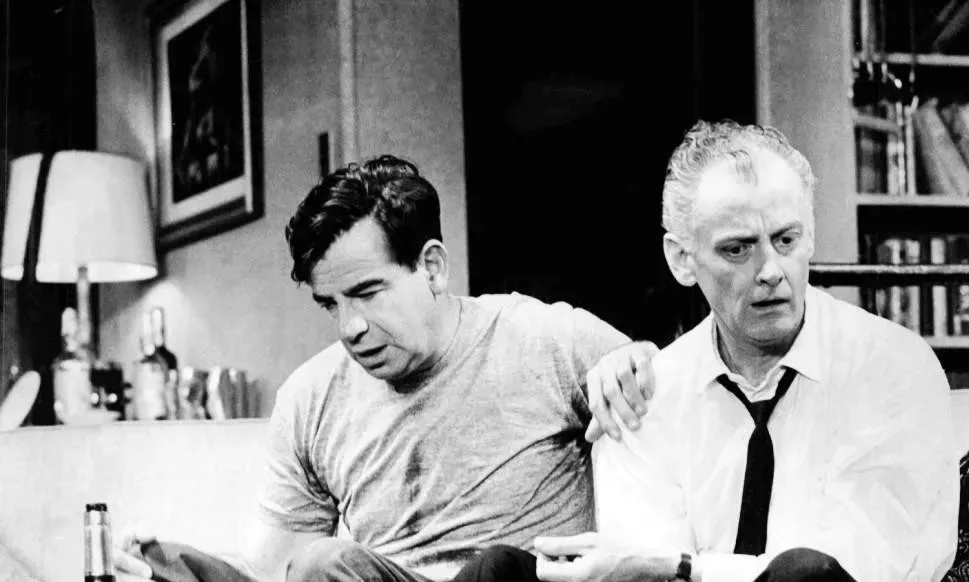
Neil Simon’s comedy about a slob and a neat freak sharing an apartment opened on Broadway in 1965. Walter Matthau played Oscar Madison and Art Carney played Felix Ungar. Matthau won a Tony Award for his performance.
Paramount’s 1968 film paired Matthau with Jack Lemmon as Felix, and the two became one of the best known comedy duos on screen. The story proved durable enough to inspire a long running television series in the 1970s. Few stage comedies have been reworked for audiences so many times.
Partner offer
Planning a trip to Vegas?
Compare hotel rates and show tickets on VEGAS.com.