
Many of the books that fill school libraries and bedside tables started in an ordinary way. A parent had a restless child, a long evening, or a sick room to fill, and made something up on the spot. The audience was two or three listeners, and none of them were critics.
The ten books below all began that way, or close to it. Each one grew out of a real family moment, and each moved from the household to the printed page. Here they are, roughly in the order they reached readers.
The Swiss Family Robinson

Johann David Wyss, a Swiss pastor, made up an adventure about a shipwrecked family for his four sons. He used the story to pass on practical lessons about resourcefulness, faith, and getting along. He never meant it as a public book, and the manuscript stayed within the family for years.
His son Johann Rudolf Wyss later edited the manuscript and helped bring it to print. The first edition appeared in German in 1812. The book has stayed in circulation for more than two centuries, though the English editions differ a good deal from the original.
Struwwelpeter

Heinrich Hoffmann was a physician in Frankfurt. In 1844 he went shopping for a picture book to give his young son Carl for Christmas, and he found nothing he liked. He bought a blank notebook and filled it with his own verses and drawings instead.
Friends encouraged him to publish, and the book appeared in 1845 as Struwwelpeter. Its cautionary tales are grim by modern standards, with children suffering for bad habits. Still, it sold widely and became one of the best known German children’s books of the nineteenth century.
The Story of Doctor Dolittle
Hugh Lofting served in the British Army during the First World War. From the front he wrote letters to his children, and those letters included drawings and stories about a doctor who could talk to animals. He later said the real war news was too grim to share with young readers.
After the war he turned the idea into a full book. The Story of Doctor Dolittle was published in 1920, and Lofting went on to write a long series. The letters to his children are the accepted origin of the character.
Winnie the Pooh
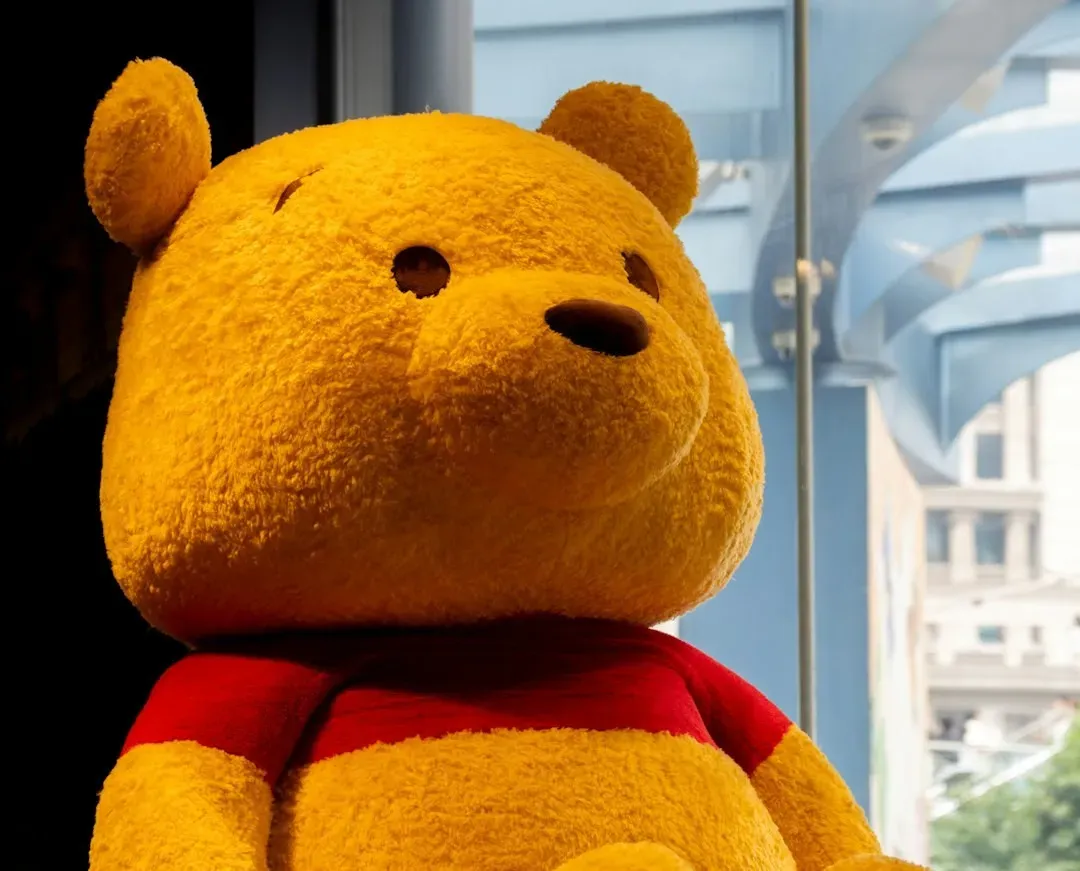
A. A. Milne based the characters on the stuffed toys his son Christopher Robin owned. Pooh, Piglet, Eeyore, Kanga, and Roo were all real nursery animals. Milne’s boy also gave the world the idea of a bear named after Winnipeg, a real black bear he had met at London Zoo.
Winnie the Pooh was published in 1926, with illustrations by E. H. Shepard, who drew from the real toys. The stories stayed popular for the rest of the century and beyond. In recent years the original text has entered the public domain in the United States, which has led to new adaptations.
The Wind in the Willows

Kenneth Grahame first told the adventures of a toad, a mole, a rat, and a badger to his young son Alastair, whom the family called Mouse. When Alastair was away, Grahame kept the tales going in letters. Those letters give the book much of its warmth and its sense of a private joke shared across a distance.
The book was published in 1908. It was received politely at first and found its large readership gradually. It is now treated as a landmark of English children’s writing.
Just So Stories

Rudyard Kipling made up tales about how the leopard got his spots and how the camel got his hump for his daughter Josephine, called Effie. She was strict about the details. Kipling wrote that she wanted each story told exactly the same way every time, and the stories had to keep their precise wording.
That demand is part of why the prose has such a distinctive rhythm when read aloud. Just So Stories came out in 1902, and Kipling drew many of the illustrations himself. Josephine died young, in 1899, so the book is also tied to a family loss.
The Hobbit

J. R. R. Tolkien told stories to his children, and The Hobbit grew from that habit. He said later that he had scribbled a sentence about a hobbit on a blank page while marking exam papers. He then worked out the story over time, partly with his own children in mind.
The book was published in 1937 and sold well enough that the publisher asked for a sequel. That request led to The Lord of the Rings. The children’s story ended up as the doorway into one of the largest fantasy worlds ever written.
Pippi Longstocking

In 1941, Astrid Lindgren’s daughter Karin was ill in bed and asked her mother to tell her a story. When Lindgren asked what it should be about, Karin came up with the name Pippi Longstocking. Lindgren then invented the strongest girl in the world, who lives alone with a horse and a monkey.
She kept telling the stories to Karin and her friends. Years later, when she was laid up with an injury, she wrote them down. The book was published in Sweden in 1945 and was soon translated widely.
Chitty Chitty Bang Bang

Ian Fleming, best known for the James Bond novels, wrote this one for his son Caspar. It came out in 1964, shortly after Fleming’s death, in three volumes, and it was the only children’s book he wrote. The idea of a magical car had come from Fleming’s own bedtime storytelling.
The book was illustrated by John Burningham. A film adaptation followed in 1968, written in part by Roald Dahl, who is the next author on the list in spirit if not in order. Fleming’s original story is shorter and different in tone from the musical many people remember.
Charlie and the Chocolate Factory

Roald Dahl made up bedtime stories for his children and tested ideas on them. He would watch their reactions and adjust the story based on where they lost interest. This hands on method helped shape the book he published in 1964.
Charlie and the Chocolate Factory has remained one of the best selling children’s books in English. Dahl’s own family has been connected to the book’s legacy through the Roald Dahl Story Company. The story’s odd, funny, slightly sharp edge reflects a writer who knew his audience personally.