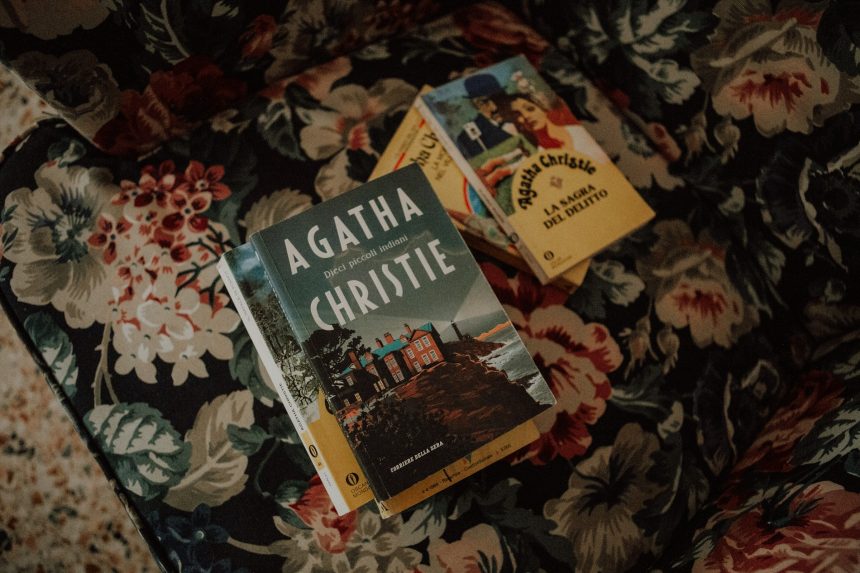
Old mysteries get a reputation for being dusty, all drawing rooms and polite suspicion. Plenty of them are nothing of the sort. Some are sharp, strange, and surprisingly modern in how they play with trust and perception.
The twelve books below were all published before 1950, and each one still reads well. They range from Victorian sensation to hard-boiled American grit, and from locked rooms to quiet psychological dread. Here they are, roughly in order of publication.
The Moonstone by Wilkie Collins (1868)

Serialized in 1868, The Moonstone follows the theft of a cursed diamond from an English country house. T. S. Eliot famously called it the first, longest, and best of modern English detective novels. That claim is debatable, but its influence on the genre is not.
The story is told through multiple narrators, each with their own blind spots. That patchwork structure feels fresh even now, and it gives the puzzle real texture. Sergeant Cuff, the investigator, is an early template for the brilliant professional sleuth.
The Hound of the Baskervilles by Arthur Conan Doyle (1902)

Doyle’s most famous Sherlock Holmes novel sends the detective to the moors of Devon to investigate a family curse. The legend of a spectral hound hangs over the Baskerville family. Holmes spends much of the book offstage, which only sharpens the atmosphere.
It works because it balances the supernatural with cold logic. The reveal is satisfying, and the setting is some of the most vivid in Victorian and Edwardian fiction. It’s also short enough to finish in a weekend.
The Mystery of the Yellow Room by Gaston Leroux (1908)

This French classic is a landmark of the locked room puzzle. A woman is attacked in a sealed chamber, and nobody can explain how the culprit escaped. The young journalist Joseph Rouletabille takes on the case with a confidence that borders on cheek.
Leroux, later known for The Phantom of the Opera, plays fair with the clues. The solution is audacious, and readers still argue over whether it’s brilliant or a little outrageous. Either way, it shows how long the impossible crime has been a favorite trick.
The Murder of Roger Ackroyd by Agatha Christie (1926)

Christie’s sixth Hercule Poirot novel caused a stir on release because of its narrative twist. Discussing the ending in detail ruins the experience, so it’s best to go in blind. The book has been debated by fans and critics for a century.
Set in the village of King’s Abbot, it shows Christie’s gift for hiding things in plain sight. Poirot is semi-retired, growing vegetable marrows, and drawn back in anyway. The fair play clues are all there on a second read.
The Maltese Falcon by Dashiell Hammett (1930)

Hammett had worked as a Pinkerton detective, and his experience gave this novel its flat, unsentimental edge. Sam Spade, a San Francisco private eye, gets tangled up with a group of liars all chasing a valuable statuette. Nobody tells the whole truth, including Spade.
The prose is lean and the dialogue crackles. Much of the hard-boiled tradition grew from this book, and it still feels tougher than many modern thrillers. The 1941 film adaptation with Humphrey Bogart helped cement its place in popular culture.
Murder on the Orient Express by Agatha Christie (1934)

A snowbound train, a murdered American businessman, and a carriage full of suspects make this one of the most recognizable setups in crime fiction. Poirot happens to be aboard and has to untangle a web of false stories. The confined setting keeps the tension tight.
Its solution is among the most discussed in the genre. The book has been adapted for screen several times, including a 2017 film directed by Kenneth Branagh. The original remains the cleanest version of the puzzle.
Rebecca by Daphne du Maurier (1938)

Rebecca isn’t a conventional detective story, but it’s built around a secret and a slow reveal. A young bride arrives at Manderley and finds herself haunted by her husband’s dead first wife. The unnamed narrator’s insecurity drives much of the suspense.
Du Maurier builds dread through household details and silences. Mrs. Danvers is still one of fiction’s great unsettling presences. Alfred Hitchcock’s 1940 film version won the Academy Award for Best Picture.
And Then There Were None by Agatha Christie (1939)
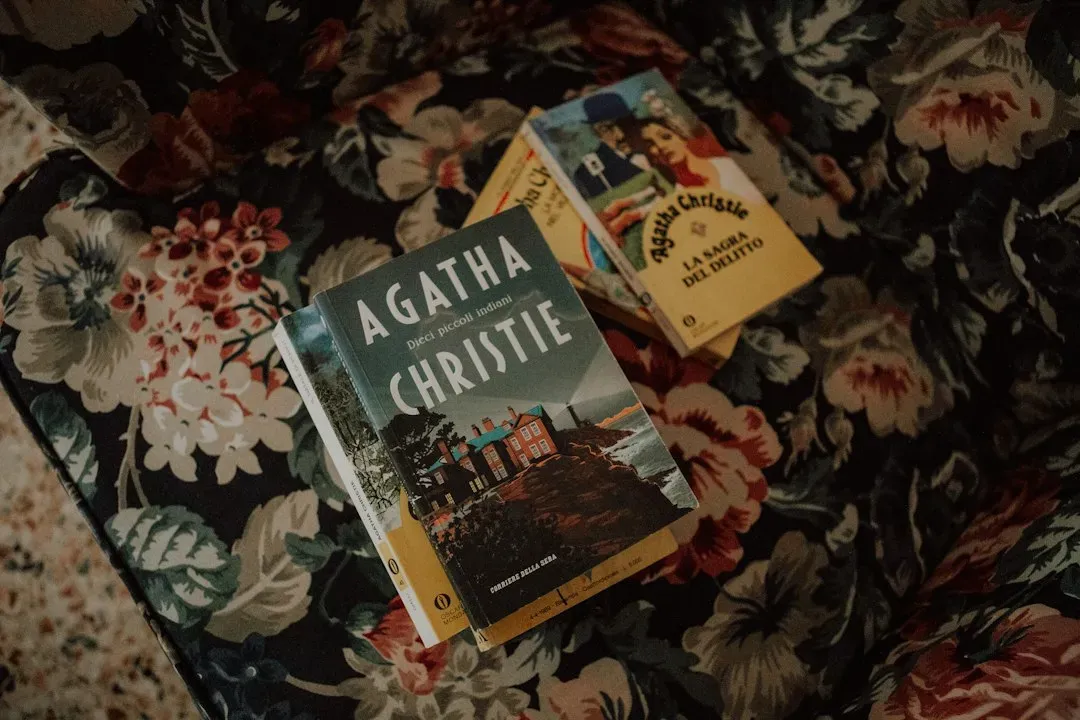
Ten strangers are lured to an island and begin to die one by one, following the pattern of a nursery rhyme. There’s no detective to rely on, so the reader is as stuck as the characters. Christie herself regarded it as one of her hardest plots to pull off.
It’s widely cited as one of the best selling mystery novels of all time. The paranoia feels timeless, and the structure has been copied endlessly. Few imitators match its efficiency.
The Big Sleep by Raymond Chandler (1939)

Chandler’s first novel introduces Philip Marlowe, a Los Angeles detective hired by a wealthy, ailing general. What starts as a blackmail case spreads into something murkier. The plot is famously tangled, and Chandler reportedly could not say who killed one of the characters.
Still, people don’t read it for tidy solutions. The similes, the moral weariness, and the sense of a corrupt city are the draw. It set a stylistic bar that crime writers still chase.
The Nine Tailors by Dorothy L. Sayers (1934)

Lord Peter Wimsey’s adventure unfolds in the Fen country, where an unidentified body turns up in a fresh grave. Church bell ringing, known as change ringing, plays a central role in the plot. Sayers researched the subject carefully, and it shows.
The novel is richer and more atmospheric than many of its peers. It blends puzzle, setting, and a flood sequence that’s genuinely gripping. For readers who want literary heft with their clues, it delivers.
The Daughter of Time by Josephine Tey (1951)

Note that this one falls just outside the cutoff, so the better Tey pick from the period is The Franchise Affair, published in 1948. It’s based loosely on the real eighteenth century case of Elizabeth Canning, and it follows a country solicitor defending two women accused of kidnapping a girl. The question is who is lying.
Tey keeps the tone quiet and the moral questions sharp. It’s a courtroom style puzzle without much violence, and it handles public opinion in a way that feels uncomfortably current. The Franchise Affair is a strong pick for anyone who likes character driven mysteries.
Gaudy Night by Dorothy L. Sayers (1935)

Set at an Oxford women’s college, this novel pairs a poison pen campaign with a long running romance between Harriet Vane and Lord Peter Wimsey. The mystery is modest in scale, yet the themes of work, independence, and integrity run deep. Many readers consider it Sayers’ finest book.
It’s slower than most entries here, and that’s part of the charm. The academic setting is drawn with obvious affection. It proves a mystery can also be a novel of ideas.