
A name on a book cover isn’t always the name on the author’s birth certificate. For centuries, writers have hidden behind other names, whether for safety, privacy, or plain strategy. Some of the best known novels in English first reached readers this way.
The reasons vary a lot. A few authors wanted to dodge social judgment, while others wanted their work read without the weight of a famous name. Here are ten classics that began life under a disguise.
Jane Eyre by Currer Bell

Charlotte Brontë published Jane Eyre in 1847 under the name Currer Bell. The name hid her sex, which mattered in a literary world that often judged women writers more harshly.
The novel was a major success almost at once. Brontë’s real identity became widely known within a few years, after the sisters’ publishing secrets were exposed.
Wuthering Heights by Ellis Bell

Emily Brontë’s only novel appeared in 1847 under the name Ellis Bell. Like her sisters, she chose a gender neutral name with initials that matched her real one.
The book puzzled many early reviewers, who disagreed about who had written it. Emily died in 1848, so she never saw it become one of the most studied novels in the language.
Agnes Grey by Acton Bell

Anne Brontë’s first novel came out in 1847 as the work of Acton Bell. It followed a governess and drew on Anne’s own work in that job.
It was published together with Wuthering Heights in a three volume set. Anne’s second novel, The Tenant of Wildfell Hall, also appeared under the Acton Bell name in 1848.
Middlemarch by George Eliot

Mary Ann Evans wrote as George Eliot, and Middlemarch appeared in installments in 1871 and 1872. She had adopted the male name earlier, partly so her fiction would be taken seriously apart from her reputation as a critic and translator.
Her private life also played a part, since she lived openly with the writer George Henry Lewes, who was married to someone else. The pen name gave her some distance from the gossip.
Adam Bede by George Eliot

Adam Bede was her first full length novel, published in 1859. Its success caused curiosity about the author, and a man named Joseph Liggins was wrongly rumored to be behind the name.
That pushed Evans to reveal herself. The episode shows how a pen name could be tough to maintain once a book became a hit.
Alice’s Adventures in Wonderland by Lewis Carroll

Charles Dodgson was a mathematics lecturer at Oxford, and he used the name Lewis Carroll for his fiction. Alice’s Adventures in Wonderland was published in 1865.
The pen name kept his creative writing separate from his academic work. He built the name by turning his given names into Latin and then back into English.
Frankenstein, Published Anonymously in 1818
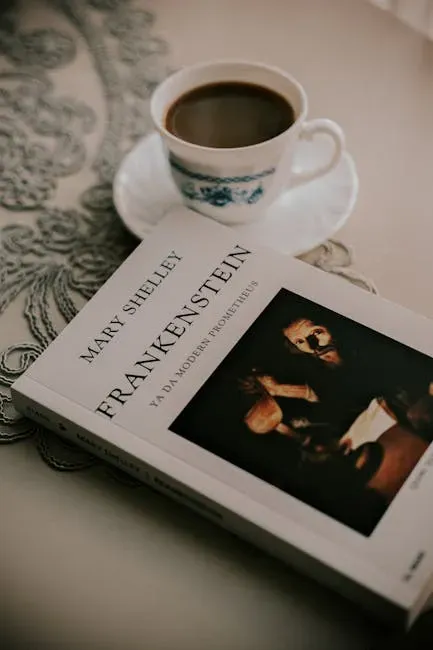
Mary Shelley’s novel first appeared without any author’s name at all. The 1818 edition carried a preface by her husband Percy Bysshe Shelley, which led some readers to assume he had written it.
Anonymity is a cousin of the pen name, and it was common then. Her name appeared on the second edition in 1823.
Sense and Sensibility by A Lady

Jane Austen’s first published novel appeared in 1811 with the credit “By a Lady.” Writing for money was seen as unfashionable for women of her class, so she stayed out of view.
Her later books were credited to the author of the earlier ones. Her name was only attached to her work after her death in 1817.
Lolita Style Cover Names: The Man in the Iron Mask Era Rival, Villette by Currer Bell

Charlotte Brontë kept the Currer Bell name for Villette in 1853. By then her identity was known to many readers, yet the name stayed on the title page.
The novel draws on her time teaching in Brussels. It shows that a pen name could outlast its secrecy and become a brand.
Nineteen Eighty-Four by George Orwell

Eric Arthur Blair published as George Orwell, and Nineteen Eighty-Four came out in 1949. He had first used the name for Down and Out in Paris and London in 1933, reportedly to spare his family embarrassment.
He chose Orwell after a river in Suffolk. The novel became a lasting reference point for discussions of surveillance and political control.