


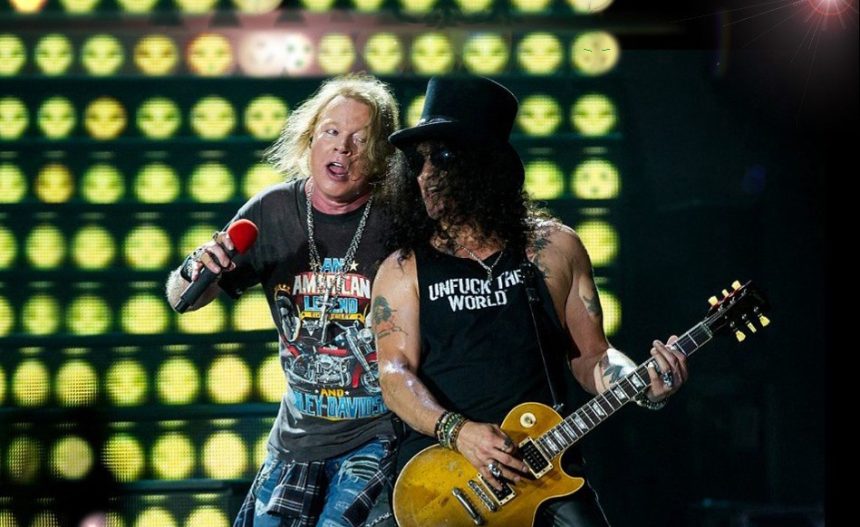
There’s a strange kind of curse that follows certain songs. They get written in a rush, almost as an afterthought, and then somehow end up defining an entire career. The band moves on, grows, experiments, records albums they’re genuinely proud of, yet the crowd only wants that one song. Some musicians make peace with it over time. Others never do, and their public complaints have become almost as famous as the songs themselves.
1. Radiohead and “Creep”

Long before Radiohead became the band behind OK Computer and Kid A, they were the band behind one deeply uncomfortable breakup anthem. Thom Yorke has been openly hostile about the song for decades, once telling a Montreal crowd who wouldn’t stop shouting for it to essentially back off. Thom Yorke has called Radiohead’s ultra-famous 1993 single “crap” and once, when a Montreal crowd were baying for it, he said: “f*** off, we’re tired of it”.
Guitarist Jonny Greenwood wasn’t much kinder to it either, at least at first. Some members hated the song before it was even on tape, especially guitarist Jonny Greenwood, and Greenwood thought the song was too quiet and boring, so he inserted loud, screeching palm mutes. Those very mutes turned into the song’s most recognizable hook, which is either ironic or fitting depending on how you look at it. The band has softened somewhat in recent years, occasionally dusting the track off for festival sets, but the relationship remains complicated.
2. Nirvana and “Smells Like Teen Spirit”

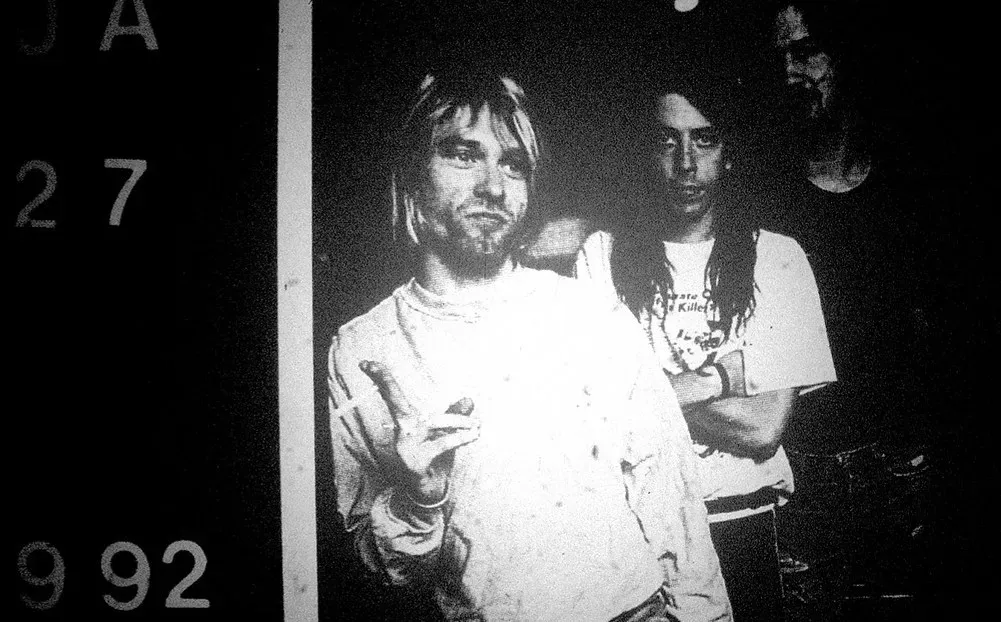
Grunge’s defining anthem arrived almost against Kurt Cobain’s wishes for it to become anything more than an album track. As the song’s fame ballooned, so did Cobain’s frustration with it. The lead singer of Nirvana, Kurt Cobain, began to resent and despise the song due to its overexposure, feeling that countless other incredible tracks by Nirvana deserved the same recognition.
Part of the issue, according to some who’ve studied the band’s catalog, is that the song stood out stylistically from the rest of their work. “Smells Like Teen Spirit” is far more upbeat than the rest of the band’s grunge discography and, by comparison, the song’s popularity misled audiences regarding the band’s actual style, undermining their other songs to the point that he didn’t want to perform it. It’s a familiar pattern. The song that opens the door to mainstream success is often the one the band feels least represents them.
3. Oasis and “Wonderwall”


Few songs have been more played, covered, and busked than “Wonderwall,” and few frontmen have been more vocal about resenting that fact than Liam Gallagher. His complaints are blunt and, in typical Gallagher fashion, not shy about it. “I can’t f***ing stand that f***ing song! Every time I have to sing it I want to gag,” Liam Gallagher has said.
The song’s inescapability seems to bother him almost as much as the song itself. “You go to America, and they’re like: ‘Are you Mr. Wonderwall?’ You want to chin someone.” Noel Gallagher, who actually wrote the track, hasn’t exactly defended it with enthusiasm either. “Wonderwall” is adored by millions, but it’s hard to rank the band members themselves among the millions who enjoy listening to it, with both Liam and Noel Gallagher having been vocal about not being fans of the record that helped turn them into a household name.
4. Led Zeppelin and “Stairway to Heaven”


It’s often called rock’s answer to the Mona Lisa, an eight minute epic that’s shaped classic rock radio for over fifty years. Robert Plant, the man who sang it night after night, grew to dread it. When it was first released in 1971, “Stairway to Heaven” became a concert staple and, in turn, became Plant’s direct route to hell, with the singer later reflecting, “I’d break out in hives if I had to sing that song in every show.”
His feelings ran deep enough that he’s taken unusual steps to distance himself from it outside of concerts too. The band’s lead singer and songwriter has not only openly criticized “Stairway to Heaven” in recent memory, but also infamously donated $10,000 to a non-profit radio station in Portland called KBOO Radio just to get them to stop playing “Stairway to Heaven.” Guitarist Jimmy Page, notably, sees the song in a completely different light, calling it the truest expression of the band as a unit. It’s a rare case where bandmates split so sharply on the same three minutes and forty seconds, or in this case, eight.
5. Guns N’ Roses and “Sweet Child O’ Mine”

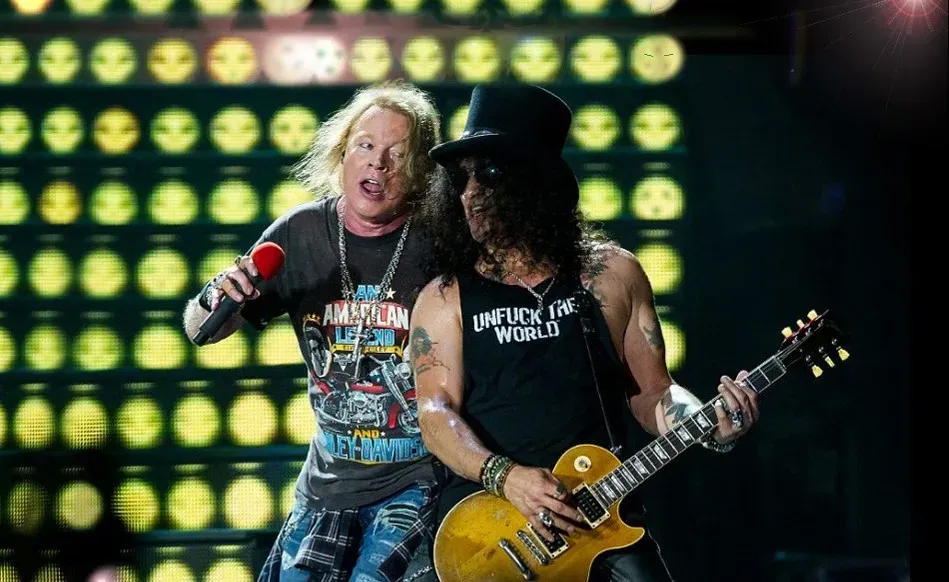
“Sweet Child O’ Mine” began as something of a joke, a riff Slash reportedly wrote almost as a throwaway exercise, and it went on to become one of the most recognizable guitar intros in rock history. Slash himself didn’t hide his early disdain for the song. Despite being one of the biggest songs in rock history, proliferating pop culture as we know it, the track is widely disliked by the band, with guitarist Slash having a particularly dim view of the song.
That resentment has mellowed with time, though it took years to get there. “I hated it for years, but it would cause such a reaction, so I’ve finally gotten to appreciate it.” With well over a billion streams on YouTube alone, it’s safe to say the band’s early skepticism was a minority position, even among themselves.
6. R.E.M. and “Shiny Happy People”


R.E.M. built a reputation on introspective, moody college rock, which made “Shiny Happy People” feel like an outlier from the start. Frontman Michael Stipe never fully embraced the song’s bubbly tone. Michael Stipe of R.E.M. once expressed his dissatisfaction with the band’s hit “Shiny Happy People,” and while he specified that he didn’t exactly “hate it,” he did admit to not wanting to sing it, once labeling it “a fruity pop song written for children.”
The contrast with the rest of R.E.M.’s catalog is part of what makes the song so jarring to longtime fans. That statement is a stark contrast to the type of song the general public would associate with being of the R.E.M. mould, referencing the darker ‘Everybody Hurts’ or ‘Losing My Religion’ as prime examples, yet ‘Shiny Happy People’ became a monster hit. The band rarely plays it live these days, and it’s not hard to see why given Stipe’s own assessment of it.
7. The Who and “Pinball Wizard”


Pete Townshend wrote “Pinball Wizard” for the Tommy rock opera, and by his own account, he thought it was one of the weaker things he’d ever put to paper. His self criticism at the time was blunt and unsparing. From the very beginning, The Who’s Pete Townshend disliked the band’s Tommy hit, having “knocked it off” and thought, “Oh, my God this is awful, the most clumsy piece of writing I’ve ever done. Oh my God, I’m embarrassed. This sounds like a Music Hall song.”
Townshend has said the song’s simple structure, verses of identical length with no middle eight, only reinforced his doubts as he wrote it. He scribbled it out and all the verses were the same length with no kind of middle eight, and thought it was going to be a complete dud, but he carried on anyway, and the song has remained one of the musician’s greatest hates, yet a greatest hit among The Who’s catalog. Decades later, it’s still one of the most instantly recognizable tracks the band ever recorded, a dud that somehow never stopped selling.
8. Simple Minds and “Don’t You (Forget About Me)”


Simple Minds almost passed on what became their signature song entirely, and other artists turned it down before them for similar reasons. Simple Minds strongly disliked their hit song “Don’t You (Forget About Me)” and almost didn’t even record it, with a few other artists, such as Billy Idol and Bryan Ferry, also initially declining to record the song, though despite not writing it themselves, Simple Minds eventually agreed to record it for the movie The Breakfast Club.
The band’s reluctance largely stemmed from the fact that they hadn’t written the song themselves, an unusual position for a group that prided itself on its own material. It became their only number one hit in the United States, forever tying them to a movie soundtrack rather than their own studio albums. That tension between commercial success and creative ownership has followed the band for decades.
9. Pulp and “Common People”

Drummer Nick Banks didn’t hear the anthem everyone else eventually heard when Jarvis Cocker first brought “Common People” to the band. His initial reaction, given years later in a radio interview, was far from glowing. Pulp drummer Nick Banks has said that he originally thought the band’s hit ‘Common People’ was a “tuneless dirge”.
He wasn’t kinder about Cocker’s early demo either. Banks replied, “It sounded a bit of tuneless dirge at first, to be honest,” and went on to say that he thought Jarvis Cocker’s initial demo recording of the track was a “load of rubbish,” though he admitted he began to appreciate the song once he heard the whole band record it. The song went on to be voted the ultimate Britpop anthem by BBC Radio 6 Music listeners, beating out tracks by Blur, The Verve, and Oasis, which makes Banks’s first impression look almost comically wrong in hindsight.
10. Beastie Boys and “Fight for Your Right (To Party!)”


Written in about five minutes as a joke, “Fight for Your Right” was meant as satire aimed squarely at the frat culture of the mid 1980s. The problem was that almost nobody caught the joke. “Fight For Your Right” was a parody of the frat culture of the day, but rather than being treated with the desired effect they intended, the track instead became an anthem celebrating the very thing it was poking fun at, and because it was their first hit single, this meant it was a lot of people’s first introduction into The Beastie Boys’ world.
Mike Diamond has since expressed genuine discomfort with how the message landed, or rather, failed to land. “The only thing that upsets me is that we might have reinforced certain values of some people in our audience when our own values were actually totally different,” Michael Diamond later observed, adding that “there were tons of guys singing along to ‘Fight for Your Right’ who were oblivious to the fact it was a total goof on them.” The group spent much of their later career actively working to shed the frat rap image that single had accidentally cemented, and largely succeeded, even if the song itself still gets played at parties it was originally written to mock.
What ties these ten stories together isn’t bitterness for its own sake. It’s the strange mismatch between what an artist intends and what an audience actually takes from a song once it’s out in the world. A joke gets read as sincere, a throwaway riff becomes iconic, a quiet acoustic demo turns into a stadium singalong nobody can escape. Some of these musicians have made peace with that gap over time. Others, decades later, still haven’t, and honestly, that’s part of what makes these songs so fascinating. The hit outgrew its creators, and in a few cases, it seems the creators never quite forgave it for that.


