Weather in movies rarely stays in the background for long. A storm can trap characters together, a heat wave can fray tempers until something snaps, and a blizzard can turn a simple journey into a fight for survival. Filmmakers have long understood that atmosphere, in the literal sense, shapes mood, pacing, and even plot in ways dialogue alone can’t manage.
The ten films below use weather not as a backdrop but as an active force. Some were shot under brutal real conditions, others built their storms on soundstages, but in every case the skies do real narrative work.
1. Twister (1996)
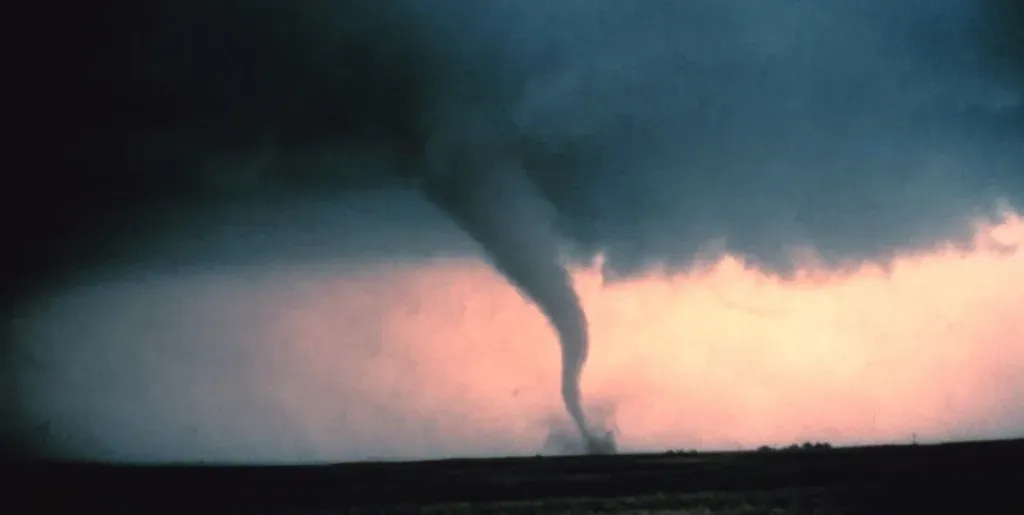
Long before extreme weather became a streaming obsession, “Twister” turned tornado chasing into a summer blockbuster. The film followed storm researchers racing across Oklahoma to plant sensors inside funnel clouds, and its special effects, groundbreaking for the mid nineties, made the tornadoes feel like characters with their own menace. The production actually chased real storm systems during filming to capture authentic sky textures before blending them with computer generated funnels.
The film’s success helped popularize storm chasing as a hobby and even a career path, something meteorologists still reference when talking about public interest in severe weather. A sequel, “Twisters,” arrived in 2024 and leaned even harder into real footage of supercells, showing that audiences still find tornado science compelling three decades later. The original remains a reference point for how weather can drive both plot and box office numbers.
2. The Day After Tomorrow (2004)
Roland Emmerich’s disaster epic imagined a sudden global cooling event triggered by melting polar ice, flash freezing New York City and burying much of the northern hemisphere in ice within days. Scientists at the time pushed back on the compressed timeline, noting that real climate shifts unfold over much longer periods, but the film’s visual language of a frozen Statue of Liberty stuck in public memory. It remains one of the most referenced climate disaster films whenever extreme cold events make headlines.
The production used a mix of physical sets, water tanks, and early 2000s CGI to simulate flooding and ice storms overtaking Manhattan. Despite scientific liberties, the film sparked genuine public conversation about abrupt climate change, a topic that has only grown more urgent in recent years. Climate researchers have occasionally cited it as a cultural touchstone even while correcting its science.
3. The Perfect Storm (2000)
Based on Sebastian Junger’s nonfiction book, this film dramatized the real 1991 Halloween Nor’easter that sank the Andrea Gail fishing boat off the coast of Massachusetts. Wolfgang Petersen’s production combined location shooting with massive water tanks to recreate waves that reportedly reached heights compiled from actual meteorological data on that storm system. The convergence of three separate weather systems, a hurricane, a cold front, and a nor’easter, gave the film its title and its terrifying premise.
George Clooney and Mark Wahlberg starred as fishermen who chose to sail into the deteriorating conditions rather than turn back, a decision inspired by the real crew’s documented final radio transmissions. The film’s technical team worked closely with wave simulation experts to make the ocean itself feel like an antagonist rather than scenery. It remains a benchmark for how practical effects and real weather history can be merged convincingly.
4. Singin’ in the Rain (1952)
Not every film on this list uses weather for menace. The title sequence of “Singin’ in the Rain” turns a downpour into pure joy, with Gene Kelly dancing through puddles and swinging from a lamppost in one of cinema’s most recognized scenes. The rain wasn’t natural at all, it was created using fire hoses and specially rigged water tanks, mixed with milk in some accounts to make it show up better on camera.
Kelly reportedly filmed the sequence while running a high fever, which makes the effortless energy of the performance even more notable. The scene has been studied in film schools for decades as an example of using weather to express emotional state rather than plot tension. It remains frequently cited in American Film Institute rankings of the greatest movie musical sequences.
5. Fargo (1996)
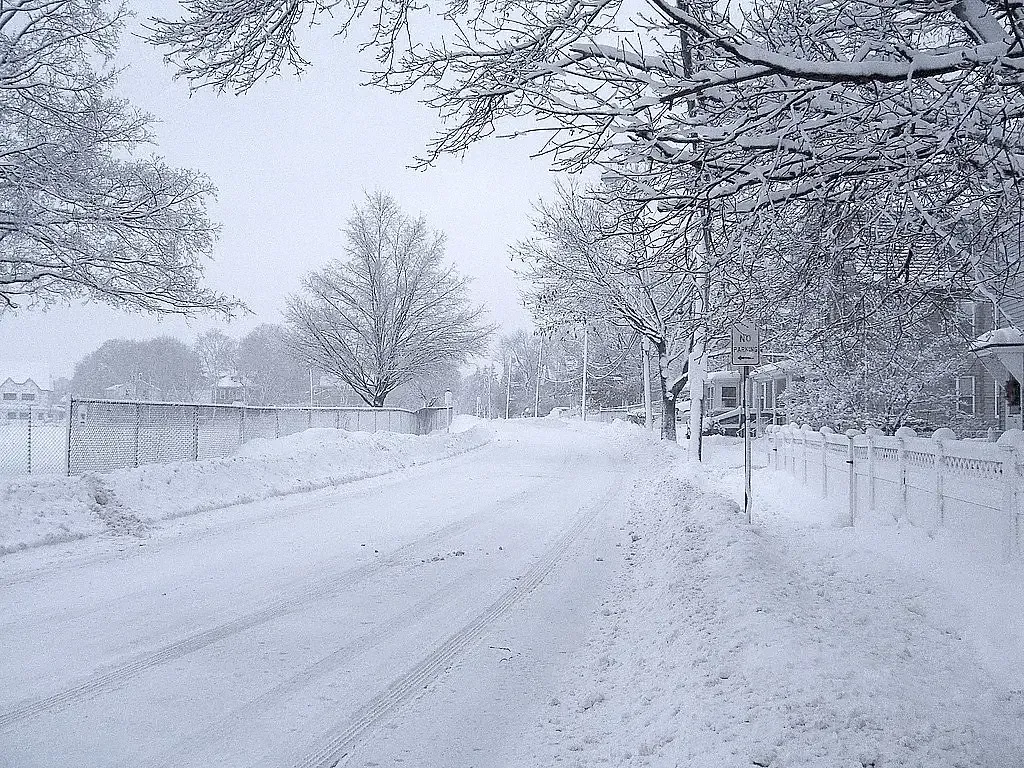
The Coen brothers used the flat, snow covered landscape of Minnesota and North Dakota to create a sense of isolation that mirrors the story’s bleak comedy and violence. Persistent snowfall in the film isn’t just seasonal detail, it slows characters down, muffles sound, and makes the rural setting feel both familiar and eerie. The production shot largely in genuinely cold conditions, giving the actors’ breath and the crunch of boots on snow an unforced authenticity.
Frances McDormand’s performance as a very pregnant, very patient police chief plays against the harshness of the winter setting, creating a contrast the Coens leaned into deliberately. The whiteout conditions late in the film become almost a character of their own, hiding and revealing violence in equal measure. Critics have long pointed to the snow as essential to the film’s tone rather than incidental scenery.
Partner offer
6. Groundhog Day (1993)

Set during the real Groundhog Day festivities in Punxsutawney, Pennsylvania, this comedy uses a relentless winter storm as the mechanism trapping Bill Murray’s character in a repeating time loop. The blizzard that strands him in the small town becomes both plot device and metaphor, a literal storm mirroring his emotional stagnation. Filming actually took place largely in Woodstock, Illinois, standing in for Punxsutawney, with fake snow supplementing whatever winter weather the crew got naturally.
The film has become so associated with the holiday that meteorologists and weather commentators reference it every February when discussing the actual groundhog prediction tradition. Its central joke, a man endlessly reliving the same snowy day, has entered common language as shorthand for repetitive frustration. The storm never really lifts until the character changes, tying the weather directly to personal growth in a way few comedies attempt.
7. Into the Wild (2007)

Sean Penn’s adaptation of Jon Krakauer’s book follows Christopher McCandless into the Alaskan wilderness, where seasonal weather ultimately becomes the force that traps and kills him. The real McCandless died in 1992 after a swollen river, swollen from snowmelt, cut off his return route from an abandoned bus he’d been living in. The film treats this geographical and meteorological detail with care, showing how a passable creek in one season becomes an impassable river in another.
Production shot on location in Alaska and other remote areas to capture the genuine harshness of the terrain and climate shifts McCandless faced. The film doesn’t dramatize a single storm so much as the slow, seasonal turn of weather that isolates its subject completely. It remains a sobering example of how real climate and geography, not invented drama, can define a true story’s tragic arc.
8. The Revenant (2015)
Alejandro González Iñárritu’s brutal survival film was shot largely in chronological order using natural light, which meant the production chased freezing conditions across Canada and eventually Argentina when snow became scarce. Leonardo DiCaprio’s character crawls, swims, and stumbles through genuinely harsh winter landscapes, and the physical toll on the cast was well documented at the time of release. The decision to avoid artificial snow and lighting whenever possible gave the film an unusually authentic, punishing texture.
Cold water scenes were filmed in near freezing rivers, and the crew reportedly dealt with temperature swings and unpredictable weather that extended the shoot considerably. DiCaprio won the Academy Award for Best Actor for the role, and interviews from the period frequently mentioned the physical demands imposed by the real conditions. The film stands as one of the more extreme examples of a production letting actual weather dictate its schedule and visual style.
9. Jaws (1975)
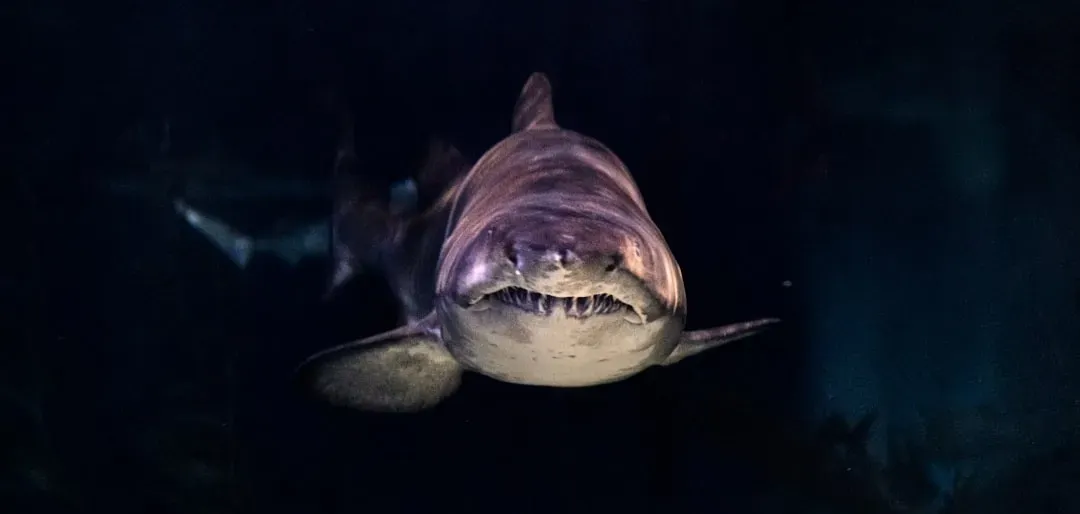
Weather doesn’t just mean storms and snow, calm water mattered just as much on Steven Spielberg’s notoriously difficult shoot off Martha’s Vineyard. The production needed flat, glassy seas for continuity, but ocean conditions rarely cooperated, leading to constant delays that pushed the shoot’s budget and schedule far past original estimates. Choppy water repeatedly ruined takes and damaged the mechanical shark, forcing Spielberg to rely more on suggestion and suspense than planned.
Ironically, those weather related setbacks are often credited with improving the film, since audiences saw less of the unconvincing mechanical shark and more tense anticipation. The unpredictable Atlantic conditions became an unintentional creative partner, shaping the film’s famous restraint. Spielberg has discussed in various interviews over the years how the ocean itself nearly derailed the production entirely.
10. Interstellar (2014)
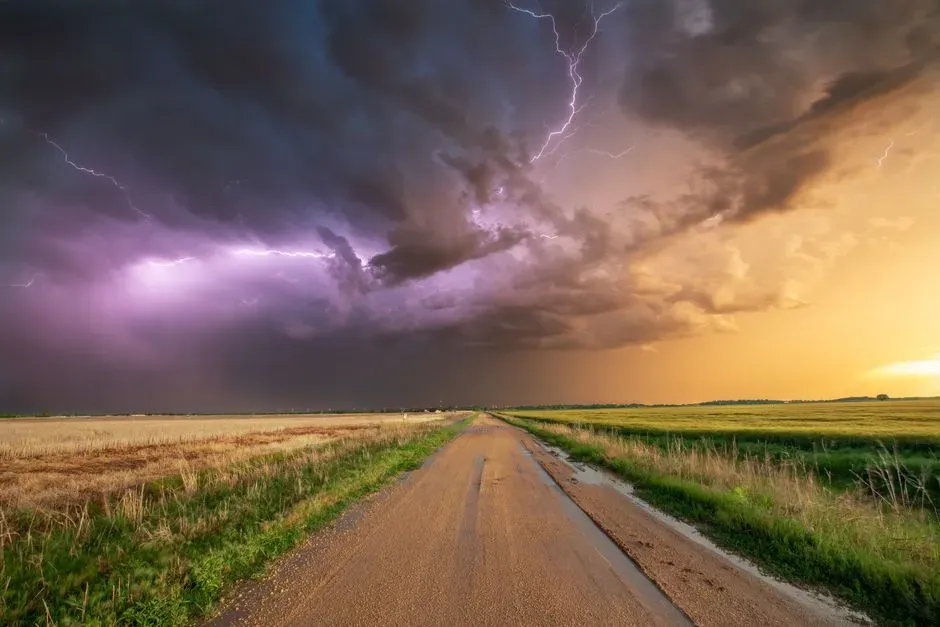
Christopher Nolan’s science fiction epic opens on a near future Earth ravaged by dust storms and crop blight, conditions inspired partly by real historical events like the 1930s Dust Bowl. The oppressive, choking weather on the family farm establishes the desperation driving the plot’s search for a new habitable world. Nolan reportedly consulted historical accounts and footage of Dust Bowl era storms to give these early scenes a grounded, documentary like texture.
Later sequences involving the planet Miller, dominated by massive tidal waves tied to its proximity to a black hole, use weather and gravitational extremes almost interchangeably as sources of danger. Physicist Kip Thorne worked as a scientific consultant on the film, lending credibility to how these extreme planetary conditions were depicted. The contrast between Earth’s slow environmental collapse and the alien planet’s violent instant threats gives the film two very different weather driven registers of fear.
These ten films show how differently weather can function once it becomes part of a story rather than simple set dressing. Sometimes it traps characters, sometimes it exposes them, and sometimes, as in Gene Kelly’s rain soaked dance, it simply lets them feel something fully. Real storms, real snow, and real historical weather events gave several of these productions a rawness that no amount of digital effects could fully replace.
Partner offer
Planning a trip to Vegas?
Compare hotel rates and show tickets on VEGAS.com.