
Liner notes tell a tidy story, but the tidy story is rarely the whole one. Behind plenty of records that shaped rock, soul, and pop history, there was someone in the control room doing producer level work while a bigger name’s signature ended up on the sleeve. Some of these people got a courtesy mention as “engineer” or “arranger.” Others got nothing at all. This is a look at ten of them, and the records they quietly built.
1. Jack Nitzsche and Phil Spector’s Wall of Sound

Jack Nitzsche is often called the unheralded architect behind the Wall of Sound, and the description fits. Nitzsche became Spector’s first-choice arranger, and by extension, one of the architects behind Spector’s Wall of Sound, working on classic releases by the Crystals, Ike and Tina Turner, the Ronettes and the Righteous Brothers. He was paid a flat arranging fee, not a producer’s royalty, even though his orchestrations were central to how those records actually sounded.
His work didn’t stop with Spector. In the fall of 1964, he played on sessions for the Rolling Stones album The Rolling Stones, Now!, beginning a long association with the group that would find him contributing to such Stones recordings as “Play with Fire,” “Paint It Black,” and “You Can’t Always Get What You Want” (choral arrangement). Nitzsche himself was matter of fact about the arrangement, once saying he felt no bitterness over the modest pay because “my fee was fifty dollars a song. I don’t feel any bitterness about the money or payment whatsoever. The credits helped me secure employment for years.”
2. Glyn Johns and the Real Story Behind Let It Be

Before Phil Spector ever touched the tapes, Glyn Johns had already spent months trying to turn the Beatles’ chaotic Get Back sessions into a coherent album. He wasn’t just recording; he was shaping arrangements and sequencing, functionally producing the record in everything but name. Glyn Johns, the man you see “practically arranging” the recording sessions in the Get Back documentary, is credited as an “engineer.”
Johns later asked the band directly for a production credit and was turned down by circumstance more than by malice. He wrote that he approached each member of the band separately asking for a production credit, making clear he wasn’t asking for a royalty, and that Paul, George, and Ringo had no objection, but John was suspicious and could not understand why he was not asking for a royalty. The tapes ended up with Phil Spector instead, and Johns has never hidden his opinion of the result, once saying flatly that “John gave the tapes to Phil Spector, who puked all over them, turning the album into the most syrupy load of bullshit I have ever heard.”
3. Geoff Emerick and the Sound of Sgt. Pepper’s

Geoff Emerick was barely out of his teens when he became the Beatles’ primary engineer for Revolver and Sgt. Pepper’s Lonely Hearts Club Band, two albums that redefined what a studio recording could sound like. He pioneered close mic placements, reversed tape effects, and unconventional compression techniques that gave those records their unmistakable texture, all under the formal title of engineer rather than producer.
George Martin received, and deserved, the production credit for those albums, but Martin himself acknowledged in interviews and his own writing that Emerick’s technical instincts were inseparable from the finished sound. Emerick’s innovations became industry standard practice within a few years, adopted by studios far beyond Abbey Road, yet his name rarely comes up outside of dedicated Beatles scholarship.
4. Norman Smith and the Early Sound of Two Legendary Bands

Norman Smith engineered the Beatles’ first several albums before EMI moved him into production work of his own, most notably with Pink Floyd’s debut, The Piper at the Gates of Dawn. On the early Beatles records, Smith functioned as a hands on collaborator, helping shape vocal balance and instrumental tone at a time when George Martin was still learning how rock and roll sessions differed from the orchestral work he knew.
Smith’s engineering credit on those Beatles records has always taken a back seat to Martin’s producer billing, even though contemporaries described Smith as deeply involved in the creative decisions, not just the technical ones. His later production work with Pink Floyd gave him the credit line, but the earlier contributions that helped define the Beatles’ sound largely went unrecognized outside industry circles.
5. Ken Scott and Bowie’s Formative Years

Before Ken Scott became David Bowie’s official co-producer on Hunky Dory and Ziggy Stardust, he engineered Bowie’s earlier records, Space Oddity and The Man Who Sold the World, while Tony Visconti held the producer credit. Scott’s career included work as co-producer or engineer during the era that yielded Space Oddity, The Man Who Sold the World, Hunky Dory, The Rise and Fall of Ziggy Stardust and the Spiders From Mars, Aladdin Sane, and Pin Ups.
Scott went on to receive proper co-production credit once Bowie asked him directly to step into that role, a shift he later described plainly, recalling that Bowie said he was going to produce the album himself but didn’t think he could do it, so Scott co-produced it with him, which led to Hunky Dory. The earlier records, though, still list him only as engineer, despite the sonic groundwork he laid for what came next.
6. Chips Moman and the Sound of American Studios

Chips Moman ran American Sound Studio in Memphis, and the house band he assembled there became the secret ingredient behind a string of late 1960s soul and pop records, including sessions tied to Dusty Springfield’s Dusty in Memphis. Moman’s arranging instincts and his musicians’ feel shaped the groove of that album even though the official production credits went to Jerry Wexler, Tom Dowd, and Arif Mardin, the Atlantic Records executives who oversaw the sessions.
Partner offer
Moman’s studio and its musicians also backed Elvis Presley’s comeback recordings and Wilson Pickett’s biggest hits, work that historians of Memphis soul consistently point to as foundational. The credit lines on those releases rarely mention the man whose studio and players made the sound possible in the first place.
7. Bones Howe and the Sunshine Pop Sound

Bones Howe engineered and later produced records for the Association, the Mamas and the Papas, and the Fifth Dimension, helping define the polished, harmony rich sound that dominated American radio in the mid to late 1960s. Early in his career, much of his contribution came through engineering credits while producers with bigger name recognition took the billing for records he helped construct from the ground up.
Howe eventually earned producer credits of his own once his reputation caught up with his output, working later with the Fifth Dimension on hits like “Aquarius/Let the Sunshine In.” Still, several of the earlier sessions that established the sonic template for sunshine pop trace back to his ears more than to the names printed on the labels.
8. Tom Wilson and the Shift in Bob Dylan’s Sound
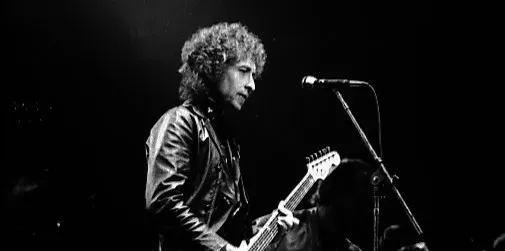
Tom Wilson produced Bob Dylan’s shift from acoustic folk to electric rock across Bringing It All Back Home and parts of Highway 61 Revisited, work that changed the direction of popular music. He was replaced partway through the Highway 61 sessions, and much of the credit for Dylan’s electric reinvention has settled on the producer who finished the album rather than the one who set the direction.
Wilson also produced the Velvet Underground’s earliest recordings, helping shape a sound that would influence decades of alternative rock, yet his name carries far less recognition than the artists he worked with. Music historians have increasingly worked to correct this, but casual listeners rarely encounter his name outside of detailed liner note research.
9. Suzanne Ciani and the Unseen Synthesizer Work

Suzanne Ciani built some of the most recognizable electronic sounds of the 1970s and 1980s, contributing Buchla synthesizer textures to commercial jingles, film scores, and pop recordings, often without a credit line to show for it. Her work shaped the sonic identity of records and advertisements that reached millions of listeners who had no idea a specific musician, rather than a generic synthesizer patch, was behind those sounds.
Because so much of her early studio work was commissioned as session work rather than formal production, contracts frequently left her name off the finished releases entirely. It has taken decades, along with a renewed interest in electronic music history, for her contributions to receive the kind of recognition that producers with similar influence typically got at the time.
10. Eddie Kramer and the Engineering Behind Hendrix’s Legacy

Eddie Kramer engineered Jimi Hendrix’s studio albums, including Are You Experienced and Electric Ladyland, working closely with Hendrix on guitar tones and studio effects that became inseparable from the finished records. Early pressings and reissues in different territories handled engineering credits inconsistently, and Kramer’s name was sometimes left off releases entirely despite his direct involvement in shaping the recordings.
Kramer later became a vocal advocate for proper studio credit in the music industry, partly because of his own experience watching engineering contributions get absorbed into an artist’s or producer’s reputation. His work on Hendrix’s catalog is now widely documented, but for years the man behind some of rock’s most experimental studio sounds worked largely in the background.
The pattern across all ten of these stories is the same. Studio credit in the pre digital era depended on contracts, egos, and label politics as much as it depended on who actually did the work. The people who shaped these records often knew exactly what they contributed, even when the sleeve told a simpler story.
Partner offer
Planning a trip to Vegas?
Compare hotel rates and show tickets on VEGAS.com.