Every now and then, a song lands so perfectly with an artist that it’s almost impossible to imagine anyone else singing it. The voice, the moment, the production – it all feels inevitable. What most people don’t realize is that some of the most iconic recordings in pop history were never meant for the people who made them famous.
Songs get passed around, turned down, shelved, and redirected all the time. Even when a song is written with someone specific in mind, the desired singer doesn’t always provide the vocals for the final track. Sometimes a rejection is just bad timing. Sometimes it’s a gut feeling. Either way, the detour changes everything. Here are ten of those detours.
1. “Umbrella” – Rihanna (Written with Britney Spears in Mind)
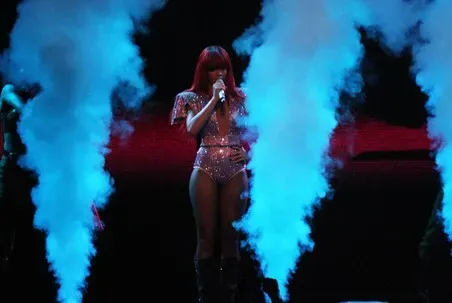
It’s difficult to conceptualize the song “Umbrella” without Rihanna’s distinct vocals and undeniable charisma. The track was a smash hit, hitting number one on the Billboard Charts in 2007 and launching Rihanna to superstardom. Yet surprisingly, writers Terius “The-Dream” Nash and Christopher “Tricky” Stewart first asked Britney Spears if she’d like to cover the song. Spears passed, reportedly because she was already deep into recording what would become her comeback album Blackout.
When Spears declined, they next approached Mary J. Blige, whose team bid on the song, though Blige turned it down. “It’s not something that got away from me, it’s just that I know what’s for me and what’s not for me,” Blige later said of the decision. Then Island Def Jam secured the song for Rihanna, and pop history was made. The track didn’t just top charts – it redefined Rihanna’s career trajectory entirely.
2. “…Baby One More Time” – Britney Spears (Written for TLC)
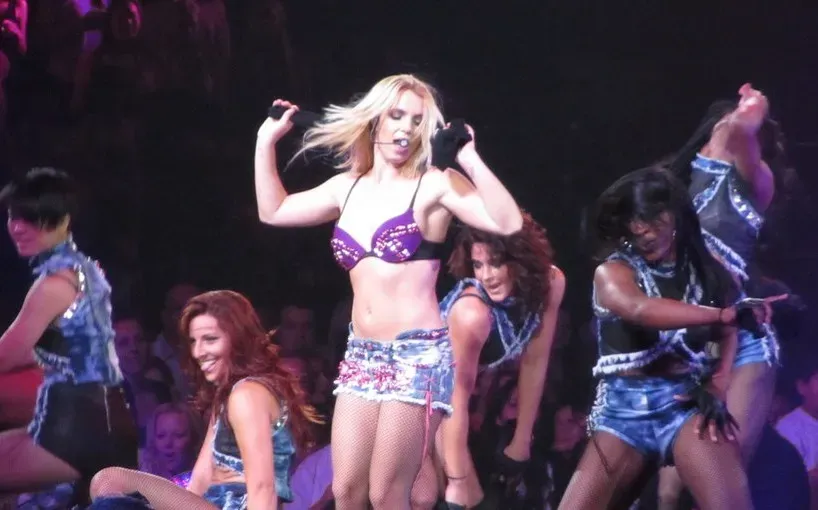
Britney Spears sent the pop world into pandemonium when she released her debut single “…Baby One More Time.” While the song helped skyrocket the pop singer to superstardom, songwriters Max Martin and Rami Yacoub initially had R&B group TLC in mind. The band rejected it, largely because they took issue with the lyric “hit me baby one more time,” which they believed sounded like it referred to domestic violence.
When the track began to circulate in search of another home, Simon Cowell, who was managing boyband 5ive at the time, made a bid for it. Cowell called Martin up to beg for the track, reportedly offering to buy him a Mercedes in exchange for it. But by that time the track was already promised to Britney, and the rest is history. She recorded the song at just 16, and it skyrocketed to number one in dozens of countries. The catchy beat, unforgettable title, and schoolgirl-themed music video made pop history.
3. “I Will Always Love You” – Whitney Houston (Written as a Farewell to Porter Wagoner)
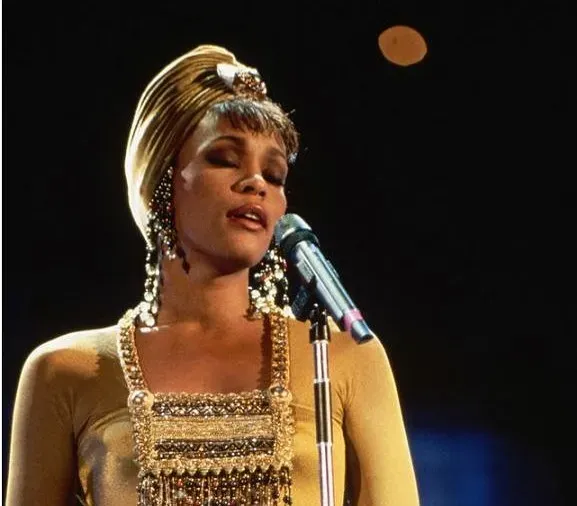
Country music singer-songwriter Dolly Parton wrote the song in 1973 for her one-time partner and mentor Porter Wagoner, from whom she was separating professionally after a seven-year partnership. She recorded it in RCA Studio B in Nashville on June 12, 1973. The song became a country hit, but its second life was far more dramatic. Parton even turned down Elvis Presley’s request in 1974 to record the song after his manager Colonel Tom Parker demanded half the publishing rights.
Houston’s version peaked at number one on the Billboard Hot 100 for a then-record-breaking 14 weeks. The single was certified diamond by the RIAA, making Houston’s first diamond single, the third female artist who had both a diamond single and a diamond album, and becoming the best-selling single by a woman in the U.S. Parton mused in a CMT interview, “Then when Whitney’s version came out, I made enough money to buy Graceland.”
4. “Nothing Compares 2 U” – Sinéad O’Connor (Written by Prince for The Family)

Prince gave the song to his funk-pop offshoot band The Family, who recorded it for their self-titled 1985 debut album. The Family version was never released as a single, and the song might have been completely forgotten had it not been for O’Connor. Much like Leonard Cohen’s “Hallelujah” only rising to prominence after Jeff Buckley’s cover, Prince’s original wouldn’t make a mark straight away. In fact, Prince was enjoying the hype of his recent “Purple Rain” success so much, he figured the song wouldn’t work at all as a solo release. Instead, he passed it onto The Family, a band he’d formed and wrote the songs for without supplying vocals.
When Sinéad O’Connor worked her magic on “Nothing Compares 2 U” for her second album, the song took on renewed life. O’Connor recorded her vocals in a single take, emphasizing a weary longing, a grief that grows exhausting over time. In December 1990, Billboard magazine named it the “#1 World Single” of 1990 at its first Billboard Music Awards. It was the second-best-selling single of 1990 in the UK and the third-best-selling song for 1990 in the US.
5. “Don’t You (Forget About Me)” – Simple Minds (Offered to Multiple Artists)

Written by Keith Forsey and Steve Schiff, “Don’t You (Forget About Me)” was first offered to Roxy Music, but Bryan Ferry passed because he was too busy with his solo work. Others who were reportedly in the running were Billy Idol, Corey Hart, and Cy Curnin of the Fixx. Ultimately, Chrissie Hynde convinced her then-husband Jim Kerr to record it with Simple Minds.
They rearranged it, recorded it, and then sort of forgot about it – that is until The Breakfast Club soundtrack exploded and the song became synonymous with the iconic teen movie. “Don’t You (Forget About Me)” became an 80s anthem and reached No. 1 on the US Charts. Unfortunately for Simple Minds, they sort of hated the song that made them famous because it was such a big departure from the rest of their music.
6. “What’s Love Got to Do With It” – Tina Turner (Passed Over by Several Artists)
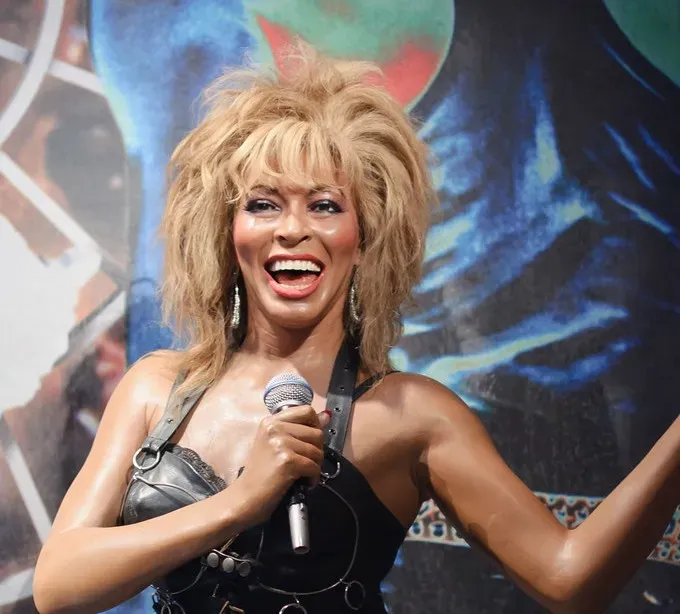
Surprisingly, “What’s Love Got to Do with It” was Tina Turner’s only No. 1 hit on the Billboard chart, but it very nearly went to someone else. Cliff Richard, Phyllis Hyman, Donna Summer and the British group Bucks Fizz were offered the track, and all declined. It’s a staggering list of near-misses for what became one of the defining recordings of the 1980s.
Phyllis Hyman wanted to record it but Arista Records boss Clive Davis said no. Still, Turner’s iconic version was a massive hit. It topped the Billboard Hot 100 for three weeks and won three Grammy Awards. The song didn’t just revive Turner’s career – it essentially created a second, entirely separate act for one of rock music’s most resilient performers.
7. “Happy” – Pharrell Williams (First Recorded by CeeLo Green)
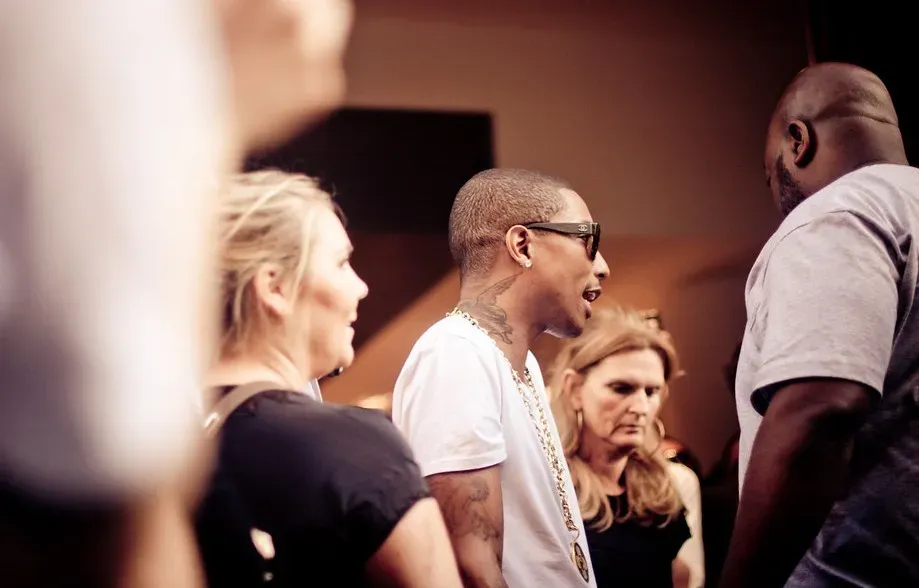
Before Pharrell Williams made “Happy” a global sensation, the song was offered to CeeLo Green. CeeLo recorded a version of the song, but his label decided not to release it. Pharrell kept the track for himself, and it became one of the best-selling singles of all time. Williams later admitted to Howard Stern that Green’s recording “burns my version.”
The feel-good anthem that dominated 2014 was actually first recorded by CeeLo Green. His version had all the same charm, but record label executives didn’t believe it would be a hit with his audience. That hesitation gave Pharrell Williams the opportunity to make it his own. Released as part of the Despicable Me 2 soundtrack, “Happy” became a global sensation. A label veto quietly handed Pharrell one of the biggest singles of his career.
8. “Since U Been Gone” – Kelly Clarkson (Originally Intended for Pink)

In 2004, American Idol alum Kelly Clarkson released her sophomore album Breakaway. The album’s second single “Since U Been Gone” was written and produced by Max Martin and Dr. Luke, who originally had Pink in mind for the record, but she passed on it. They then offered it to Hilary Duff, but she turned it down as well. That’s two firm rejections before the song found its permanent home.
Kelly Clarkson’s energetic anthem was almost sung by someone else. The songwriters, Max Martin and Dr. Luke, initially offered the song to P!nk and Hilary Duff, but both artists passed on it. Clarkson’s raw vocals and powerful delivery made the song a massive success, helping define her career. It remains one of the most enduring pop-rock crossovers of its decade, and it’s hard to picture it sounding this vital in any other voice.
9. “How Will I Know” – Whitney Houston (Written for Janet Jackson)
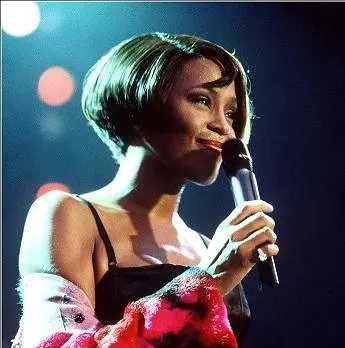
Whitney Houston’s “How Will I Know” is an infectious, charming hit defined by Houston’s soaring vocals. Originally written by songwriting duo George Merrill and Shannon Rubicam, it was actually specifically envisioned for Janet Jackson. Jackson passed on it because she was preparing to release her landmark album Control, a project that would define its own chapter of pop history on entirely different terms.
Written for Janet Jackson – who passed on it as she was about to release her groundbreaking Control album – Brenda Andrews at Irving Music played the demo for A&R icon Gerry Griffith who was song-hunting for a “new young singer.” That singer wound up being Whitney Houston, and the song was selected for her first album. The accidental pairing produced one of Houston’s most joyful early hits and helped launch a career that would go on to rewrite pop music’s record books.
10. “Manic Monday” – The Bangles (Written by Prince for Apollonia 6)

Prince wrote “Manic Monday” under the pseudonym Christopher and originally intended it for his side project Apollonia 6. Instead, he gifted it to The Bangles, and it became one of their biggest hits. Prince had a well-documented habit of writing songs for other artists and side projects, but this particular handoff was unusually generous given how strong the track turned out to be.
The Bangles released “Manic Monday” in 1986, and it reached number two on the Billboard Hot 100, kept out of the top spot, in a now-famous twist, by Prince’s own “Kiss.” The song became a defining moment for the band and helped them break through to a mainstream audience far wider than their indie rock roots had previously reached. It’s one of the more ironic footnotes in pop history: the same artist who gave away the song also blocked it from reaching number one.
What connects all ten of these stories is the strange, unpredictable logic of the music business. A song refused today can become the most recognizable recording of a generation tomorrow. Chemistry between a voice and a melody isn’t always visible on paper, and the artists who passed often did so for completely reasonable, even smart, reasons. Timing, brand direction, personal taste – all of it plays a role. The fascinating thing is that none of it ultimately matters once the right voice finds the right song. The match, when it happens, tends to feel like it was always inevitable.