
There’s a particular kind of disappointment that only television can deliver. You invest years in a show, you care about the characters, you trust the writers, and then one twist arrives and dismantles everything you loved about it. It doesn’t just end badly. It reaches backward and makes the good parts feel tainted too.
What makes these moments so damaging isn’t the surprise itself. Twists are supposed to be surprising. The problem is when a twist ignores the logic of its own world, betrays character development that took seasons to build, or treats the audience’s investment as something disposable. These eleven examples are textbook cases of exactly that.
1. Game of Thrones – Daenerys Becomes the Mad Queen Overnight (Season 8)

Daenerys Targaryen’s transformation from liberator to tyrant happened almost overnight, lacking the psychological depth that had characterized her journey throughout previous seasons. Instead of an internal struggle or meaningful dialogue with trusted advisors like Tyrion or Jon Snow, viewers witnessed a jarring shift driven by plot necessity rather than organic growth.
A big issue with Game of Thrones season 8 is not just that it was a disappointing finale for the beloved series, but that it retroactively ruined previous seasons. The rushed and nonsensical plot destroyed other established storylines such as Jon Snow’s faceoff with the Night King. The fan reaction was so excessively negative that Benioff and Weiss reportedly canceled their appearance at 2019’s San Diego Comic-Con, and over a million reported fans signed a petition to remake Season 8 with competent writers.
2. How I Met Your Mother – The Mother Dies, Ted Gets Robin (Season 9 Finale)

How I Met Your Mother delivered a controversial finale that revealed the mother had been dead for six years, only to have Ted end up with Robin, effectively undermining nine seasons of character development and romantic storylines. The twist felt like a betrayal to many fans who had invested in Tracy’s story, only to have her relegated to a plot device in Ted and Robin’s eventual reunion.
It was so sudden and so shocking that it was a plotline that was suspect from the moment viewers saw it. Making matters worse, the finale then circled back to Ted ending up with Robin, undoing years of character growth and rendering the entire nine-season build-up feel pointless to many fans. The show had built its entire premise on the promise of one love story, then quietly swapped it out in the final hour.
3. Dallas – An Entire Season Was Pam’s Dream (Season 9)

As shower scenes go, there are arguably only two that have made permanent imprints upon pop culture: Alfred Hitchcock’s iconic scene from Psycho and Bobby Ewing’s surprise return in Dallas’ season-nine finale. The latter marked Patrick Duffy’s return to the hit CBS primetime soap after his popular character was seemingly murdered when hit by a car in the show’s season-seven finale.
The ninth season of Dallas, now nicknamed “The Dream Season,” ended with Bobby Ewing’s return and the reveal that his death and all the events following it took place in Pamela’s dream. Due to Season 9 being a dream, all the events in the episodes are not canon to the other seasons. Some cast members were reportedly “pissed” to see their Season 9 storylines get washed down the drain when Bobby Ewing returned from the dead.
4. Lost – The Flash-Sideways World Was Purgatory All Along (Season 6 Finale)

Out of every series on this list, Lost has perhaps the most famously disappointing ending. The series offered up so many mysteries, thanks to its oddly complex mythology. Naturally, fans were hoping for a lot of answers from the finale. Lost concluded with revelations about the flash-sideways timeline being a form of purgatory where the characters reunited after death, though the island events were supposedly real. While some viewers appreciated the emotional character resolutions, many felt cheated by the mystical ending that left numerous plot threads dangling and questions unanswered about the island’s true nature.
The series finale of Lost intentionally left a lot of key elements unexplained. The finale decided to go with a more character-driven conclusion, which felt emotionally appropriate for a send-off, giving fans a chance to say goodbye to the characters they spent six seasons caring about. However, it probably would have gone over better had the previous episode gone to any lengths to answer lingering questions about the island or any of its mysteries.
5. Dexter – Dexter Becomes a Lumberjack in Oregon (Season 8 Finale)

The show followed the exploits of Miami forensic specialist Dexter Morgan, who secretly murdered nefarious figures that evaded the law. In the series finale, Dexter contends with serial killer Oliver Saxon while shaken by the loss of his adoptive sister Debra. Accepting that he destroys everyone close to him, Dexter seemingly drives a boat headlong into a hurricane, only to resurface months later under an alias as a lumberjack in Oregon.
In fairness, the last three seasons of Dexter had increasingly become a law of diminishing returns as it tried to keep its story going in uninteresting and ludicrous ways. This all came to a head in the series finale, with the pacing all over the place, a relatively boring final antagonist, and head-scratching decisions by Dexter himself. A character defined by compulsion, brilliance, and dark psychology ended up as a man with a beard and a chainsaw. It was genuinely hard to believe.
6. St. Elsewhere – Everything Was Inside a Child’s Snow Globe (Series Finale)

St. Elsewhere was groundbreaking for leaning into realism, dynamic character arcs, and refreshing storytelling. Filled with unusual literary devices for TV, such as serialized plots, flashbacks, and dream sequences, the NBC show constantly pushed the boundaries. At the end of St. Elsewhere, the series finale implied that the entire show existed in the imagination of Tommy Westphall, a boy with autism who created the story in his mind while gazing into a snow globe replica of St. Eligius Hospital.
Partner offer
Despite its expansive potential, St. Elsewhere’s twist didn’t sit well with some viewers. Many felt that, after six seasons, to boil all the show’s plots and characters down to one child’s imagination was a betrayal of the time they invested in the series. It also ushered in the idea that every show exists in the Tommy Westphall Universe, which, because of crossover episodes, includes everything from Cheers to Star Trek to Law & Order and The Walking Dead.
7. Pretty Little Liars – A.D. Was Spencer’s Secret Twin (Series Finale)

A.D. had been the series antagonist since the very beginning, and it spawned a massive number of fan theories about who it could possibly be. The series finale reveals that the gang’s latest tormentor is the heretofore unknown identical twin sister and impersonator of Spencer: Alex Drake, a psychopathic killer with an inexplicable Cockney accent.
The secret twin twist felt cheap at best, especially as it ensured that fans could never have accurately guessed who A.D. was. This made the puzzle impossible to assemble, even for the best detective fans, as they were withheld one vital piece of information. In retrospect, Pretty Little Liars was never really built to keep dispensing new villain reveals every couple of seasons. That first “A” reveal from Season 2 was perfect, but by Season 7, the show felt like it was making things up as it went along.
8. Roseanne – The Conners Win $108 Million in the Lottery (Season 9)

What made the rewatchable sitcom Roseanne so enduring for the viewing public in the late-eighties and nineties was how unabashedly lower middle-class it was. Back in the day, family sitcoms normally portrayed white families as upper-middle-class, with a nice home in the suburbs. While the Conners did live in the suburbs, they lived in a working-class one, which resonated with viewers who watched the sitcom week after week.
In Season 9, Roseanne hit the lottery to the tune of $108 million. Instantly, the Conners went from a lower-income family that everyone found relatable to one that flaunted wealth in the faces of the working public who enjoyed Roseanne. It was such a departure from the norm that it turned off a lot of people, and it was no wonder that the series came to an end after that season. The entire identity of the show rested on financial struggle. Removing that stripped away the one thing that made it feel real.
9. The Walking Dead – Glenn’s Fake-Out Death Dumpster Scene (Season 6)
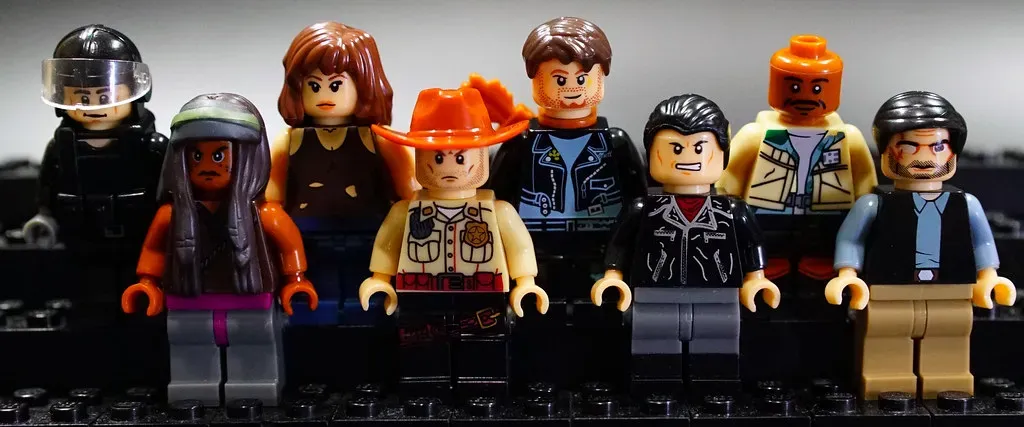
In Season 6 of The Walking Dead, Glenn Rhee appears to be mauled by walkers after falling off a dumpster. However, it was revealed later that Nicholas’s body fell on top of Glenn, and the walkers were feasting on him instead. Glenn actually managed to survive by crawling under the dumpster.
It was an obvious fake-out that felt more like a clumsy ratings grab. It completely weakened the storyline of the character and dulled the shock of Glenn’s actual death in the show later on. Since the highlight of the show was its approach toward death, this first cliffhanger generated mostly negative reactions from fans. The Walking Dead had built its reputation on the idea that nobody was truly safe. Faking a major character’s death and then walking it back quietly told audiences that the rules had changed.
10. The 100 – Clarke Kills Bellamy (Final Season)

Throughout seven seasons, Clarke and Bellamy had a strong relationship that grew from enemies to allies to friends. They sacrificed for each other and saved each other’s lives multiple times. To end their relationship like this meant undoing whatever growth had happened between them. The writing was so inconsistent and didn’t do justice to the characters at all.
In the final season, Clarke Griffin shoots and kills Bellamy Blake after he tries to hand over Maddy’s sketchbook to Bill Carogan. The sketchbook contained secrets to their enemies, and it would have risked Madi’s life. Their last scene was so abrupt that Clarke didn’t even look at Bellamy’s body and left it behind as if she had turned her humanity switch off. Seven seasons of earned relationship dynamics were erased in a single, careless scene.
11. Sugar – The Private Detective Was an Alien (Season 1, Episode 6)

Sugar seemed at first like a straightforward neo-noir show. Centering on private investigator John Sugar as he looks into the disappearance of a Hollywood producer’s granddaughter, it had the moody atmosphere and performances viewers expected. Then, out of nowhere at the end of the sixth episode, it was revealed that the private detective in question was an alien. Like, from outer space.
While this might have worked had the reveal happened earlier, with only two episodes left in the season, that twist in Sugar instead changed the show’s tone and never answered all the new questions it opened up. The noir atmosphere, the careful pacing, the grounded mystery – all of it was undercut by a reveal that belonged in an entirely different genre. As one critic put it, the Apple TV+ thriller “makes the grave error of resorting to a ridiculous plot twist that should’ve been the damn plot all along.”
What connects all eleven of these moments is less about shock value and more about trust. A plot twist, at its best, recontextualizes everything that came before it and makes the story richer. At its worst, it tells the audience that the rules they agreed to when they started watching simply don’t apply anymore. Once that trust is broken, it’s almost impossible to repair, and reruns of even the best earlier episodes start to carry a slightly hollow feeling.
Partner offer
Planning a trip to Vegas?
Compare hotel rates and show tickets on VEGAS.com.