There are records you’ve heard a hundred times on speakers. Then you put on a decent pair of headphones – and it’s like somebody opened a hidden door in a house you thought you knew completely. Suddenly there are sounds hiding behind sounds, instruments breathing in corners, stereo effects that make the music feel like it’s physically moving around inside your skull. It’s genuinely a little disorienting the first time it happens.
The albums on this list aren’t just “good.” They were built, often deliberately and obsessively, in ways that reward close, private, isolated listening in ways no speaker setup in a living room can fully replicate. Some use radical panning. Some exploit room acoustics, reversed tapes, or layered textures that only reveal themselves under headphones. Let’s dive in.
1. Pink Floyd – The Dark Side of the Moon (1973)
There’s a reason this album has lived on turntables, CD players, and streaming playlists for decades. Dark Side isn’t just iconic – it’s a sonic benchmark. Nine months at Abbey Road, constant experimentation, and a heady blend of rock, spoken word, and effects turned it into the ultimate headphone album.
Pink Floyd designed much of the sound to emanate from one speaker to another, as in the beginning of the song “Money,” and there are very-low-frequency sounds, such as the helicopter noise in the song “Speak to Me,” as well as very-high-frequency sounds, like the clocks in the beginning of “Time.” With headphones on, each of those deliberate spatial moves becomes almost theatrically real.
The stereo-panning echoes on Gilmour’s vocals on “Us and Them” required some ingenuity to create. Engineer Alan Parsons achieved them using a 3M eight-track tape recorder, with Gilmour’s vocal sent to one pair of tracks and bounced along to the next pair and so on, to achieve four distinct echoes that could be panned within the stereo spectrum to give the sense that the echoes were traveling from speaker to speaker. On headphones, that effect is nothing short of staggering.
Audiophiles have long embraced the album as a reference recording for testing audio equipment. Its dynamic range, stereo imaging, and frequency spectrum made it ideal for demonstrating high-fidelity sound reproduction. Incredibly, it spent 937 weeks on the Billboard 200 and sold over 50 million copies worldwide.
2. Radiohead – OK Computer (1997)
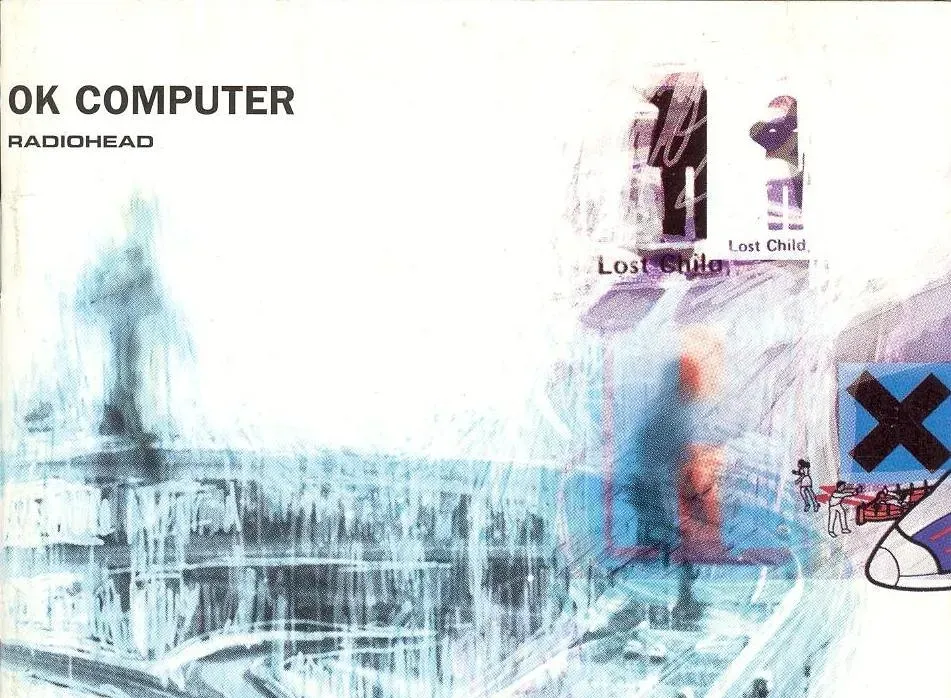
OK Computer is the third studio album by the English rock band Radiohead, released on 21 May 1997. Radiohead and their producer Nigel Godrich recorded most of it in their rehearsal space in Oxfordshire and the historic mansion of St Catherine’s Court in Bath in 1996 and early 1997.
The album was recorded in various locations, including St. Catherine’s Court, a historic mansion in Bath, England. This setting provided a unique acoustic environment that shaped the sound of the album. The band utilized the natural reverb of the mansion’s rooms to add depth and atmosphere to their recordings. On headphones, that reverb isn’t background wallpaper – it’s practically a character in the music itself.
Wide stereo fields, careful use of reverb and delay, and dynamic contrasts gave songs a cinematic scale uncommon in mainstream rock, encouraging producers to treat albums as immersive environments rather than collections of singles. Honestly, OK Computer almost feels like it was designed to be heard in darkness, alone, with good headphones pressed against your ears. The album was nominated for Album of the Year and won Best Alternative Music Album at the 1998 Grammy Awards.
3. Radiohead – Kid A (2000)

If OK Computer rewarded careful headphone listening, Kid A practically demands it. What makes Kid A so influential isn’t the electronics, the weirdness, or the abstraction. It’s the architecture. The way every sound lives in relation to another. The way every decision is both technical and emotional. The layering is vertical – micro-details stacked in spectral columns – but it’s also horizontal, stretched across time, letting certain elements breathe while others suffocate.
Every “error” becomes part of the language. Influences from Aphex Twin, Autechre and Boards of Canada drift through the mix, not as references but as structural principles: granular breaks, cut-up phrasing, rhythmic artifacts left uncorrected. Glitch isn’t decoration – it’s motion.
Kid A didn’t just expand the palette of what a band could sound like. It expanded the emotional possibilities of production itself. The whispering synth layers, the disembodied vocal treatments, the barely-there percussion on tracks like “How to Disappear Completely” – all of it becomes exponentially more visceral with headphones sealed around your ears.
4. My Bloody Valentine – Loveless (1991)
Arguably the poster album for shoegaze, Loveless is a masterpiece combining elephantine riffs with dream-pop haze, awash with reverb and overdriven guitars. It’s one thing to hear it through a speaker. It’s another thing entirely to hear it through headphones. The texture is so dense that on speakers, the mix sometimes collapses into a single wall of noise. On headphones, the layers separate just enough to realize each layer is itself a complex, moving thing.
The band is said to have spent over two years and a then-extraordinary amount of studio budget recording and mixing Loveless, pushing engineers and equipment to their absolute limits. That obsession is audible in a way that only reveals itself in private listening. The guitar treatments shift and shimmer in ways that feel almost biological – like something breathing inside your head.
It’s delicate but dense, a swirl of whispery vocals and glistening textures that rewards close listening. I think this is easily the most underrated headphone album ever made. Most people gave up on it through speakers and never discovered what it actually sounds like.
5. Björk – Vespertine (2001)

Uploaded by Freakmighty, CC BY 2.0)
It’s delicate but dense, a swirl of whispery vocals and glistening textures that rewards close listening. Even with its digital bones, Vespertine never feels cold. The original CD already gives you plenty of dynamic subtlety, but the 2022 One Little Independent vinyl reissue takes it further – smoother top end, warmer low end, quieter surfaces. It doesn’t just sound good – it feels like you’re eavesdropping on a dream.
Vespertine was deliberately composed for intimate listening. Björk used microphones to capture the most fragile sounds imaginable – music boxes, harp harmonics, choral whispers and harpsichord runs. Binaural 3D audio is inherently more authentic to our ears than two-dimensional stereo. It is sound designed to replicate the way we hear spatially, leveraging how humans consume auditory information in our natural environment. Vespertine understood this long before spatial audio became a marketing term.
On speakers, many of its quieter textures simply vanish beneath room noise. Headphones create the sealed environment the album needs to survive. The intimacy Björk built into every note finally has somewhere to land.
6. Jimi Hendrix – Electric Ladyland (1968)

On Electric Ladyland, Jimi Hendrix and his brilliant engineer Eddie Kramer create a wonderful, three-dimensional sonic world and invite you to step in. This album is not necessarily stoned, but it certainly is beautiful. The stereo panning on this record is so aggressive and so deliberate that it sounds almost reckless through speakers – guitars that don’t just pan, they lurch and swoop.
On headphones, though, that recklessness turns into something architectural. You can physically feel which ear a guitar run is entering from. Hendrix and Kramer exploited the stereo field in ways that were shockingly ahead of their time. Tracks like “Voodoo Chile” and “1983 (A Merman I Should Turn to Be)” become genuinely three-dimensional experiences.
For audiophiles, a headphone album is a work that is so exquisitely recorded that it demands you listen to each beautifully recorded note under a sonic microscope. Electric Ladyland absolutely fits that definition, and it’s one of the few records from the 1960s that genuinely sounds like it was made for a pair of modern audiophile headphones.
7. Steely Dan – Aja (1977)
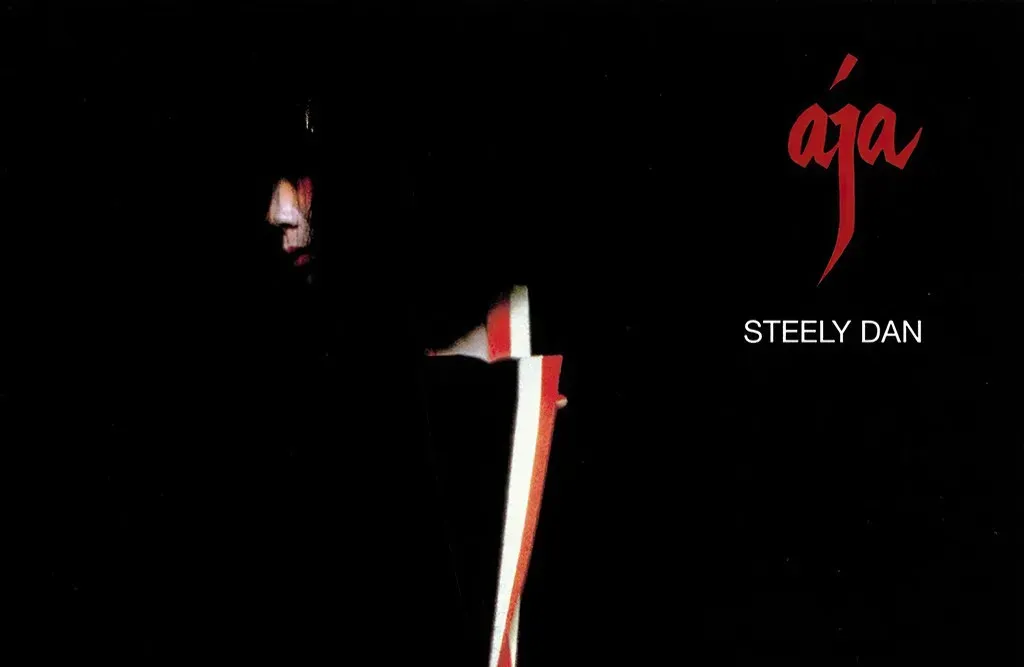
Let’s be real: Aja is the audiophile community’s most lovingly obsessed-over album. It shows up on nearly every serious “test your headphones” list for good reason. The production, handled by Gary Katz, achieved a clarity and instrumental separation that was almost unreasonably advanced for 1977. The rhythm section alone – featuring a rotating cast of the best session musicians alive at the time – is worth studying track by track.
A great headphone test album does more than sound “clean.” It presents a wide range of sonic challenges that reveal how a headphone behaves across the full frequency spectrum and dynamic range. Strong candidates typically feature intentional spatial design, where instruments occupy clearly defined positions, allowing you to assess soundstage width, depth, and imaging precision. Aja ticks every single one of those boxes.
On speakers, Aja sounds sophisticated. Through headphones, it sounds like the musicians are performing specifically for you, in a specific spot in your skull. The hi-hat patterns on “Peg,” the bass guitar decay on “Home at Last,” the layered jazz guitar voicings throughout – all of it becomes micro-detailed in a way that’s genuinely thrilling. Aja by Steely Dan is listed among audiophile essentials alongside albums like Rumours by Fleetwood Mac and Brothers in Arms by Dire Straits.
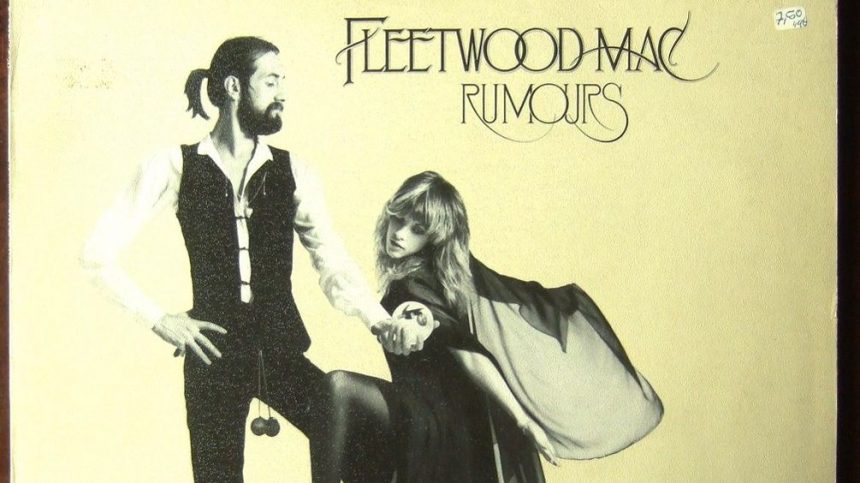
8. Fleetwood Mac – Rumours (1977)
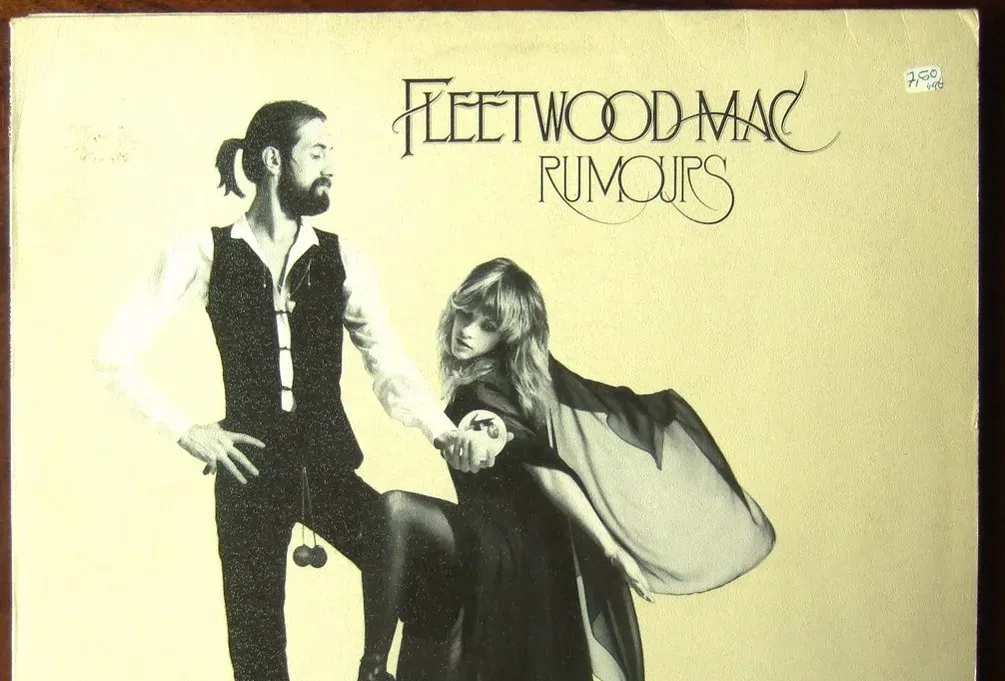
The amount of space and air on this album is extraordinary for a rock and roll album. You can hear the concrete walls and hard surfaces of the old house on many of the tracks. The drums sound unbelievable throughout the entire record. The songs themselves have some interesting panning and stereo separation techniques going on, which make for a very interesting listen. The vocals and harmonies are often panned and set back in the mix, making it sound like you are in the room listening live to the band playing.
That last point is the key revelation. On headphones, Rumours stops being a “classic album” and starts being an experience with real physical presence. The three-way vocal interplay between Stevie Nicks, Christine McVie and Lindsey Buckingham occupies different points in the stereo image, and you feel that triangulation between your ears in a way that no speaker arrangement quite manages.
Rumours was recorded while the band was actively falling apart – and perhaps that emotional rawness translated into production choices that feel unusually unguarded. Most modern music is mastered for loudness, often at the expense of nuance. Audiophile recordings go the other way – wide dynamic range, room to breathe, and details that catch you off guard. Rumours is exactly that kind of record.
9. Dire Straits – Brothers in Arms (1985)
Brothers in Arms was one of the first major album releases to be fully recorded digitally, and Dire Straits and producer Neil Dorfsman were clearly aware of exactly what that new clarity would allow. The album was engineered with an almost clinical precision in terms of instrument placement and stereo imaging. Mark Knopfler’s guitar has a physical presence in the mix that some engineers still use as a reference benchmark.
These are records built with depth, contrast, and intent – albums that challenge headphones to reproduce quiet nuance, explosive scale, and complex layering without collapsing or fatiguing the listener. Whether you’re evaluating a new audiophile open-back, a planar magnetic flagship, or a high-end pair of wireless headphones, these albums help you understand how your gear sounds, not just that it sounds good.
On headphones, the title track “Brothers in Arms” becomes something almost cinematic. The guitar seems to float in a space wider than your skull, the reverb decays with a precision that makes each note feel geometric. The album sold over 30 million copies, but it’s hard to say for sure how many of those buyers ever heard what it truly sounds like with a proper pair of headphones. It’s a completely different experience.
10. Daft Punk – Random Access Memories (2013)

Recorded largely using live instruments, Random Access Memories is one of the few chart-topping dance albums that facilitates, in fact demands, deeper listening. The band worked with a range of engineers and legendary studio musicians to create something that was fundamentally about sound quality as an artistic statement. The bass frequencies alone are extraordinary – warm, physical, and layered in a way that most headphones will struggle to fully resolve.
Here’s the thing about Random Access Memories on headphones: it’s not just better. It’s different in a way that changes what you think the album is. Tracks like “Giorgio by Moroder” reveal layers of dialogue, sound design and transitional texture that a speaker setup, especially in a reflective room, simply obscures. The panning is sophisticated, the dynamic range is unusually wide for modern production.
Most modern music is mastered for loudness, often at the expense of nuance. Audiophile recordings go the other way – wide dynamic range, room to breathe, and details that catch you off guard. Random Access Memories was one of the most deliberate counter-arguments to loudness-era mastering released in the 2010s. It was practically designed for private, focused, headphone listening.
11. Godspeed You! Black Emperor – F♯ A♯ ∞ (1997)
Godspeed You! Black Emperor’s 1997 debut album was a momentous release for post-rock, and it remains one of the genre’s key landmarks. English director Danny Boyle cited F♯ A♯ ∞ as inspiration while making his critically acclaimed horror film 28 Days Later, which makes total sense given its apocalyptic tone. Moments of tranquility separate the more thunderous segments, with satisfying homages to the late, great Ennio Morricone. Each musical passage features a number of field recordings and samples, adding further fascination to the already impressive spectacle.
On speakers, this album sounds vast and overwhelming in roughly equal measure. On headphones, the architecture becomes visible. You can trace the vinyl crackle of the intro, the distant traffic recordings, the way strings enter from one side of the stereo field before expanding to fill everything. The dynamic range is extraordinary – quiet passages of near-silence followed by waves of orchestral guitar that genuinely feel like a physical impact.
This is a true sensory experience like no other, and a proper headphone listen. Strong headphone test candidates typically feature intentional spatial design, where instruments occupy clearly defined positions, allowing you to assess soundstage width, depth, and imaging precision. They also balance microdetail and macrodynamics – quiet passages with audible room tone, breath, or decay, followed by moments of impact that test driver control and composure. F♯ A♯ ∞ is all of that, taken to an extreme that almost no other record has matched.
A Final Thought
The albums on this list were made by artists who thought carefully – sometimes obsessively – about how sound exists in space. Listening on speakers means that spatial information gets blurred, scattered by room acoustics, absorbed by furniture, diluted by distance. Without binaural processing, headphones can provide a very unnatural stereo soundstage as the signals fed to the left and right ears are almost completely isolated and separate. That’s why many people hear a headphone mix as being “inside” their head rather than around it. For these eleven albums, that “inside your head” quality is exactly the point.
Audiophile-grade headphones can reveal the soul and essence of a song. From breathy vocals to powerful, heart-thumping basslines, the right pair of headphones can transform your entire listening experience completely. These albums prove that some music was never really meant to share a room with you. It was meant to live right inside you. So – which of these have you only ever heard on speakers?