History has a funny way of humbling even the greatest experts. Archaeologists, museum curators, and scientists have, on more than one occasion, staked their reputations on objects that turned out to be elaborate deceptions. Some of these fakes fooled the world for decades. Others sparked international scandals that reshaped how we think about authentication, scholarship, and the very nature of trust in science.
The stories behind these famous forgeries are more dramatic than any fiction. From primitive skulls that supposedly rewrote human evolution to burial boxes connected to biblical figures, each case is a window into human ambition, greed, and the desperate desire to believe in something extraordinary. Prepare to be surprised.
1. The Piltdown Man – The Fake “Missing Link” That Fooled Science for 41 Years
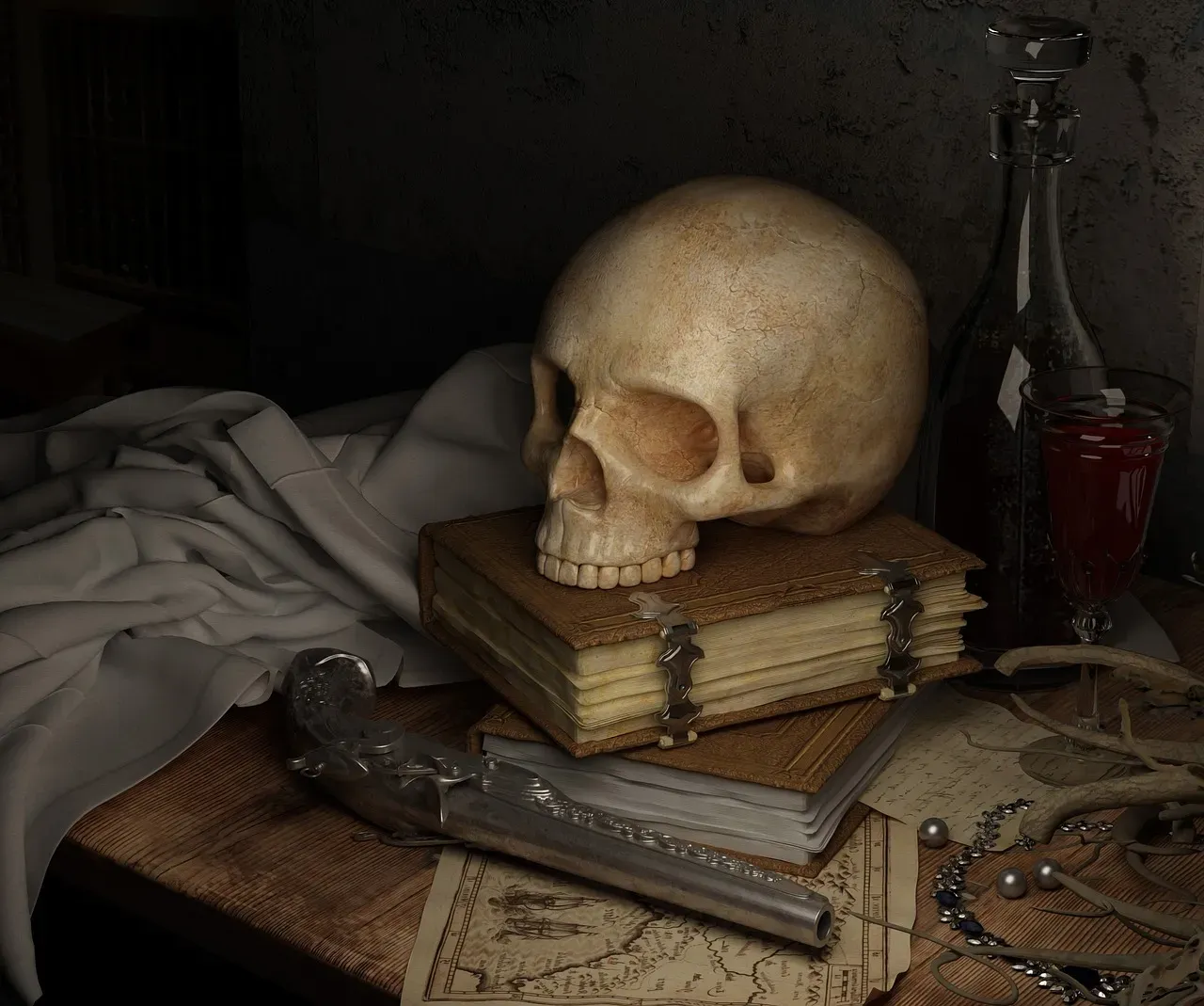
Imagine announcing you’ve found proof of human evolution and watching the entire scientific world celebrate you. That’s exactly what happened in 1912, when amateur archaeologist Charles Dawson presented bone fragments near the village of Piltdown in Sussex, England. The discovery was announced at a Geological Society meeting and given the Latin name Eoanthropus dawsoni, meaning “Dawson’s dawn-man.” The scientific community was electric with excitement.
The remains were eventually found to consist of the altered mandible and some teeth of an orangutan deliberately combined with the cranium of a fully developed, though small-brained, modern human. The Piltdown hoax is prominent for two reasons: the attention it generated around the subject of human evolution, and the length of time – 41 years – that elapsed from its alleged initial discovery to its definitive exposure as a composite forgery.
It was discovered that the skull pieces had been fraudulently modified to appear ancient, and planted in the sites. New collaborative research, published in the journal Royal Society Open Science, used high-precision measurements, chemical analysis, and 3D imaging to demonstrate the forger was almost certainly Dawson.
Whether Dawson acted alone is uncertain, but his hunger for acclaim may have driven him to risk his reputation and misdirect the course of anthropology for decades. The Piltdown hoax stands as a cautionary tale to scientists not to be led by preconceived ideas, but to use scientific integrity and rigour in the face of novel discoveries. Honestly, it’s one of the most spectacular cautionary tales in all of science history.
2. The Shroud of Turin – The World’s Most Debated Relic

The Shroud of Turin captivated believers for centuries, believed to be the actual burial cloth of Jesus Christ. Its mysterious image and sacred associations drew pilgrims and scholars alike, fueling debates about its authenticity. Radiocarbon dating in the 1980s traced the linen’s origins to the Middle Ages, exposing it as a medieval forgery.
Independent radiocarbon dating tests were carried out in 1988 at the University of Oxford, the University of Arizona and the Swiss Federal Institute of Technology, following years of discussion to obtain permission from the Holy See. The tests were done on portions of a swatch taken from a corner of the shroud, and concluded with 95 percent confidence that the material dated to AD 1260–1390.
The documented history of the shroud dates back to 1354, when it began to be exhibited in the new collegiate church of Lirey, a village in north-central France. The shroud was denounced as a forgery by the bishop of Troyes, Pierre d’Arcis, in 1389. So even medieval church officials had doubts about its authenticity, centuries before modern science got involved.
Radiocarbon dating, conducted by three separate laboratories, dated the fabric between 1260 and 1390. The shroud shows evidence of being a relic from medieval times, as its patterns are complex and would have required a sufficient loom likely not introduced until the 13th century. The debate, remarkably, still rages on in academic circles even today.
3. The Cardiff Giant – A Ten-Foot Petrified Man Made of Gypsum
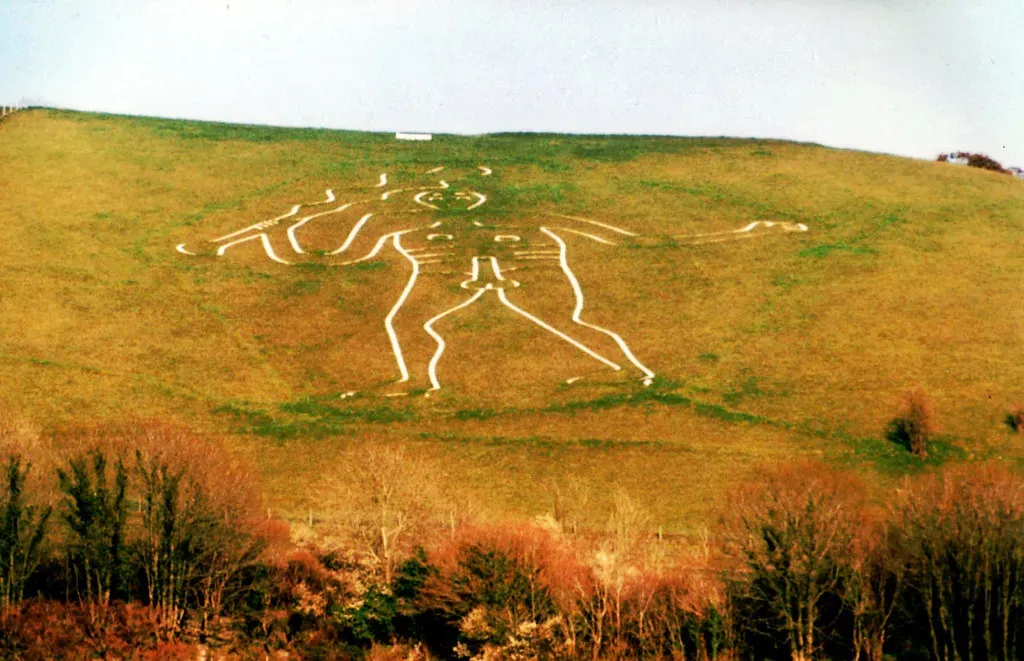
Nothing quite captures the gullibility of crowds like a ten-foot stone man. This 10-foot-tall, alleged petrified man was discovered in 1869 by workers digging a well in Cardiff, New York. The giant was actually manufactured from a block of gypsum and shipped to a farm in Cardiff, where it was buried for a year before being found by the well builders.
Skeptics had the right of it, as the Cardiff Giant was actually a fake. It was a statue created by an atheist named George Hull after a heated debate at a revival meeting about Genesis 6:4, which claimed that the giants had once inhabited the earth. Hull’s plan was to mock religious literalists, but what he actually created was a national sensation.
As news spread, archaeologists, scientists, and thousands of the curious flocked to Newell’s farm. He charged visitors 50 cents for a look. Newell made no claims about the giant’s authenticity, but invited visitors to draw their own conclusions.
P.T. Barnum offered to buy it and was turned down, so he had his own built and claimed his was real and the Cardiff Giant was a fake. The irony is almost too perfect. A fake artifact spawning a second fake artifact, with two showmen arguing about which fraud was more genuine.
4. The Tiara of Saitaphernes – The Louvre’s Gold-Plated Embarrassment
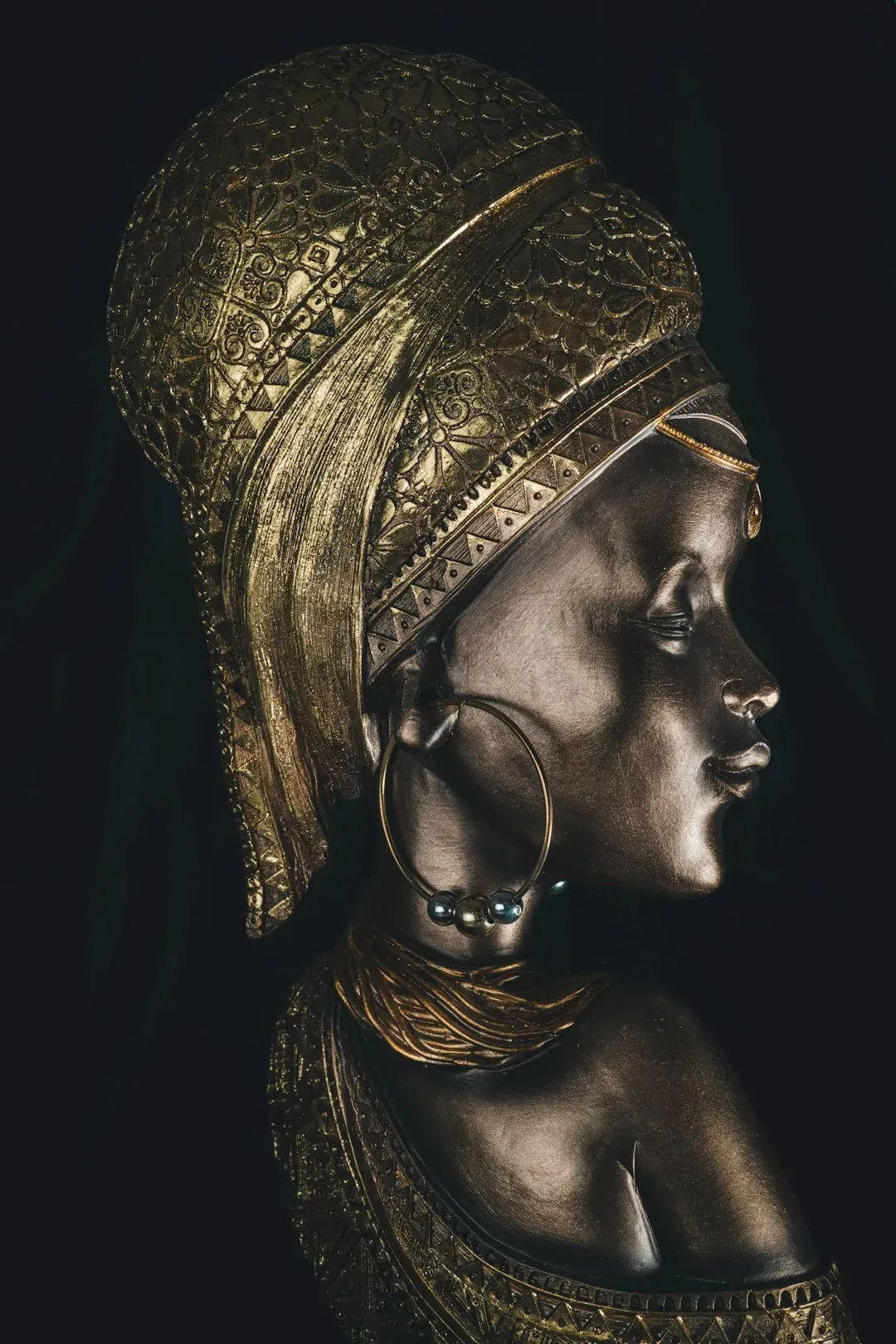
Few institutions in the world carry more prestige than the Louvre. So when that museum was duped by a fake, the fallout was enormous. The Tiara of Saitaphernes dazzled the art world when the Louvre purchased it in 1896, believing it belonged to a Scythian king. Experts praised its craftsmanship – until 1903, when the truth emerged: it was a modern creation, confessed by the goldsmith himself. The revelation caused a major scandal, deeply embarrassing the museum and prompting sweeping reforms in artifact authentication.
Let’s be real, this is the kind of story that keeps museum directors up at night. A celebrated piece of ancient goldwork, admired and displayed for years, turns out to have been made by a living craftsman. The Cardiff Giant and similar petrified men involved only the crudest technique, while the Tiara of Saitaphernes is the work of a gifted goldsmith. In a strange way, its quality was what made it so believable.
The goldsmith responsible, Israel Rouchomovsky of Odessa, was so skilled that some argued the piece deserved to remain in the Louvre simply as an example of extraordinary craftsmanship. This episode remains a pivotal lesson in curatorial caution. The museum’s authentication process was entirely overhauled after the scandal broke.
5. Drake’s Plate of Brass – California History Written in Fraud
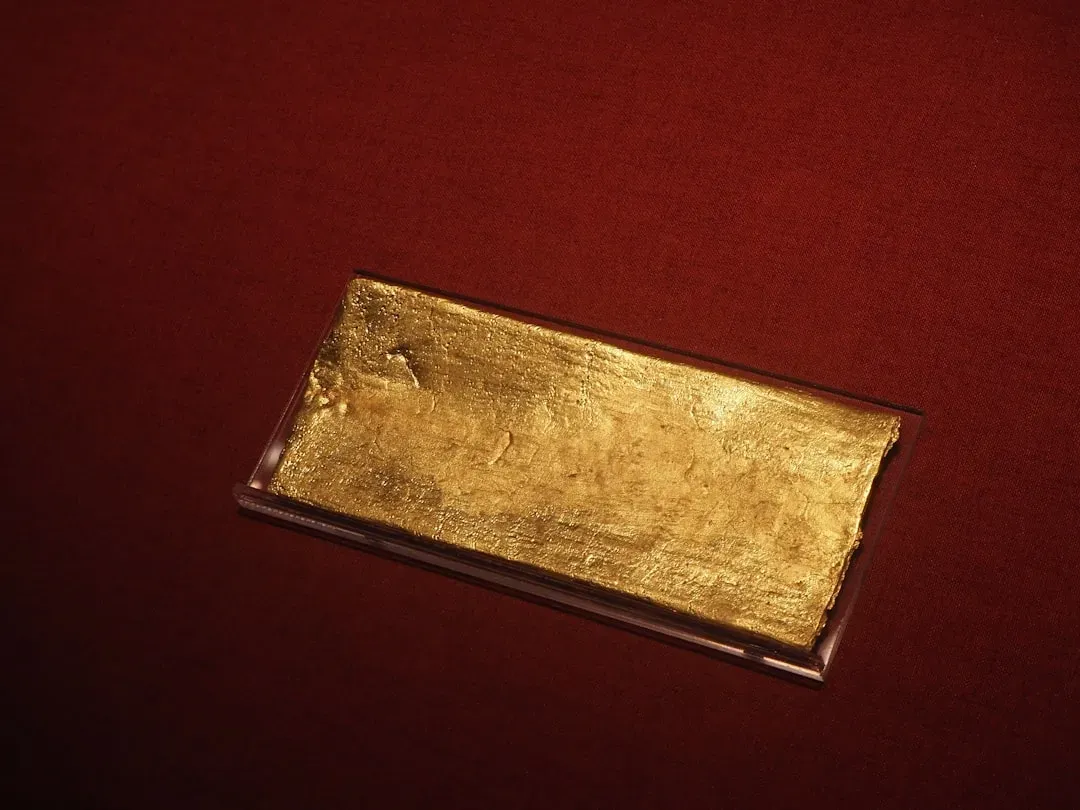
For decades, a brass plate found in California was considered undeniable proof of the famous English explorer Sir Francis Drake’s landing on the West Coast in 1579. Discovered in California in 1936, Drake’s Plate of Brass was hailed as proof of Sir Francis Drake’s 1579 landing on the West Coast. Historians and the public alike embraced the plate as a significant historical artifact. However, after nearly four decades of acclaim, advanced metallurgical testing in the 1970s revealed it was a modern forgery.
It was not until the 1970s that the plate was subjected to modern analysis, which revealed it was a fake. It was too pure to have been made in Elizabethan England, and contained trace metals of modern American brass. The plate was too smooth to have been hammered by hand like brass plates were in the 1500s, and must have been made with modern rolling equipment. The edges were cut with a precision achievable only with modern tools.
Here’s the part that makes the whole affair almost comically absurd. The pranksters had placed the logo of their fraternal organization on the back of the plate, in fluorescent paint visible under a black light. A fraternity prank that went all the way to museum display cases and textbooks. The episode highlights how wishful thinking and national pride can cloud judgment, even among experts.
6. The Kensington Runestone – Vikings in Minnesota?
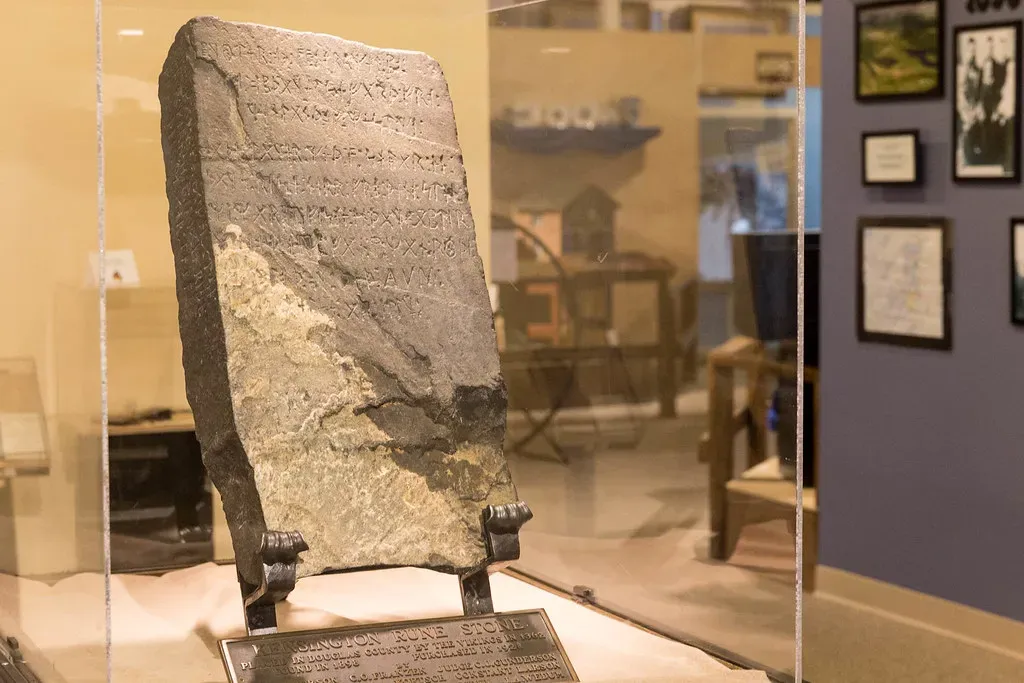
The idea that Vikings reached the American heartland long before Columbus is thrilling. So thrilling, in fact, that when a stone covered in runic inscriptions turned up in Minnesota in 1898, people desperately wanted it to be real. In 1898, a farmer named Olof Ohman uncovered a stone engraved with runes near the town of Kensington in Minnesota. Over the past century a number of scholars and amateurs have analyzed the stone, some believing the Kensington Runestone was carved by a band of 14th-century Vikings on a journey.
Partner offer
Olaus J. Breda, professor of Scandinavian Languages and Literature, declared the stone to be a forgery and published a discrediting article which appeared in Symra in 1910. He forwarded copies of the inscription to fellow linguists and historians in Scandinavia, such as Oluf Rygh and Sophus Bugge. They “unanimously pronounced the Kensington inscription a fraud and forgery of recent date.”
In The Vikings and America, Wahlgren again stated that the text bore linguistic abnormalities and spellings that he thought suggested that the Runestone was a forgery. One of the main linguistic arguments for the rejection of the text as genuine Old Swedish is the term opthagelse farth, meaning “journey of discovery.” This lexeme is unattested in either Scandinavian, Low Franconian or Low German before the 16th century.
It is thought to be more than coincidental that the stone was found among Scandinavian newcomers in Minnesota, still struggling for acceptance and quite proud of their Nordic heritage. That cultural context is key. The stone told the community what it wanted to believe, and that desire to belong made critical thinking much harder to come by.
7. The James Ossuary – The Burial Box That Shook Biblical Archaeology

Few archaeological discoveries in recent history have generated more headlines, more controversy, or more legal drama than a modest limestone bone box carrying four explosive words. The James Ossuary, a modest limestone box, burst into the spotlight in 2002 thanks to its sensational inscription: “James, son of Joseph, brother of Jesus.” This seemingly monumental find ignited fierce debates and global headlines, raising hopes of direct archaeological evidence for Jesus’ existence.
The box appeared on the cover of Time magazine, drew thousands to a Toronto exhibit and was featured in a critical 60 Minutes report in 2008, linking it to an antiquity forgery ring. The Israel Antiquities Authority prosecuted antiquities dealer Oded Golan, alleging the inscription was a modern forgery added to an ancient box. The trial stretched over seven years and produced nearly 12,000 pages of testimony.
Concluding a seven-year case, Jerusalem district court judge Aharon Farkash ruled that evidence presented by the Israel Antiquities Authority against Golan was insufficient to prove the last part of the inscription was faked beyond a reasonable doubt. The “not guilty” verdict, however, was far from a declaration of authenticity.
The judge’s decision to clear Golan wrote that it “does not mean that the inscription on the ossuary is authentic or that it was written 2,000 years ago.” It’s hard to say for sure whether anyone truly knows what to make of the James Ossuary even today. The case remains a fascinating, unresolved puzzle sitting exactly at the crossroads of faith, law, and science.
What These Famous Fakes Tell Us About Human Nature

Most archaeological forgeries are made for reasons similar to art forgeries – for financial gain. The monetary value of an item that is thought to be thousands of years old is higher than if the item were sold as a souvenir. Money, however, is rarely the whole story. Some forgers craved fame. Others wanted to prove a point. A few were simply playing elaborate jokes that spiraled out of control.
Common motives for making bogus artifacts include publicity and self-promotion, monetary gain, practical jokes, and revenge, but some fakers have had the goal of supporting their own theories about the human past. Fakes have often been inspired by nationalism, with patriotic perpetrators boosting their country through spurious links to past civilizations.
People are taken in by hoaxes and fakes for many reasons. Successful bogus artifacts often match expectations or preconceived ideas of antiquities. That’s the real psychological hook. We are most vulnerable to deception when we already want something to be true. Think of it like a magic trick where the audience secretly wants to be fooled.
These famous forgeries have left an indelible mark on history, challenging the credibility of revered institutions and reminding us how easily fact can be mistaken for fiction. Each case exposed vulnerabilities in scholarship, but also spurred advances in scientific authentication and critical thinking. In that sense, every great fake has ultimately made science stronger, even as it made it look foolish first.
The Science of Unmasking Fakes: How Investigators Catch Them Today
Modern technology has made forgery exponentially harder to pull off. What fooled generations of expert eyes now falls apart in hours under the scrutiny of chemical analysis, radiocarbon dating, CT scanning, and DNA testing. The study of Piltdown Man used scientific methods not available in the earlier twentieth century: DNA analyses, high-precision measurements, spectroscopy and virtual anthropology in the hope of finding the answers that had eluded previous investigators.
Examining CT scans, researchers noticed a strange, off-white putty on the surface of virtually every bone of the Piltdown forgery. This putty had been painted over and stained, and in some cases was used to fill in cracks and gaps that the forger accidentally created. Inside the crania and teeth, tiny pebbles were found stuffed inside hollow chambers sealed over with the same putty. Researchers think the hoaxer used these pebbles to weigh down the bones, as fossilized bones are noticeably heavier than recent bones.
Such a brazen hoax is unlikely to occur again in physical anthropology because of the sophistication of modern analytical techniques. Still, the tools of detection are only as good as the willingness to apply them honestly. History has shown, more than once, that institutions sometimes resist testing objects they already want to believe are genuine.
The Legacy: What Museums Have Learned
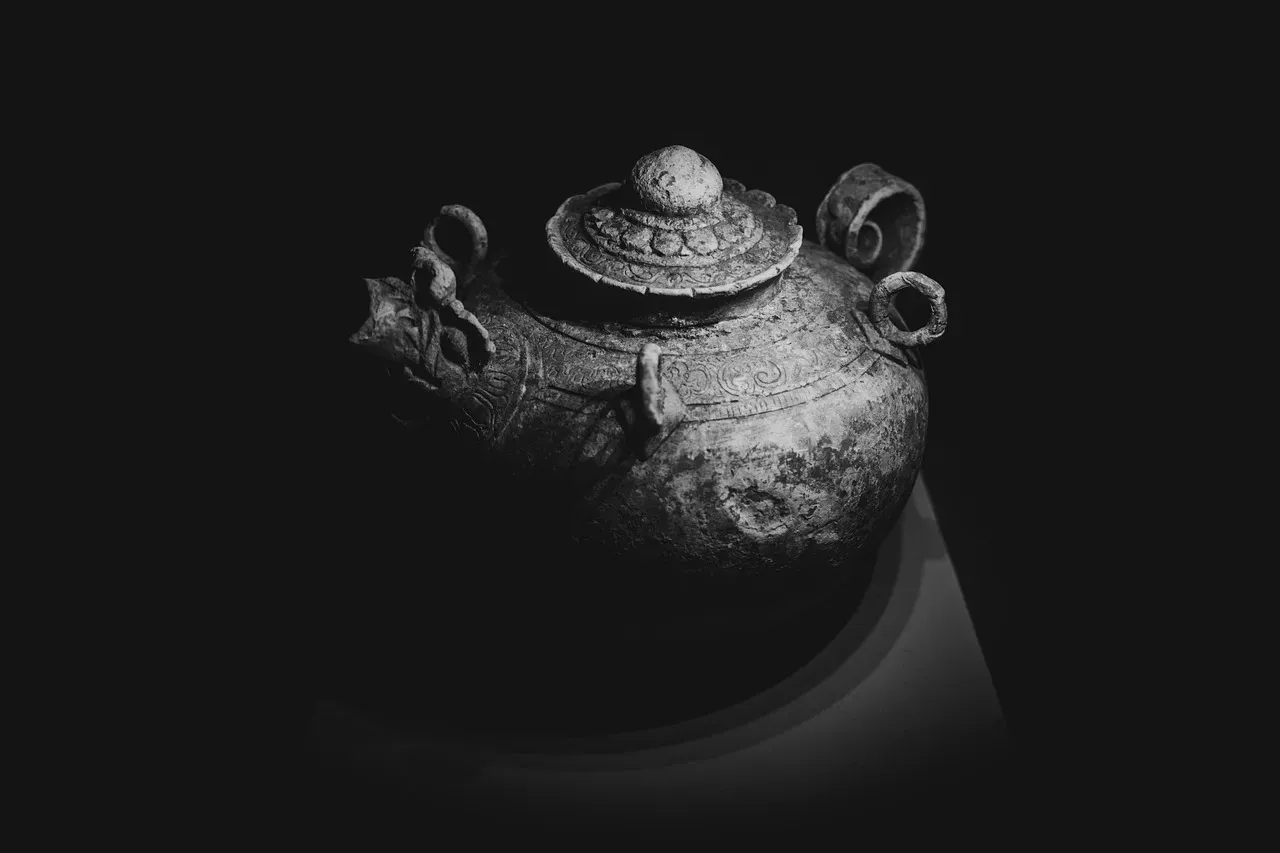
Art forgery is a real menace museums have to contend with. Every now and then, a museum ends up with a fake artifact that can end up being on display for a number of years before they realize it is a fake. The cases discussed here forced the world’s most respected cultural institutions to completely rethink how they verify acquisitions.
Forgers often go to extreme lengths to fool museums into buying their work. Some fakes are so good that historians and archaeologists have a hard time telling them apart from the real thing. It’s an arms race of sorts, with forgers growing more sophisticated and authenticators developing ever more precise tools to counter them.
The Golan case has had the effect of making collectors and experts more suspicious of forgeries, and museums have reviewed their collections looking for fakes. That alone is a meaningful legacy. Skepticism, applied correctly, is not cynicism. It is simply good science. And good science, as every case on this list proves, is what eventually wins.
Conclusion: The Enduring Power of a Good Fake
What’s genuinely remarkable about every artifact on this list is not the deception itself. It’s how long each forgery survived scrutiny, and how many intelligent people were swept up in believing it. Throughout history, the allure of ancient relics has inspired both fascination and deception. Whether driven by greed, ambition, or the thrill of discovery, forgers have crafted objects so convincing that even seasoned experts were fooled for decades. These fake artifacts didn’t just trick museums – they shaped the way we understood entire eras and cultures.
The Piltdown Man misdirected evolutionary science for a generation. The Shroud of Turin still inspires fierce debate in 2026, long after radiocarbon tests delivered their verdict. The Cardiff Giant sold tickets and captured imaginations across an entire nation. Each forgery says as much about the desires of the people who believed in it as it does about the skills of whoever made it.
Perhaps the most unsettling thought is this: if so many fakes fooled so many experts for so long, how many more might still be out there, quietly sitting in museum display cases, waiting for better science to catch up with them? What would you guess?
Partner offer
Planning a trip to Vegas?
Compare hotel rates and show tickets on VEGAS.com.